

We may earn a commission when you buy through links on this page, at no extra cost to you. Learn more.
The best antinori white wine for your table depends on whether you want a structured Chardonnay blend, a fresh Orvieto-style white, or a sweet late-harvest bottling. Antinori’s best-known white is Cervaro della Sala, a Chardonnay and Grechetto blend from Umbria. The wider range also includes Chardonnay, Sauvignon Blanc and Sémillon wines, an Orvieto blend, and Muffato della Sala, a botrytized dessert wine.
Antinori is often associated with Tuscan reds, but its white wines show another side of the family’s portfolio. Choose by grape, texture, and occasion: the label names point to distinct styles rather than one house flavor.
Castello della Sala Gives Antinori White Wine Its Umbrian Character
Most of the best-known Antinori still whites come from Castello della Sala, an estate in Umbria near the Tuscan border and about 18 kilometers from Orvieto. Its hillside vineyards, varied white grapes, and fossil-rich soils help explain why the range spans brisk, citrusy wines and layered, oak-influenced bottles.
Antinori’s estate profile for Castello della Sala describes the property as a 600-hectare estate, with 229 hectares planted to vines. The vineyards sit between 220 and 470 meters above sea level, on clay and limestone soils rich in marine fossils. They receive the rising sun and experience marked differences between daytime and nighttime temperatures. These details help explain the emphasis on freshness and mineral character in the estate’s whites.
The grape mix combines local varieties with international ones. Procanico and Grechetto are traditional Umbrian grapes; Chardonnay, Sauvignon Blanc, Sémillon, Pinot Blanc, Viognier, Traminer, and Riesling add other options. Wine Enthusiast describes Orvieto as a regional blend that includes Procanico and Grechetto, with dry versions showing crispness, peach-like fruit, and tangy acidity. San Giovanni della Sala reflects that local tradition, while Cervaro and Bramìto use Chardonnay for different interpretations of the same site. Antinori’s other estates also produce whites such as Villa Antinori Bianco, Villa Antinori Pinot Bianco, and Guado al Tasso Vermentino. The Wine Brands overview helps place Antinori in the broader group of multi-estate producers.
Cervaro della Sala Combines Chardonnay with Grechetto
Cervaro della Sala is Antinori’s flagship white and the bottle to consider for a fuller, more complex style. It blends Chardonnay with a smaller share of Grechetto, pairing Chardonnay’s breadth and texture with a local grape that gives the wine an Umbrian reference.
The first vintage was made in 1985 after a project led by Renzo Cotarella, who joined Castello della Sala in 1979. Antinori wanted a white wine capable of developing with bottle age, rather than a simple wine for immediate drinking. The producer describes Cervaro as one of the first Italian white wines to undergo malolactic fermentation and aging in barriques, a combination that helped establish a more ambitious approach to Italian white wine.
The cellar choices explain the wine’s texture. Antinori harvests early in the day and gives the must about four hours of skin contact at 10 degrees Celsius, or 50 degrees Fahrenheit. Chardonnay ferments in barriques and undergoes partial malolactic fermentation; Grechetto ferments separately and does not age in oak. The components are blended later, then the wine spends several months in bottle. Expect citrus, white flowers, ripe orchard fruit, and notes that can recall vanilla, hazelnut, toasted almond, pastry cream, or flint. VinePair’s review of the 2015 Cervaro describes pear, white peach, lemon, and orange alongside restrained oak. Those details help explain why the wine suits roast chicken, turkey, pork, or fish with a butter-based sauce. For another example of a European family producer, baron philippe de rothschild wine offers a useful contrast in labels and regions.
Five Castello della Sala Bottles Cover Different White-Wine Styles
The Castello della Sala range is best understood as a set of choices, not a strict ladder from basic to premium. Grape blend and cellar treatment tell you more about the glass than the estate name alone.
The comparison below uses production details published by Antinori. Maceration and fermentation temperatures describe winery practices, not serving instructions; they help explain why the wines have different textures and aromatic profiles.
| Wine | Main grapes | Documented cellar detail | First vintage |
|---|---|---|---|
| Cervaro della Sala | Chardonnay, Grechetto | About 4 hours of skin maceration at 50°F; Chardonnay ferments in barriques | 1985 |
| Bramìto della Sala | Chardonnay | About 2–4 hours of maceration at 50°F; fermentation at 61–64°F in oak and steel lots | 1994 |
| Conte della Vipera | Sauvignon Blanc, Sémillon | Fermentation in stainless steel at no more than 61°F | 1997 |
| San Giovanni della Sala | Grechetto, Procanico, Pinot Bianco, Viognier | About 6 hours of cold maceration at 50°F; fermentation at 61°F | 1990 for the estate’s Orvieto Classico |
| Muffato della Sala | Sauvignon Blanc, Grechetto, Traminer, Sémillon, Riesling | Fermentation for 18 days at about 63°F; oak aging in 228-liter barrels | 1987 |
Bramìto della Sala is the direct Chardonnay choice. Some lots ferment in oak and others in stainless steel; only the oak-fermented lots undergo malolactic fermentation. This gives the wine more texture than a purely stainless-steel Chardonnay while keeping the focus on the grape. Conte della Vipera is the aromatic, higher-acid choice: Sauvignon Blanc brings freshness and a pronounced aromatic line, while Sémillon adds a softer counterpart. Its stainless-steel fermentation keeps the profile focused on fruit, with citrus and tropical notes that suit shellfish and herb-driven dishes.
San Giovanni della Sala is the clearest choice for someone who wants an Orvieto connection. Its four-grape blend of Grechetto, Procanico, Pinot Bianco, and Viognier is a contemporary expression of the appellation; separate fermentation and several months on the lees support a fresh, floral, rounded style. Muffato della Sala belongs in a different category. It blends five varieties affected by Botrytis cinerea, or noble rot, which concentrates sugar and aromas. The grapes are picked in successive passes, fermented for 18 days at about 63°F, aged in 228-liter oak barrels, and then held in stainless steel. Expect a sweet wine with concentrated fruit and balancing acidity, not a dry table white.
Grape Variety and Oak Shape the Flavor Profile
Antinori’s whites do not all taste alike because the grapes and cellar methods serve different purposes. Chardonnay contributes body and broad orchard-fruit flavors, Grechetto brings local character, Sauvignon Blanc emphasizes freshness and aromatics, and Sémillon can round out the sharper edges.
Chardonnay is the key grape in Cervaro and Bramìto, but the two wines are not interchangeable. Cervaro adds Grechetto and uses a more ambitious barrel program, including partial malolactic fermentation and bottle aging. Bramìto stays focused on Chardonnay, with separate lots fermented in oak and steel. Choose Bramìto for a direct view of Chardonnay from the estate, or Cervaro for a more layered blend with greater texture and complexity. In both, oak should be read as part of the wine’s structure rather than as the only flavor.
Grechetto helps connect the wines to Umbria’s white-wine culture. It appears in Cervaro and San Giovanni, while Procanico plays a similar regional role in the Orvieto blend. Sauvignon Blanc and Sémillon create a different balance in Conte della Vipera: Sauvignon Blanc gives fresh citrus and herbal aromas, while Sémillon can contribute a softer texture and ripe fruit. Muffato relies on noble rot, which concentrates the grapes’ sugars and flavors. Its sweetness is balanced by acidity, so it can retain shape beside dessert rather than feeling heavy. These distinctions make the label useful: choose by dominant grape and production style, not only by the Antinori name.
Food Pairings Work Best When Acidity and Sweetness Match
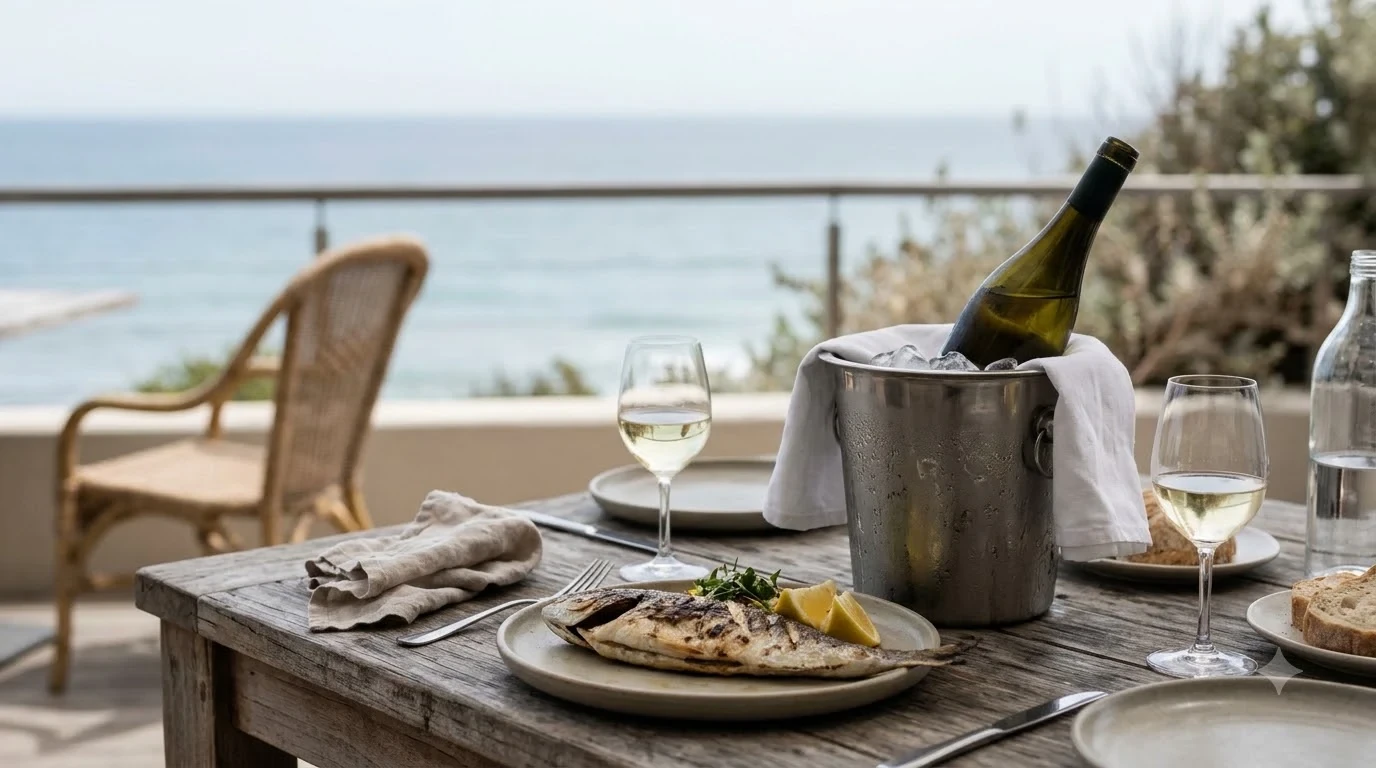
Choose an Antinori white by the weight and seasoning of the dish: brighter wines suit fresh seafood and vegetables, fuller Chardonnay blends suit richer poultry and sauces, and Muffato belongs with desserts or salty cheeses. Matching intensity is as important as matching grape variety.
Conte della Vipera and San Giovanni della Sala are natural partners for shellfish, grilled white fish, lemon-dressed salads, vegetable antipasti, and pasta with herbs. Their acidity can stand up to dishes with citrus, vinegar, or tomato better than a soft, low-acid white. A useful rule is to choose a wine with acidity equal to or higher than the food’s acidity; otherwise the wine can seem flat beside a sharp dressing or squeeze of lemon. Keep strong chili heat moderate, since alcohol can make spicy sensations feel hotter.
Cervaro and Bramìto can handle dishes with more fat or creamy texture. Try Cervaro with roast chicken, turkey, pork loin, grilled halibut with butter, or mushroom risotto. Bramìto can work with baked fish, scallops, chicken with herbs, or a mild cheese plate. Muffato calls for a different approach: serve it with fruit tarts, baked peaches, almond cake, or blue cheese. The wine should taste at least as sweet as the dessert; if the dessert is sweeter, the wine can taste sour or thin by comparison. Salt in blue cheese creates a useful contrast with sweetness.
Tip: Taste the dish before choosing the bottle. A lemon-heavy seafood plate needs a lively, high-acid white such as Conte della Vipera or San Giovanni; a creamy roast-chicken dish can support the fuller texture of Cervaro.
Serving Temperature and Storage Preserve the Detail
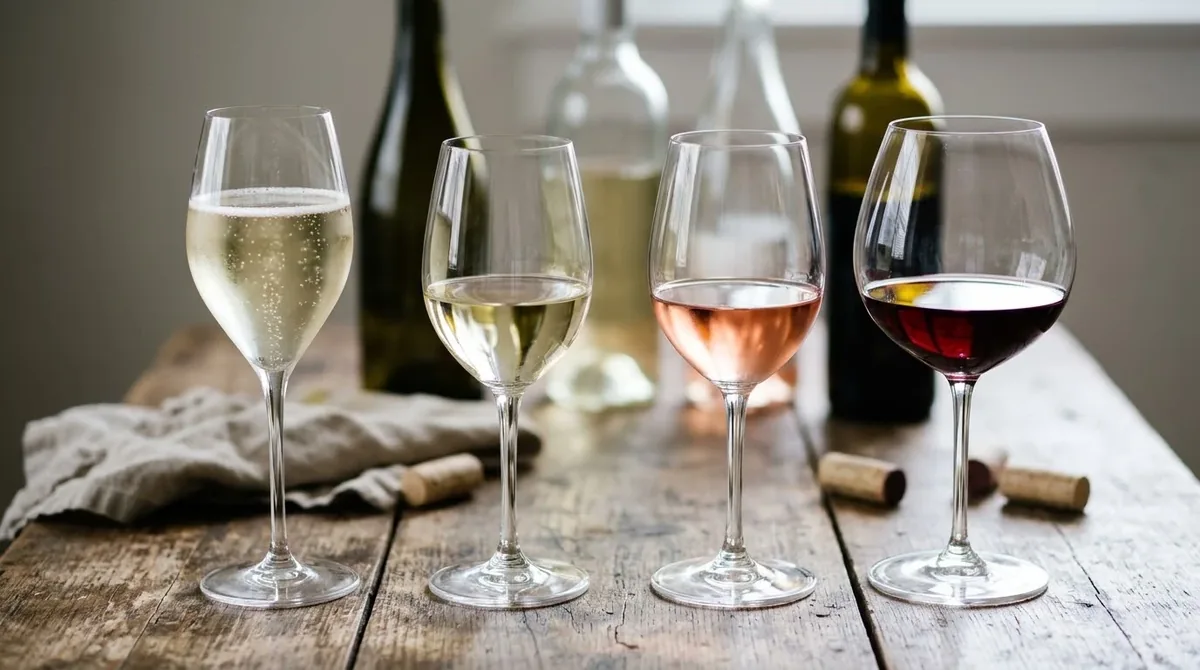
Serve each Antinori white at a temperature that suits its body and sweetness. Light, crisp whites are best around 45–50°F, fuller whites around 50–55°F, and sweet whites around 43–50°F.
For San Giovanni della Sala and Conte della Vipera, aim for 45–50°F so their citrus, floral notes, and freshness remain clear. Bramìto can also be served in that range, or toward 50°F if you prefer more aroma and texture. Cervaro is fuller and more layered, so 50–55°F allows its fruit, oak, and savory notes to show without becoming warm. Muffato is best around 43–50°F; chilling helps balance its sweetness, but serving it ice-cold can mute the fruit.
A standard 750-milliliter bottle gives about five 5-ounce glasses. For a seated dinner, that is a useful planning measure: one bottle serves five moderate pours, while a tasting of several wines calls for smaller portions. After opening, keep still white wine in the refrigerator and aim to finish it within three to five days. Close the bottle securely between pours to limit oxidation.
Store unopened bottles on their sides in a cool, dark place near 55°F, away from temperature swings, direct light, and vibration. A wine designed to age, such as Cervaro, still needs consistent storage conditions for bottle development to be worthwhile. Pour into clean white-wine glasses with room to swirl, especially for Cervaro, Bramìto, and Muffato, whose aromas benefit from a little air in the glass.
Choose the Bottle by Occasion and Drinking Style
For a first Antinori white, decide whether the meal calls for brightness, Chardonnay texture, or sweetness. San Giovanni, Bramìto, and Cervaro make three clear starting points, while Conte della Vipera and Muffato serve more specific occasions.
Choose San Giovanni della Sala when you want a fresh, food-friendly white with an Umbrian identity and a connection to Orvieto. It is a flexible table option for seafood, vegetables, simple pasta, and lighter poultry. Choose Conte della Vipera when you prefer a more aromatic white with Sauvignon Blanc character, especially for shellfish, herbs, and dishes that benefit from crisp acidity. Both are useful when the meal includes lemon or other high-acid ingredients.
Choose Bramìto if you want Chardonnay without moving all the way to the more layered Cervaro style. Its combination of stainless-steel and oak-fermented lots gives it more dimension than a simple unoaked wine, while keeping the focus on Chardonnay. Cervaro is the bottle for a special dinner, a richer sauce, or a meal where a fuller white can hold attention through the main dish. Its history and cellar treatment make it the most distinctive expression in the group.
Choose Muffato when the menu includes dessert or a salty cheese course. It is not a dry white and should not be selected as a general-purpose aperitif if guests are expecting a crisp wine. Antinori also produces whites elsewhere in its portfolio, including Villa Antinori Bianco, Villa Antinori Pinot Bianco, and Guado al Tasso Vermentino; these are separate wines from different estates, not alternate names for Cervaro. Read the full wine name and appellation before comparing bottles, and use the grape blend as the quickest clue to style. The guide to black box pinot grigio alcohol content explains why alcohol level is one detail to consider alongside grape and body, rather than a complete description of flavor.
Frequently Asked Questions
These quick answers cover details that often arise after the main styles are clear, including the estate’s history, label terminology, and the meaning of noble rot.
Is Castello della Sala a winery or a wine name?
Castello della Sala is the Antinori estate near Orvieto, not the name of one specific wine. The medieval castle dates to 1350 and lends its name to several labels, including Cervaro, Bramìto, and Muffato.
What does IGT mean on an Antinori white label?
IGT stands for Indicazione Geografica Tipica, an Italian geographical designation for wines from a defined area that do not use the narrower DOC or DOCG categories. Four Castello della Sala labels carry Umbria IGT, while San Giovanni della Sala is labeled Orvieto Classico Superiore.
Does Antinori make a white wine without Chardonnay?
Yes. Conte della Vipera uses Sauvignon Blanc and Sémillon, and its label depicts the estate’s 13th-century Saint John’s Chapel as a tribute to Castello della Sala’s first proprietors.
What is noble rot in Muffato della Sala?
Noble rot is the beneficial form of Botrytis cinerea, which can develop when damp mornings are followed by drier weather. It changes ripe berries and concentrates their sugars and aromas, as it does in sweet wines from Sauternes in France.
Can Cervaro della Sala be aged?
Yes. Antinori created Cervaro as a white wine that could evolve in bottle, but the ideal drinking window varies by vintage and storage history. Older bottles should be evaluated individually rather than assigned one universal age limit.
Antinori’s white wines offer a practical range, from crisp regional blends to barrel-fermented Chardonnay and concentrated sweet wine. Start with San Giovanni for freshness, Bramìto for Chardonnay character, or Cervaro for depth; keep Muffato in mind when the occasion calls for dessert wine.
More in Wine Brands
 Underwood Wine Price: Compare Bottles, Cans, and Pack SizesUpdated Nov 21, 2026
 Zenato Wine Price: Compare Styles and Choose the Right BottleUpdated Nov 21, 2026
 Zuccardi Wine Price: Compare Bottles and Find the Right RangeUpdated Nov 21, 2026
 Yellow Tail Moscato Review: Taste, Sweetness and Serving TipsUpdated Nov 21, 2026
 Wolf Blass Yellow Label Review: Choose Your Best StyleUpdated Nov 21, 2026
 Wolffer Estate Rose Review: Choose the Right Bottle for Your TableUpdated Nov 21, 2026