

We may earn a commission when you buy through links on this page, at no extra cost to you. Learn more.
The andre champagne price typically ranges from about $7 to $10 for a standard 750 ml bottle in US retail stores. André Brut, Extra Dry, and Spumante are generally positioned as affordable California sparkling wines for casual celebrations, brunch, and cocktails. The final cost depends on the expression, retailer, location, and bottle availability, so comparing the style and size is just as important as comparing the shelf price.
André has been producing accessible sparkling wine since 1966, and its lineup now includes traditional sparkling styles alongside fruit-forward options and ready-to-pour cocktails. Although shoppers commonly search for André Champagne, the brand’s bottles are California sparkling wines rather than Champagne produced in France. Understanding that distinction, knowing which expression you want, and checking the bottle size will help you judge whether a particular purchase represents reasonable value.
Who Should Buy André Sparkling Wine?
André is aimed at shoppers who want affordable bubbles for informal occasions rather than a premium Champagne experience. Its approachable flavor profiles, familiar bottle formats, and range of sweetness levels make it useful for brunches, casual parties, and mixed drinks.
The brand belongs to the California sparkling wine portfolio of E. & J. Gallo Winery. According to the producer, André dates back to 1966 and was originally developed to make sparkling wine accessible at an affordable price. That positioning remains central to its identity. Instead of concentrating on prestige cuvées or long-aged vintage releases, the brand focuses on everyday occasions and easy-to-enjoy styles.
For shoppers comparing everyday sparkling wine, André offers several different directions. Brut is suited to people who prefer a relatively dry, refreshing profile, while Extra Dry offers more noticeable fruit and sweetness. Spumante provides a sweeter alternative, and Blush appeals to people who enjoy red-fruit characteristics. These differences matter because a bottle’s sweetness can influence how well it works with food, desserts, or cocktail ingredients.
André can be particularly practical for gatherings where several bottles are needed. A standard 750 ml bottle provides approximately five conventional 5-ounce wine servings, although H-E-B describes its André Brut bottle as containing approximately six smaller glasses. For a gathering of 10 adults, two bottles may therefore provide approximately 10 standard servings, while three bottles allow a little additional flexibility.
However, shoppers seeking traditional French Champagne, complex yeast-derived aromas, or a bottle intended for a formal wine-focused occasion should compare other categories. The Champagne designation belongs to sparkling wine produced within the designated Champagne region of France. André is a different product category, even though some American product descriptions use the expression California Champagne.
Readers exploring the wider category can also browse our Wine Brands coverage to understand how different producers position their sparkling wines.
Key Factors That Determine André Champagne Price
The main factors affecting the cost are the particular André expression, bottle capacity, retailer, and local market. Comparing the same 750 ml format is the simplest way to establish whether two listings offer similar value.
For a practical US shopping estimate, André’s standard sparkling wine bottles generally fall around $7 to $10 per 750 ml bottle. H-E-B’s listing provides a retail example of $6.92 for André Brut, while Target lists standard André Brut, Extra Dry, and Spumante bottles around $7.99. Super 1 Foods lists André Brut and Extra Dry at approximately $8.98. These retailer examples support the broader approximate $7 to $10 range, although prices vary by state and retailer and can change with store availability.
The following comparison separates the major purchasing considerations. Prices are indicative retail ranges rather than guaranteed prices for every location.
| Buying consideration | Typical example | Why it matters |
|---|---|---|
| Standard bottle size | 750 ml | Provides approximately five standard 5 oz servings. |
| André Brut | About $7–$10 | A relatively dry, versatile sparkling option. |
| André Extra Dry | About $7–$10 | A fruitier, semi-dry alternative. |
| André Spumante | About $7–$10 | Suitable for shoppers who prefer sweeter bubbles. |
| Retailer comparison | 2–3 store listings | Helps identify differences in local shelf pricing. |
| Serving size | 5 oz | Provides a consistent way to estimate servings. |
Retailer examples also show why a single national price should not be assumed. H-E-B displays its own local pricing and explicitly notes that in-store, curbside, and delivery prices can differ. Target provides another useful comparison because its standard André bottles are listed together in the same retail category. Comparing those listings is more meaningful than relying on a price quoted for an unrelated bottle size or expression.
Another consideration is the difference between a sparkling wine and a sparkling wine cocktail. André’s core Brut, Extra Dry, and Spumante expressions should not automatically be compared with its premixed Peach Bellini or Pineapple Mimosa products. The latter are intended for a different drinking occasion and have a different product formulation.
For a fair comparison, identify the exact product name, confirm the 750 ml size, and look at the price displayed by the retailer serving your area. A similar-looking bottle is not necessarily the same style or product.
Tip: Compare André Brut with another 750 ml Brut sparkling wine, not with a flavored cocktail or a smaller bottle. Matching the style and size gives you a much more useful price comparison.
Step-by-Step: How to Find the Right André Bottle
Choosing André becomes easier when you follow a consistent buying process. Start with the occasion, establish your preferred sweetness, and then compare the standard bottle format across retailers.
-
Decide what the wine is for.
For a general toast, brunch, or an aperitif, start with André Brut or Extra Dry. For a sweeter after-dinner pour, consider Spumante. If you want a premixed drink rather than a traditional sparkling wine, look at the cocktail range instead.
-
Choose your sweetness preference.
Brut is the sensible starting point for shoppers who prefer a drier sparkling wine. Extra Dry is semi-dry despite the potentially confusing name, while Spumante is a sweeter choice. If the wine will accompany dessert, choose a style that is at least as sweet as the food.
-
Confirm the bottle size.
The standard format is 750 ml. That amount provides approximately five 5-ounce servings. Smaller bottles can be useful for individual occasions, but comparing their total price directly with a full-size bottle can give a misleading impression.
-
Compare local retailers.
Check at least two or three available stores. H-E-B, Target, and other regional retailers provide useful examples of how André is distributed. Their listings can differ according to store location and fulfillment method.
-
Check the exact expression.
Make sure a Brut listing is not being confused with Extra Dry, Spumante, Blush, or a ready-to-drink cocktail. These products have different flavor profiles and may suit different occasions.
-
Plan the quantity.
For a gathering of 10 people, two standard bottles provide approximately 10 conventional 5-ounce pours. If André is the main drink rather than one option among several, additional bottles may be appropriate.
-
Arrange proper chilling and serving.
Place the bottle in the refrigerator before the occasion. Sparkling wine is generally served around 40–50 degrees Fahrenheit, which helps preserve its refreshing character and makes the bubbles more enjoyable.
This approach prevents shoppers from choosing a bottle simply because it has the lowest displayed price. The best purchase is the expression that fits the occasion, desired sweetness, and available budget.
André Sparkling Wine Types and Styles Explained
André’s core lineup includes Brut, Extra Dry, and Spumante, with additional expressions such as Blush and flavored sparkling cocktails. Their differences are primarily about sweetness, fruit character, and intended use.
André Brut
Brut is the logical starting point for shoppers who prefer a drier sparkling wine. H-E-B describes it as a dry blend of white grapes with refreshing pear and lemon notes. Total Wine also identifies green apple and sweet lemon characteristics in its description.
Its relatively restrained sweetness makes it versatile for casual celebrations and savory appetizers. Consider serving it with salty snacks, mild cheeses, or light seafood dishes. The acidity and bubbles can provide a refreshing contrast to richer foods.
According to H-E-B’s product information, André Brut contains 10.5% alcohol by volume in its standard 750 ml bottle. That makes the alcohol information particularly straightforward for shoppers comparing the core expressions.
André Extra Dry
Extra Dry is a useful choice for people who want a fruitier sparkling wine. The official André website describes it as semi-dry, with pear and apple aromas and enough sweetness to make it suitable for mixing. Shoppers can find the producer’s description on the official André Extra Dry product page.
The terminology deserves attention. In sparkling wine classifications, Extra Dry is actually sweeter than Brut. Therefore, shoppers who assume that Extra Dry must be the driest option may end up buying a bottle that tastes sweeter than expected.
André Extra Dry works well for casual brunches and fruit-based cocktails. Apple juice, orange juice, and fresh fruit can complement its fruity profile without requiring elaborate preparation.
André Spumante
Spumante is the better direction for shoppers who enjoy sweeter sparkling wine. Total Wine describes André Spumante as a light, sweet California sparkling wine with lively bubbles and flavors of ripe pear, green apple, and honey.
Its sweetness can make it more suitable for fruit desserts and sweeter brunch dishes than a relatively dry Brut. It can also work as a simple celebratory pour for guests who prefer approachable fruit flavors over a crisp, dry finish.
André Blush and Fruit-Based Options
André Blush offers a different flavor direction, with Total Wine describing strawberry, watermelon, cherry, and citrus characteristics. Its pink appearance also makes it an alternative for occasions where shoppers want something different from a conventional pale sparkling wine.
The broader brand range includes flavored options such as Peach Bellini, Pineapple Mimosa, and other sparkling cocktails. These are useful when convenience and a recognizable fruit profile matter more than selecting a traditional Brut or Extra Dry wine.
For a more detailed look at the core expressions, our André Champagne coverage provides additional brand and product information. Shoppers comparing sweetness can also consult our guide to André Champagne alcohol content.
Common Mistakes When Comparing André Prices
The most frequent purchasing mistakes involve confusing product styles, misunderstanding the Champagne terminology, and comparing different bottle sizes. Avoiding these errors makes the advertised price much easier to interpret.
Assuming California Champagne Is French Champagne
André is a California sparkling wine brand, not a Champagne house from France. The Champagne designation is geographically protected and refers to wine produced in the Champagne region under its applicable production rules.
This distinction matters because production location, grape sourcing, and winemaking methods influence the character and market positioning of sparkling wine. André’s accessible retail positioning should be understood on its own terms rather than measured against the expectations attached to a traditional French Champagne bottle.
Confusing Brut and Extra Dry
Another common mistake is assuming Extra Dry means less sweet than Brut. The sparkling wine sweetness sequence runs from Brut Nature and Extra Brut through Brut, Extra Dry, Dry, Demi-Sec, and Doux.
Consequently, Brut is generally the drier choice between the two André expressions. Extra Dry has a more noticeable sweetness, which can be attractive for fruit-based drinks and brunch occasions.
Ignoring Bottle Capacity
A 375 ml half bottle contains half the wine of a standard 750 ml bottle. A shopper who sees a lower total price on a smaller format should calculate the equivalent cost per milliliter before deciding which option provides better value.
The same principle applies when comparing bottles with premixed cocktails or cans. The container and product category need to match before the displayed prices become directly comparable.
Buying According to Price Alone
A lower-priced Brut is not automatically a better choice for someone who prefers sweet sparkling wine. Similarly, choosing Spumante for a meal centered on delicate savory dishes may produce a less balanced pairing than selecting a drier expression.
Think about the intended food, the guests’ sweetness preferences, and whether the wine will be served alone or mixed. A suitable bottle is more useful than one that simply has the lowest shelf price.
Expecting Every Retailer to Carry Every Style
Availability differs by store and region. One retailer may list André Brut and Extra Dry but have limited availability of Spumante or Blush. Another may offer premixed cocktails while carrying fewer traditional sparkling expressions.
For that reason, checking the exact product listing before traveling to a store is a sensible purchasing habit.
André Storage and Serving Tips
Good serving practices help preserve the freshness and carbonation of André sparkling wine. Keep unopened bottles cool, chill them before serving, and minimize the time an opened bottle spends exposed to air.
Chilling Before Serving
Serve sparkling wine at approximately 40–50 degrees Fahrenheit. Refrigerating an André bottle several hours before a gathering is a straightforward way to reach an appropriate serving temperature.
A chilled bottle is generally easier to enjoy because the cooler temperature helps retain its refreshing character. Avoid leaving it in direct sunlight or near a warm kitchen appliance while preparing food.
Choosing the Right Glass
André’s approachable style does not require expensive stemware. A standard wine glass, sparkling wine glass, or clean party cup can be suitable for casual occasions.
For a more conventional sparkling wine presentation, a flute can help display the bubbles. A slightly wider glass, however, can make the fruit aromas easier to appreciate, particularly with Extra Dry and Spumante.
Opening and Pouring
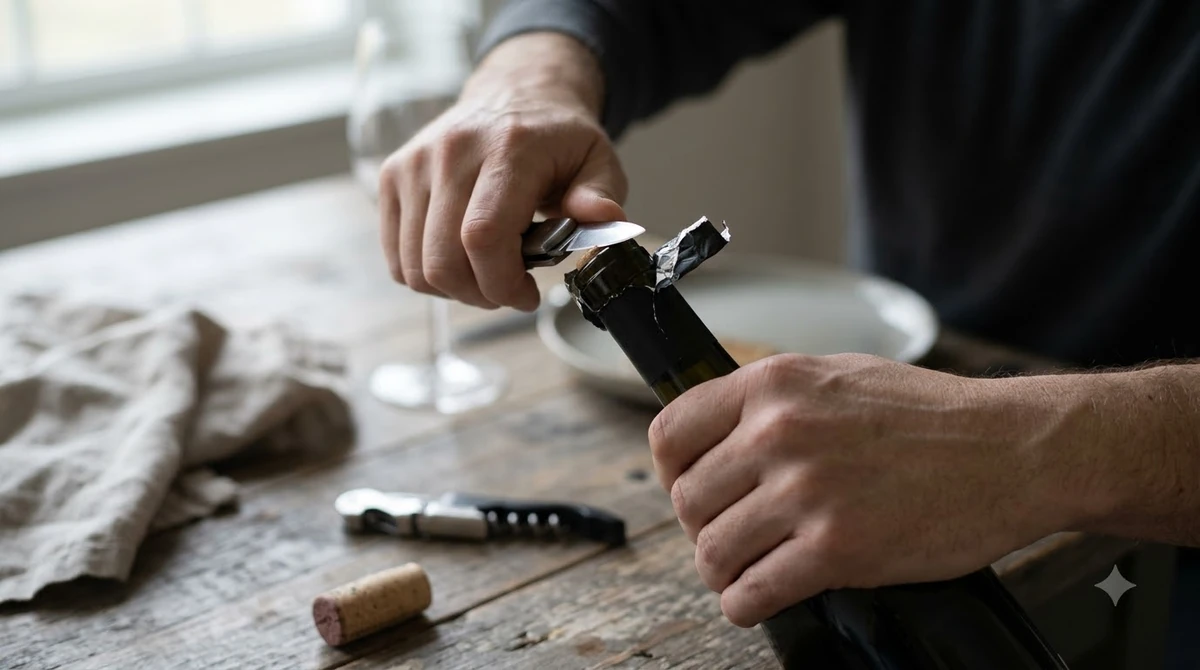
Handle sparkling wine carefully because pressure builds inside the sealed bottle. Keep the bottle pointed away from people, pets, and breakable objects while opening it. Hold the cork firmly and rotate the bottle slowly rather than forcing the closure out.
Pour gradually into the glass to limit excessive foaming. A conventional serving is approximately 5 ounces, and a standard 750 ml bottle provides roughly five such pours.
Storing an Opened Bottle
Once opened, sparkling wine loses carbonation progressively. Use a purpose-made sparkling wine stopper and return the bottle to the refrigerator promptly.
Opened sparkling wines are generally best consumed within one to three days, although the exact period depends on the wine, closure, and storage conditions. If the bubbles have faded substantially, the aroma has changed, or the wine no longer tastes fresh, its original serving character may be diminished.
For unopened bottles, a cool, dark storage location is preferable. A temperature near 55 degrees Fahrenheit is a useful general wine-storage target. Avoid repeated temperature changes and prolonged exposure to strong light.
Proper storage will not turn an inexpensive sparkling wine into a bottle designed for extended aging, but it can help preserve the freshness and carbonation that make André enjoyable.
Frequently Asked Questions
Is André Champagne made by Gallo?
Yes. André is included in the E. & J. Gallo Winery portfolio. Its brand history dates to 1966, when it was developed to offer an affordable sparkling wine option. The producer continues to position André around informal celebrations and accessible sparkling styles.
Is André Champagne made using the traditional Champagne method?
No. André’s standard California sparkling wine is associated with the Charmat method, in which secondary fermentation takes place in pressurized tanks before bottling. Traditional Champagne undergoes its second fermentation in the bottle. These production approaches create different styles and are an important distinction when comparing the wines.
Does André Champagne have a screw cap?
Some André packaging uses convenient twist-style closures rather than the traditional cork-and-wire arrangement. Packaging can differ between expressions and production runs. This convenience is particularly useful for informal occasions where opening equipment is not readily available.
Can André sparkling wine be used in a mimosa?
Yes. André Brut and Extra Dry can both be used as the sparkling wine component of a mimosa. For a less sweet result, choose Brut and combine it with chilled orange juice. Extra Dry provides a fruitier starting point for people who prefer a sweeter brunch cocktail.
How long can an unopened André bottle remain in storage?
Unopened André sparkling wine is generally intended for relatively early consumption rather than extended cellar aging. Store it away from direct sunlight and major temperature fluctuations. For the best fresh-fruit character and carbonation, buying a bottle closer to the intended occasion is a practical approach.
André offers an accessible way to buy California sparkling wine, with Brut, Extra Dry, Spumante, and fruit-based options covering different sweetness preferences. For most shoppers, an approximate $7 to $10 budget for a standard 750 ml bottle provides a useful starting point, with local retailer pricing determining the final cost. Compare the expression, bottle size, and serving occasion before purchasing, and choose the style that best matches the experience you want.
More in Wine Brands
 Underwood Wine Price: Compare Bottles, Cans, and Pack SizesUpdated Nov 21, 2026
 Zenato Wine Price: Compare Styles and Choose the Right BottleUpdated Nov 21, 2026
 Zuccardi Wine Price: Compare Bottles and Find the Right RangeUpdated Nov 21, 2026
 Yellow Tail Moscato Review: Taste, Sweetness and Serving TipsUpdated Nov 21, 2026
 Wolf Blass Yellow Label Review: Choose Your Best StyleUpdated Nov 21, 2026
 Wolffer Estate Rose Review: Choose the Right Bottle for Your TableUpdated Nov 21, 2026