


We may earn a commission when you buy through links on this page, at no extra cost to you. Learn more.
The pairing of pinot grigio with chicken is an excellent match for grilled, roasted, or herb-seasoned poultry when the dish stays light and bright. The wine’s crisp acidity, modest body, and citrus or orchard-fruit flavors complement chicken without covering up its mild taste. Choose a fresh Italian bottle for lemony preparations, or a fuller Pinot Gris or textured ramato style when the plate has cream, browned skin, or richer seasoning. The best match depends more on the sauce and cooking method than on the cut of chicken.
Chicken is one of the most flexible proteins at the table, and Pinot Grigio can be just as adaptable. A simple grilled breast with parsley calls for a different bottle than a golden roast with pan juices or a creamy mushroom skillet. Use the guide below to match the wine’s weight and acidity to the finished dish, then serve it cool enough to feel refreshing without muting its aromas.
Why Pinot Grigio Works With Chicken
Pinot Grigio pairs well with chicken because its freshness supports mild poultry rather than competing with it. A typical dry Italian example has light body, low tannin, and lively acidity, with flavors that often suggest lemon, green apple, pear, or melon.
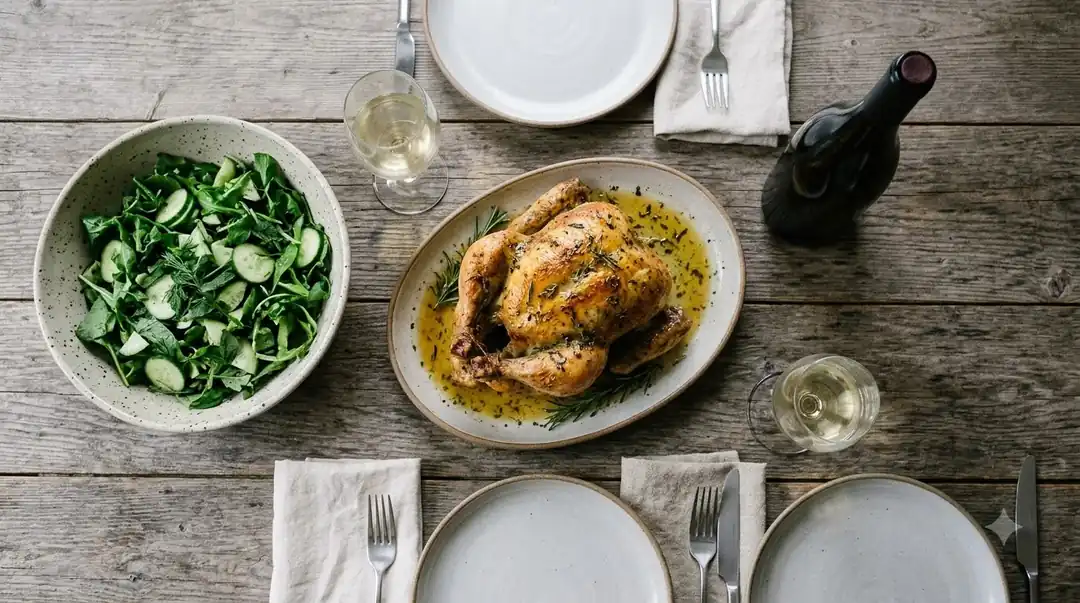
Chicken breast and thigh meat have gentle flavors that take on marinades, herbs, and cooking juices readily. Pinot Grigio adds contrast to olive oil, butter, and the natural savoriness of roasted skin, while its citrus notes echo lemon, capers, parsley, and other common seasonings. The wine’s low tannin also makes it less likely to create a drying sensation beside lean meat than a heavily structured red wine might.
Acidity is the key. A sip of crisp wine refreshes the palate after a bite of chicken brushed with oil or served with a light pan sauce. The match becomes especially convincing when the plate includes an acidic ingredient, such as lemon juice or a restrained vinaigrette, because a wine with equal or greater acidity will remain lively instead of seeming flat. For the same reason, a simple grilled chicken salad is often a more natural fit than a dish with very sweet glaze or a heavy, intensely spiced sauce.
The sauce and sides matter more than the cut alone. A lean breast with lemon and herbs favors a bright, light-bodied bottle, while a creamy pan sauce or crisp fried coating can call for more texture and concentration.
Best Chicken Preparations for Crisp Pinot Grigio
Fresh, unoaked Pinot Grigio is at its best with chicken that is grilled, quickly sautéed, poached, or served cool. Think chicken paillard, lemon-herb skewers, and a summer roast served with salad rather than a dense gravy.
Grilled chicken paillard is a particularly reliable choice because the meat is thin, cooks quickly, and often arrives with citrus, olive oil, and greens. A crisp wine from Veneto or Alto Adige brings lemon and green-fruit character that fits the seasoning, while enough acidity keeps the pairing from feeling heavy. Wine Enthusiast also highlights salad-topped grilled chicken paillard and herby, lemony chicken skewers as strong Pinot Grigio matches in its Pinot Grigio food-pairing advice.
For skewers, season chicken with lemon zest, garlic, oregano, thyme, or rosemary, then add zucchini, bell pepper, or red onion. A light char brings out savory notes without overwhelming the wine. Serve with couscous, grilled squash, or tomato-cucumber salad, and keep the dressing bright rather than sugary.
Simply roasted chicken can work too, particularly when the meat is served warm or at room temperature with a green salad, roasted potatoes, or vegetables dressed with olive oil. Choose a bottle with enough fruit and texture to stand beside browned skin, but stay with a crisp style if the seasoning is mostly garlic, lemon, and herbs. For a roast with rich pan gravy, sausage stuffing, or intense mushroom sauce, move to a fuller style described in the next section.
Creamy, Roasted, and Fried Chicken Need More Structure
Richer preparations need a Pinot Grigio with more concentration, texture, or skin contact. A fuller Pinot Gris from Alsace or Oregon, or an Italian ramato, is a better starting point for cream sauce, crisp skin, and more deeply browned flavors than a very light, neutral bottle.
Chicken with a modest cream sauce works best when lemon, white wine, mushrooms, or herbs keep the sauce savory rather than sweet. Acidity balances the richness, while a rounder palate gives the pairing enough presence. Fuller Pinot Gris suits chicken piccata finished with butter, creamy chicken and mushrooms, or a skillet dish with soft polenta. For a very rich sauce or heavy chicken pie, Chardonnay may offer more body.
Roast chicken with browned skin sits between the light and rich categories. Thyme, lemon, and garlic suit mineral Italian Pinot Grigio; butter, pan drippings, and roasted root vegetables call for more mid-palate weight. A wine that is too light may disappear, while overt sweetness or oak can make the poultry taste less fresh.
Fried chicken is a more challenging partner because the coating adds salt, crunch, and fat. A lively Pinot Grigio can refresh the palate alongside a lightly breaded cutlet or chicken Milanese, especially when lemon is squeezed over the top. For a large portion of heavily seasoned, spicy fried chicken, however, a high-acid sparkling wine often has more cleansing power; keep the Pinot Grigio for a lighter crust, a simple seasoning blend, and sides such as slaw or a lemon-dressed salad. Decanter’s chicken-pairing advice likewise emphasizes matching acidity and body to the preparation rather than relying on the meat alone.
Match Sauces, Seasonings, and Side Dishes
The sauce can change the pairing more than the chicken itself. Lemon, herbs, capers, and fresh vegetables favor brisk acidity, while cream, browned butter, mushrooms, and sweet glazes ask for more weight or a different wine style.
For lemon-butter chicken, choose an Italian Pinot Grigio with fresh acidity and a clean finish. The lemon in the food should not be sharply more acidic than the wine, or the wine may seem soft and dull. Keep citrus and vinegar measured, then use fresh zest and herbs for aroma. Chicken piccata with capers is another good option because salt and citrus give the dish definition.
Herb-driven dishes are easy to match. Parsley, thyme, basil, chives, oregano, and rosemary fit the grape’s restrained fruit and subtle floral notes. For pesto chicken, basil and garlic mirror the wine’s savory side; a little lemon ties the components together. Keep salad vinaigrette light, since a sweet balsamic dressing can make a dry wine seem sharper. Creamy sides such as risotto, mashed potatoes, and buttered noodles add weight, so a rounder Pinot Gris or ramato has a better chance than the leanest Pinot Grigio. Parmesan, olives, and feta can make a crisp wine feel more generous. A useful companion dish is pinot grigio with pasta, especially with light cream, pesto, or lemon sauce.
Sweet barbecue sauce, honey glaze, and fruit chutney require caution. A very dry wine beside a strongly sweet sauce can taste tart and thin, so reduce the glaze’s sugar or choose a fruitier Pinot Gris. Chili heat can also feel stronger alongside alcohol; for very spicy chicken, an off-dry Riesling is often a safer alternative.
Choose a Pinot Grigio Style and Region
Start with northeastern Italy for the classic crisp style, then look to Alsace, Oregon, or ramato when the chicken dish has more richness. Pinot Grigio and Pinot Gris are names for the same grape, but regional climate and winemaking can produce noticeably different wines.
Italian Pinot Grigio from Veneto is commonly fresh, easygoing, and fruit-forward, making it a natural match for grilled chicken, light roast poultry, and lemon-herb salads. Alto Adige, farther north in the alpine foothills, is associated with clear citrus character and bright acidity. Friuli-Venezia Giulia offers a broader range, from youthful wines to more textured bottles. A Decanter panel tasting of 61 northern Italian examples described Veneto wines as fresh and accessible, Alto Adige wines as zesty and precise, and Friuli as particularly diverse.
Alsace Pinot Gris often has more body and ripe-fruit richness than the lean Italian style, and it may be dry or somewhat off-dry. Oregon Pinot Gris can also show a rounder texture with ripe pear or peach. These fuller styles suit roast chicken, creamy mushrooms, or savory chicken and rice, but sweetness needs consideration: a sweeter wine is more comfortable with a dish that has some sweetness of its own than with sharply acidic lemon sauce. Ramato is a copper-colored, skin-contact Pinot Grigio; extended contact with the grape’s gray-pink skins adds color, texture, spice, and savory depth.
Ramato can bridge crisp white wine and light orange wine, making it an option for chicken thighs, roasted eggplant, paprika, or grilled vegetables. For a red-wine comparison, see pinot noir with chicken; Pinot Noir brings red-fruit character and low-to-medium tannin rather than Pinot Grigio’s crisp white-fruit profile. For grilled breast with lemon, look for words such as fresh, crisp, mineral, or unoaked. For roast thighs with cream and mushrooms, consider a fuller Pinot Gris or ramato with more texture. The grape name is a starting point, not a guarantee of identical flavor from bottle to bottle.
Serving Temperature, Portions, and Cooking Tips
Serve light Pinot Grigio at 45–50°F so its acidity feels refreshing while citrus, pear, and floral notes remain clear. A wine served ice-cold can seem muted, while a warm glass may make the alcohol and ripe fruit feel more obvious.
Chill the bottle in the refrigerator, then pour a small taste before dinner. If the wine seems muted, give it a few minutes in the glass; if it feels warm, return it to the refrigerator briefly. A standard 750-milliliter bottle yields about five 5-ounce pours. Use white-wine glasses with enough bowl space for aromas to gather, and pour modestly so the wine stays cool.
| Chicken preparation | Best Pinot Grigio style | Serving temperature | Helpful flavor cues |
|---|---|---|---|
| Grilled paillard or lemon-herb skewers | Crisp Italian Pinot Grigio | 45–50°F | Lemon, green apple, herbs |
| Simple roast chicken with salad | Fresh, mineral Pinot Grigio | 45–50°F | Parsley, thyme, olive oil |
| Creamy mushroom chicken | Fuller Pinot Gris or textured ramato | 50–55°F | Mushroom, butter, savory herbs |
| Chicken Milanese with lemon | Bright Pinot Grigio with good acidity | 45–50°F | Crisp coating, capers, citrus |
Pinot Grigio can also be used in the pan for a quick sauce. Add a modest splash after sautéing shallot or garlic, scrape up the browned bits, and let the wine reduce before adding broth, lemon, or a small amount of butter. This gives the sauce a savory wine note without leaving it watery. Use a dry bottle that tastes clean and fresh; avoid a sweet or strongly oaked wine because its flavors may become more pronounced as the liquid reduces.
Tip: Keep a little of the wine chilled while you cook, then taste the sauce before serving. If the sauce has become more acidic than the wine, soften it with a small amount of butter or broth rather than adding more lemon.
Opened Pinot Grigio should be sealed and stored in the refrigerator. It is generally best within three to five days, though the freshest citrus aromas are usually strongest soon after opening. If planning the meal ahead, prepare the chicken and sides first, then take the wine out just long enough to pour at the right temperature. For a different white-wine match with richer seafood or poultry-adjacent flavors, the pairing principles in pinot grigio with salmon offer a useful comparison.
Frequently Asked Questions
What kind of glass should I use for Pinot Grigio?
A standard white-wine glass is suitable. A bowl that is slightly wider with a narrower opening helps collect the wine’s aromas while keeping the pour easy to sip. You do not need a special varietal glass to enjoy it with chicken.
Can Pinot Grigio go into a chicken marinade?
Yes, a dry, unoaked wine can be used in a marinade with olive oil, garlic, herbs, and a little citrus. Keep the wine as one component rather than the entire liquid, and refrigerate the chicken while it marinates. Discard marinade that has contacted raw poultry unless it is thoroughly cooked before serving.
Should Pinot Grigio be decanted before serving?
Usually not. Most crisp, youthful examples are ready to drink after opening, and a few minutes in a glass is enough to release their aromas. A more structured ramato or mature Pinot Gris may benefit from a short period of air, but prolonged decanting is rarely necessary.
Can Pinot Grigio work with chicken soup?
Yes, a clear chicken broth with carrots, celery, parsley, and noodles is light enough for a crisp Italian style. A thick cream-based soup needs a fuller Pinot Gris because its texture is closer to a main-course sauce. Skip heavily sweet garnishes, which can make a dry white seem austere.
Can I serve Pinot Grigio with leftover chicken?
Yes, especially when the leftovers are served cold in a salad, sandwich, or grain bowl with herbs and a light dressing. Avoid pairing a delicate wine with heavily smoked or very sweet barbecue leftovers, which can dominate its subtle fruit. A fresh squeeze of lemon and crunchy greens help restore balance.
Pinot Grigio is a dependable choice for chicken when the wine’s weight matches the seasoning and sauce. Choose a crisp Italian bottle for grilled or lemon-herb poultry, and move toward fuller Pinot Gris or ramato for richer roast and cream-based dishes. Serve it cool, keep the flavors balanced, and let the preparation—not just the protein—determine the bottle.
More in Food & Wine Pairing
 Risotto With White Wine Recipe: Make a Creamy Dinner at HomeUpdated Nov 20, 2026
 Wassail With Wine Recipe for a Festive Spiced Holiday DrinkUpdated Nov 20, 2026
 Spritz Veneziano Recipe: Make a Classic Venetian Aperitivo at HomeUpdated Nov 20, 2026
 Summer Wine Punch Recipe for Easy Homemade EntertainingUpdated Nov 20, 2026
 Bishop Recipe: How to Make a Bright, Citrus-Forward Red Wine CocktailUpdated Nov 20, 2026
 Wine Cupcakes Recipe: Bake Rich Chocolate Cupcakes at HomeUpdated Nov 20, 2026