

We may earn a commission when you buy through links on this page, at no extra cost to you. Learn more.
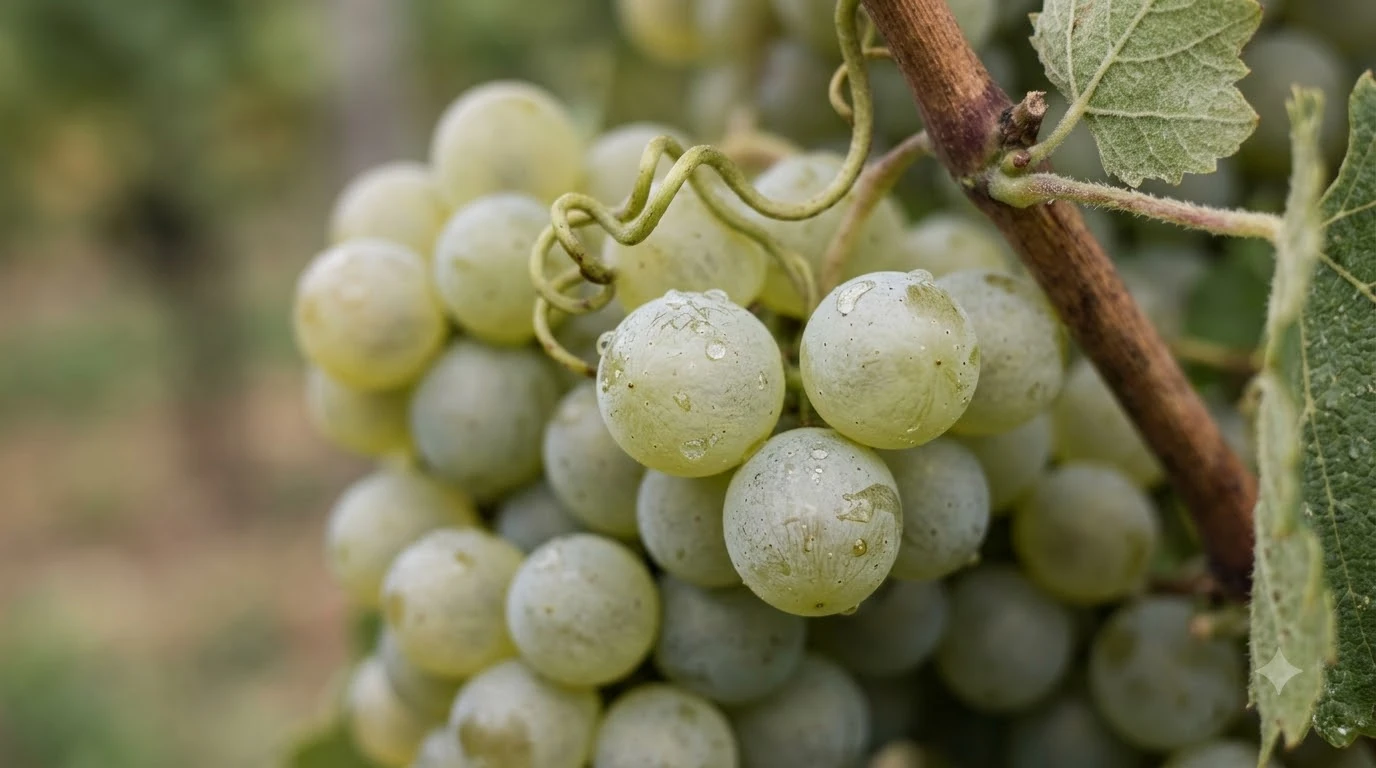
The parellada grape is a white Spanish variety best known as one of the three traditional grapes in Cava, where it contributes finesse, floral character, and a smooth, light impression. It also appears in still white wines from Catalonia, especially Penedès and neighbouring appellations. Its early budding and very late ripening make vineyard site important, and the best-known examples often come from higher, cooler vineyards.
Parellada is easy to overlook because it is frequently blended rather than named on the front label. Yet its contribution helps explain why classic Cava can feel delicate and aromatic beside the firmer structure of Xarel·lo or the rounded fruit of Macabeo. Understanding the grape’s growing cycle, flavor profile, and role in a blend makes it easier to choose a bottle and serve it well.
Parellada Grape Identity and Its Place in Spanish Wine
Parellada is a white-berried wine grape from Spain, with its strongest identity in Catalonia and its most recognized use in traditional-method Cava. It is distinct from Macabeo and Xarel·lo, even though the three varieties are commonly grouped together in the region’s classic sparkling-wine blend.
The D.O. Cava describes Parellada as the third-most cultivated variety in its registered planting area and notes that it was cultivated in Spain as far back as the 14th century. Its account makes a useful distinction about origin: it traces the variety to Aragón while identifying it as native to Alto Penedès and associated with Conca de Barberà, Costers del Segre, and the northwestern part of D.O. Tarragona. That regional spread is why the grape is best understood as a Spanish variety with a particularly strong Catalan home, rather than as a grape confined to a single village.
In the classic Cava trio, each grape has a different job. Macabeo is often valued for fresh fruit and balance, Xarel·lo for structure and backbone, and Parellada for delicacy, finesse, and a more lifted aromatic feel. This is a useful shorthand, not a rigid recipe: producers decide the proportions according to vineyard conditions, the base wine they want, and the style they intend to age.
Parellada also matters outside sparkling wine. The D.O. Penedès lists it among its indigenous white varieties alongside Macabeu and Xarel·lo, and it is authorized for still white wines from the appellation. Readers comparing Spanish white grapes can also explore the Airén grape, a different variety with a much broader association with central Spain.
Growing Cycle, Altitude, and Key Regions
Parellada is a grape of contrasts: it begins its growing season early but ripens very late, and it can produce large crops. Its best-known Cava plantings are associated with higher parts of Penedès, where a longer, cooler growing period can help preserve aromatic detail and balance.
The D.O. Cava describes the vine as an early budder with large bunches of medium-sized berries and a very late harvest. High productivity can be an advantage for growers, but it also makes crop management important: where a vine carries more fruit than a site can ripen with concentration, the base wine may lack the definition a producer wants for a refined sparkling blend. Older vines and lower yields are among the factors Decanter identifies as ways of concentrating Parellada’s flavor. Altitude is another recurring theme. Jesi Llopart of Cava Llopart told Decanter that plantings at 300 meters and above can help achieve a balance between acidity and adequate fruit ripening. That figure is a producer’s practical observation, not a universal legal threshold; the essential point is that a cooler, higher-altitude site can give late-ripening fruit more time to develop while retaining freshness.
The wider Penedès landscape helps explain why one altitude figure cannot describe every vineyard. The appellation stretches between Barcelona and Tarragona, between the Mediterranean coast and the mountains, and its regulatory council identifies 10 distinct zones. It also notes that areas above 600 meters generally receive more frequent precipitation and show greater differences between daily maximum and minimum temperatures. Alto Penedès is central to Parellada’s identity, while Conca de Barberà, Costers del Segre, and northwestern Tarragona are also named growing areas.
Site matters because Parellada’s strengths are not automatic. Decanter reports that Gramona avoids the variety in its own area because the berries can retain water and acidity can be low there, while other producers, including Llopart and Mascaró, put more emphasis on it. These contrasting decisions do not mean one producer is right and another is wrong; they show that the grape’s performance depends on altitude, local climate, crop level, and the style of wine being made.
Flavor, Acidity, Body, and Aroma
Expect a light to medium-light white wine with an aromatic, elegant profile and moderate acidity, rather than the forceful structure of a high-acid Sauvignon Blanc. In a Cava blend, Parellada is usually the variety that brings delicacy and a smooth, lifted impression.
Descriptors associated with the grape include apple blossom, green apple, lemon peel, citrus, and a faint almond note; some descriptions also mention white pepper. These are tasting clues, not a checklist that every bottle must satisfy. The D.O. Cava describes Parellada as aromatic and capable of producing well-structured, fruity, elegant wines with moderate acidity. That moderate acidity helps explain its role in blending: it can soften the overall impression and add shape without making the wine feel sharply tart. In a cooler, higher-altitude site, the fruit may seem more vivid and the finish more refreshing; in a warmer or more water-retentive site, the wine may show less definition.
Lees aging can add another layer. Decanter reports that Parellada develops an orange-zest aroma as it ages on lees, a useful detail when comparing a fresh, youthful bottling with a more mature traditional-method Cava. Lees contact can also add texture and savory complexity, so the grape’s contribution is not limited to primary fruit. A still wine picked at a different maturity, a sparkling base wine, and a bottle aged for an extended period on its lees can each present a different balance of fruit, floral notes, texture, and savory character.
For a quick comparison, the proportions of Cava plantings provide context for how the variety sits beside its blending partners. The figures below are reported planting shares, not required percentages in a bottle or a formula for every Cava. They are a snapshot of vineyard plantings, not a recipe: producers may use a higher, lower, or zero proportion of Parellada according to their vineyards and preferred style.
| Grape variety | Share of Cava plantings in Decanter’s breakdown | Typical blending role |
|---|---|---|
| Macabeo | 35.3% | Fresh fruit, balance, and volume |
| Xarel·lo | 25.5% | Structure, body, and freshness |
| Parellada | 20.3% | Finesse, delicacy, and aromatic lift |
| Chardonnay | 8.7% | Additional fruit and aromatic range |
How Parellada Shapes Cava Blends
Parellada is one of the white varieties authorized for Cava, and its most familiar role is alongside Macabeo and Xarel·lo. It contributes a more delicate aromatic register to a wine whose character also depends on the base wine, the second fermentation, and time spent aging in the bottle.
Cava is made by the traditional method: the second fermentation takes place in the same bottle that is sold to the drinker. The three traditional local grapes became closely associated with this process because they were established in Penedès long before the region became widely known for bottle-fermented sparkling wine. D.O. Cava also authorizes other grapes, including Chardonnay and Subirat Parent among the white varieties, so Parellada is important but not compulsory in every bottle.
Its supporting role should not be mistaken for a lack of influence. A blend built around Xarel·lo may have plenty of structure, while Macabeo can contribute orchard-fruit character; Parellada can make the overall wine feel more graceful and aromatic. In a bottle with meaningful lees aging, its orange-zest character can become part of a more complex profile. Producers such as Llopart and Mascaró have chosen to put more emphasis on the variety, showing that it can be more than a background component when the site suits it.
Other producers take a different approach. Decanter quotes Gramona as explaining that, in its area, Parellada can have low acidity and large berries that retain water; the resulting base wine can be less suitable for long aging. The same article notes the grape’s relatively low potential alcohol in that local context, around 9% to 10%. That observation is tied to a specific producer’s site and decision, not a universal alcohol range for all Parellada wines. For readers who want to understand the broader styles that the grape can appear in, the Wine by Type overview helps distinguish still whites from traditional-method sparkling wines. The key distinction is that the grape supplies the raw material and flavor; the winemaking method is what turns a still base wine into sparkling Cava. For more vineyard context, see Decanter’s discussion of Cava’s three headline grapes.
Still Wines, Food Pairings, and Serving Temperature
Parellada is not limited to sparkling wine: it is also an authorized and indigenous white variety in D.O. Penedès. Regional Penedès whites range from youthful wines intended for early drinking to barrel-fermented or barrel-aged styles with a longer development window.
The D.O. Penedès says that most of its white wines are enjoyed in the year after bottling, when their sensory qualities are at their peak. It also notes that producers make barrel-fermented or barrel-aged whites that can develop over two to five years. Those are regional guidelines for Penedès white wines overall, not a guarantee that every Parellada bottling will improve for the same length of time. For a fresh, uncomplicated single-variety Parellada, the producer’s intended drinking window is a better guide than assuming that all white wines need cellar time. Food pairing is straightforward when the wine’s moderate acidity and delicate body are kept in mind. Good matches include steamed clams, grilled white fish, oysters, simple seafood, salads, eggs, and fresh or lightly cured cheeses; the D.O. Penedès specifically identifies fish and seafood prepared without sauces, oysters, eggs, cold dishes, and fresh or lightly cured cheeses as good partners for its white wines.
Keep strong flavors in proportion. A lemon-heavy dressing can make a moderate-acid white seem less lively, so use a wine with equal or higher acidity when the dish is notably tart. Rich cream sauces can overwhelm a light Parellada, while a little olive oil, herbs, or a restrained butter sauce is less likely to bury the wine. Salty snacks and fried seafood can work especially well with a sparkling Cava because the bubbles and freshness help refresh the palate. Serve sparkling Parellada Cava at 40–50°F, which keeps the bubbles lively while allowing its fruit and floral notes to show. A still, light-bodied Parellada is generally best around 45–50°F; a fuller white from the region can be served a little warmer, around 50–55°F. Very cold serving temperatures can mute the subtler aromas that make this grape distinctive.
Tip: Chill a bottle of Parellada Cava to about 45°F and pour a small first glass before serving food. If the wine seems too quiet, let it warm for a few minutes rather than serving it close to freezing.
Dry Parellada is not the best match for a dessert that is sweeter than the wine. Wine should be at least as sweet as the dessert, so a sweet wine in a different style, such as one made with the Brachetto grape, is a better direction for fruit tarts or berry desserts. For a savory meal, Parellada’s light frame makes it a flexible choice with simple seafood and vegetable dishes.
Choosing a Bottle, Cellaring, and Comparing Styles
The easiest way to buy Parellada is to decide first whether you want a still white or a sparkling Cava. Then look for a producer and a style that suit your preference for fresh fruit, floral detail, or more developed lees-aged character.
For Cava, the D.O. designation confirms the wine’s protected origin and production rules, but it does not tell you how much Parellada is in the blend. A producer may emphasize the classic trio, use Parellada as a smaller component, or choose a different permitted combination. The D.O. Cava’s authorized grape-variety overview is useful background on the range of white and red varieties allowed for the appellation. For a still wine, seek out bottles from Penedès or neighbouring Catalan regions and look for a Parellada varietal statement from the producer. Conca de Barberà is especially relevant for readers interested in inland, higher-altitude expressions, while Alto Penedès is central to the grape’s regional identity. A wine made from cooler, higher-altitude vineyards may show a more defined aromatic profile than fruit grown in a warmer site, although producer choices and the season also shape the result.
Age is not a simple quality ranking. A young still Parellada may offer the cleanest expression of its floral and citrus notes, while a traditional-method Cava can gain complexity from time on lees. In Decanter’s account, older vines and lower yields are associated with greater flavor concentration, and extended lees aging can bring an orange-zest nuance. Choose the style for the meal and the character you enjoy rather than assuming that older always means better. Keep unopened bottles away from sunlight, heat, and vibration; a steady cellar temperature near 55°F is a practical target, and bottles with cork closures are commonly stored on their sides. Once opened, keep still wine refrigerated and aim to finish it within three to five days. Sparkling Cava is usually best within one to three days when resealed with a sparkling-wine stopper and kept cold.
A standard 750 ml bottle provides about five 5 oz pours. If you are serving both a still Parellada and a Cava, offer the still wine with the first course and reserve the sparkling bottle for appetizers or seafood. That sequence lets the delicate still wine speak clearly before the extra fizz and lees-derived character of Cava take center stage. Readers comparing the different roles Spanish and European grapes play in wine can use the Dornfelder grape profile as a contrast: it is a red variety, while Parellada is a white grape with a lighter frame and a very different place at the table.
Frequently Asked Questions
These answers separate grape-specific details from broader regional rules, including the 15-month minimum for Clàssic Penedès and the appellation’s organic requirements. They can help clarify what a name or designation on a bottle does and does not tell you.
Is Parellada also known as Montònec?
Yes. Montònec is a recognized alternative name for Parellada in Catalan wine references. Seeing the synonym does not mean the bottle contains a different grape variety; it points to the same white cultivar.
How long must Clàssic Penedès age before release?
The D.O. Penedès rules state that Clàssic Penedès sparkling wines must remain in the cellar for at least 15 months. The appellation treats that minimum as Reserva-level aging, so the requirement applies to the regional sparkling category rather than to every still Parellada wine.
Who decides whether a wine qualifies for D.O. Penedès?
The D.O. Penedès inspectors carry out a qualification process and analyze samples from the winery’s wine batches. This is an appellation control, not simply a decision made by the producer using the regional grape names.
When did Clàssic Penedès become a named sparkling-wine category?
The D.O. Penedès says the wines received the Clàssic Penedès brand name in 2014, after additional producers had joined the appellation’s sparkling-wine activity. The category is defined around the region and its production requirements, not around Parellada alone.
Is Clàssic Penedès required to be organic?
Yes. The D.O. Penedès describes Clàssic Penedès as 100% organic and 100% Penedès in origin. Those requirements are tied to the appellation’s sparkling-wine category and should not be assumed to apply to every wine made from Parellada elsewhere.
Parellada rewards attention because its role is subtle but meaningful: it can bring floral lift and finesse to Cava, while also making fresh, graceful still whites in Catalonia. Start with a bottle from a suitable higher site, serve it cool rather than icy, and pair it with seafood or lightly seasoned dishes to let the grape’s delicate character remain clear. The most revealing first taste is often a well-made Cava that gives Parellada room to contribute rather than hiding it under too much weight or sweetness.
More in Wine Types & Grapes
 Zinfandel Sugar Content: Dry Red vs. White Zinfandel GramsUpdated Nov 21, 2026
 Best Zinfandel Substitute Options for Sipping and CookingUpdated Nov 21, 2026
 Zweigelt Food Pairing: Best Dishes, Cheeses, and Serving TipsUpdated Nov 21, 2026
 Zinfandel Tannins Explained: How Structure Shapes Every BottleUpdated Nov 21, 2026
 Zinfandel Sweetness Level: Dry Red vs. Sweet White Zin ExplainedUpdated Nov 21, 2026
 Xinomavro Food Pairing: Best Dishes, Styles, and Serving TipsUpdated Nov 21, 2026