


We may earn a commission when you buy through links on this page, at no extra cost to you. Learn more.
Riesling carbs typically range from about 3 grams in a 5-ounce glass of dry Riesling to approximately 9 grams in an off-dry German Kabinett. Sweeter Rieslings can contain considerably more carbohydrates because they retain more natural grape sugar after fermentation. The exact amount depends on residual sugar, alcohol content, and winemaking style. Understanding the difference between dry, off-dry, and sweet Riesling makes it easier to estimate what is in your glass.
Riesling is one of the most versatile white wine grapes, producing everything from crisp, completely dry wines to concentrated dessert wines. That variety creates significant differences in carbohydrate content, even between two bottles carrying the same grape name. A dry Riesling from Alsace and a sweet late-harvest Riesling from Germany can have very different nutritional profiles. Here is how to compare their carbohydrates, understand wine labels, and estimate the amount in a standard serving.
How Many Carbs Are in Riesling?
A 5-ounce serving of dry Riesling generally contains approximately 3 grams of carbohydrates, while an off-dry example can contain around 9 grams. Sweeter bottles can contain substantially more, depending on their remaining grape sugar.
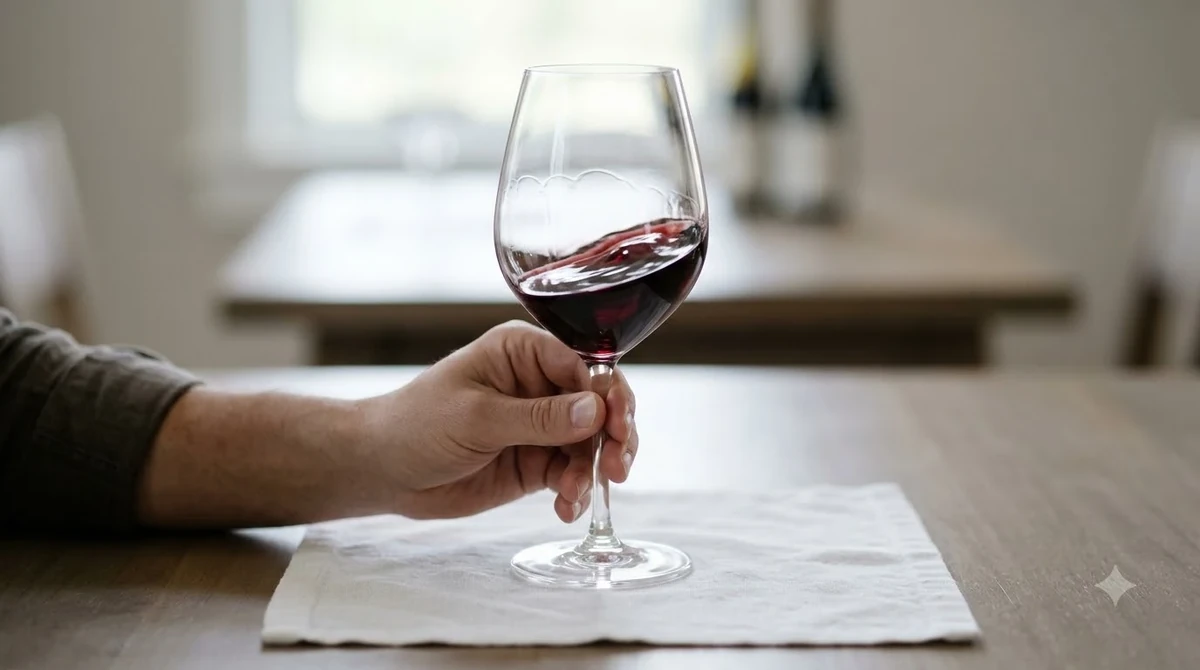
Riesling does not have a single carbohydrate value because the grape can be fermented into several different wine styles. During fermentation, yeast converts grape sugar into alcohol. When fermentation finishes with very little sugar remaining, the resulting wine is dry. When some of the original grape sugar remains, the finished wine has additional carbohydrates.
Wine.com’s nutrition comparison provides a useful reference point. Its typical 5-ounce dry white wine serving contains approximately 3 grams of carbohydrates and less than 1 gram of sugar. Its German Riesling Kabinett example contains approximately 9 grams of carbohydrates and 7 grams of sugar per serving.
These figures demonstrate why choosing a Riesling based solely on its grape variety does not provide enough information to estimate its nutritional content. The sweetness of the finished wine matters considerably more than the word Riesling on the front label.
For practical comparisons, the following estimates use a standard 5-ounce pour. They are approximate reference figures rather than guaranteed nutritional values for every bottle.
| Riesling style | Typical carbohydrates per 5 oz | General sweetness |
|---|---|---|
| Dry Riesling | About 3 g | Dry |
| Off-dry Riesling | About 6–9 g | Slightly sweet |
| Kabinett Riesling | About 9 g in the referenced example | Dry to off-dry or sweet |
| Medium-sweet Riesling | About 9–14 g | Noticeably sweet |
| Sweet Riesling | About 14–20 g or more | Sweet to very sweet |
The ranges for off-dry, medium-sweet, and sweet wines are illustrative estimates, not universal nutritional standards. Actual carbohydrate totals depend on the wine’s residual sugar and other components. A particularly concentrated dessert Riesling can exceed the upper end of these estimates.
Serving size also matters. A restaurant pour of 6 ounces contains 20% more wine than a standard 5-ounce serving. A 750-milliliter bottle holds approximately five standard glasses, so multiplying the per-glass estimate by five gives a useful approximation for the entire bottle.
How Residual Sugar Changes Riesling Carbohydrates
Residual sugar is the primary reason sweet Riesling contains more carbohydrates than dry Riesling. Measured in grams per liter, it describes the sugar left in the wine after fermentation rather than the original sugar concentration of the harvested grapes.
Riesling grapes naturally contain fermentable sugars, which yeast transforms into alcohol and carbon dioxide during winemaking. If fermentation continues until nearly all fermentable sugar has been consumed, the result is dry wine. If fermentation stops earlier or yeast activity naturally ends while sugar remains, the finished wine retains sweetness.
Residual sugar is especially useful because it provides a measurable way to compare sweetness. For example, a wine containing 5 grams of residual sugar per liter has less remaining sugar than one containing 40 grams per liter. The difference becomes noticeable when comparing their carbohydrate contributions in a glass.
A standard 5-ounce serving is approximately 0.148 liters. Multiplying residual sugar in grams per liter by 0.148 gives an estimate of the residual sugar in that serving.
| Residual sugar | Approximate sugar per 5 oz | General style |
|---|---|---|
| 4 g/L | 0.6 g | Dry |
| 9 g/L | 1.3 g | Dry or near the upper dry threshold |
| 18 g/L | 2.7 g | Off-dry |
| 30 g/L | 4.4 g | Medium-sweet |
| 45 g/L | 6.7 g | Sweetness threshold |
| 90 g/L | 13.3 g | Very sweet |
| 120 g/L | 17.8 g | Concentrated dessert wine |
These calculations estimate residual sugar, not total carbohydrates. Wine also contains small amounts of other carbohydrate compounds, and nutrition calculations can differ between producers. This explains why a bottle’s total carbohydrate estimate may not exactly match the number calculated from residual sugar alone.
It is also important to distinguish sugar from carbohydrates. Sugar is a type of carbohydrate, so the two figures are related, but they are not interchangeable. A wine containing 7 grams of sugar does not necessarily contain exactly 7 grams of total carbohydrates.
For readers comparing different white wines, the same principle applies to Moscato carbs. Moscato d’Asti is often sweeter and can have a higher carbohydrate total than a dry Riesling, although the exact comparison depends on the individual wines.
Dry, Off-Dry, and Sweet Riesling Compared
Riesling’s sweetness spectrum extends from bone-dry wines to intensely sweet dessert bottlings. Understanding the differences between these styles helps explain why carbohydrate estimates vary so widely.
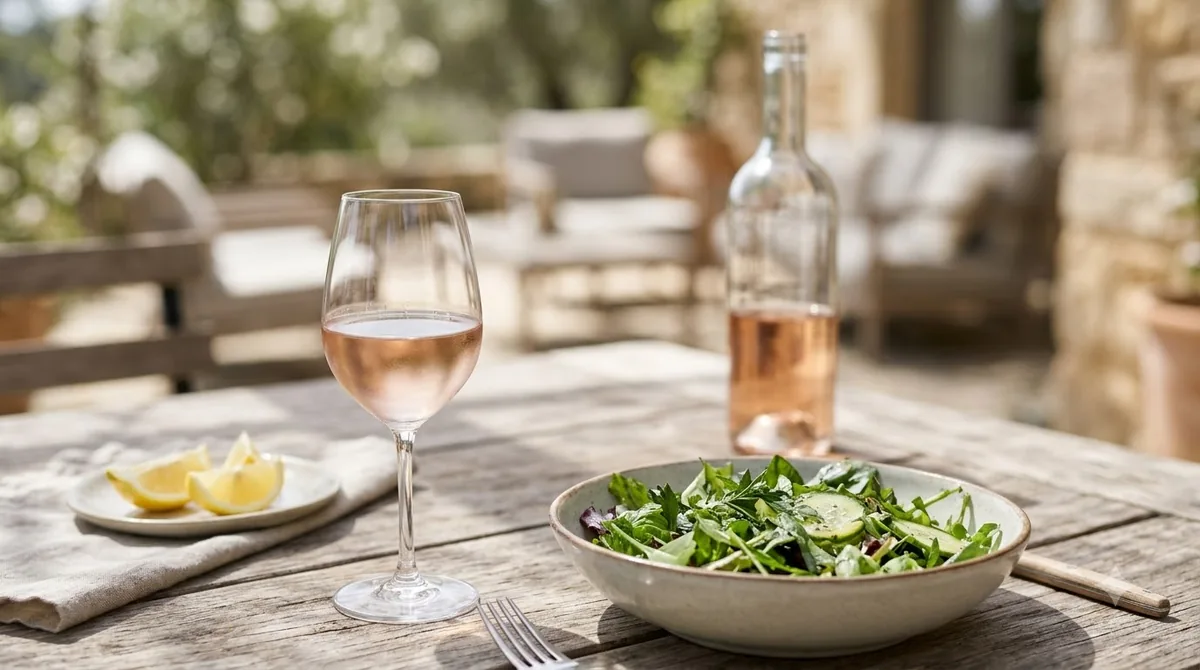
Dry Riesling: Dry Riesling has little residual sugar and typically provides the lowest carbohydrate estimates among conventional Riesling styles. German wines labeled trocken are a useful starting point. According to the commonly used German labeling convention, trocken generally indicates no more than 9 grams of residual sugar per liter, subject to acidity-related exceptions.
Dry Riesling is also produced in Alsace, Austria, Washington State, and New York’s Finger Lakes. These wines often feature citrus, green apple, mineral notes, and refreshing acidity. Their fruit aromas can make them seem sweet even when the actual residual sugar content is very low.
Off-dry Riesling: Off-dry wines retain more sugar than dry examples but maintain enough acidity to balance the sweetness. German terms such as halbtrocken and feinherb commonly indicate this style. Halbtrocken generally falls around 9–18 grams of residual sugar per liter under the commonly used high-acid Riesling thresholds, while feinherb is an unofficial term with less rigid boundaries.
Off-dry Riesling is particularly recognizable for its combination of ripe peach, citrus, and a slightly sweet finish. The referenced Wine.com Kabinett example illustrates the nutritional difference, with approximately 9 grams of carbohydrates and 7 grams of sugar in a 5-ounce serving.
Medium-sweet Riesling: Medium-sweet examples have a more noticeable sugar presence. German wines labeled lieblich are generally associated with residual sugar levels up to approximately 45 grams per liter. At this concentration, the wine’s sweetness becomes an important part of its overall character.
Sweet Riesling: Sweet Riesling has more residual sugar and consequently higher carbohydrate content. Bottles labeled süß or süss indicate sweet wine, generally above 45 grams of residual sugar per liter. Late-harvest bottlings, Beerenauslese, Trockenbeerenauslese, and Eiswein can reach considerably higher concentrations.
The distinction between these styles is useful when comparing wines in a restaurant or wine shop. A dry Riesling and a sweet Riesling might share the same grape, region, and producer, yet their remaining sugar can differ substantially.
Tip: Look for the word trocken when seeking a dry German Riesling. If the bottle says halbtrocken or feinherb, expect some sweetness. For a dessert-style wine, look for terms such as Beerenauslese, Trockenbeerenauslese, or Eiswein.
How to Read a Riesling Label for Sugar Content
German Riesling labels provide several useful clues about sweetness, but not every classification describes the finished wine’s sugar level. The most helpful distinction is between terms that describe sweetness and terms that describe grape ripeness at harvest.
Start with the following German sweetness terms:
- Trocken: Dry, generally up to 9 g/L of residual sugar under the applicable acidity conditions.
- Halbtrocken: Medium-dry or off-dry, commonly associated with approximately 9–18 g/L.
- Feinherb: An unofficial term generally associated with off-dry wines.
- Lieblich: Medium-sweet, generally reaching up to approximately 45 g/L.
- Süß or Süss: Sweet, generally above 45 g/L.
These terms are particularly useful when shopping for German Riesling because they provide a more direct indication of sweetness than the grape name alone. The Wine Folly explanation of German Riesling labels provides additional background on the classification system.
Prädikat terms require a different interpretation. They describe the ripeness and characteristics of grapes at harvest rather than guaranteeing a specific sweetness level in the finished wine.
Kabinett generally describes a lighter style made from relatively ripe grapes. Many Kabinett Rieslings are off-dry, but dry versions also exist. A bottle labeled Kabinett trocken is specifically a dry-style example.
Spätlese means late harvest. These grapes are harvested later than those used for Kabinett, generally producing more concentrated fruit. Spätlese often has more sweetness, but a Spätlese trocken can still be dry.
Auslese means selected harvest. The grapes are selected for their ripeness, and the resulting wine is often rich and sweet. However, dry Auslese wines are also possible.
Beerenauslese and Trockenbeerenauslese represent increasingly concentrated dessert-wine styles. Their grapes are exceptionally ripe, often affected by noble rot, and contain concentrated sugars.
Eiswein is made from grapes that freeze naturally on the vine. Pressing the frozen grapes concentrates their juice, creating a wine with pronounced sweetness and acidity.
For a broader understanding of different grape varieties and wine classifications, explore Wine by Type. Learning the distinction between grape varieties, harvest classifications, and sweetness descriptions makes nutritional comparisons more straightforward.
Does Alcohol Content Affect Riesling Carbs?
Alcohol content and carbohydrate content are related through fermentation, but they measure different things. Higher alcohol often indicates that more grape sugar was converted during fermentation, while lower alcohol can accompany a wine that retains more sugar.
During fermentation, yeast consumes fermentable sugar and produces alcohol. If a Riesling ferments until nearly all its sugar is consumed, it can finish with relatively high alcohol and little residual sugar. If fermentation stops while substantial sugar remains, the wine can finish with lower alcohol and a sweeter flavor.
This relationship explains why alcohol percentage can provide a useful clue when comparing Riesling bottles. Wine Enthusiast identifies wines at approximately 12% ABV or higher as typically dry, while examples below 11.5% ABV commonly exhibit sweetness.
However, alcohol percentage is not a substitute for an actual carbohydrate measurement. A naturally sweet wine can have a relatively low alcohol percentage because fermentation stopped before all the sugar was converted. A dry Riesling can also have moderate alcohol depending on grape ripeness, fermentation conditions, and regional climate.
Alcohol itself contributes calories, but it is not classified as a carbohydrate. Wine.com’s nutrition explanation estimates that each gram of alcohol contributes approximately 7 calories. Therefore, a dry Riesling can have few carbohydrates while still supplying calories from its alcohol content.
This is an important distinction when comparing the nutrition of different wines. Two bottles might have similar carbohydrate totals but different alcohol percentages, producing different overall calorie estimates.
For example, a dry white wine at 13% ABV can contain approximately 3 grams of carbohydrates in a 5-ounce serving. A sweeter Riesling Kabinett at 8.5% ABV can contain approximately 9 grams of carbohydrates in the same serving. The lower-alcohol wine is not necessarily the lower-carbohydrate option.
Winemaking decisions, grape ripeness, and fermentation conditions all contribute to these differences. Alcohol percentage is best used as one piece of information alongside sweetness terminology and residual sugar.
Riesling Serving Sizes and Bottle Carbohydrates
The amount of Riesling poured into a glass directly affects total carbohydrate intake from that serving. A standard 5-ounce pour provides a consistent comparison, while larger restaurant servings and full bottles require adjusted calculations.
A 750-milliliter bottle contains approximately 25.4 fluid ounces, or about five standard 5-ounce servings. Once you know the approximate carbohydrates per serving, multiplying by five provides a practical bottle estimate.
The following examples illustrate how serving size changes the estimated carbohydrate total. They use the dry white and German Kabinett nutrition figures from Wine.com as reference points.
| Serving size | Dry Riesling estimate | Kabinett example |
|---|---|---|
| 3 oz | 1.8 g | 5.4 g |
| 5 oz | 3 g | 9 g |
| 6 oz | 3.6 g | 10.8 g |
| 8 oz | 4.8 g | 14.4 g |
| 750 ml bottle | 15 g | 45 g |
These are proportional estimates based on the two reference servings, not laboratory measurements of every Riesling. The actual nutritional values of a particular bottle may differ.
Serving size can also be misleading when comparing wine at home with restaurant pours. A large wineglass might hold considerably more than 5 ounces, even if the glass is not completely full. An 8-ounce serving contains 60% more wine than a standard 5-ounce serving.
When estimating the total for a dinner or gathering, consider the number of glasses and the sweetness of the wine. Five standard glasses from a dry bottle and five standard glasses from an off-dry bottle can have significantly different carbohydrate totals.
Riesling is also sometimes served in smaller dessert-wine portions. A 3-ounce serving of a concentrated sweet Riesling contains less total wine than a 5-ounce pour, although its carbohydrate concentration can still be considerably higher.
For the most accurate comparison, use the same serving size for each wine. This makes it easier to compare dry Riesling with other white wines, as well as with red varieties such as those discussed in our guide to dry red wine carbs.
Frequently Asked Questions
Is Riesling naturally higher in sugar than other white grapes?
No. Riesling grapes do not automatically produce sweeter finished wine than Chardonnay or Sauvignon Blanc. The winemaker’s fermentation choices determine how much sugar remains. Riesling’s reputation for sweetness comes partly from the popularity of off-dry and sweet examples, rather than an unavoidable characteristic of the grape.
Can a Riesling labeled Kabinett be completely dry?
Yes. Kabinett describes a German Prädikat classification associated with grape ripeness at harvest, not a fixed finished-wine sweetness level. A bottle labeled Kabinett trocken is a dry expression. The same general distinction applies to Spätlese trocken, which can also produce dry wine.
Does sparkling Riesling contain the same carbohydrates as still Riesling?
Not necessarily. Sparkling Riesling can be produced at different sweetness levels, and the dosage added during traditional-method production can contribute additional sugar. The amount also depends on the base wine and its residual sugar before bottling. Brut and sweeter sparkling styles therefore should not automatically be assigned the same nutritional estimate.
Why can a dry Riesling taste like ripe peaches or honey?
Fruit aromas and flavor perceptions do not always indicate actual residual sugar. Riesling naturally develops expressive aromas of peach, apricot, citrus, apple, and flowers. Even a dry wine with very little remaining sugar can seem ripe and sweet because of its aromatic profile and fruit character.
Does Riesling age differently from other white wines?
Many quality Rieslings can age for a surprisingly long time because their naturally high acidity provides structure. Wine Enthusiast explains that mature examples can develop notes of dried fruit, honey, caramel, candlewax, and earth. Some well-made bottles from Germany, Austria, and Alsace can evolve over decades rather than being intended exclusively for immediate consumption.
Riesling carbohydrates depend primarily on the sweetness of the finished wine, making dry, off-dry, and dessert-style bottles very different nutritional choices. A 5-ounce dry Riesling serving provides a useful reference of approximately 3 grams of carbohydrates, while an off-dry Kabinett example can contain around 9 grams. Understanding residual sugar, German wine terminology, and serving sizes makes it easier to compare bottles and estimate the carbohydrates in your next glass.
More in Wine Types & Grapes
 Zinfandel Sugar Content: Dry Red vs. White Zinfandel GramsUpdated Nov 21, 2026
 Best Zinfandel Substitute Options for Sipping and CookingUpdated Nov 21, 2026
 Zweigelt Food Pairing: Best Dishes, Cheeses, and Serving TipsUpdated Nov 21, 2026
 Zinfandel Tannins Explained: How Structure Shapes Every BottleUpdated Nov 21, 2026
 Zinfandel Sweetness Level: Dry Red vs. Sweet White Zin ExplainedUpdated Nov 21, 2026
 Xinomavro Food Pairing: Best Dishes, Styles, and Serving TipsUpdated Nov 21, 2026