


We may earn a commission when you buy through links on this page, at no extra cost to you. Learn more.
To learn how to pronounce mirin, say “MIR-in” in standard American English, with the stress on the first syllable. The Japanese original is closer to “mee-ri-n,” with three evenly timed sound units and a light tap for the middle consonant. Both forms are useful: the first is the familiar English dictionary pronunciation, while the second better reflects the word’s Japanese rhythm.
Mirin often appears on menus, in teriyaki recipes, and on bottles beside soy sauce and sake. The name looks simple, but its vowels and final consonant can make English speakers hesitate. A quick sound guide helps you order it, discuss a recipe, and recognize the ingredient without confusing its English pronunciation with Japanese speech.
The Standard American Pronunciation of Mirin
In American English, mirin is usually pronounced MIR-in, with the first syllable carrying the stress. Cambridge records the US pronunciation as /ˈmɪr.ɪn/, which is two syllables: the first sounds like the vowel in “ship,” followed by an English r, and the second has the same short vowel.
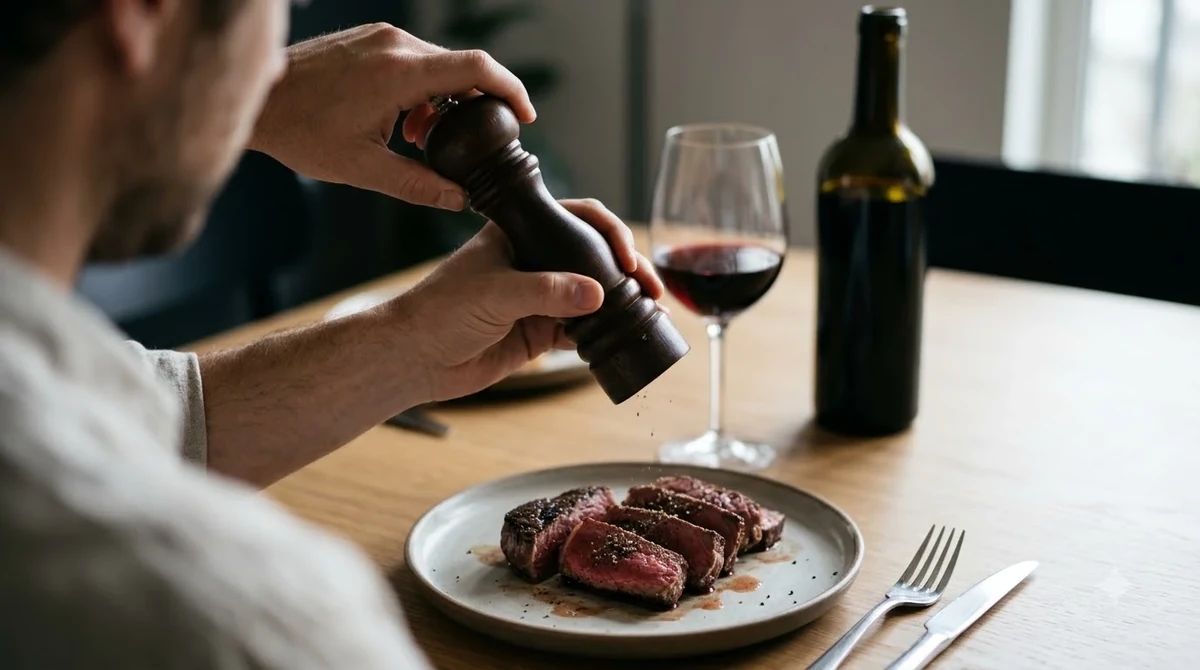
Say it as “MIR-in,” not “my-rin,” “my-reen,” or “muh-RIN.” Keep the first vowel short rather than turning it into the long “ee” sound in “meet.” The word begins with the same /m/ sound as “moon,” and the ending is a clear /in/ sequence, like the opening of “inside.” The stress should not move to the second syllable.
The pronunciation can be easier to remember when you listen for the two beats rather than read the letters one at a time. Start with “mir,” then add the brief “in” ending: MIR-in. Let the first beat stand out, but do not stretch its short vowel into a long “ee.” This is the most practical version for an American restaurant conversation or an English-language cooking class.
| Guide | American English | Japanese reading |
|---|---|---|
| Basic sound cue | MIR-in | mee-ri-n |
| Sound units | 2 syllables | 3 morae |
| First vowel | Short /ɪ/ | Short /i/ |
| Middle consonant | English r | Light tap, like a quick r/l sound |
| Rhythm | First syllable stressed | Units timed more evenly |
The table shows why a single spelling can lead to two slightly different sound patterns. The two-syllable version is the conventional English pronunciation; the three-part version is a practical guide to the Japanese reading. For a dictionary audio model, use Cambridge Dictionary’s US pronunciation entry, then compare it with the Japanese breakdown in the next section. At a restaurant, a best effort is enough: VinePair notes that guests can ask a server to say a drink name or point to the menu.
The Japanese Pronunciation Uses Three Sound Units
In Japanese, mirin is written みりん and read as mi-ri-n. It is commonly described as three morae, not as the two stressed syllables used in ordinary American English, so the sound is more evenly paced than “MIR-in.”
The first character, み, is “mi,” with a short vowel similar to the “ee” in “meet,” but without holding it for an extra beat. The second, り, is “ri.” Its consonant is a quick tongue tap, rather than the strong American English r made farther back in the mouth. The final ん is “n,” a nasal sound that closes the word.
A helpful approximation for English speakers is “mee-ree-n,” with each part given a compact, steady beat. Do not pronounce the middle as a full English “ree” with a long vowel, and do not add another vowel after the final n. The Japanese word ends on that nasal consonant. The result should feel light and compact, not like three separate English words.
The Japanese pronunciation does not mean an American speaker must avoid the common English form. In an English conversation, MIR-in is understood and is supported by US dictionary pronunciation. When speaking Japanese or aiming for the original sound, the three-mora rhythm and tapped middle consonant are more faithful. The Oishii Desu guide to Japanese food pronunciations also breaks mirin into み, り, and ん, with the sound cue “mee-r’een.”
Why the Spelling Can Mislead English Speakers
Mirin is written with five Roman letters, but those letters do not tell an English reader exactly how Japanese sounds are timed. The safest approach is to decide whether you are using the established English pronunciation or approximating the Japanese original, then keep the sounds consistent.
One source of confusion is the letter i. In English words, i can represent several different vowels, as it does in “ship,” “machine,” and “mine.” In the American dictionary pronunciation of mirin, both vowels use the short /ɪ/ sound. In Japanese, み has the short, clear /i/ vowel, closer to “ee,” but it is not stretched into a long sound.
The r creates another mismatch. American English usually forms /r/ with the tongue held back from the roof of the mouth. Japanese り uses a brief tap near the ridge behind the upper teeth. It is not the Spanish rolled rr, and it is not a long English r. For practice, say “ladder” in a quick, relaxed American voice and notice how the middle consonant can become a light tap; that is a closer physical cue than an exaggerated growled r.
English speakers already meet this kind of spelling challenge with borrowed food and wine words. The pronunciation notes for how to pronounce chardonnay and how to pronounce claret are useful reminders that familiar Roman letters can preserve a sound pattern from another language. Mirin follows the same principle, although its Japanese mora rhythm is distinct from the pronunciation conventions of French or English wine terms.
What Mirin Is and Why It Is Called Rice Wine
Mirin is a sweet Japanese rice-based seasoning used to add sweetness, depth, aroma, and gloss to food. It is often called Japanese sweet rice wine, but in most recipes it functions as a cooking ingredient rather than as a glass of table wine.
Traditional hon mirin is made with steamed glutinous rice, rice koji, and shochu or another brewing alcohol. Koji enzymes break down rice starch into sugars and help develop amino acids and other flavor compounds. Kikkoman’s mirin glossary describes slow saccharification and aging as central to hon mirin’s sweetness and umami; the process gives the liquid a rounded flavor rather than the simple sweetness of plain sugar syrup. A common reference figure for hon mirin’s alcohol content is about 14% ABV.
The term “rice wine” can be confusing because mirin and sake are not interchangeable products. Hon mirin is sweet and syrupy, while sake is generally less sweet and is made through a different fermentation process. Mirin’s natural sugars, aroma, and alcohol make it useful in sauces and cooked dishes, while sake is often used for its own flavor and as a cooking liquid. Kikkoman notes that hon mirin was enjoyed as a beverage around the Sengoku period, approximately the 16th century, before its use as a seasoning became established during the late Edo period in the 19th century. That history helps explain why the English phrase “sweet rice wine” persists even though most modern home cooks encounter mirin as a condiment.
Its role is easier to place alongside other pantry ingredients than alongside dry table wines. A bottle of mirin belongs with soy sauce, cooking sake, rice vinegar, and other seasonings. Readers exploring broader wine categories can use the site’s Wine by Type overview for wine terminology; mirin, by contrast, is best understood through its place in Japanese cooking.
How Mirin Changes the Flavor and Texture of Food
Mirin does more than sweeten a dish. Its sugars help create a glossy surface, its alcohol carries aroma into ingredients, and its combination of sweetness and umami rounds out savory sauces.
One familiar example is teriyaki. Mirin combines naturally with soy sauce to make a sweet-savory glaze that clings to chicken, salmon, or vegetables. Kikkoman suggests combining equal amounts of mirin and soy sauce as a simple starting point; a recipe may then add ginger, garlic, or another seasoning depending on the dish. As the sauce heats, the sugars help produce the shiny finish associated with a good glaze. Mirin also appears in simmered dishes, marinades, and braises, where it can soften strong odors in fish and seafood, contribute mellow flavor to meat or vegetables, and help ingredients retain their shape.
In a Japanese-style simmered dish, mirin is usually one part of a balanced seasoning group rather than the only source of sweetness. Soy sauce brings salt and savory depth, while dashi, sake, or other ingredients supply additional flavor. Use mirin with a light hand when adapting a recipe: a tablespoon can make a noticeable difference in a small pan of sauce, and a large pour may make the final dish sweeter than intended. Start with the amount specified, taste after the sauce has simmered, and adjust in small increments. If a recipe already contains sugar, honey, or another sweetener, consider whether the full amount is still needed. Mirin is not a substitute for every rice-based seasoning: sushi rice is usually seasoned with rice vinegar, sugar, and salt, not with mirin as the main acid. Vinegar supplies a bright acidity that mirin does not have, so the two products play different roles even though they may sit on the same grocery shelf. Serious Eats describes nanbansu as a Japanese sweet-sour sauce made with rice vinegar, mirin, soy sauce, and sugar; it works as a marinade and dipping sauce, and the sugars caramelize on grilled chicken.
Tip: For a quick teriyaki-style starting point, combine 1 tablespoon of mirin with 1 tablespoon of soy sauce, warm them together, and taste before adding more sweetener. The equal-parts ratio follows Kikkoman’s suggested balance; a specific recipe may need less salt or more aromatics.
Mirin Types, Alcohol Levels, and Storage
Not every bottle labeled mirin is made in the same way. The most useful distinction is between hon mirin, mirin-style cooking seasoning, and mirin-like seasoning, because their alcohol content, salt, and production methods can differ.
Hon mirin
Hon mirin means “true mirin” and is the traditional alcohol-based product. A common reference level is about 14% ABV, and one widely cited production method ages steamed glutinous rice with rice koji and shochu for roughly 40 to 60 days. It has a rounded sweetness, layered aroma, and texture suited to sauces, marinades, simmered dishes, and glazes.
Mirin-style and mirin-like seasonings
Mirin-style seasoning, often labeled aji-mirin, is formulated to provide a similar sweet flavor but may contain added salt and other ingredients. Just One Cookbook describes a common style with roughly 8% to 14% alcohol and about 2% salt, although products differ; because salt may already be part of the formulation, a recipe may need less soy sauce or added salt. Mirin-like products are designed to imitate mirin’s flavor and may contain less than 1% alcohol. Kikkoman describes its sweetened cooking seasoning as having an alcohol content below 1%. This type can be useful when a cook is choosing a lower-alcohol product, but it does not behave in exactly the same way as traditional hon mirin.
Storage and cooking considerations
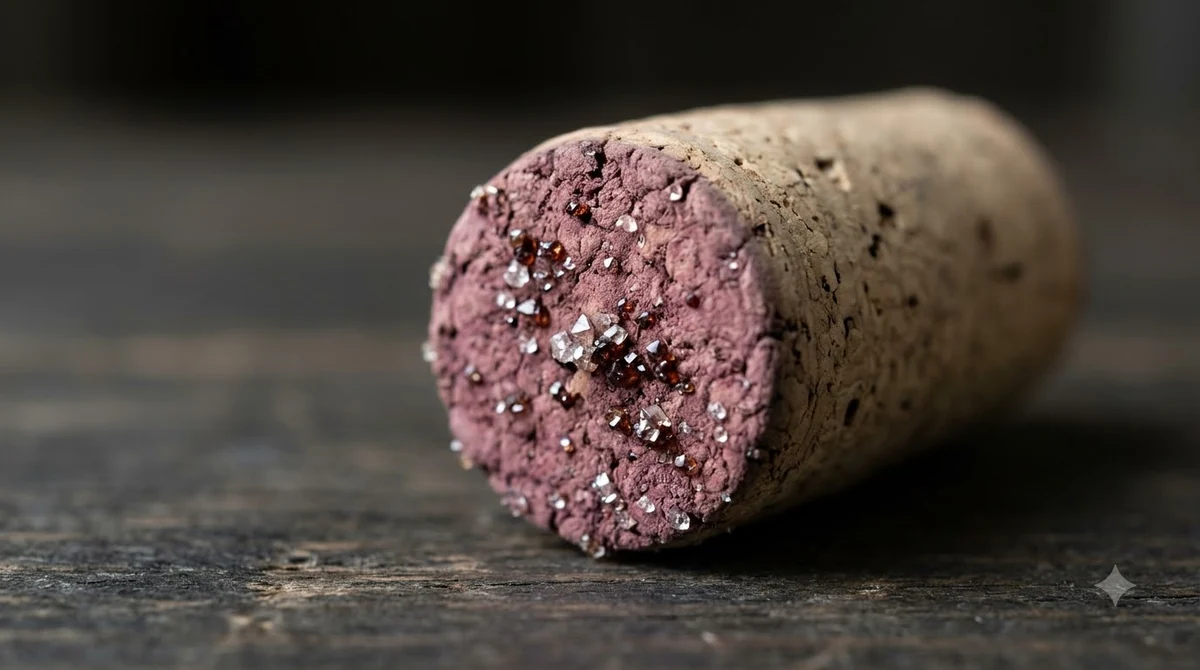
Storage depends on the type. Just One Cookbook recommends keeping hon mirin in a cool, dark place and notes that refrigeration can cause its sugar to crystallize; the crystals do not automatically make it unusable. It recommends refrigerating mirin-like condiments after opening and using them within about three months. Follow the maker’s storage directions for the particular bottle, because formulations are not identical. Alcohol content is also worth remembering even though mirin is usually heated: cooking reduces alcohol but does not guarantee that every trace disappears. Kikkoman notes that some alcohol can remain after heating, and the amount depends on the recipe and cooking method.
Frequently Asked Questions
How do you write mirin in Japanese?
The ingredient is commonly written in hiragana as みりん. It also has a kanji spelling, 味醂, and another variant, 味淋, appears in Japanese reference works. Hiragana is a straightforward form to recognize on Japanese ingredient lists and food packaging.
Is mirin the same as sake?
No. Both are rice-based Japanese products, but sake is brewed as an alcoholic beverage, while traditional hon mirin is made by allowing koji enzymes to convert rice starch into sugars in the presence of brewing alcohol. This difference helps explain why mirin is substantially sweeter and more syrupy than sake.
Is mirin the same as rice vinegar?
No. Mirin is sweet and used to round out savory flavors, while rice vinegar is acidic and adds a sharper taste. For standard seasoned sushi rice, rice vinegar is combined with sugar and salt; mirin does not provide the same level of acidity.
What does aji mean in aji-mirin?
Aji means “taste” or “flavor,” so aji-mirin can be understood as a mirin-flavored cooking seasoning. The name signals a style of product rather than guaranteeing that it is traditionally brewed hon mirin. Its ingredient list can include added salt or sweeteners.
Can sake and sugar replace mirin in a recipe?
They can serve as a practical substitute when mirin is unavailable, although the result will not have quite the same depth. One suggested starting ratio is 3 parts sake to 1 part sugar by volume; mix it before adding it to the pan so the sugar can dissolve. Adjust the sweetness to suit the sauce or marinade.
For everyday American English, “MIR-in” is the clearest pronunciation to use; for the Japanese original, think “mee-ri-n” with three even beats and a light tap in the middle. Once the sound is familiar, the word becomes easier to recognize on menus and in recipes—and its role as a sweet, savory cooking seasoning is easier to understand.
More in Wine Types & Grapes
 Zinfandel Sugar Content: Dry Red vs. White Zinfandel GramsUpdated Nov 21, 2026
 Best Zinfandel Substitute Options for Sipping and CookingUpdated Nov 21, 2026
 Zweigelt Food Pairing: Best Dishes, Cheeses, and Serving TipsUpdated Nov 21, 2026
 Zinfandel Tannins Explained: How Structure Shapes Every BottleUpdated Nov 21, 2026
 Zinfandel Sweetness Level: Dry Red vs. Sweet White Zin ExplainedUpdated Nov 21, 2026
 Xinomavro Food Pairing: Best Dishes, Styles, and Serving TipsUpdated Nov 21, 2026