


We may earn a commission when you buy through links on this page, at no extra cost to you. Learn more.
For barbera tasting notes, expect vivid cherry, plum, and berry flavors, brisk acidity, and usually softer tannins than many other Italian reds. The wine is typically dry and ruby-colored, with a medium body that can feel juicy rather than heavy. Oak aging, vineyard site, and bottle age can add spice, deeper fruit, and a firmer texture without erasing Barbera’s lively freshness.
Barbera is one of Piedmont’s signature red grapes, but it is not a single fixed style. Compare a young Barbera d’Asti with a concentrated Nizza or savory Barbera d’Alba to see how soil, climate, and cellar choices shape the same grape. A useful note separates varietal character from the effects of ripeness and aging.
What Barbera Tastes Like
Barbera usually opens with bright red and dark fruit, led by sour cherry, ripe cherry, plum, raspberry, and blackberry. Its acidity is a defining feature, while its tannins are commonly low to moderate, giving the wine a smooth, energetic feel rather than a drying grip.
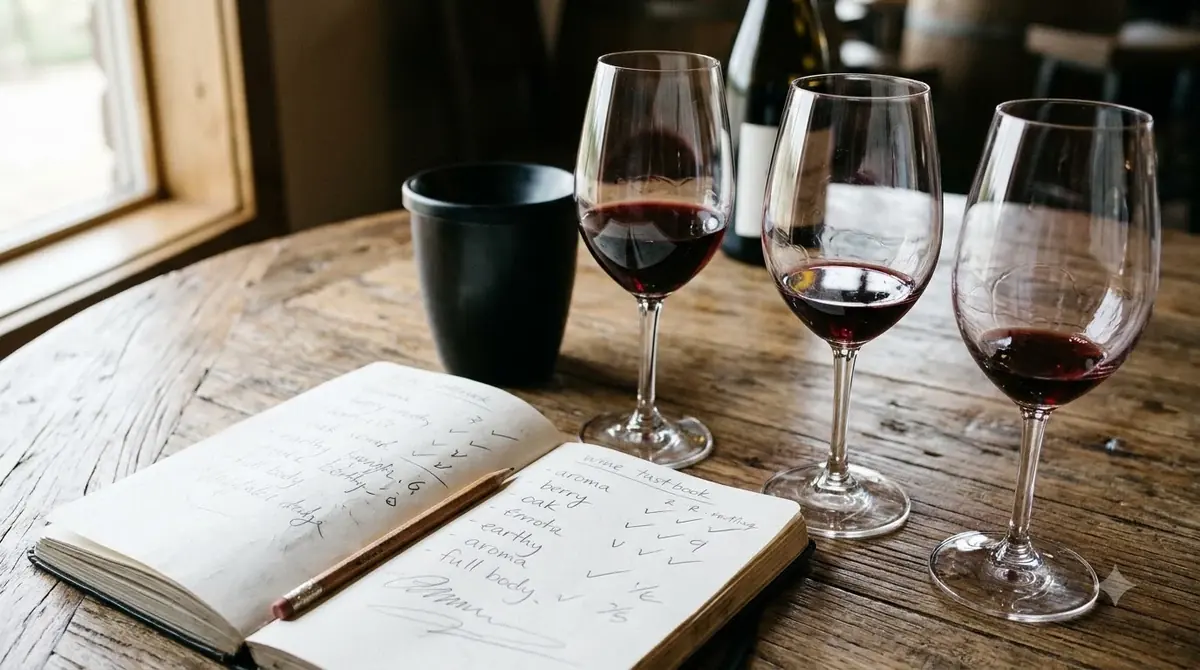
In a young, unoaked example, look first for tart cherry and red plum, sometimes joined by strawberry, raspberry, violet, or black pepper. The color may be deep ruby or nearly purple, suggesting more weight than the palate delivers. A sip often feels fresh and mouthwatering, with fruit carried by clear acidity.
Riper fruit can move the profile toward black cherry, blackberry, plum preserve, and a rounder impression. That does not mean the wine is sweet: Barbera is generally dry, though ripe aromas can seem sweet. The Barbera d’Asti consortium describes fruit ranging from crisp to ripe cherry, blackberry, raspberry, and plum, with jammy and preserved-fruit notes as the wine develops.
Secondary aromas depend on the vineyard and cellar. Floral notes may suggest violet, while herbs and balsamic scents add a savory edge. Developed bottles can show leather or earth; oak-aged versions may offer vanilla, cocoa, cinnamon, coffee, or licorice. These are possibilities, not a checklist.
Acidity, Tannin, Body, and Finish
Barbera’s high acidity is the feature that most clearly shapes its structure, while modest tannin usually keeps the texture approachable. Most examples fall in the medium-bodied range, although concentrated, oak-aged wines can feel fuller and more structured.
Acidity is the mouthwatering sensation that keeps each sip lively. In Barbera, it can be pronounced even when the fruit is ripe. This balance helps the wine work with tomato-based dishes and rich meats, which can make softer, lower-acid reds seem flat. A young bottle may seem angular at first; a little air and food can help its fruit come into focus.
Tannin is usually less assertive than it is in Nebbiolo or Cabernet Sauvignon. Rather than leaving a firm, drying film across the gums, Barbera often has a supple or lightly dusty texture. Oak aging and concentration can add more grip, but the wine should still feel balanced by its acidity and fruit. If the finish seems firm, consider whether the bottle is a structured Superiore or Nizza rather than assuming every Barbera has the same tannin level.
The finish commonly returns to sour cherry, plum skin, and savory spice. A simple bottling may finish clean and brisk, while a more concentrated wine can leave notes of dark berries, cocoa, or licorice. Pay attention to whether the acidity feels integrated or sharp, whether tannin dries the mouth, and whether fruit remains after swallowing. Those details are more useful than calling a wine merely “smooth” or “bold.”
Reading Fruit and Aromas in the Glass
A clear tasting sequence helps separate primary fruit from floral, herbal, and oak-derived aromas. Start with the wine’s color and first fruit impression, then give it a few minutes in the glass to see whether spice, earth, or darker fruit appears.
Hold the glass against a pale background and note the hue at the rim as well as the center. A youthful Barbera may show purple highlights around a deep ruby core; with maturity, the color can move toward garnet. Color is only a clue, not a reliable measure of weight or quality. A very dark wine can still have refreshing acidity and a medium-bodied palate.
Smell before swirling, then swirl gently and smell again. The first pass may reveal cherry, raspberry, or plum; afterward, look for blackberry, dried herbs, violet, anise, or balsamic notes. Oak may bring vanilla, cocoa, coffee, cinnamon, or licorice. Describe aromas in groups, such as “sour cherry and plum, with violet and a light cocoa note.”
On the palate, compare the fruit to the aroma. Does the wine taste as bright as it smells, or does it shift toward ripe black fruit? Is the acidity immediate, or does it build toward the finish? Does oak contribute a gentle spice accent or dominate the fruit? A tasting note should describe the balance, not only name flavors. “Ripe cherry, firm acidity, fine tannin, and a savory finish” tells a reader more than a long string of disconnected fruit references.
Asti, Alba, and Nizza: Regional Differences
Piedmont is Barbera’s best-known home, and three labels provide a useful starting point: Barbera d’Asti, Barbera d’Alba, and Nizza. They share the grape’s fruit-and-acidity signature, but local soils, exposures, and appellation rules can shape different expressions.
Barbera d’Asti comes from the hills around Asti and Monferrato, across parts of the provinces of Asti and Alessandria. The regional consortium permits 90–100% Barbera, with up to 10% other non-aromatic red grapes grown in Piedmont. The standard style is often bright, supple, and fruit-forward, with cherry, raspberry, blackberry, and plum. Stainless-steel fermentation is common for straightforward bottlings intended to be enjoyed young.
Barbera d’Alba comes from the Langhe around Alba, where Nebbiolo receives many prized sites. Wine Enthusiast describes Alba’s soils as richer in clay than Asti’s, and says Alba Barbera can show more acidity and tannic support. Depending on the producer, it may feel savory or earthy while retaining cherry and plum fruit. The appellation is a clue, not a substitute for tasting. A Wine by Type overview can place Barbera beside other red styles.
Nizza is a more narrowly defined Barbera denomination in the Asti area. It became its own DOCG, and Wine Enthusiast describes it as covering 18 municipalities, with wines made exclusively from Barbera. Nizza bottlings are often selected for concentration and aging potential; the rules require at least 18 months of aging, including six months in wood. Expect the possibility of darker fruit, more polished tannin, and oak spice, although a producer’s choices still matter.
How Oak, Winemaking, and Age Shape the Style
Winemaking has a major effect on Barbera because the grape naturally brings pronounced acidity and relatively light tannin. Stainless steel tends to preserve fresh fruit, while malolactic fermentation and oak aging can soften the acid impression, add texture, and introduce savory or sweet-spice aromas.
Fresh, unoaked Barbera is often fermented and held in stainless steel, preserving cherry, raspberry, plum, and energetic acidity. It is usually the clearest way to understand the grape’s basic profile: direct fruit, a lively palate, and a clean finish. These wines are often enjoyable soon after release and suit relaxed meals.
Oak-aged Barbera can be a different experience. Barrels may contribute vanilla, cocoa, cinnamon, coffee, toast, or licorice, while time in wood and bottle can add texture and make the fruit seem more concentrated. New or small barrels can leave a more obvious imprint; larger or older casks generally contribute less overt flavor. Oak should frame the fruit, not cover it.
Malolactic fermentation converts sharper malic acid into softer lactic acid, often making Barbera feel rounder without removing its fresh character. Yield and harvest timing also help balance concentration with freshness. According to the Barbera d’Asti consortium, standard d’Asti requires at least 4 months of aging and 12% ABV; Superiore requires 14 months, including 6 months in wood, and 12.5% ABV. Wine Enthusiast gives Nizza a minimum 18 months, including 6 months in wood. These periods define release requirements, not identical flavor outcomes. For another point of comparison, Grenache tasting notes often emphasize ripe red fruit and a softer tannin profile, while Barbera’s more pronounced acidity tends to stand out.
| Designation | Barbera required | Minimum aging | Minimum alcohol |
|---|---|---|---|
| Barbera d’Asti DOCG | 90–100% | 4 months from November 1 after harvest | 12% ABV |
| Barbera d’Asti Superiore DOCG | 90–100% | 14 months from November 1 after harvest; at least 6 months in wood and 6 months in bottle | 12.5% ABV |
| Nizza DOCG | 100% | 18 months; at least 6 months in wood | Not stated here |
Food Pairings That Bring Out Barbera
Barbera is particularly good with foods that benefit from acidity and do not require heavy tannin. Tomato-based pasta, pizza, sausage, roast pork, mushrooms, and many rich dishes from northern Italy make natural matches.
Tomato sauce is a classic partner because its own acidity can make a low-acid wine seem dull; Barbera has enough freshness to keep pace. Try it with spaghetti pomodoro, pizza with tomato and sausage, lasagna, or a meat ragù. A bright Barbera d’Asti can also work with a mushroom pizza, where the wine’s acidity cuts through cheese and oil while its earthy notes echo the mushrooms.
For meat, pair the wine’s weight with the dish. A lighter, fruit-forward Barbera suits grilled sausages, salami, roast chicken, or pork tenderloin. A more concentrated Superiore or Nizza can handle braised beef, lamb, duck, game, and dishes with savory reductions. Fat and salt soften the perception of tannin, which is useful when serving a more structured bottle with cured meats or a rich stew.
Mushrooms, truffles, and earthy vegetables connect with Barbera’s savory side. Piedmontese dishes such as tajarin with butter and truffles, agnolotti, risotto with porcini, hearty bean dishes, and meat pies are fitting choices. Decanter’s guide to food with Barbera also highlights local pasta, risotto, mushrooms, salami, and pork dishes. Cheese works when its intensity matches the wine: try a young Barbera with mild cheese or a developed bottle with aged Castelmagno. Delicate seafood is not the first choice for a tannic red, and oily fish can clash with tannin. Chili heat can also make alcohol and tannin seem stronger, so choose a fresh style for spicy dishes. For contrast, Petit Verdot tasting notes describe a more tannic red profile.
Tip: Match the wine’s weight to the dish before matching individual flavors. Choose a fresh Barbera d’Asti for tomato pasta or sausage pizza, and save a more concentrated Superiore or Nizza for braised meat, game, or aged cheese.
Serving and Tasting Barbera at Home
Serve most fresh Barbera slightly cool, around 55–60°F, rather than at a warm room temperature. A more concentrated, oak-aged example can be served a little warmer, but avoid letting the wine become hot in the glass.
If stored at room temperature, chill the bottle for about 20–30 minutes before serving. Pour a 5-ounce serving into a red-wine glass with enough bowl space for aromas to gather. If the wine seems closed, give it 10–15 minutes in the glass before judging its aromas.
Most young Barbera does not need a long decant. For a concentrated, young Superiore or Nizza, 30 minutes of air can help loosen the aromas and soften the first impression. Older bottles may need more careful handling because extended exposure to air can fade delicate fruit. If sediment is present, pour slowly and stop before it reaches the glass.
Once opened, reseal the bottle and keep it in the refrigerator, even if it is red. A still wine such as Barbera is generally best within 3–5 days, although the fruit may fade before the final day. Let a chilled glass sit briefly before drinking so the wine can return toward its serving temperature. For unopened bottles, store them away from sunlight and heat; a cool, stable spot near 55°F is preferable.
Frequently Asked Questions
Barbera’s core profile is recognizable across Piedmont, but its history and appellation rules add useful context. The grape appears in written records long before modern wine classifications, and harvest and aging details help explain the differences among regional labels.
Does Asti have warmer vineyards than Alba?
Wine Enthusiast cites Prunotto’s director and winemaker as estimating that Asti averages about 3.6°F warmer than Alba. He also describes Asti soils as generally sandier and Alba soils as richer in clay, which helps explain regional differences in ripeness and structure.
When is Barbera usually harvested?
The Barbera d’Asti consortium says the grapes are usually harvested in the second half of September. Exact timing varies with the growing season, vineyard exposure, and the producer’s desired balance between ripeness and acidity.
How far back does Barbera’s written history go?
The regional consortium dates Barbera’s first historical appearance in written records to 1512. That reference is a documentary milestone, not a claim that the grape was first cultivated in that year.
How important is Barbera in Piedmont’s vineyards?
The Barbera d’Asti consortium estimates that Barbera covers approximately 30% of Piedmont’s 43,000 hectares of vineyards. That regional planting share helps explain why the grape appears in several local appellations and many different wine styles.
What is the Nizza Riserva aging requirement?
Wine Enthusiast reports that Nizza Riserva must age for at least 30 months, including one year in wood. This is a longer requirement than the 18-month minimum for standard Nizza and signals a more extended maturation period before release.
For most drinkers, Barbera is an approachable way to explore Piedmont through fresh fruit, lively acidity, and food-friendly structure. Start with a young Barbera d’Asti to learn the grape’s essential character, then compare it with Barbera d’Alba or Nizza to see how site and aging change the glass.
More in Wine Types & Grapes
 Zinfandel Sugar Content: Dry Red vs. White Zinfandel GramsUpdated Nov 21, 2026
 Best Zinfandel Substitute Options for Sipping and CookingUpdated Nov 21, 2026
 Zweigelt Food Pairing: Best Dishes, Cheeses, and Serving TipsUpdated Nov 21, 2026
 Zinfandel Tannins Explained: How Structure Shapes Every BottleUpdated Nov 21, 2026
 Zinfandel Sweetness Level: Dry Red vs. Sweet White Zin ExplainedUpdated Nov 21, 2026
 Xinomavro Food Pairing: Best Dishes, Styles, and Serving TipsUpdated Nov 21, 2026