

We may earn a commission when you buy through links on this page, at no extra cost to you. Learn more.
This wine ice cream recipe makes a creamy, scoopable dessert by reducing sweet wine and blending it into a chilled custard base. The method concentrates the wine’s fruit and floral notes while keeping excess liquid and alcohol from overwhelming the freeze. You will need a saucepan, a whisk, a fine-mesh strainer, and an ice cream maker for the smoothest result.
Wine ice cream sits between a classic frozen custard and a dessert-wine course: dairy rounds the wine’s acidity, while the wine brings aromas that vanilla alone cannot supply. The recipe below makes about 1 quart, works especially well with Orange Muscat or a late-harvest Riesling, and can be served with berries, shortbread, or a crisp crumble.
Choose a Wine That Can Stand Up to Cream
The most dependable choice is a fragrant, fruit-forward wine with noticeable sweetness and modest tannin. Orange Muscat, late-harvest Riesling, and a soft, ripe rosé are useful starting points because their fruit aromas remain recognizable beside cream, sugar, and cold temperatures.
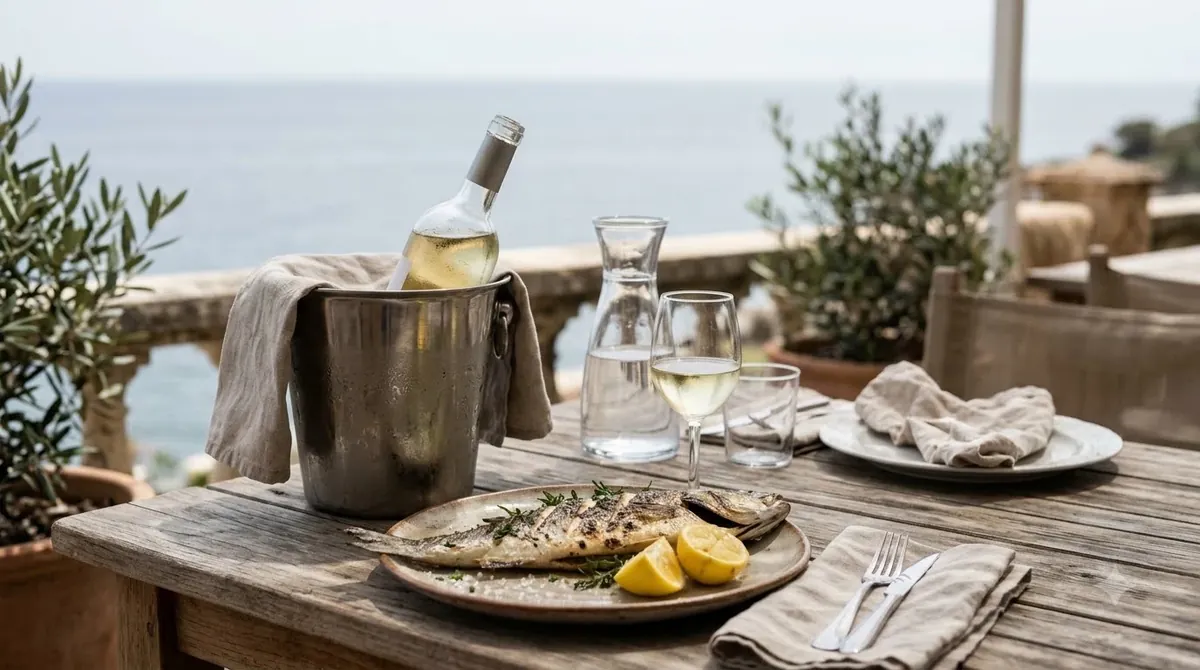
For a first batch, choose Orange Muscat or another sweet Muscat with orange-blossom, peach, and apricot notes. A late-harvest Riesling gives a different profile: lime, apple, stone fruit, and a lively thread of acidity that can keep the dairy from tasting heavy. Sweetness matters because sugar in the ice cream can make a dry wine taste sharper and more bitter than it did in the glass. Wine Enthusiast’s guide to wine and ice cream pairings makes the same basic point: a dessert wine should not be overwhelmed by the sweetness of the frozen dessert.
Red wine can work, but it needs more thought. Cabernet Sauvignon has high tannin, and those drying, grippy notes can clash with sugary dairy. A soft Merlot or a juicy, low-tannin Gamay-based wine is a more forgiving red direction; use a modest amount and pair it with dark chocolate, cherry, or raspberry rather than delicate citrus. Avoid a heavily oaked or aggressively tannic bottle for the first attempt, since barrel spice and astringency become more obvious in a cold, sweet base.
Choose by flavor, not color or prestige: if a small pour tastes thin, sharply acidic, or strongly bitter, those traits will remain noticeable in the frozen dessert.
Ingredients and Equipment for a One-Quart Batch
This version uses a cooked egg-yolk custard, concentrated wine, and a small amount of corn syrup to help the frozen texture stay creamy. The quantities are set up for a home batch of roughly 1 quart, with enough wine flavor to register clearly without making the mixture refuse to freeze.
Use these amounts as written for the first batch. The wine begins as 1 1/4 cups and is reduced to about 1/3 cup; the other ingredients are measured after the reduction, so do not add the full starting volume of wine to the dairy.
| Ingredient | Amount | Purpose |
|---|---|---|
| Sweet Orange Muscat or late-harvest Riesling | 1 1/4 cups, reduced to 1/3 cup | Fruit and floral wine flavor |
| Heavy cream | 1 1/2 cups | Richness and smooth body |
| Whole milk | 3/4 cup | Balances the cream |
| Granulated sugar | 1/2 cup | Sweetness and softer freezing |
| Large egg yolks | 5 | Custard structure |
| Light corn syrup | 1 tablespoon | Helps limit a hard, icy texture |
| Fine sea salt | 1/8 teaspoon | Balances the sweet dairy |
| Vanilla extract | 1 teaspoon | Rounds the finish |
You will also need a 2- to 3-quart saucepan, heatproof bowl, whisk, silicone spatula, fine-mesh strainer, thermometer, and lidded container. An ice cream maker with a frozen bowl or compressor gives the most even result. Freeze a machine bowl for the full time in its manual; many models need 12 to 24 hours. Keep the dairy cold, separate the yolks, and chill the storage container before churning.
How to Make Wine Ice Cream at Home
Build the flavor in two stages: reduce the wine on its own, then cook a simple custard and combine them after the custard has cooled. Chilling the base thoroughly before churning is just as important as the recipe measurements.
1. Reduce and cool the wine
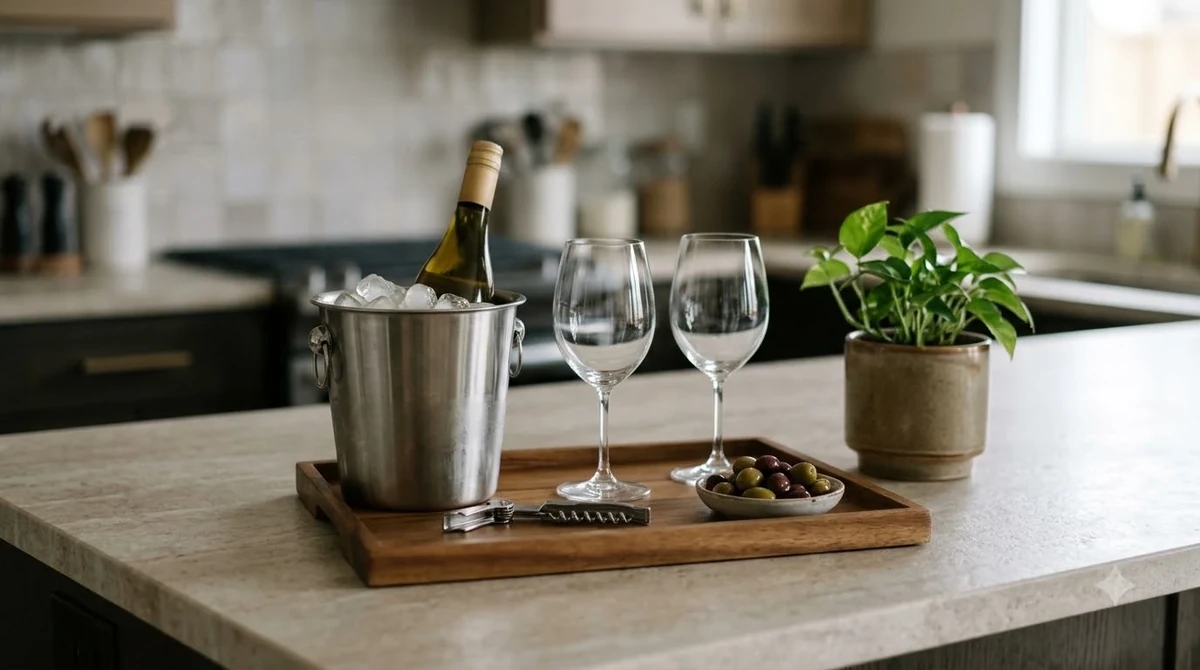
Pour 1 1/4 cups of sweet wine into a small, nonreactive saucepan. Bring it to a gentle simmer over medium-low heat, then adjust the burner so the surface bubbles quietly rather than boiling hard. Stir occasionally and reduce the liquid to about 1/3 cup; depending on the pan width and heat, this commonly takes 10 to 15 minutes. Measure the reduction in a heatproof measuring cup if you are unsure: the target is the final volume, not a fixed cooking time.
Cool the reduction in a small bowl before adding it to the custard. It should smell concentrated and fruity, not scorched or caramel-bitter; if it smells burnt, start again with a lower flame.
2. Warm the dairy and temper the yolks
Whisk the egg yolks with the sugar and salt in a heatproof bowl until the mixture looks a little paler and the sugar begins to dissolve. In a 2- to 3-quart saucepan, combine the milk, cream, and corn syrup. Heat over medium-low, stirring, until steam rises and small bubbles form around the edge. Do not let the dairy reach a rolling boil.
Whisk about 1/2 cup of hot dairy into the yolks in a thin stream, then whisk in another 1/2 cup before returning the yolk mixture to the pan. This tempering warms the eggs without scrambling them. Cook over low to medium-low heat, stirring and scraping the bottom and corners.
3. Cook, strain, and chill the custard
Cook until the custard coats the back of a spoon and reaches about 170 to 175°F. Do not let it boil. Strain into a clean bowl, stir in the vanilla, and cool the bowl over an ice bath until no longer warm.
Once the custard is cool, whisk in the cooled wine reduction until evenly blended. Cover the surface or press food-safe wrap directly against it, then refrigerate for at least 4 hours; overnight is even better. The base should be thoroughly cold before it goes into the machine. This resting period also lets the dairy and wine flavors settle together, so the result tastes integrated instead of like separate layers.
4. Churn and harden
Pour the cold base into the prepared ice cream maker and churn according to the machine’s instructions, usually about 20 to 30 minutes. Stop when it resembles thick soft serve and holds a ridge briefly when lifted with a spatula. Churning time varies with the machine, room temperature, and how cold the base was, so use the texture rather than the clock as the final cue.
Pack the churned ice cream into the cold container, press parchment or wax paper against the surface, and close the lid. Freeze for 4 to 6 hours for neat scoops; straight from the machine, it will be softer, like gelato.
Why Alcohol, Sugar, and Temperature Affect the Freeze
Wine ice cream behaves differently from plain vanilla because both alcohol and sugar make a frozen mixture less firm. The goal is not to remove every trace of wine, but to concentrate its flavor while keeping the amount of alcohol in the base low enough for a scoopable dessert.
Alcohol lowers the freezing point of the mixture. Too much can leave ice cream slushy even after several hours in a home freezer. Modernist Food’s boozy ice cream formula uses a reduced wine addition and explicitly warns that excess alcohol produces a soft, slushy texture. Its red-wine formula starts with 300 grams of Cabernet Sauvignon and reduces it to 100 grams before adding it to the custard. That reduction-first approach is useful at home because it retains concentrated wine character without adding the entire original volume to the dairy.
Reduction does not make the dessert alcohol-free: some alcohol remains, and the amount varies with pan width, heat, and cooking time. Treat it as a wine-containing dessert, not an alcohol-free treat. A harder boil cannot provide a dependable remaining-alcohol calculation and may damage the wine flavor.
Sugar also affects texture. It sweetens the base and makes it less likely to freeze into a hard block, but too much can make the finished ice cream soft and cloying. That is why the recipe uses 1/2 cup of sugar and a measured 1/3 cup of wine reduction. A very sweet dessert wine may add enough sweetness on its own, so do not automatically add extra sugar. Chill the custard for at least 4 hours, use a fully frozen machine bowl, and harden the churned ice cream in a shallow, cold container; these controls matter more than owning an expensive machine.
Flavor Variations and Pairings That Work
Build variations around the wine’s fruit rather than adding several competing flavors. Orange Muscat works with citrus zest and dark chocolate, while late-harvest Riesling leans naturally toward apple, pear, peach, and ginger.
For an orange version, add 1 teaspoon of finely grated orange zest to the warm dairy and strain it out with the custard. For chocolate, fold in 2 to 3 ounces of chopped bittersweet chocolate during the final minute of churning or ripple in cooled chocolate sauce. Keep additions moderate so they do not bury the wine. Port offers a raisin-and-caramel variation: reduce 1 cup of ruby or tawny Port to 1/3 cup and use it in place of the Orange Muscat reduction. Cinnamon and vanilla suit Port; a port and tonic recipe gives another course a lighter, sparkling contrast.
For a red-wine version, choose soft, fruit-driven Merlot or Gamay rather than highly tannic Cabernet Sauvignon. Add 1/2 teaspoon of cinnamon and serve with roasted cherries or raspberries; a dry, tannic red can taste more bitter beside a sugary base. For another chocolate-and-red-wine dessert, see this red wine hot chocolate recipe.
For a glass alongside the scoop, choose a wine at least as sweet as the dessert. Pedro Ximénez Sherry, late-harvest Riesling, or Canadian icewine can suit vanilla and fruit versions; add a crisp biscuit, crumble, brownie, or tart rhubarb for contrast. Decanter notes that such textures give the wine more to meet than cold dairy alone. For more bottle ideas, see what wine goes with ice cream and browse Wine Recipes & Cocktails.
Serving, Scooping, and Storing the Finished Dessert
Serve the ice cream cold but not rock-hard, and keep portions modest because the wine flavor is concentrated. A short rest at room temperature softens the surface enough to release the aroma without letting the whole scoop collapse.
Let the container stand on the counter for 3 to 5 minutes before scooping. Dip the scoop in warm water and wipe it between servings; use chilled bowls in a warm room and add crisp toppings just before serving. Fresh raspberries, blackberries, sliced peaches, and roasted cherries echo the wine. A little lemon zest or juice adds lift, while shortbread, almond biscotti, or pound cake contributes crunch.
For a simple plate, serve one scoop with two or three berries and a shard of shortbread. A spoonful of unsweetened crème fraîche or toasted almonds suits a richer presentation; keep the garnish plain when the wine is especially aromatic.
Store the ice cream in a shallow airtight container toward the back of the freezer, where the temperature is more stable than near the door. For the best texture, use it within 1 to 2 weeks; ice crystals and freezer odors become more noticeable as it sits. Keep the surface covered with parchment or wax paper, return the container to the freezer promptly after serving, and avoid repeatedly letting the whole batch soften and refreeze.
Do not store it in the refrigerator between servings. If it becomes hard after a long freeze, give it a few minutes at room temperature rather than microwaving it, which can melt the edges unevenly.
Frequently Asked Questions
These five answers cover 30-minute no-machine intervals, a sparkling-wine swap, a two-batch approach, and two common troubleshooting questions.
Can I make wine ice cream without an ice cream maker?
Yes, but the texture will be denser and may contain more noticeable ice crystals. Pour the chilled base into a shallow metal pan, freeze it, and whisk vigorously every 30 minutes for the first 2 to 3 hours, scraping the frozen edges into the center. Transfer it to a lidded container once it is too firm to whisk.
Can I use sparkling wine for this recipe?
You can use it, but the bubbles will disappear during simmering, so the finished dessert will not be sparkling. A fruity sparkling rosé or Moscato can contribute berry or floral aromas, but still wine is easier to measure and reduce consistently. Save the fresh bottle for pouring alongside the finished scoops.
What should I do if the custard develops small lumps?
Take the pan off the heat immediately and pour the custard through a fine-mesh strainer while it is still hot. If the base remains slightly grainy after straining, blend it briefly with an immersion blender before chilling. Do not continue cooking in an attempt to smooth it out, because extra heat can set the egg proteins further.
Can I double the recipe?
Yes, but churn it in separate batches unless your machine is specifically sized for the larger volume. Ice cream expands as air is incorporated, so filling the freezer bowl to the rim can cause overflow and uneven churning. Keep the second portion refrigerated while the first batch churns.
Can I use a wine that has been open for several days?
Use it only if it still smells clean and tastes sound, with no vinegar-like sharpness, mustiness, or other spoilage character. Cooking concentrates both pleasant and unpleasant flavors, so a tired wine can become more obvious after reduction. A small taste before heating is a better test than relying on the number of days the bottle has been open.
Homemade wine ice cream is easiest to master when the wine is flavorful, the reduction is measured, and the custard is thoroughly chilled before churning. Start with Orange Muscat or late-harvest Riesling, then try Port, chocolate, or seasonal fruit once you know how the base freezes in your machine.
More in Food & Wine Pairing
 Risotto With White Wine Recipe: Make a Creamy Dinner at HomeUpdated Nov 20, 2026
 Wassail With Wine Recipe for a Festive Spiced Holiday DrinkUpdated Nov 20, 2026
 Spritz Veneziano Recipe: Make a Classic Venetian Aperitivo at HomeUpdated Nov 20, 2026
 Summer Wine Punch Recipe for Easy Homemade EntertainingUpdated Nov 20, 2026
 Bishop Recipe: How to Make a Bright, Citrus-Forward Red Wine CocktailUpdated Nov 20, 2026
 Wine Cupcakes Recipe: Bake Rich Chocolate Cupcakes at HomeUpdated Nov 20, 2026