

We may earn a commission when you buy through links on this page, at no extra cost to you. Learn more.
Jordan white wine is Jordan Vineyard & Winery’s dry Russian River Valley Chardonnay, a cool-climate California white known for citrus and orchard fruit, lively acidity, and measured French-oak influence. It is a single-variety Chardonnay rather than a separate white blend, and it is made to balance ripe fruit with freshness instead of emphasizing buttery richness. Expect a medium-bodied wine that can work as an aperitif or alongside seafood, poultry, and creamy dishes.
The name can be confusing because Jordan is also strongly associated with Cabernet Sauvignon from Alexander Valley. The white bottling comes from a different Sonoma County appellation, and its vineyard sites, harvest decisions, and cellar treatment are tailored to Chardonnay. Understanding those choices makes it easier to predict the wine’s flavor, choose a good serving temperature, and match it with dinner.
What Jordan White Wine Actually Is
Jordan white wine is the winery’s Russian River Valley Chardonnay. The grape is Chardonnay, the wine is dry, and the style is built around freshness, texture, and restrained oak. It is not a Pinot Grigio, Sauvignon Blanc, or blend of several white varieties. The name on the bottle identifies the producer; “Russian River Valley” identifies the growing region.
Jordan’s red and white wines come from different Sonoma County appellations and follow different methods. Cabernet Sauvignon is associated with warmer, inland Alexander Valley, while the Chardonnay comes from cooler Russian River Valley, where fog and a longer growing season help retain acidity as grapes develop flavor. Both reflect the winery’s preference for balance, but they express different grapes and places.
Jordan has focused on Chardonnay and Cabernet Sauvignon since the 1970s, rather than building a broad range of unrelated labels. The white wine is a Sonoma Chardonnay with a French-inspired approach and fruit shaped by California vineyards. Readers can compare its red counterpart in our Jordan Cabernet tasting notes, or learn more about producer ranges in our Wine Brands overview.
Where Russian River Valley Shapes the Style
Jordan Chardonnay gets much of its freshness from the cool pockets of the Russian River Valley in Sonoma County. Pacific fog, gravelly benchland soils, and cool nighttime temperatures help the grapes ripen without losing the acidity that gives the finished wine its brisk line.
The Russian River Valley is a large appellation in the geographical heart of Sonoma County. According to Jordan’s vineyard overview, the region covers about 150 square miles and has roughly 15,000 acres under vine. The Pacific’s influence moves inland through gaps and the Russian River corridor; evening fog can lower temperatures by 35 to 40 degrees from the daytime high before retreating the next morning. That daily cooling slows ripening and helps Chardonnay develop flavor while holding on to natural acidity.
Soil is another part of the picture. Jordan describes its Chardonnay vineyards as gravelly and well drained, particularly in benchland sites near the river. Porous gravel limits excessive water retention and contributes to the subtle mineral impression the winery seeks. These are not the same conditions as the warmer Alexander Valley estate vineyards used for Cabernet Sauvignon, even though the appellations sit near one another around Healdsburg.
Jordan works with multiple growers and vineyard blocks rather than relying on a single plot. Individual lots contribute different aspects of fruit, acidity, texture, or mineral character; blending them gives the team room to keep the overall profile balanced as weather changes from one harvest to the next.
How Jordan Handles Harvest, Fermentation, and Oak
Jordan’s cellar choices are designed to protect Chardonnay’s bright fruit and acidity while adding texture. The winery harvests at night, picks at a relatively modest sugar level, uses both stainless steel and new French oak, and limits malolactic fermentation so the wine does not become dominated by butter-like flavors.
According to Jordan’s winemaking description, Chardonnay grapes are hand-harvested in the middle of the night, when temperatures are lowest. The winery says it generally targets approximately 22 to 23 degrees Brix at harvest. Brix measures the sugar level in grape juice; picking at this point is intended to preserve freshness and stone-fruit character rather than wait for very high sugar levels that could lead to riper, more tropical flavors and higher alcohol. Cold fruit also helps limit unwanted extraction from grape skins before fermentation.
After sorting and pressing, the juice is fermented in a combination of vessels. Jordan’s stated general approach uses about 30 percent stainless steel tanks and 70 percent new French oak barrels. Stainless steel helps preserve clean fruit character, while French oak contributes structure and a gentle layer of spice or toast. The barrels are selected from several cooperages, and the winery says it uses each French barrel only once for this Chardonnay, so oak is intended to support the fruit rather than overwhelm it.
Lees work adds texture. The team practices bâtonnage, or stirring fine yeast lees, by hand roughly every four to six weeks during winter. This broadens the mid-palate without requiring a strongly buttery style. Malolactic fermentation, which converts sharper malic acid into softer lactic acid, is held to 30 percent or less in the winery’s general description, helping preserve freshness. After selecting lots for the final blend, the winery fines and filters the wine, then gives Chardonnay about six months of bottle aging before release. The winery’s Chardonnay winemaking page explains the choices behind its oak and acidity balance.
| Winemaking detail | Jordan’s reported approach | Purpose |
|---|---|---|
| Harvest sugar | About 22–23 Brix | Protect fresh fruit and acidity |
| Primary fermentation | About 30% stainless steel; 70% new French oak | Balance clean fruit with subtle oak structure |
| Lees stirring | Every 4–6 weeks during winter | Broaden mid-palate texture |
| Malolactic fermentation | 30% or less, depending on vintage | Preserve bright acidity |
| Bottle aging | About 6 months before release | Allow aromas and flavors to harmonize |
What Jordan Chardonnay Tastes Like
Jordan Chardonnay typically combines citrus and orchard-fruit flavors with a firm thread of acidity, a medium-weight texture, and oak in the background. The precise balance changes by vintage, but fresh apple, pear, lemon, and stone fruit are useful reference points when deciding whether this wine matches your palate.
Wine Enthusiast’s review of the 2024 Jordan Chardonnay describes aromas of fresh citrus, green apple, lemon balm, flint, and white flowers. On the palate, the reviewer identifies tart pineapple, Anjou pear, fresh herbs, and florals, with bright acidity and a long finish. The wine was listed at 12.7 percent alcohol by volume and received 91 points. Those numbers and tasting notes describe that particular vintage, not a guaranteed formula for every release.
Decanter’s reviews of the 2021 Chardonnay offer a useful comparison. One reviewer described lemon and lime zest with a saline edge, while another noted grapefruit, Meyer lemon, and Asian pear. The two tastings each awarded 93 points and described a wine with both richness and refreshing acidity. Decanter recorded the 2021 at 13.7 percent alcohol and medium body. Its review also noted the use of new French oak and a portion of stainless-steel aging, which helps explain why the wine can feel rounded without losing its freshness. Read the Decanter review of Jordan Chardonnay for the vintage-specific tasting descriptions.
Do not expect every vintage to smell or taste exactly the same. Growing-season temperatures, harvest dates, vineyard selections, and malolactic fermentation can shift the wine toward brighter citrus or riper orchard fruit. Oak may seem more prominent in a young bottle and less obvious as fruit and texture integrate. Chardonnay has enough body to carry lees contact and barrel influence, while Jordan’s acidity keeps the finish lively. A creamy impression does not mean residual sugar; pear and pineapple are fruit flavors, not proof of sweetness. The recurring style is dry, fresh, and polished rather than sweet or heavily buttery, a useful balance for drinkers who prefer a fresher profile to vanilla-forward examples.
How to Serve and Store Jordan White Wine
Serve Jordan Chardonnay cool, but not ice-cold. A temperature around 50 to 55 degrees Fahrenheit is a good starting point for a medium-bodied white with oak and texture; too much chilling can mute the wine’s citrus, pear, and subtle barrel aromas.
If the bottle has been refrigerated for several hours, let it stand briefly before pouring; if it is too warm, chill it for a short interval. A standard 5-ounce pour leaves room to swirl, and a 750-milliliter bottle yields about five servings. Use ordinary white-wine glassware with a bowl wide enough to gather aromas. There is no need to decant a young bottle; open it shortly before serving and let it develop in the glass.
For storage, keep unopened bottles away from direct light and temperature swings. A cool, steady cellar close to 55 degrees Fahrenheit is a suitable target; bottles with natural cork are generally stored on their sides so the cork does not dry out. Once opened, reseal the bottle and refrigerate it. Most still wines keep their best qualities for about three to five days in the refrigerator, although fruit aromas and freshness can gradually fade. Bring the remaining wine back toward serving temperature before the next glass.
Tip: Take Jordan Chardonnay out of the refrigerator about 10 minutes before serving if it feels sharply cold. A little warming in the glass can bring out pear, lemon, and gentle oak notes without making the wine feel heavy.
Food Pairings and Choosing Between Jordan Wines
Jordan Chardonnay is most at home with foods that welcome acidity and a little oak. Seafood, roast poultry, vegetables, and creamy sauces are natural partners because the wine can refresh the palate while its texture meets the weight of the dish.
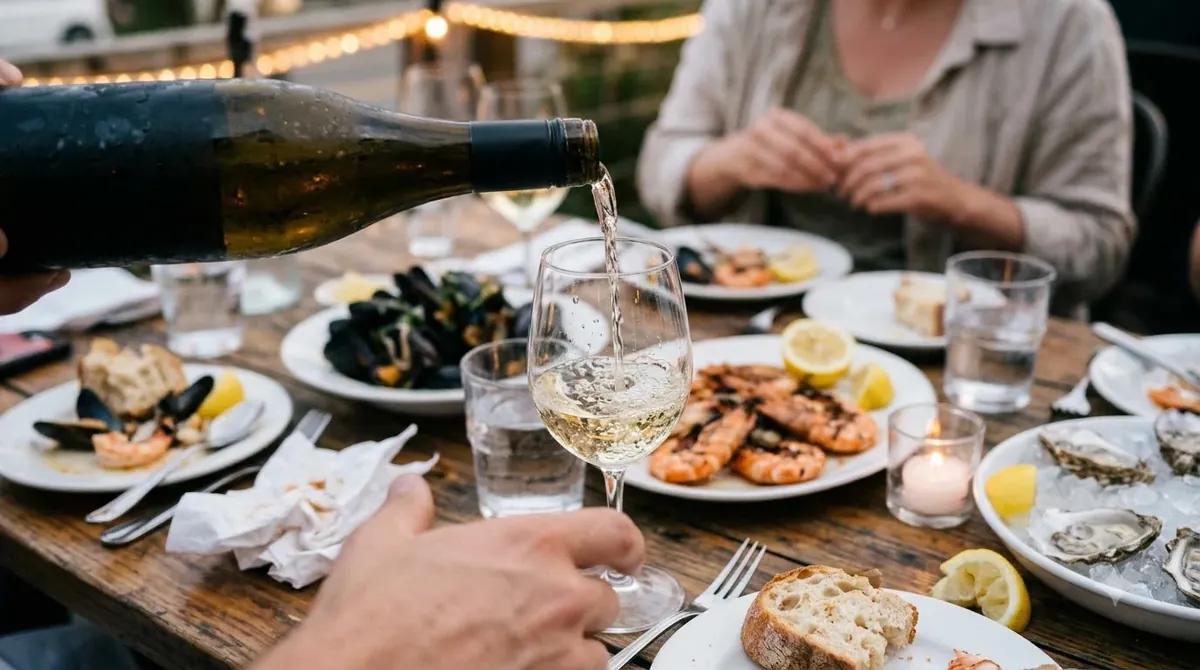
For a simple match, serve it with oysters, shrimp, crab, or seared scallops. The wine’s citrus character suits the clean sweetness of shellfish, and its acidity gives the pairing enough lift. Salmon and ahi tuna also work, particularly when grilled or served with herbs, lemon, or a light sauce. Because Jordan Chardonnay is not a tannic red, it avoids the drying, metallic clash that can occur when oily fish is paired with a strongly tannic wine.
Roast chicken, grilled chicken, and turkey are dependable options. Lemon-and-herb poultry echoes the wine’s citrus notes, while pan juices, creamy chicken pasta, or mushroom risotto give its texture something to meet. The acidity helps keep moderate butter or cream sauces from feeling too rich. For a vegetarian main, try roasted cauliflower, squash, or asparagus with olive oil and herbs.
Seasoning matters as much as the main ingredient. Jordan Chardonnay has little tannin, so consider whether the dish’s acidity and richness match the wine: lemon-heavy sauces and sharp vinaigrettes need comparable acidity, while very sour preparations may make the wine seem less lively. Hot chili dishes can make alcohol feel more pronounced, so moderate spice is a safer match than fiery sauces. Choose Chardonnay for seafood or poultry; choose Jordan Cabernet Sauvignon for steak, lamb, or richer red-meat dishes. The Cabernet has firmer tannins and darker fruit, while the white relies on acidity and texture.
Frequently Asked Questions
These answers cover a few vintage and production details that can help explain why one bottle may differ from another. They also clarify some of the technical choices behind Jordan’s Chardonnay.
What was notable about the 2024 growing season?
Jordan reported 27 inches of rain from January through April, which replenished vineyard soils after several dry years. July then brought several days above 100 degrees Fahrenheit, and growers managed irrigation to reduce heat stress. The harvest ran from August 29 through September 17.
How many vineyard blocks went into the 2024 Chardonnay?
The 2024 blend drew fruit from 21 vineyard blocks across 11 Russian River Valley vineyards. Jordan also reported using 10 different Chardonnay clones in that vintage. The combination gave the winemaking team a wider range of fruit and structural components to assess for the final blend.
When did Jordan begin sourcing Chardonnay from the Russian River Valley?
Jordan’s vineyard history says its first winemaker, Rob Davis, shifted Chardonnay sourcing from Alexander Valley to the Russian River Valley in 2000. He was seeking the stone-fruit character, lively acidity, and mineral impression associated with white Burgundy. The change established the geographic identity of the modern Jordan Chardonnay.
What type of cork does Jordan use for its Chardonnay?
Jordan says it has bottled Chardonnay exclusively with DIAM corks beginning with the 2019 vintage. The closure is made using natural cork and beeswax and is designed to provide consistent oxygen transmission. Jordan distinguishes this choice from its Cabernet Sauvignon, which remains bottled under natural cork.
Why is the 2019 Chardonnay a milestone vintage?
The 2019 release marked the 40th anniversary of Jordan Chardonnay. It was also the first vintage under Maggie Kruse as head winemaker. The winery describes that release as 100 percent Chardonnay from the Russian River Valley, making it a notable point in the wine’s history as well as a particular bottling.
Jordan white wine is a strong choice for drinkers who like dry Chardonnay with citrus, orchard fruit, lively acidity, and oak that supports rather than dominates. Serve it cool, pair it with seafood or poultry, and consider the vintage when comparing tasting notes, because the wine’s details shift even as its balanced style remains recognizable.
More in Wine Brands
 Underwood Wine Price: Compare Bottles, Cans, and Pack SizesUpdated Nov 21, 2026
 Zenato Wine Price: Compare Styles and Choose the Right BottleUpdated Nov 21, 2026
 Zuccardi Wine Price: Compare Bottles and Find the Right RangeUpdated Nov 21, 2026
 Yellow Tail Moscato Review: Taste, Sweetness and Serving TipsUpdated Nov 21, 2026
 Wolf Blass Yellow Label Review: Choose Your Best StyleUpdated Nov 21, 2026
 Wolffer Estate Rose Review: Choose the Right Bottle for Your TableUpdated Nov 21, 2026