

We may earn a commission when you buy through links on this page, at no extra cost to you. Learn more.
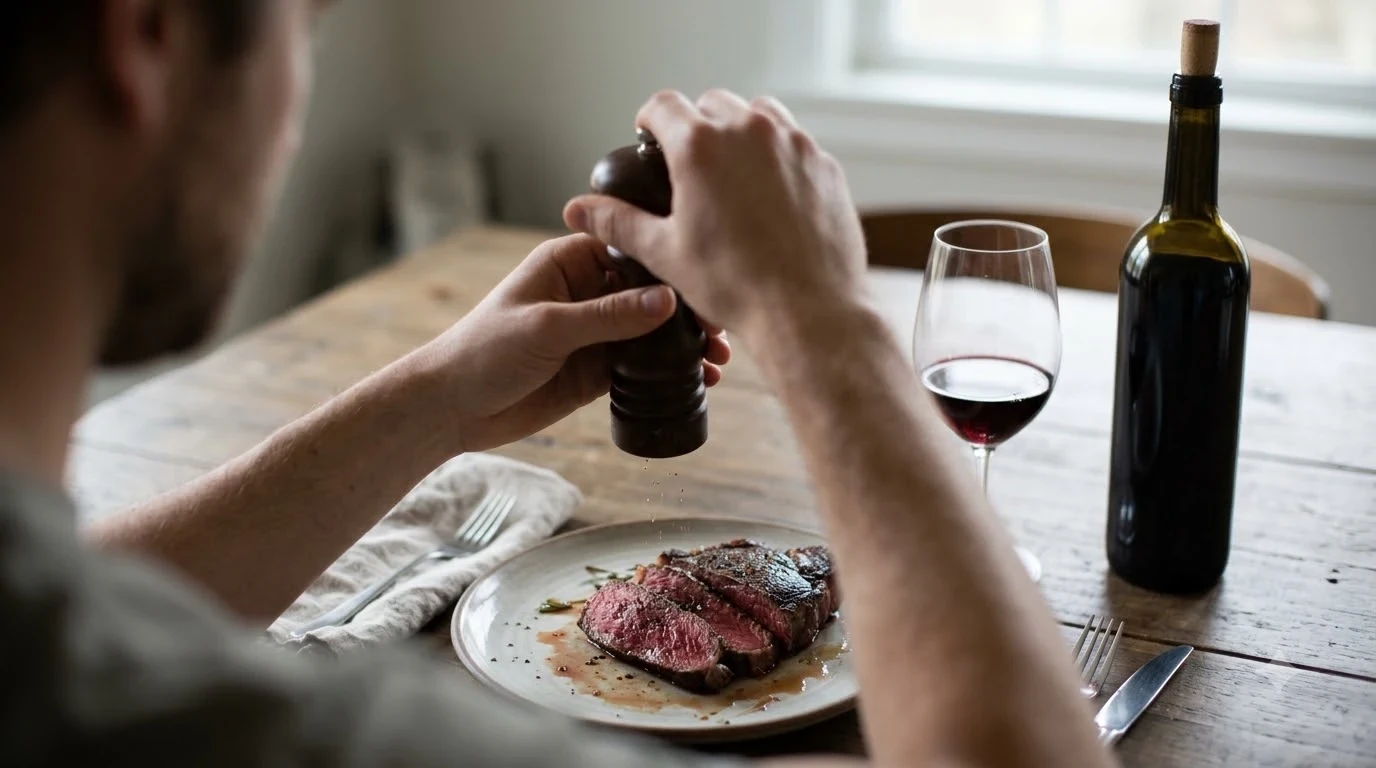
Cabernet sauvignon with steak is one of the most reliable red wine pairings. The wine’s firm tannins and dark fruit flavors stand up to the fat and savory char of a grilled steak, and the tannins soften as the meat’s richness coats the palate. Richer cuts with more marbling and bolder sauces usually show the wine at its best.
This guide explains why the pairing works, which cuts and sauces suit a cabernet sauvignon best, and how to avoid the few combinations that clash. It is written for home cooks and diners who want a dependable choice without a long wine education.
Why cabernet sauvignon and steak go together
Cabernet sauvignon is a full-bodied red with noticeably firm tannins. Wine Folly’s cabernet sauvignon grape guide describes its typical profile as dry, full bodied, and medium-high in both tannin and acidity, with flavors of black cherry, black currant, cedar, baking spices, and graphite. The same source notes that its “rich flavor and high tannin content” make it a strong partner for grilled meats and boldly flavored dishes.
The reason is mostly chemical. Tannins bind to the proteins and fats in red meat, which makes the wine taste smoother and less astringent. At the same time, the beef’s fat softens the grip of the tannins, so the fruit and oak notes come forward. That balance is why a bite of steak and a sip of cabernet often taste better together than either does alone.
Which steak cuts work best
Not every steak suits the same wine. Leaner cuts are less forgiving of big tannins, while fattier cuts give the wine something to soften against. A ribeye with visible marbling is the classic partner, and a strip steak or sirloin is a solid middle choice when you want a little less richness on the plate.
Resting matters too. Letting the steak sit for several minutes after cooking keeps its juices in the meat instead of on the board, so each bite tastes richer and the wine has a juicy, savory partner rather than a dry one. Cutting against the grain also makes the meat feel more tender, which helps a big tannic wine feel smoother.
Grilling and searing also change the match. Char adds bitter and smoky notes that echo the oak and cedar in many cabernets, which is why a steak cooked over high heat often feels right with a bottle from a warm growing region.
| Steak cut | Fat level | Cabernet style that suits it |
|---|---|---|
| Ribeye | High, with marbling | Full-bodied, ripe, oaked cabernet with firm tannins |
| New York strip | Medium | Balanced cabernet with black fruit and some structure |
| Filet mignon | Low | Elegant, moderately tannic cabernet with restrained oak |
| Flank or skirt | Medium, more chew | Youthful cabernet with bright acidity and grippy tannins |
Tip: If the steak is very lean, pick a cabernet with softer tannins or serve it with a sauce that adds fat, such as a compound butter, to balance the wine.
Sauces and sides that work with cabernet
Sauce is where many pairings succeed or fail. Peppercorn sauce, red wine reduction, and herb butter all complement the wine because they echo its spice and savory character. Mushrooms, roasted root vegetables, and charred onions also suit a cabernet’s earthy side.
A mushroom cream sauce or a simple pan sauce made from the steak drippings, deglazed with a splash of the same wine, is another strong option. Because the sauce repeats flavors already in the glass, the pairing feels unified instead of busy. Keep the sauce modest in volume so it coats the meat rather than drowning it.
Avoid sauces that are very sweet or very acidic, such as a sugary barbecue glaze or a sharp vinegar dressing. Those flavors make the wine taste thinner and can sharpen its tannins in an unpleasant way. A simple salt-and-pepper seasoning is often the safest option.
Cabernet sauvignon and steak compared with other options
Oak is another factor. Many cabernets spend time in oak barrels, which adds vanilla, toast, and spice notes. Those flavors pick up the char and caramelized edges of a grilled steak, so an oaked bottle often feels more complete on the plate than an unoaked one. Unoaked styles can still work, but they tend to suit simpler preparations better.
Cabernet is not the only red that works with beef. VinePair’s cabernet sauvignon guide points out that other bold reds are often recommended for beef, including Tannat for brisket and Sagrantino for a bone-in ribeye, both of which are even more tannic. Pinot noir is a lighter alternative for thinner cuts, but it lacks the grip to match a heavily charred steak.
When you are cooking for a group, it helps to think about variety. A bold cabernet for the ribeye and a softer, fruit-forward red for guests who prefer lighter wines covers most tastes without complicating dinner. Keeping a second bottle on hand also gives you a backup if the first one tastes too tight on the night.
For a steakhouse-style meal, cabernet sauvignon remains the most widely available choice. Its style ranges from fruit-forward versions to structured, oak-driven bottles, so it is easy to match to the cut and the budget.

How to choose a cabernet for steak
Vintage and style also matter. Cabernets from a warm year tend to taste riper and fuller, while cooler years can show more structure and acidity. Neither is better for steak by default; the right choice depends on whether you want the wine to match a rich ribeye or a leaner cut that needs more lift.
Look for a bottle described as full bodied with firm tannins, and check whether the producer mentions oak aging, since that usually adds spice and structure. A bottle from a region known for cabernet, such as Napa Valley or Bordeaux, is a dependable starting point, but younger wines from other regions often work just as well and cost less.
Serve the wine at a cool room temperature rather than very warm, so its fruit stays lively and the tannins do not feel heavy. Giving a young cabernet some time in the glass before dinner can also soften its edges, since bigger tannins usually feel rougher when the wine is first poured.
For a more detailed guide to matching this grape with other dishes, see our cabernet sauvignon food pairing page.
Frequently Asked Questions
Is cabernet sauvignon the best wine for steak?
It is one of the most popular and dependable choices, especially for ribeye and other fatty cuts. Other bold reds can also work well, so the best match depends on the cut, the sauce, and your taste.
Should I serve cabernet sauvignon chilled or at room temperature?
Serve it at a cool room temperature rather than chilled or very warm. Chilling it too much can make the tannins taste harsher, while a very warm glass can taste flat and heavy.
What sauce goes best with cabernet and steak?
Peppercorn sauce, a red wine reduction, and herb butter are classic choices. They echo the wine’s spice and savory notes. Very sweet barbecue sauces tend to clash with the tannins.
Can I cook with cabernet sauvignon for a steak sauce?
Yes. A reduction made with cabernet, shallots, and a little stock makes a rich sauce that matches the wine served alongside. Reduce it until it is glossy and concentrated so the alcohol cooks off and the flavor stays deep.
Cabernet sauvignon and steak is a pairing that rewards a little attention to the cut and the sauce. Start with a full-bodied bottle, match the richness of the meat, and use the food and wine guide in our Grape x Food section to explore other combinations. For a lighter option, see our best wine with seafood picks.
More in Food & Wine Pairing
 Risotto With White Wine Recipe: Make a Creamy Dinner at HomeUpdated Nov 20, 2026
 Wassail With Wine Recipe for a Festive Spiced Holiday DrinkUpdated Nov 20, 2026
 Spritz Veneziano Recipe: Make a Classic Venetian Aperitivo at HomeUpdated Nov 20, 2026
 Summer Wine Punch Recipe for Easy Homemade EntertainingUpdated Nov 20, 2026
 Bishop Recipe: How to Make a Bright, Citrus-Forward Red Wine CocktailUpdated Nov 20, 2026
 Wine Cupcakes Recipe: Bake Rich Chocolate Cupcakes at HomeUpdated Nov 20, 2026