

We may earn a commission when you buy through links on this page, at no extra cost to you. Learn more.
Feudi di San Gregorio wine is a collection of Campanian wines that puts native grapes such as Fiano, Greco, Falanghina, and Aglianico at the center. Based in Sorbo Serpico in Irpinia, the producer is best known for expressive white wines and structured Aglianico reds, including Taurasi DOCG. Start with Fiano or Greco for a fresh, savory white, and choose Taurasi when you want a red with depth and aging potential.
Feudi di San Gregorio offers more than one house style: its labels range from accessible regional wines to single-vineyard bottlings selected to show the differences among Irpinia’s hills. Knowing the grapes, appellations, and main labels makes it easier to pick a bottle for a seafood dinner, a slow-cooked meat dish, or a special occasion.
What Feudi di San Gregorio Represents
Feudi di San Gregorio is a modern Irpinian winery with roots in the local wine revival, founded in 1986 and based in Sorbo Serpico, in the province of Avellino. Its identity is closely tied to Campania’s native grapes and to the idea that the region’s inland hills can produce serious whites as well as age-worthy reds.

The estate began during a period of rebuilding after the 1980 earthquake in Irpinia. Decanter records that members of the Ercolino and Capaldo families established the winery, with Luigi Moio as its first winemaker. That early commitment to bottling local varieties helped give Irpinia a more visible identity.
The winery itself is part of the brand’s story. Feudi says its cellar was inaugurated in 2004, among Italy’s first “signature wineries,” and recognized twice at the Venice Biennale for architectural excellence. The building brings production, design, art, tastings, and hospitality together; restaurant Marennà also opened in 2004.
A Decanter estate profile lists 300 hectares under vine, vineyard elevations of 400 to 700 meters, and a varietal mix of 35% Aglianico, 25% Greco, 25% Fiano, and 15% Falanghina. These figures describe the profile recorded there, not a fixed recipe for every current bottling. For a wider view of producers and labels, explore our guide to Wine Brands.
Irpinia’s Hills and Native Grapes
Irpinia is the mountainous inland part of Campania, east of Naples, where elevation, rainfall, and varied soils give local wines a different profile from the region’s warmer coastal areas. Feudi works with a set of native varieties that includes Fiano, Greco, Aglianico, and Falanghina, and its FeudiStudi project examines individual vineyard sites rather than treating the area as a single uniform source.
The geography is varied even within a relatively compact area. Feudi describes Irpinia as a landscape of mountains, hills, plains, waterways, woodlands, fruit trees, olive groves, and aromatic herbs. The Apennine setting brings abundant rainfall, windy conditions, and winters that can be harsh and snowy, while summers are milder than many people expect from southern Italy. Those conditions help preserve freshness in grapes that also develop ripe fruit and savory character.
FeudiStudi is the producer’s most explicit expression of this site-by-site approach. The winery says it selects from more than 800 available vineyard plots each year according to the character of the vintage. Its FeudiStudi wines are made in limited runs of about 2,000 bottles, with an average of 12 crus annually: four each for Greco, Fiano, and Aglianico. This is different from a broad regional bottling, where grapes from multiple sites can be combined to create a consistent house style.
Individual sectors have their own signatures. Feudi associates Fiano from the Mount Partenio slopes around Sant’Angelo a Scala, Summonte, and Ospedaletto d’Alpinolo with spice, balsam, candied fruit, and smoke. Its Greco di Tufo sector on the right bank of the Sabato River is described through flint and savory-mineral tension; its northeast Taurasi sector is associated with spicy and smoky aromas. These are clues rather than rules, since vintage, exposure, and cellar choices also shape each bottle.
White Wines: Fiano di Avellino, Greco di Tufo, and Falanghina
Feudi’s white wines are the most direct place to begin, especially if you enjoy dry wines with bright acidity, citrus, orchard fruit, and a savory finish. The core choices are Fiano di Avellino, Greco di Tufo, and Falanghina, represented by labels such as Pietracalda, Cutizzi, and Serrocielo.
Fiano di Avellino is the fuller, more textured option. Under the regional appellation rules, the wine must contain at least 85% Fiano; Greco, Coda di Volpe Bianca, and Trebbiano Toscano may make up no more than the remaining 15%. The denomination covers 26 municipalities in Avellino province. Typical flavors include pear, yellow apple, citrus peel, flowers, herbs, and a lightly nutty or almond-like finish. Feudi’s Pietracalda is a Fiano di Avellino Riserva, while the winery also lists Campanaro as another Fiano Riserva.
Wine Enthusiast’s review of Feudi’s 2024 Fiano describes ripe melon and lemon alongside hay, grass, cedar-like notes, and an earthy palate. It records 13% ABV in a 750 ml bottle and a score of 90 points, a useful example of Fiano’s balance of fruit and savory character. Read the Wine Enthusiast review of Feudi’s Fiano for the bottle note.
Greco di Tufo usually feels firmer and more mineral than Fiano. Feudi’s Cutizzi is a Greco di Tufo Riserva, and its FeudiStudi map identifies single-site Greco wines including Nassano, Chianchetelle, and Ariella. Expect citrus, orchard fruit, herbs, and a flinty or stony edge; it works with grilled shrimp, baked white fish, clams, fennel, or lemon-herb pasta. Falanghina offers a more open style: Feudi’s Serrocielo is labeled Falanghina del Sannio DOC, with fresh citrus, pear, white flowers, and a brisk finish. Pair it with fried zucchini, mozzarella, seafood salads, grilled vegetables, or simply prepared shellfish. These whites are generally dry, with acidity rather than sweetness driving their food appeal.
Red Wines: Aglianico, Taurasi, and Serpico
Aglianico gives Feudi’s red wines structure, dark-fruited intensity, and firm tannins. The range includes Irpinia Aglianico bottlings such as Serpico and Dal Re, plus Taurasi DOCG and Piano di Montevergine Taurasi Riserva.
Taurasi is the appellation to know. The Consorzio Tutela Vini d’Irpinia states that Taurasi DOCG is made with at least 85% Aglianico from 17 municipalities in the Calore Valley. Standard Taurasi must age for at least three years, including at least one year in wood; Taurasi Riserva requires at least four years, including at least 18 months in wood. These rules establish a minimum framework, not a guarantee that every producer’s wine tastes alike. Oak size, extraction, vineyard site, and bottle age all influence the result.
In the glass, Taurasi often brings black cherry, plum, dried herbs, licorice, tobacco, and smoky or earthy notes, backed by assertive acidity and tannin. Young examples can seem tight, especially beside richly textured food, while mature bottles tend to show more integrated tannins and tertiary aromas. Decanter’s profile of Feudi’s Taurasi range highlights the contrast between the estate’s historical vintages and the way site selection shapes the wines; its Campania coverage also identifies Feudi as a leading producer working to map individual crus. See Decanter’s Feudi di San Gregorio producer profile for background on the estate and its Taurasi bottlings.
Serpico and Dal Re offer other ways to explore Aglianico without starting with a Taurasi Riserva. Both are listed as Irpinia Aglianico DOC bottlings, letting you focus on dark fruit, savory notes, and grip outside Taurasi’s longer minimum-aging rules. For food, think roasted lamb, grilled sausages, braised beef, mushroom ragù, and aged sheep’s milk cheese: salt and fat soften Aglianico’s high tannin. Avoid pairing a tannic Taurasi with oily fish, and be cautious with very hot chili, since alcohol and tannin can make the heat feel stronger. Compare the grape’s profile with the softer, Tempranillo-led style of Campo Viejo red wine to hear how variety and origin change a red wine.
How to Choose Between Feudi’s Labels
The label tells you whether the wine is meant to express a broad regional style, a named appellation, or a particular vineyard. Once you recognize that distinction, choosing between Pietracalda, Cutizzi, Serrocielo, Serpico, and Piano di Montevergine becomes much easier.
For a first bottle, choose a classic Fiano di Avellino or Greco di Tufo. Pietracalda is the Fiano Riserva in Feudi’s core range, while Cutizzi is its Greco di Tufo Riserva: choose Fiano for a rounder texture and pear, citrus, herbs, and nuts, or Greco for a tauter, more mineral impression. Serrocielo Falanghina suits a casual meal or a table with lighter dishes.
For reds, standard Taurasi DOCG introduces Aglianico under the appellation’s aging rules; Piano di Montevergine is the estate’s Taurasi Riserva for a more considered dinner or cellar. Serpico and Dal Re carry the Irpinia Aglianico DOC designation, while Selve di Luoti is another Taurasi DOCG in Feudi’s range.
FeudiStudi sits at the more site-specific end of the range. These limited wines are selected from individual vineyard plots and produced in small quantities, so the bottling can vary with the vintage and chosen site. A FeudiStudi Fiano from the Mount Partenio sector is intended to show the character of that place, not simply to be a more expensive version of a regular Fiano. Read the denomination as well as the grape: Fiano di Avellino DOCG and Greco di Tufo DOCG identify specific white-wine origins; Irpinia Aglianico DOC is broader, while Taurasi DOCG sets additional grape and aging rules. For a comparison with another producer-led portfolio, see our overview of Baron Philippe de Rothschild wine.
Food Pairings, Serving Temperatures, and Storage
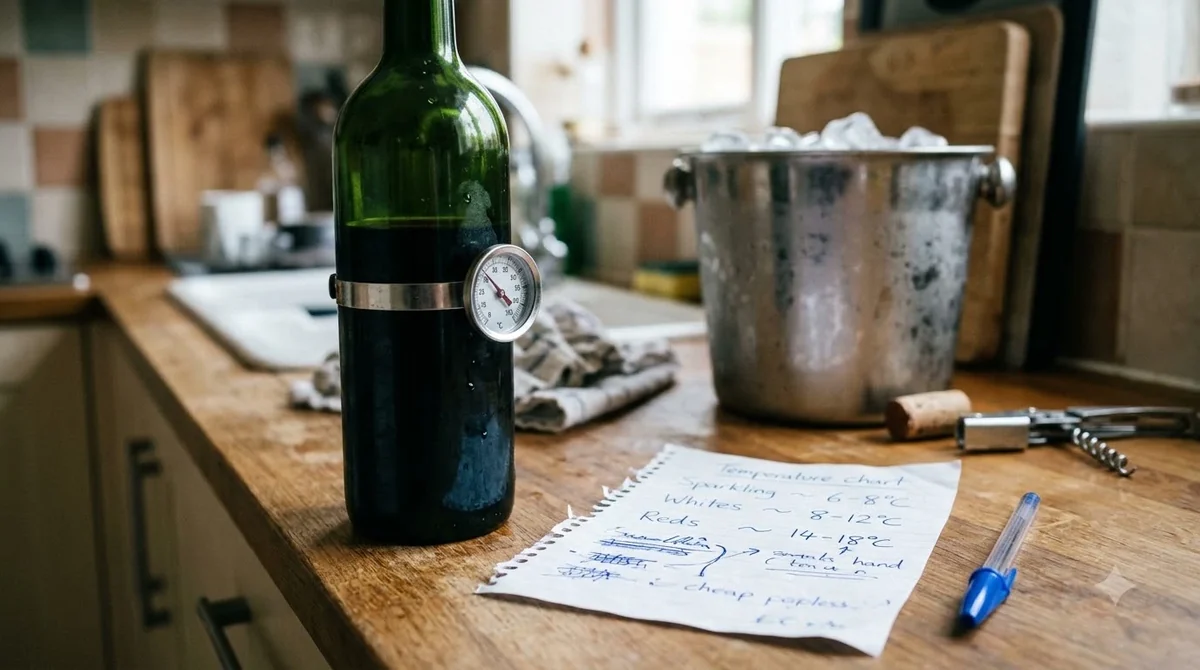
Feudi’s whites are at their best with dishes that echo their acidity and savory character, while Aglianico needs food with enough flavor and texture to meet its tannin. Serving temperature matters: a cold white can seem muted, and an overly warm red can feel more alcoholic and loose.
Use the following temperatures as starting points. The figures are practical serving ranges, not appellation rules; give a fuller white such as a Riserva a little more warmth than a crisp, lighter white, and let a structured red open gradually in the glass.
| Wine style | Serving temperature | Food matches |
|---|---|---|
| Fiano di Avellino | 50–55°F | Roast chicken, crab, creamy pasta, grilled sea bass |
| Greco di Tufo | 45–50°F | Clams, shrimp, lemon pasta, grilled vegetables |
| Falanghina | 45–50°F | Mozzarella, fried zucchini, seafood salad |
| Campania rosato | 45–50°F | Charcuterie, tomato salad, grilled peppers |
| Irpinia Aglianico | 60–65°F | Grilled sausage, pork shoulder, mushroom ragù |
| Taurasi DOCG or Riserva | 60–65°F | Roast lamb, braised beef, aged pecorino |
Match seasoning as well as the main ingredient: Fiano works with lemon, capers, and herbs; Greco with shellfish and salty ingredients; Falanghina with fried foods and fresh cheeses. Aglianico’s high tannin is softened by fatty beef, lamb, or aged cheese, while very spicy sauces can make alcohol and tannin feel more aggressive.
Tip: Open a young, full-bodied Taurasi 30–60 minutes before serving, then pour a small taste to see how it is developing. If the wine seems angular, give it more air; if it is already aromatic and balanced, pour without waiting for the full hour.
For a multi-course dinner, serve Falanghina or Greco first, Fiano with richer seafood or poultry, and Aglianico with the main meat dish. A 750 ml bottle gives about five 5-ounce pours, enough for four to five adults to share a dinner pour. Store unopened bottles on their sides in a cool, dark place near 55°F, away from temperature swings and direct light. After opening, refrigerate still wines with a proper closure; they generally keep for 3–5 days, while sparkling wines are best within 1–3 days with a pressure-tight stopper.
Frequently Asked Questions
These quick answers cover a few details that can help you understand the wider Feudi di San Gregorio portfolio beyond the best-known Irpinia bottles.
What was Feudi di San Gregorio’s first wine?
The estate’s first wine was called Nobellum, released in 1991. It came five years after the winery was founded and preceded several of the labels that later became familiar reference points for Irpinian wine.
Does Feudi di San Gregorio make sparkling wine?
Yes. Its DUBL project explores Campania’s native grapes through the traditional-method, or Metodo Classico, approach. The project began in Irpinia in 2003 and involved collaboration with Champagne specialist Anselme Selosse, who saw potential in Greco and Aglianico for sparkling wine.
Are any vines associated with the estate more than a century old?
Feudi’s description of Irpinia refers to monumental vines more than 200 years old. That statement describes the wider historic viticultural landscape the producer highlights; it should not be taken to mean that every Feudi bottle comes from vines of that age.
Does the Feudi range include wines from outside Irpinia?
Yes. The producer’s lineup includes Lacryma Christi del Vesuvio DOC Bianco and Rosso, wines associated with the volcanic slopes around Mount Vesuvius. They offer a different Campanian expression from the inland Fiano, Greco, and Aglianico wines of Irpinia.
How long must Fiano di Avellino Riserva mature?
The Consorzio Tutela Vini d’Irpinia lists a minimum maturation period of 12 months for Fiano di Avellino Riserva. That requirement is separate from the longer minimum aging rules for Taurasi DOCG and Taurasi Riserva.
Feudi di San Gregorio is a useful producer to explore if you want to understand why Irpinia is known for both textured white wines and serious Aglianico reds. Begin with Fiano or Greco, then move to Taurasi to see how the same inland landscape can produce a very different style of wine.
More in Wine Brands
 Underwood Wine Price: Compare Bottles, Cans, and Pack SizesUpdated Nov 21, 2026
 Zenato Wine Price: Compare Styles and Choose the Right BottleUpdated Nov 21, 2026
 Zuccardi Wine Price: Compare Bottles and Find the Right RangeUpdated Nov 21, 2026
 Yellow Tail Moscato Review: Taste, Sweetness and Serving TipsUpdated Nov 21, 2026
 Wolf Blass Yellow Label Review: Choose Your Best StyleUpdated Nov 21, 2026
 Wolffer Estate Rose Review: Choose the Right Bottle for Your TableUpdated Nov 21, 2026