

We may earn a commission when you buy through links on this page, at no extra cost to you. Learn more.
Columbia Crest Grand Estates is a Washington wine collection built around five familiar styles: Cabernet Sauvignon, Chardonnay, Merlot, Syrah, and a red blend. The range gives shoppers a choice between structured reds and a versatile white, with each bottle intended to express its grape variety. Understanding the grapes, Columbia Valley setting, and vintage details makes it easier to choose a bottle for dinner or an informal glass.
Grand Estates sits within Columbia Crest’s broader portfolio, rather than describing one single wine. The label can refer to very different experiences depending on whether the bottle is Cabernet Sauvignon, Chardonnay, or another member of the range. This guide explains how to read the collection, what its Washington origin contributes, and how to serve and pair each style.
What Columbia Crest Grand Estates Is
Grand Estates is Columbia Crest’s varietal-focused collection, and the winery’s official collection page lists five wines: Cabernet Sauvignon, Chardonnay, Merlot, Syrah, and Red Blend. The lineup covers firmer reds, a softer red, a white, and a blend rather than one fixed house profile.
Grand Estates is distinct from Columbia Crest’s other collections. Reserve is described as coming from premier vineyard sites and being crafted in its Petit Chai, while Founders Series is linked to Horse Heaven Hills, with fruit from the estate vineyard and local family farms. Grand Estates is framed around varietal character and a broader selection of Washington-grown wines, so two Columbia Crest Cabernet labels can have different aims.
For shoppers comparing the range, start with the grape name rather than assuming every Grand Estates bottle tastes alike. A Cabernet drinker who likes darker fruit and a firm finish may prefer the red Cabernet; someone who wants a white for roast chicken or seafood can begin with Chardonnay. Our guide to Columbia Crest red wine can help narrow the red options, while the Columbia Crest white wine overview gives more context for the white styles.
How Columbia Valley Shapes the Style
The Columbia Valley gives Grand Estates a broad Washington identity: warm, dry growing seasons, irrigation, and soils shaped by ancient flood deposits. The region is large and varied, so its name describes a wide growing area rather than one small vineyard site or a single uniform flavor.
According to the Washington State Wine Commission, the Columbia Valley American Viticultural Area covers more than 11 million acres and was designated in 1984. It stretches across central, south-central, and southeastern Washington and into north-central Oregon. The commission reports that more than 99 percent of Washington’s vinifera acreage lies within the AVA, and names Cabernet Sauvignon, Chardonnay, Merlot, Riesling, and Syrah among its leading varieties. Those are useful clues to why the Grand Estates selection includes both red and white grapes that are well established in the region.
The Cascade Mountains create a rain shadow over much of eastern Washington. The commission gives the Columbia Valley an average annual precipitation range of 6 to 8 inches and describes the climate as arid to semi-arid; irrigation is therefore important for growing vinifera grapes. Water from the Columbia River and its tributaries, along with aquifers, supports vineyard irrigation. Consistently warm, dry conditions give growers control over vine water and fruit development, and the commission says this helps limit vintage variation compared with regions where rainfall is less controllable.
Geology is part of the story too. The commission describes Columbia Valley soils as windblown loess over gravel and slackwater sediment, with basalt bedrock. These materials do not create a single flavor that can be identified in every glass, but they help explain the region’s varied vineyard conditions. A broad AVA label can include fruit from different sites, exposures, elevations, and soil profiles. For a consumer, the practical point is to treat Columbia Valley as a meaningful regional origin, not a guarantee that every wine will taste exactly the same.
The Five Grand Estates Wines at a Glance
The five listed bottlings are built around different grape varieties, so they suit different palates and meals. The chart below combines the winery’s lineup with standard varietal structure and recommended serving ranges; it is a practical starting point, not a claim that every vintage has identical weight or acidity.
| Grand Estates wine | Typical structure | Serving temperature | Good starting pairing |
|---|---|---|---|
| Cabernet Sauvignon | High tannin; usually full-bodied | 60–65°F | Grilled beef or lamb |
| Merlot | Medium tannin; softer texture | 55–60°F if lighter; 60–65°F if fuller | Roast chicken or burgers |
| Syrah | Medium-plus to high tannin; dark-fruited | 60–65°F | Grilled sausages or mushrooms |
| Red Blend | Depends on the grape mix | 55–65°F, according to body | Tomato-based pasta or roast meats |
| Chardonnay | Medium acidity; can range from crisp to rounded | 50–55°F if full; 45–50°F if lighter | Roast chicken or salmon |
Cabernet Sauvignon is the collection’s most structured familiar red. Its naturally high tannin can create a drying grip, particularly when young. The exact balance of fruit, oak, acidity, and tannin depends on vineyard sourcing and cellar choices. Pair it with protein and fat that soften tannin, such as steak, grilled lamb, or a cheeseburger.
Merlot generally offers a softer alternative. Its tannin level is medium rather than high, making it easier to pair with weeknight dishes that do not have the richness of a steak. Syrah typically has medium-plus to high tannin and can feel more savory or peppery, so it is a good candidate for grilled vegetables, roast pork, or sausages. Red Blend needs the most label-specific attention: a blend led by Merlot may feel rounder, while one led by Cabernet or Syrah may have firmer tannins. Do not assume the words “red blend” identify a fixed recipe.
Chardonnay is the white member of the five-wine lineup. Chardonnay has medium acidity as a grape category, but winemaking and ripeness can make a particular bottling feel leaner or richer. It can work for someone who wants a white wine with more breadth than a very crisp Sauvignon Blanc, while still being flexible at the table. To explore the difference between the collection’s two broad color families, compare the red and white guides linked above before choosing by grape or meal.
What to Expect in the Glass
Grand Estates should be approached as a family of wines, not as one exact tasting profile. The most reliable way to understand an individual bottle is to begin with the named grape and vintage, then use published tasting notes as a point of reference rather than a promise about every bottle bearing the same label.
A useful example is Wine Enthusiast’s review of the 2022 Grand Estates Chardonnay from Columbia Valley. The review lists it at 13.5 percent alcohol by volume in a 750-milliliter bottle and awards it 90 points. Its tasting description mentions green papaya, Meyer lemon, and lemon verbena, followed by green apple, toasted filbert, and toffee; the reviewer also notes a crisp texture and vibrant acidity. Those are observations about that specific 2022 bottling, not a guarantee that every Grand Estates Chardonnay will show the same fruit or oak character. Read the Wine Enthusiast review of the 2022 Grand Estates Chardonnay as a vintage-specific snapshot.
For reds, consider structure as much as flavor. Cabernet Sauvignon generally has more tannin than Merlot, while Syrah can also feel firm and savory. Tannin is a drying texture, not simply bitterness; it becomes more noticeable beside lean food. Merlot is often the easier choice for a lighter meal, while Cabernet and Syrah suit grilled or roasted dishes with protein, fat, and browned flavors.
Acidity shapes the white wine experience. A wine with lively acidity can refresh the palate between bites, especially when paired with food that has lemon, vinegar, or tomato. Chardonnay’s medium acidity means its exact freshness can vary, so a crisper vintage may suit shellfish or roast chicken with citrus, while a broader example can be better alongside dishes with cream, butter, or roasted vegetables. Keep the tasting note tied to the exact vintage and bottling rather than expecting a permanent flavor recipe from the collection name.
Serving Temperatures and Bottle Handling
Serving temperature has a noticeable effect on aroma, texture, and balance. Cool whites tend to feel fresher, while reds served too warm can seem more alcoholic and less defined; a brief chill can help a red wine show its fruit and structure more clearly.
For the Grand Estates range, use the grape and body as your guide. A light Merlot is comfortable around 55 to 60°F, while a fuller Cabernet Sauvignon or Syrah is better around 60 to 65°F. Serve a lighter Chardonnay at 45 to 50°F and a fuller Chardonnay at 50 to 55°F. If a bottle has been stored in a warm room, place it in the refrigerator before serving and check the temperature again rather than relying on the room itself.
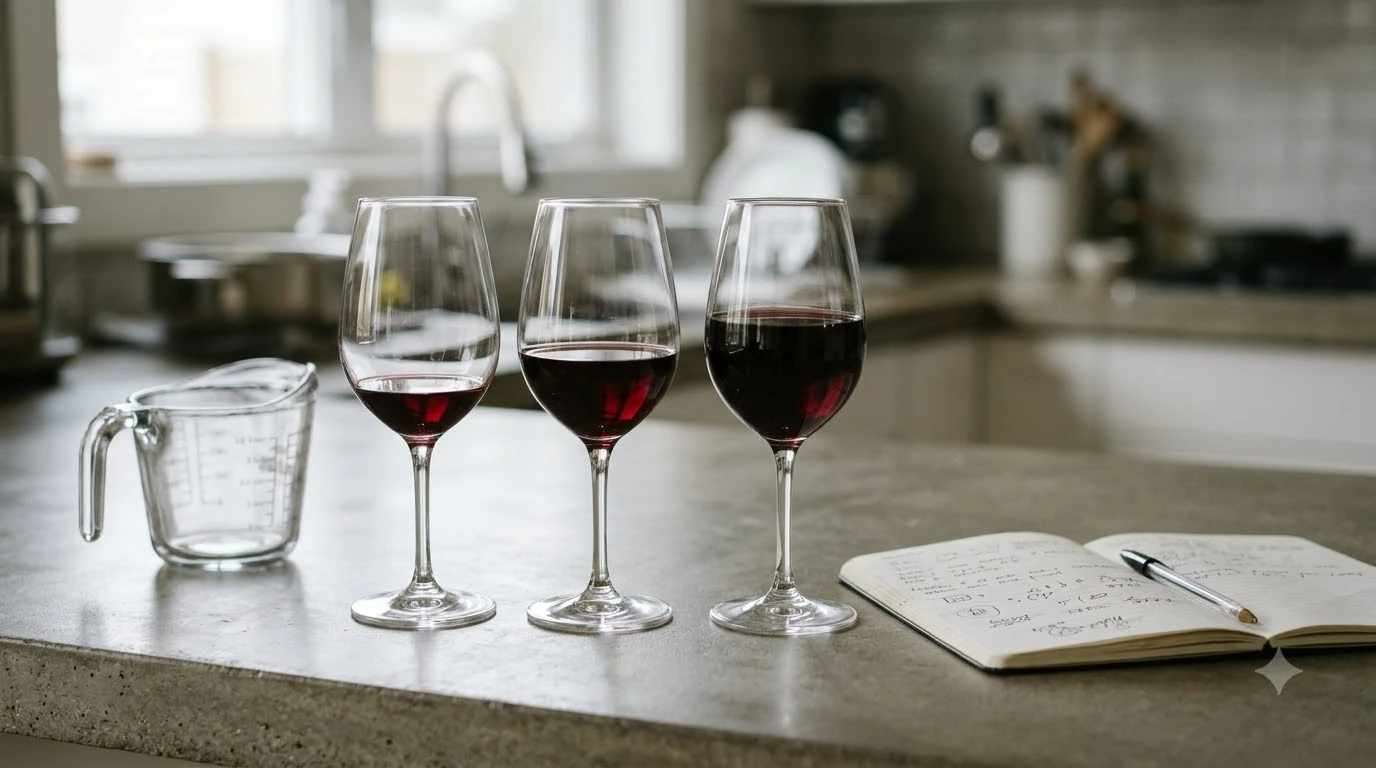
A standard 750-milliliter bottle yields about five 5-ounce pours. That serving size leaves enough room in a typical wine glass to swirl the wine and smell it without filling the bowl to the rim. For a young, full-bodied red such as Cabernet Sauvignon, 30 to 60 minutes in a decanter can soften the first impression and allow aromas to open. Merlot and Syrah may also benefit from a little air, but taste as you go: not every red requires a long decant, and older or delicate wines can lose freshness if left exposed for too long.
Tip: If a red tastes muted straight from the bottle, pour a small sample and give the rest 15 minutes in the glass or decanter before deciding it needs a longer aeration. A modest cool-down is often more useful than leaving a bottle open for hours.
Store unopened bottles away from sunlight, heat, and temperature swings. A cool location near 55°F is a useful target; bottles with natural corks are generally stored on their sides. Refrigerate opened still wine and aim to finish it within 3 to 5 days. Bring a chilled red toward its serving range before pouring.
Food Pairings for Each Style
The simplest pairing method is to match the wine’s structure to the weight and seasoning of the dish. Cabernet Sauvignon and Syrah can stand beside savory, protein-rich food, while Chardonnay and softer Merlot are often easier with poultry, vegetables, or less intensely seasoned meals.
Cabernet Sauvignon works naturally with grilled steak, lamb chops, burgers, and slow-cooked beef. Its high tannin can feel rough beside very lean food, but salt and fat soften the perception of tannin, which is why a well-seasoned steak or a burger with cheese can make the wine feel more balanced. Merlot can be paired with roast chicken, meatloaf, pork tenderloin, or mushroom dishes. The grape’s medium tannin gives it enough structure for meat without demanding the same amount of fat as a powerful Cabernet.
Syrah pairs well with grilled sausages, barbecue that is not too sweet, lamb, and roasted mushrooms. Its firm structure can meet charred or savory flavors, but be cautious with very hot chili sauces: alcohol and tannin can amplify the sensation of heat. If the dish is spicy, choose a lower-alcohol, softer style rather than assuming a bold red will calm the pepper. Red Blend is best matched after considering the blend’s dominant grape and body. A round, Merlot-led blend may suit tomato pasta or roast chicken; a Cabernet-led blend can work better with burgers or grilled beef.
Chardonnay is versatile with roast chicken, salmon, crab, shrimp, creamy pasta, and vegetables cooked with butter or olive oil. Its medium acidity may not cut through sharp citrus or tomato as effectively as Sauvignon Blanc or Riesling, so choose a fresher example for lemon-caper chicken or vinaigrette. Acidic food needs wine with equal or higher acidity or the wine can taste flat. Blue cheese brings salt and richness that can soften red-wine tannin; oily fish can clash with tannic reds, making Chardonnay a better choice than Cabernet Sauvignon or Syrah. For more on comparing producer labels and collections, the site’s Wine Brands resource offers useful context.
Frequently Asked Questions
These answers cover the collection’s early milestones and clarify what the label represents.
When did Columbia Crest introduce Grand Estates?
Columbia Crest’s history timeline says Grand Estates Chardonnay, Merlot, and Cabernet Sauvignon were introduced in 2001. The present collection page lists five styles, including Syrah and Red Blend, so the current range is broader than the original launch lineup.
Who was Columbia Crest’s first winemaker?
The winery identifies Doug Gore as its first winemaker. He crafted the 1984 Vineyard Reserve White, which was first released in 1985 as a medium-dry blend of Riesling, Gewürztraminer, and Muscat Canelli.
What were Columbia Crest’s first red varietal releases?
The winery timeline records the first release of red wine varietals in 1988, using wines from the 1984 vintage. Cabernet Sauvignon and Merlot were the two red varieties named in that milestone.
When did the Columbia Crest winery open?
Columbia Crest says its winery and visitor center were officially dedicated and opened in June 1982. The winery also records that vineyards were planted in 1978 in the area that would become the Horse Heaven Hills AVA.
Has a Columbia Crest wine received major national recognition?
According to the winery’s timeline, Wine Spectator named the 2005 Reserve Cabernet Sauvignon its number-one wine on the publication’s Top 100 list in December 2009. The winery describes it as the first and only Washington State wine to receive that honor.
Columbia Crest Grand Estates is easiest to understand as five distinct Washington wine styles under one collection name. Choose the grape that suits the meal, use the vintage-specific details as a guide, and serve the bottle at a temperature that preserves its balance. That approach makes the range approachable without assuming every Grand Estates wine tastes the same.
More in Wine Brands
 Underwood Wine Price: Compare Bottles, Cans, and Pack SizesUpdated Nov 21, 2026
 Zenato Wine Price: Compare Styles and Choose the Right BottleUpdated Nov 21, 2026
 Zuccardi Wine Price: Compare Bottles and Find the Right RangeUpdated Nov 21, 2026
 Yellow Tail Moscato Review: Taste, Sweetness and Serving TipsUpdated Nov 21, 2026
 Wolf Blass Yellow Label Review: Choose Your Best StyleUpdated Nov 21, 2026
 Wolffer Estate Rose Review: Choose the Right Bottle for Your TableUpdated Nov 21, 2026