

We may earn a commission when you buy through links on this page, at no extra cost to you. Learn more.
Domaine Drouhin Oregon wine comes from a Dundee Hills estate founded in 1987 by the Drouhin family of Burgundy, and it is best known for Pinot Noir with a smaller Chardonnay program. The winery produced its first wine in 1988 from purchased fruit and began using its own estate grapes in 1990. Its Pinot Noirs follow classic Burgundian methods built on gentle handling and French oak. This guide covers the history, the vineyard, the winemaking approach, the core wines, and practical advice on serving and pairing.
Domaine Drouhin Oregon has been part of the Oregon wine scene since the late 1980s, when a Burgundy merchant family chose the Willamette Valley for a serious Pinot Noir project. The estate sits on a hilltop overlooking the Willamette Valley, and its wines are built around Pinot Noir with a smaller Chardonnay program alongside. Whether you are choosing a first bottle, planning a dinner, or comparing Oregon with Burgundy, the details below will help you decide. If you are new to how producers, families, and labels relate to one another, our Wine Brands overview is a good place to start before you compare bottles.
Who Founded Domaine Drouhin Oregon and Why Burgundy Looked West
The estate was started by Robert Drouhin, head of a Beaune merchant house, after years of interest in what Oregon could grow. The decision grew out of family history and first-hand contact with the region.
Maison Joseph Drouhin was founded in Beaune in 1880 by Joseph Drouhin, who had moved there from Chablis. His son Maurice succeeded him, and Robert Drouhin took control of the business in 1957. According to Wine with Seth’s producer profile, Robert first visited Oregon’s Willamette Valley in 1961 during a tour of the firm’s American markets, and that trip planted the idea that the region deserved a closer look.
Burgundy’s view of Oregon shifted in the late 1970s. A 1975 Pinot Noir Reserve from The Eyrie Vineyards placed in the top 10 of the 1979 Gault Millau Wine Olympics in France. A year later Robert organized a rematch in Beaune, where the Eyrie wine finished second, one-fifth of a point behind his own 1959 Chambolle-Musigny. Results like that made it hard for Burgundians to dismiss what Oregon could do with Pinot Noir.
Véronique Drouhin, a Dijon oenology graduate, joined the story in 1986 by interning at The Eyrie Vineyards, Adelsheim Vineyards and Bethel Heights. She became the estate’s first winemaker and has made every wine there since 1988. Readers who want to compare another Burgundy family business can look at our domaine laroche wine guide, which covers a different corner of the same tradition.
How the Dundee Hills Estate Came Together, Year by Year
The land was bought in July 1987, the first wine arrived in 1988, and the first vintage from the estate’s own grapes followed in 1990. The early milestones show a project built step by step rather than in one stroke.
Robert and Véronique decided to buy the land in July 1987. David Adelsheim, who had been scouting for Robert, showed him the Dundee Hills property during the first International Pinot Noir Celebration that year. According to Club Oenologique’s feature on the estate, Robert picked the site because its elevation, aspect and latitude were remarkably similar to Burgundy. At the time the family was not thinking in terms of appellations, because Oregon’s viticultural areas did not yet exist.
The first wine arrived in 1988 from 96 barrels of Pinot Noir made from purchased fruit. A four-level gravity-flow winery was built on the hilltop in 1989, and 1990 marked the first vintage from grapes grown on the estate. Véronique has said the founders faced no regulations about what to plant, so they could choose their own path, and they chose Burgundy clones.
The first years were hard. Véronique has described the early days without water or electricity, and she has said she spent months at a time away from her children. The team grafted its Burgundy clones onto rootstock, which looked unusual because Oregon had no phylloxera yet. Phylloxera was found in Oregon in 1991, and the grafted vines proved to be a sensible precaution. That early choice is why the estate now holds some of the oldest vineyards in the state.
The Vineyard Site: Soils, Elevation, and Sustainable Farming
The estate covers 235 acres on the western flank of the Dundee Hills, with about 130 acres planted to vines. The soils, slopes and climate explain much of the house style.
Chardonnay covers about 13 acres and is interplanted with Pinot Noir, with the Pinot planted at a range of elevations as in Burgundy. The soils are volcanic and derived from basalt, mostly the deep, well-drained Jory series and the shallower Nekia series. The vineyards face east at elevations between 200 and 350 meters, and that elevation and aspect are a large part of why the family chose the site.
The climate is maritime. Pacific breezes pass through the Coast Range and cool the valley, giving long, dry summers with plenty of sunshine, cool nights, and rainy winters. Pinot Noir grown in these conditions ripens slowly and keeps its acidity, which helps the wines hold their shape.
The estate is certified L.I.V.E. for sustainable viticulture, and its vines are tended by hand when leaves and fruit need thinning. It also grows its own rootstock in two large blocks, so cuttings can be grafted on the property. Taken together, these practices point to a vineyard built for control and consistency.
Winemaking Approach: Gravity Flow, Gentle Handling, and French Oak
The winery is built around gravity, and the Pinot Noir is handled gently from harvest to bottle. The slow pace is intentional, and it helps explain the fine texture and restrained oak in the wines.
Grapes are hand-picked into small 25-pound totes and moved into the four-level gravity-flow winery. Fermentations run 7 to 12 days, with gentle extraction through punch-downs, called pigeage, and pump-overs, called remontage. The free-run juice moves by gravity to the barrel cellar on the third level, which means less pumping and less stress on the wine.
After malolactic fermentation, the wines are racked off their lees by gravity and returned to barrel. The Pinot Noir spends 12 to 14 months in French oak, with about 20 percent of the barrels new, and the barrels are custom made in Burgundy. Véronique selects the best barrels for each cuvée, blends them, lets the wines rest, and moves them into bottle by gravity. The bottled wines then rest another 6 to 18 months before release.
The stylistic result will feel familiar to anyone who knows Burgundy: elegance and finesse over sheer power. The Prince of Pinot describes the estate’s Pinots as more elegant and less powerful than many Oregon Pinots, with good aging potential. Writing in Decanter, Anne Krebiehl MW has described Véronique’s preference for gentle extraction and restrained use of French oak.
The Core Wine Lineup: Laurène, Louise, Arthur, and Édition Limitée
The main Pinot Noirs are Cuvée Laurène and Cuvée Louise, with limited Édition Limitée bottlings and the Arthur Chardonnay alongside them. The table below summarizes the names, first dates, and what sets each wine apart.
| Wine | Variety | Vineyard source | First made or released | Key detail |
|---|---|---|---|---|
| Cuvée Laurène | Pinot Noir | Finest lots from the Dundee Hills estate | 1992 | Named for Véronique’s eldest daughter; the estate’s flagship |
| Cuvée Louise | Pinot Noir | Limited selection from the Dundee Hills estate | 1999, 75 cases | Named for her youngest daughter; modeled on Burgundy’s Musigny Vineyard |
| Arthur | Chardonnay | Dundee Hills estate | 2004 | Named for Véronique’s son; fermented in oak and stainless steel |
| Édition Limitée | Pinot Noir and Chardonnay | Drouhin family estate | 2012 vintage | Limited bottlings released together for the first time |
Cuvée Laurène is made from the finest lots of the estate vineyard and was first produced in 1992. Decanter’s 2020 tasting scored the 2014 Laurène at 94 points. The Prince of Pinot also gave the 2012 Laurène 94 points, praising its blueberry and black cherry fruit and its long finish. If you are weighing Drouhin against another Pinot-focused estate, our domaine de la cote wine guide makes a useful side-by-side read.
Cuvée Louise is the limited Pinot Noir. Its first bottling in 1999 was only 75 cases, and the wine is modeled on the style of Burgundy’s Musigny Vineyard. The Prince of Pinot scored the 2009 Louise 93 points, describing a mouthful of ripe fruit with a silky finish.
Arthur is the estate’s Chardonnay and is named for Véronique’s son. Club Oenologique describes its character as shimmering acidity and fine cooked-pear fruit, with fermentation split between oak and stainless steel. The wine sits between the aims of a Chablis and a Meursault, though it has its own Oregon length and tropical hint. Decanter scored the 2016 Arthur 91 points.
Tip: Drouhin Pinots often show more on the second day, according to reviewers who revisited opened bottles. Keep a glass or two of Laurène or Louise for the next evening before you judge the wine.
Roserock: The Second Estate in the Eola-Amity Hills
Roserock is the family’s second vineyard, planted in the Eola-Amity Hills and bought in the early 2010s. Its cooler site and different soils give the Drouhins a second voice for Pinot Noir.
Roserock’s soils are volcanic but more Nekia than Jory, which The Prince of Pinot describes as a clear contrast with the Dundee Hills estate. The site is cooler and has more variation in aspect. WineWiki dates the purchase to 2013, while The Prince of Pinot dates it to 2014, so the early 2010s is the safest way to describe the timing. The vineyard is also LIVE certified for sustainable viticulture.
The Roserock Zéphirine Pinot Noir is a barrel selection meant to show the best of the site. The Prince of Pinot described its 2014 version with blackberry and cassis flavors and firm tannins that grew more integrated after a day in the bottle. The name honors Zéphirine Drouhin, who has no family relation to the estate, and a rose was named after her in 1868.
The family draws a clear contrast between the two sites. WineWiki reports that the Dundee Hills style is charming and rather silky, while the Eola-Amity Hills style is more structured and energetic. If you want a silkier, more perfumed Pinot, start with the Dundee Hills bottlings. If you want more structure, Roserock is the better pick.
Serving, Decanting, and Food Pairing for Drouhin Oregon Wines
Serve the Pinot Noirs a little cooler than many people expect, decant the young and fuller bottlings, and match the Chardonnay to food with acidity. The basic rules are simple, and they make a clear difference at the table.
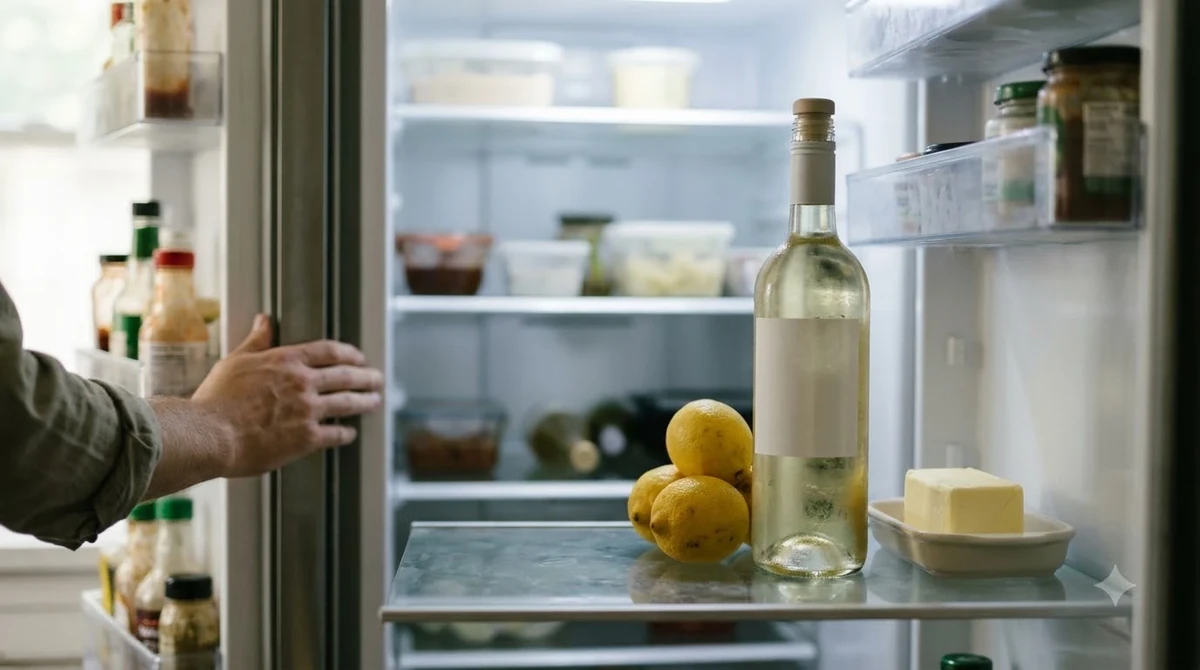
Pinot Noir shows best between 55 and 60 F, which keeps the fruit lifted and the oak in the background. Arthur Chardonnay works well around 50 to 55 F, and a dry rosé around 45 to 50 F. Store bottles on their side in a cool place near 55 F. Once opened, a still wine keeps for three to five days in the refrigerator.
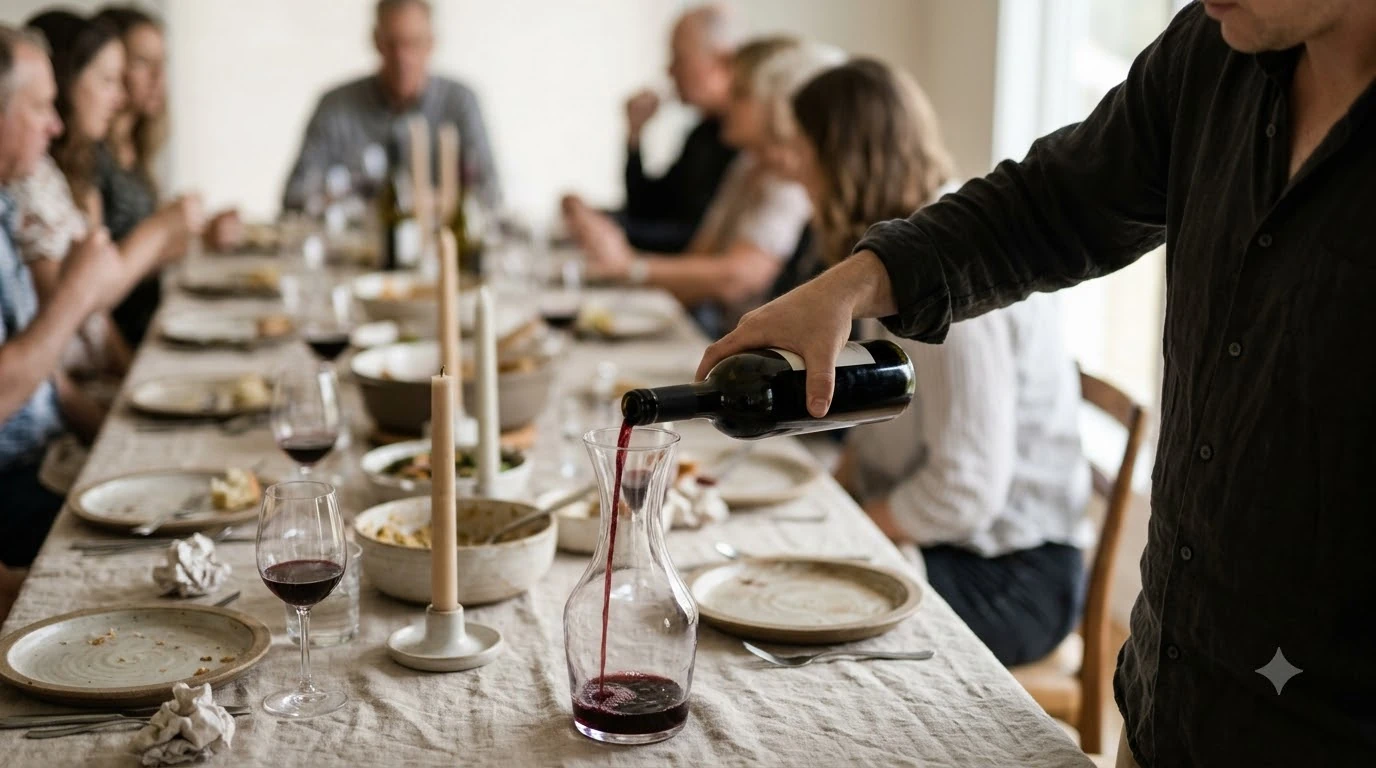
Decanting is optional for the lighter Pinots but useful for the younger, fuller bottlings. A common rule for young full reds is to decant for 30 to 60 minutes before serving. The Prince of Pinot notes that the 2012 Laurène was enjoyable with decanting even when young, and that it opened further in the glass over time.
Pinot Noir’s bright acidity and low to medium tannin make it a flexible partner. Roast duck, pork and salmon all suit the Pinots, and The Prince of Pinot has noted that the estate’s rosé works well with grilled salmon. Arthur needs food with acidity or richness to match its brightness, so roast chicken with lemon or a cream sauce is a good match. Salty and fatty dishes soften tannin, so a cheese board works with the Pinots as well. If you also buy Provence-style rosé, our domaine ott wine guide explains how the styles differ.
Frequently Asked Questions
Can Domaine Drouhin Oregon Pinot Noir age?
Yes, the estate’s Pinots have a reputation for aging well. The Prince of Pinot’s review of the 2012 Laurène said it could age magnificently for another 5 to 15 years after that review.
When did the estate start making Chardonnay and rosé?
The Chardonnay program began in 1996, according to The Prince of Pinot’s winery profile. The estate first produced a rosé in 2008, which made the 2009 release its second.
How much wine does the estate produce?
In 2014 the estate produced about 18,000 cases, all grown on its own land. The Prince of Pinot’s winery profile reports those figures and describes the estate as fully estate grown.
Does the winery use solar power?
Yes, the winery has a solar installation rated at 94.5 kW. The Prince of Pinot’s winery profile describes it as the largest solar system in Oregon’s wine industry.
How many wineries were in Oregon when Domaine Drouhin started?
Club Oenologique reports that Oregon had 30 wineries in 1988, when the estate was establishing itself. The same feature says the state had grown to about 800 wineries by the time it was published.
Domaine Drouhin Oregon offers Burgundy-style structure with Oregon fruit, and it rewards buyers who like elegance over power. Start with the Laurène for Pinot Noir and the Arthur for Chardonnay, then try Roserock once you know the house style. Serve the wines slightly cool and give the Pinots a little time in the glass.
More in Wine Brands
 Underwood Wine Price: Compare Bottles, Cans, and Pack SizesUpdated Nov 21, 2026
 Zenato Wine Price: Compare Styles and Choose the Right BottleUpdated Nov 21, 2026
 Zuccardi Wine Price: Compare Bottles and Find the Right RangeUpdated Nov 21, 2026
 Yellow Tail Moscato Review: Taste, Sweetness and Serving TipsUpdated Nov 21, 2026
 Wolf Blass Yellow Label Review: Choose Your Best StyleUpdated Nov 21, 2026
 Wolffer Estate Rose Review: Choose the Right Bottle for Your TableUpdated Nov 21, 2026