

We may earn a commission when you buy through links on this page, at no extra cost to you. Learn more.
Here is how to swirl wine: set the glass on a flat surface, hold its stem, and move the base in small circles until the wine forms a shallow whirl. A few seconds is enough to expose more of the wine to air and lift aromas toward your nose. Once the motion feels steady, you can repeat it while holding the glass, using a restrained wrist movement rather than a large sweep.
Swirling is a practical tasting step, not a performance. It helps you notice fruit, floral, herbal, spice, and oak-related aromas before taking a sip, and it gives you a moment to look at the wine as it moves around the bowl. You do not need a special glass or professional technique to get the benefit; a modest pour, a stable surface, and a small circular movement will do. For a wider introduction to tasting, start with these Wine Basics.
Why swirling releases more wine aroma
Swirling spreads a thin film of wine around the inside of the glass, increasing the area exposed to air and helping aromatic compounds move from the liquid into the space above it. That makes the wine easier to smell, which matters because much of what people describe as flavor is perceived through the nose.
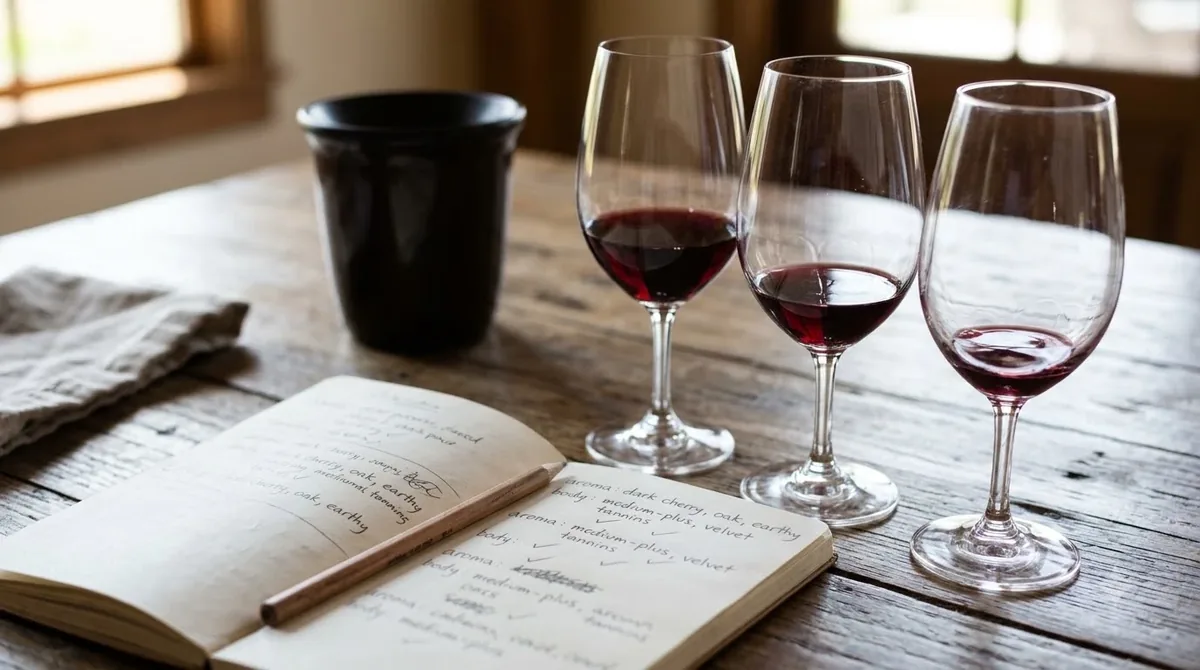
Wine Enthusiast explains that as wine meets oxygen, aroma compounds become more detectable as they travel with evaporating alcohol from the glass. The effect is especially useful when a young Cabernet Sauvignon, Syrah, or aromatic white initially seems muted. A still glass can show a few scents, but a gentle swirl often makes fruit, herbs, flowers, baking spices, or oak notes more apparent. The change is not magic and it does not create aromas that were never present; it helps make existing aromas easier to notice.
The Wine and Spirit Education Trust (WSET) recommends a small pour, a first sniff, a gentle swirl, and a second sniff. The comparison gives you a baseline: does the second smell reveal a clearer fruit note, a new scent, or no meaningful change? Read WSET’s guide to tasting wine for more on the relationship between aroma and flavor.
How to make a steady, spill-free swirl
The most reliable method starts with the glass on a table, not in the air. A flat surface steadies the bowl while you learn the small circular movement, so you can focus on the wine rather than balancing the glass.
First, pour a modest amount into a clean wine glass; leave most of the bowl empty. Place the base on the table, grip the stem near its midpoint or lower end, and keep the foot flat. Move the stem in small circles so the base traces a tight circle on the surface. The wine should climb partway up the sides of the bowl and roll back down without reaching the rim. Begin with two or three slow circles, then pause and look at the wine. You can add a little more movement if it is not circulating, but there is no prize for speed.
Once the tabletop method feels natural, lift the glass an inch or two and keep the same compact wrist action. Hold the stem and keep your elbow close to your body. If the wine climbs too high, stop and let it settle; do not try to correct it with a sharp flick. The goal is a controlled ring, not a wave.
VinePair describes both the table-based method and the lifted-glass method as valid approaches, and recommends practicing with water for about 5 to 10 seconds. That is a useful low-mess exercise: add a small amount of water to an empty glass, place it on a table, and rehearse until the liquid travels around the bowl smoothly. Its swirling technique overview also makes a sensible point about restraint: broad, showy movements are unnecessary. A short, neat swirl is easier to repeat and less likely to splash a shirt or tablecloth.
Choose a glass and pour that give the wine room
A glass with a rounded bowl and a rim that narrows slightly is a good everyday choice because it gives the wine space to move while directing aromas toward your nose. A moderate pour leaves enough empty space for the liquid to travel without spilling over the edge.
For a still wine, start with roughly 2 to 3 ounces in the glass during a tasting. That is not a standard drinking pour; it is a practical tasting amount that leaves plenty of headroom for swirling, smelling, and comparing several wines. For a normal serving, a 5-ounce pour is common, but the bowl should still be far from full. A 750-milliliter bottle provides about five 5-ounce glasses, so a tasting pour also makes it easier to share a bottle among several people without filling every glass to the brim.
The bowl needs room for a small circular current, but it does not have to be oversized or costly. A standard all-purpose glass works for Pinot Noir, Merlot, Chardonnay, Sauvignon Blanc, and many other still wines. A narrow tumbler or a glass filled nearly to the rim makes swirling harder. Stemless glasses work too: set one firmly on the table and use short circles, avoiding a long grip around the bowl that can warm the wine.
Tip: Practice with 2 ounces of water in the glass before trying a full pour of red wine. A few controlled circles should make a shallow moving ring; if the liquid reaches the rim, reduce the circle size and slow your hand.
Keep the glass clean and free of detergent scent, since residue can distract from subtle aromas. If you are tasting several wines, use the same glass shape and a similar pour for each one. Consistency makes comparisons more useful: a fuller bowl or a much larger sample can make one wine seem more aromatic simply because it has more surface area exposed to air.
What the wine’s legs can and cannot tell you
After a swirl, look for the thin trails that form on the inside of the bowl as the wine runs back down. These streaks are commonly called legs or tears, and they can offer clues about alcohol and viscosity, but they are not a quality score.
Legs form as alcohol and water evaporate at different rates and surface-tension effects pull liquid into streams along the glass. More visible or slower-moving legs may suggest higher alcohol or a fuller, more viscous feel, but glass cleanliness, room conditions, and the wine’s composition also affect the display. Compare wines in similar glasses rather than ranking them by dramatic streaks.
Do not assume that heavy legs mean the wine is sweeter, older, more expensive, or better made. A high-alcohol Zinfandel may show pronounced legs, while a lighter Pinot Noir may leave finer trails; neither appearance tells you whether the wine is balanced or enjoyable. Use the visual cue as one observation, then return to the aroma and palate. Notice whether the wine smells like ripe blackberry, cherry, lemon, pear, or herbs, and whether its acidity, tannin, body, and finish fit the style.
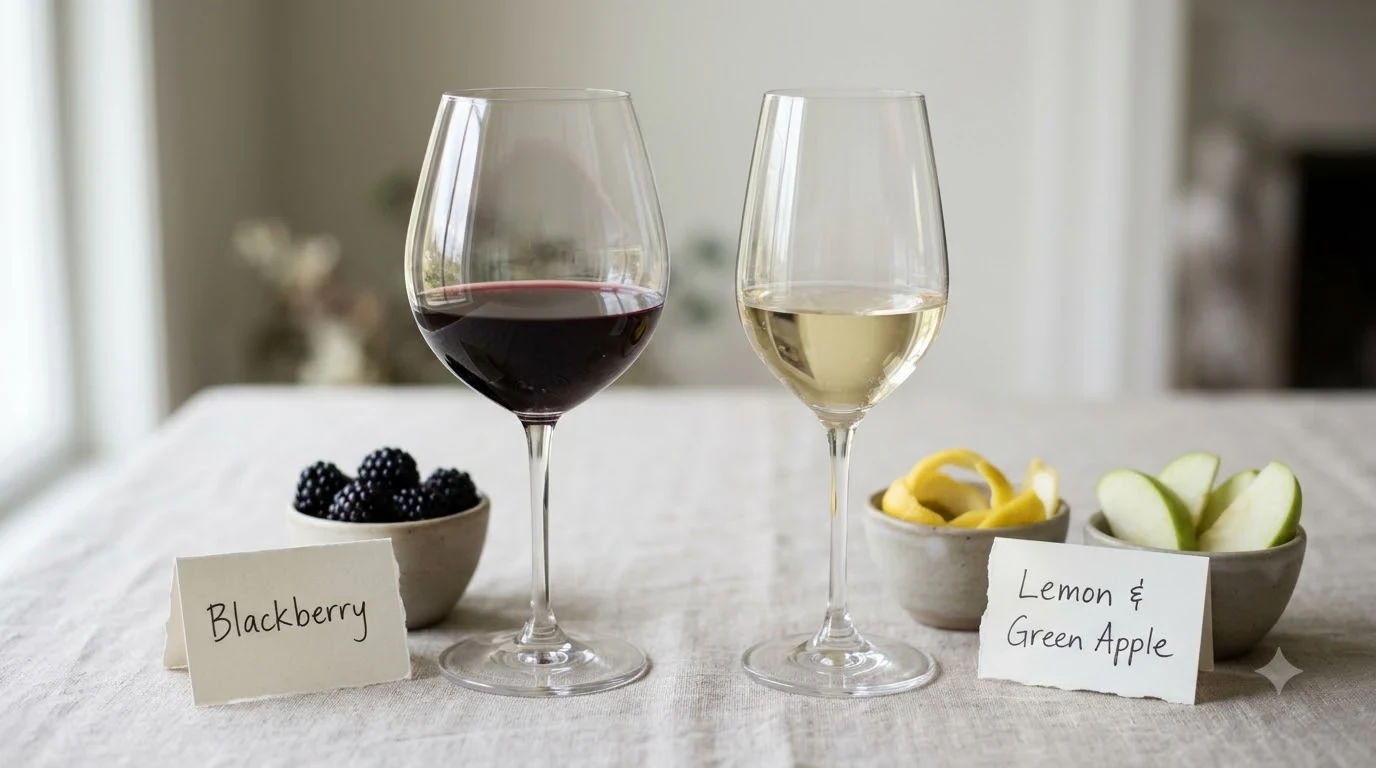
A swirl also helps you inspect color and clarity. A deep ruby red may look lighter at the rim, while a pale white can show straw or lemon tones against a white background. Tilt the glass over a white napkin and compare the center with the edge. These clues provide context but cannot identify a grape or region with certainty.
Which wines to swirl and when to leave the bubbles alone
Most still wines benefit from at least one gentle swirl, including Cabernet Sauvignon, Pinot Noir, Chardonnay, Sauvignon Blanc, and rosé. Sparkling wines are the main exception: routine swirling can release carbon dioxide and reduce the stream of bubbles that carries aromas to your nose.
For still reds, a short swirl can expose dark fruit, red fruit, pepper, cedar, or earth. Young Cabernet Sauvignon and Syrah may seem closed just after pouring; Merlot and Pinot Noir often need a lighter movement. Swirl Sauvignon Blanc to look for citrus, cut grass, or herbs, and Chardonnay for apple, stone fruit, or toast. Rosé can be swirled like a still white, with care to keep it below the rim.
For Champagne, Cava, Prosecco, and other fully sparkling wines, do not make a full swirl part of your normal routine. The bubbles release carbon dioxide as they rise, and that movement already helps carry aromas out of the wine. Wine Enthusiast’s discussion of sparkling wine notes that swirling can speed the loss of those bubbles; it recommends observing the bead and bringing the glass to your nose before considering even a very gentle swirl. The practical rule is simple: preserve the fizz first, especially when the wine’s lively texture is part of its appeal.
There are exceptions during serious tasting. An older vintage Champagne with fine bubbles, a lightly sparkling pét-nat, a frizzante wine, or an aromatic sparkling red such as Lambrusco may tolerate a small movement when aroma is the priority. Start with a sniff and let the bubbles work first. A swirl may reveal developed notes in an aged bottle, but it also costs effervescence.
Match the swirl to the wine’s age, temperature, and setting
Swirling is most useful when it is adjusted to the wine rather than repeated automatically. A young, concentrated red can handle a more confident initial swirl, while an older or delicate wine calls for a smaller movement and a faster return to smelling and sipping.
Wine Enthusiast notes that younger, bolder wines may need more exposure to air, while an older vintage can be more vulnerable to over-oxidation. Give a young Cabernet Sauvignon or Syrah a few seconds of movement, then smell before deciding whether to repeat. Treat mature Burgundy or aged Pinot Noir gently; one small swirl may be enough. Several seconds of swirling may help a temporary matchstick or struck-flint smell fade, but it will not cure every fault.
Temperature also affects what you notice. Very cold wine can seem muted, so a white served straight from a very cold refrigerator may need a few minutes in the glass before its aromas become expressive. Typical serving ranges provide a useful reference: sparkling wine is usually served at 40–50°F, light whites and rosé at 45–50°F, full-bodied whites at 50–55°F, light reds at 55–60°F, full-bodied reds at 60–65°F, and sweet whites at 43–50°F. The purpose of swirling is not to warm a wine dramatically; it is to release aromas while the wine is near its intended serving temperature.
| Wine style | Swirl approach | Typical serving temperature |
|---|---|---|
| Light white or rosé | One gentle swirl; repeat only if aromas seem reserved | 45–50°F |
| Full-bodied white | Gentle to moderate swirl in a roomy bowl | 50–55°F |
| Sweet white | Small swirl, then smell before sipping | 43–50°F |
| Light red | One or two controlled swirls | 55–60°F |
| Full-bodied red | A few seconds of swirling, then pause | 60–65°F |
| Sparkling wine | Usually skip the swirl to preserve bubbles | 40–50°F |
Think of the swirl as one step in a repeatable tasting sequence: look, swirl, smell, sip, and consider the finish. Smell once before swirling and again afterward so you can compare what changed. WSET also describes how aromas travel from the mouth toward the nose when you taste, which is why a small sip and a pause can reveal more than a quick gulp. There is no need to swirl constantly while talking or eating; a brief movement before the first sniff is usually enough. For a dinner or gathering, this approach works just as well with one bottle as with several; this guide to how much wine for 100 guests can help estimate bottles for a large group, while this explanation of how many glasses in a magnum helps with larger-format serving expectations.
Frequently Asked Questions
These five answers address bottle aeration, sediment, fortified wines such as Port and Sherry, swirl direction, and alcohol content.
Does swirling aerate the whole bottle?
No. The movement affects only the small amount already poured into your glass; the wine remaining in the bottle is not stirred or meaningfully aerated. Resealing the bottle limits further air exposure to the remaining wine.
Should you swirl a wine that has sediment?
Use a gentle motion, since a vigorous swirl can distribute sediment through the glass. Sediment in an older red can form as natural color and tannin compounds settle over time, and it is not automatically a sign that the wine is faulty. Pour slowly and leave the deposit behind.
Can you swirl Port or Sherry?
Yes. Still fortified wines such as Ruby Port, Tawny Port, and Oloroso Sherry can be swirled gently to release their aromas. Use a small pour, since these styles are commonly served in smaller portions than table wine.
Does the direction of the swirl matter?
No. A clockwise or counterclockwise circle works equally well; there is no required direction for releasing aroma. A smooth, contained motion matters more than which way the glass travels.
Does swirling lower the alcohol in wine?
No. Swirling helps volatile aromas move into the air, but a few seconds of movement does not reduce the alcohol in a glass by a meaningful amount. The wine should be treated as having the same strength before and after the swirl.
A good swirl is small, steady, and purposeful: it should help you smell the wine, not draw attention to the movement. Start with the glass on the table, leave room in the bowl, and adjust the motion to the wine in front of you. With a little practice, the technique becomes a natural part of tasting still wine while sparkling wine gets to keep its bubbles.
More in Wine Basics
 Which Rose Is Best for Your Taste, Budget, and Food PairingsUpdated Nov 21, 2026
 Is Cheap Wine Bad? How to Find Bottles Worth DrinkingUpdated Nov 21, 2026
 What To Write On A Wine Gift Tag: Thoughtful Messages For Every OccasionUpdated Nov 21, 2026
 Which Wine Is Best For Weight Loss? Compare Lower-Calorie ChoicesUpdated Nov 21, 2026
 What Is The Best Wine For Mimosas? Choose Bubbly That Balances Orange JuiceUpdated Nov 20, 2026
 Which Prosecco Is Best for Your Taste and OccasionUpdated Nov 20, 2026