

We may earn a commission when you buy through links on this page, at no extra cost to you. Learn more.
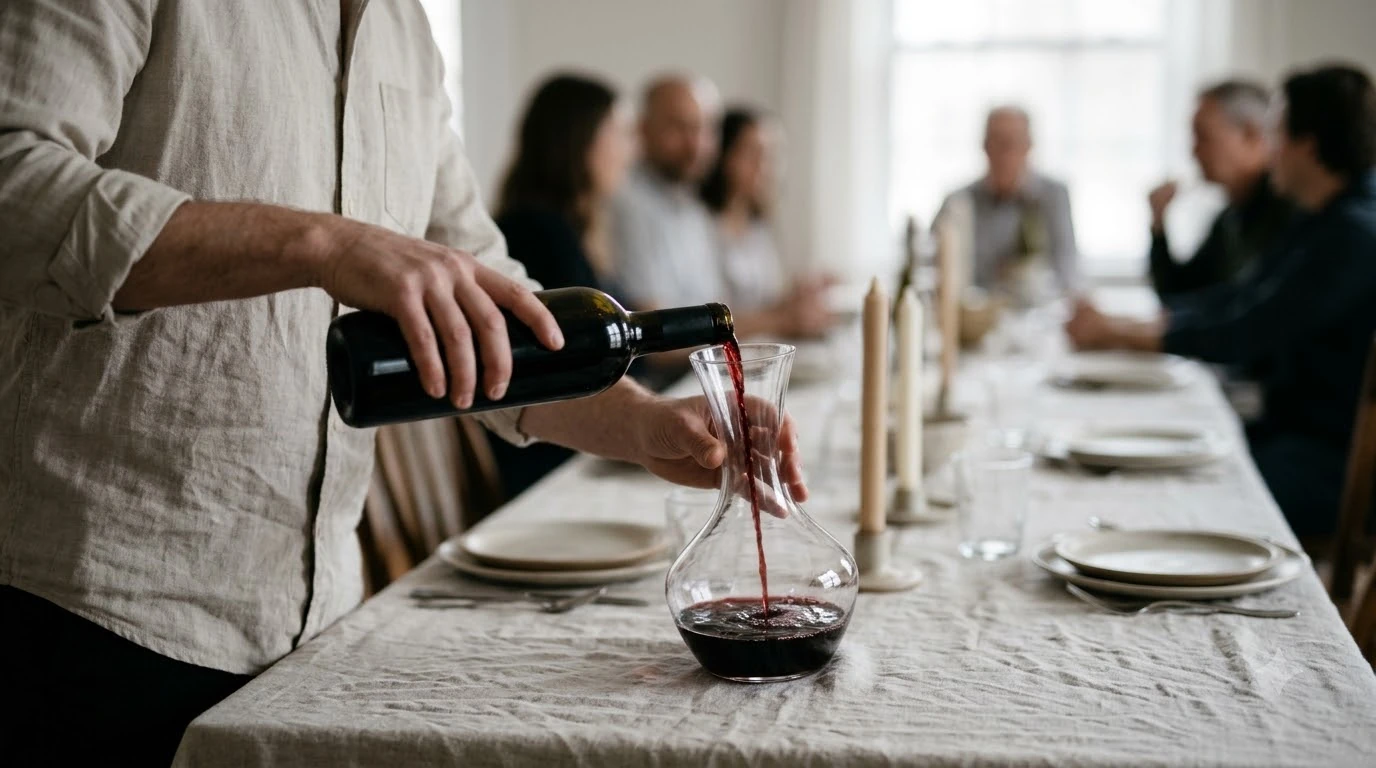
To answer how many bottles of wine for 20 guests you will need, plan on about 14 bottles for a three-hour party where everyone drinks wine. That figure assumes each wine drinker has one 5-ounce glass per hour, that a standard 750 ml bottle pours about five glasses, and that you add a 10 percent spare for generous pours and the occasional faulty bottle. A two-hour gathering needs about nine bottles, while a four-hour reception calls for 18. If some guests will stick to beer, cocktails, or soft drinks, subtract them before you start multiplying.
Hosting 20 people turns a simple question into a planning problem, and the wine order is where most hosts second-guess themselves. Run short during the toast and the evening loses momentum, while overbuying leaves a dozen half-empty bottles and nowhere to put them. The math is straightforward once you know three things: how long the party lasts, how many guests will actually choose wine, and how much a typical pour holds.
The Formula That Sets the Number
Every reliable planning method starts from the same two facts: how much wine a bottle holds and how much a guest pours. Once those are fixed, the rest is multiplication.
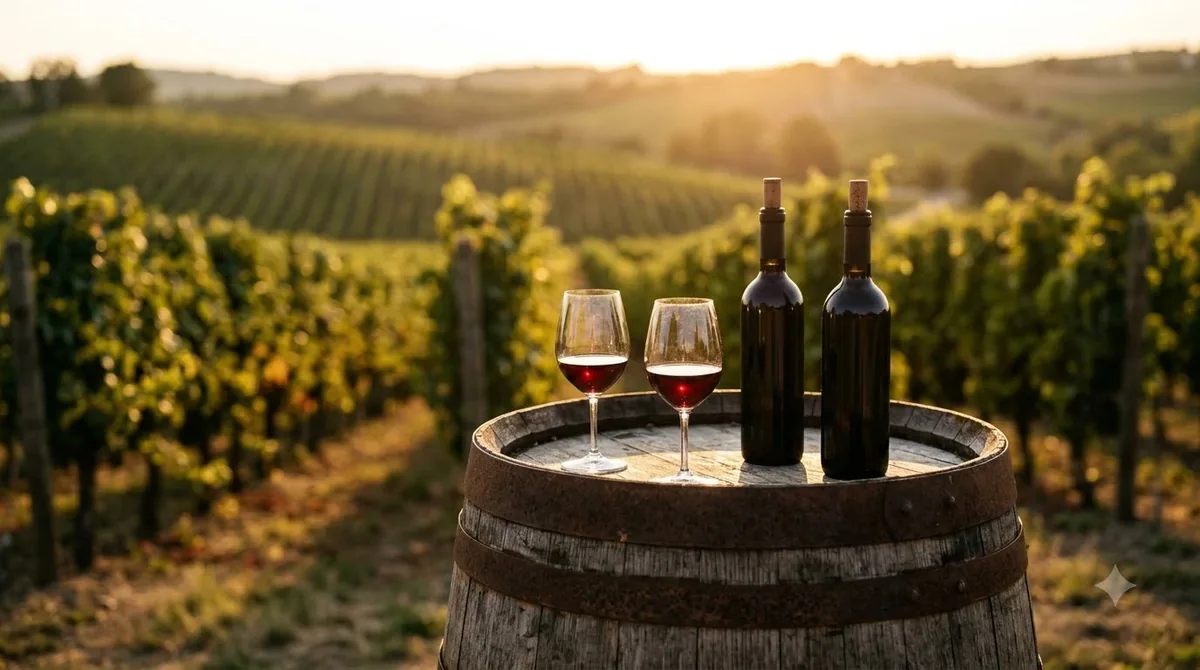
A standard 750 ml bottle holds about 25 ounces, which fills five glasses of 5 ounces each. Most planning guides assume each wine drinker will have about one glass per hour, with a little extra in the first hour when people arrive thirsty and a slower pace as the evening goes on. For 20 guests over three hours, that works out to 60 glasses, and 60 divided by five gives 12 bottles before any spare. The one-glass-per-hour rule is an average rather than a promise, so if your party opens with a welcome toast and a long stretch of appetizers, lean toward the higher end of the range.
The spare is the step most hosts skip, and it is the one that prevents the worst outcome. Adding 10 percent covers bigger pours than planned, a bottle that turns out to be faulty, and guests who top up their own glasses. Twelve bottles plus 10 percent comes to 13.2, which you round up to 14, because running short is the one mistake you cannot repair once the party has started. If you would rather open fewer, larger bottles, the breakdown for big formats is in how many glasses in a magnum.
The whole calculation fits in one line: guests times hours times 0.22, rounded up, gives the number of 750 ml bottles to buy when every guest drinks wine. The 0.22 is one glass per hour, divided by five glasses per bottle, multiplied by 1.1 for the spare. The tables below follow that same logic.
Bottles for 20 Guests by Party Length
Party length changes the answer more than most hosts expect, so the three-hour row is the place to start unless you know your evening will run shorter or longer.
| Party length | Glasses poured (20 guests) | Bottles before spare | Bottles to buy (with 10% spare) |
|---|---|---|---|
| 2 hours | 40 | 8 | 9 |
| 3 hours | 60 | 12 | 14 |
| 4 hours | 80 | 16 | 18 |
Read across the table and the pattern is clear: each extra hour adds roughly four or five bottles for a group of 20. The three-hour row fits a typical dinner or an early-evening reception with appetizers, and it gives you 14 bottles for 20 wine drinkers. Stretch the same guest list to four hours and the order climbs to 18, which is why a late dinner or a party that runs into the night needs more than the headcount alone suggests.
The one-glass-per-hour rhythm is the same one behind the Sommy party wine guide, which plans one 150 ml glass per wine drinker per hour and five glasses to a 750 ml bottle. That guide also lands on 14 bottles for 20 guests at three hours. If your list grows well beyond 20, the same logic scales cleanly, and how much wine for 100 guests works through the bigger version of this math.
Adjusting for Different Party Styles
The kind of event changes how much wine each guest drinks, so a single per-guest figure rarely fits every party.
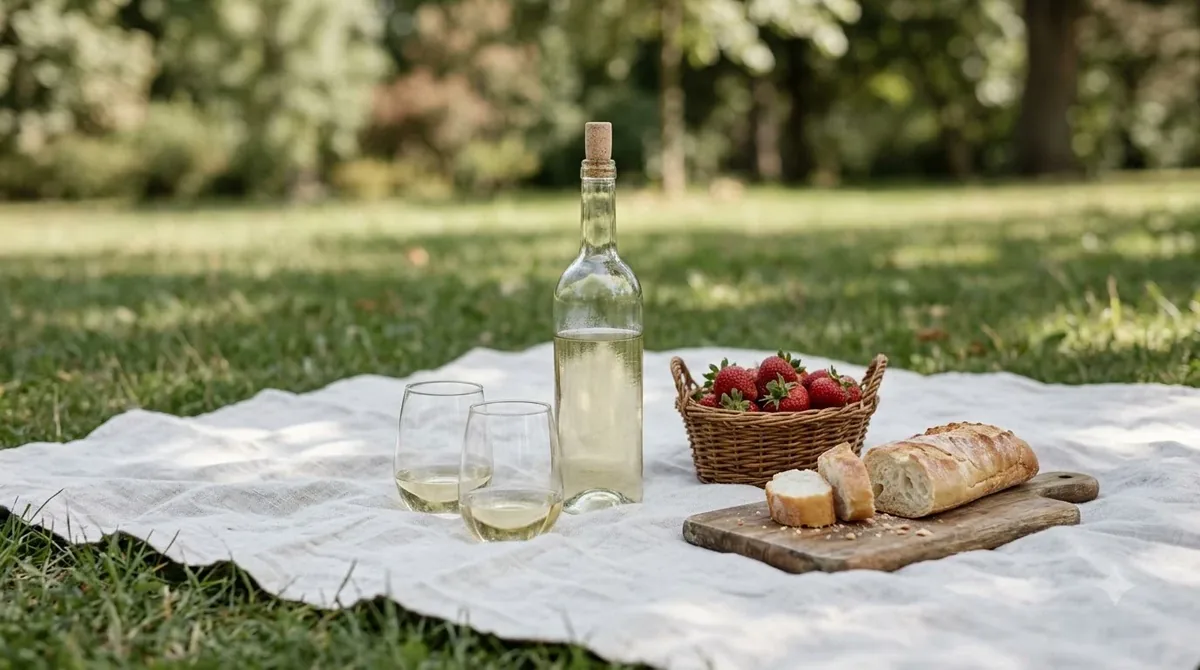
A cocktail party with food and other drinks needs less wine than a seated dinner. One California winery’s planning guide suggests about 0.4 bottles per guest for a three-hour cocktail party where other drinks are offered, and about half a bottle per adult wine drinker for a three-hour dinner where wine is the main drink. The table below applies those ratios to 20 guests and adds the 10 percent spare.
| Party style | Bottles per guest | Bottles for 20 guests | Buy with 10% spare |
|---|---|---|---|
| Cocktail party, 3 hours, other drinks served | 0.4 | 8 | 9 |
| Seated dinner, 3 hours, wine as the main drink | 0.5 | 10 | 11 |
| Wine-focused dinner, about one bottle per guest | 1.0 | 20 | 22 |
| Reception, 5 hours, full bar | 0.6 | 12 | 14 |
The wine-focused row is the one to choose when your guests are serious about wine. Wine writer Jancis Robinson describes a serious wine dinner as roughly a bottle a head, while she reckons half a bottle a head suits friends who are less interested in the wine itself. For a group of 20, that difference doubles the order from 11 bottles to 22, so it is worth knowing which kind of crowd you are hosting before you buy. Receptions with food and a full bar sit in the middle, and the bar absorbs part of the demand, but a five-hour stretch is long enough that the total stays well above the cocktail-party row. Welcome glasses poured as guests arrive also count toward the total, so a long reception should be planned from the first pour.
Planning for Guests Who Skip Wine
Not every guest on the list will drink wine, and the count should reflect that before you multiply anything.
Tip: Count drinkers, not invitations. A simple RSVP question about wine will give you a far better number than the full guest list.
Start by taking out children, guests who will drink only beer or spirits, and anyone who prefers soft drinks. If six of your 20 guests will not touch wine, you are planning for 14 wine drinkers. At three hours, 14 times three is 42 glasses, which is 8.4 bottles before the spare and 10 bottles after it. That is four fewer bottles than the full-headcount plan, and a real saving once you get to case prices.
The same logic works as a quick sanity check when you are unsure of the crowd. The winery guide mentioned above suggests scaling the order down by a third when a third of the guests will not drink wine. Keep non-alcoholic options such as sparkling water and a soft drink in clear view from the start, so guests who skip wine are not reaching for your reserve bottles.
Splitting Bottles Between Red, White, and Sparkling
A 50/50 split between red and white works as a default, and the menu should steer the final numbers from there.
For 14 bottles, that default gives seven red and seven white. Lean toward red when the main course is roast beef or lamb, because tannin softens against fat and protein. Cabernet Sauvignon, with its high tannin, handles rich meat well, and a 70 percent red split turns 14 bottles into about 10 red and four white. Pinot Noir, with lower tannin and higher acidity, is the more flexible red when the menu is mixed.
Lean toward white when the main is fish or chicken, because oily fish clashes with tannic reds. A 70 percent white split gives about 10 white and four red from the same 14 bottles. Sauvignon Blanc and Riesling bring high acidity that suits lighter dishes, while Chardonnay with medium acidity works well with richer sauces. Match acidic food with wines of equal or higher acidity, since a flat wine tastes thin next to a vinaigrette, and serve light whites and rosé at 45 to 50 F, with full whites at 50 to 55 F.
Sparkling wine is a separate decision. For a toast, plan one bottle for every six guests, rounded up, so 20 guests need four bottles. Sommy’s calculator counts toast bottles as part of the evening’s total rather than adding them on top, so four of the 14 can be sparkling, leaving ten still wines to split between red and white. Chill sparkling wine to 40 to 50 F before pouring. For a clearer picture of how the styles differ, the Wine Basics lessons are a good place to start.
Why Extra Wine Is Worth Buying and How to Store It
Buying slightly more than the formula suggests protects the party, and unopened wine keeps well enough to finish later.
Wine writer Jancis Robinson describes the ideal host as one who offers, but does not necessarily pour, slightly more wine than guests need. That is the same instinct behind the 10 percent spare: a little surplus costs little, while an empty table in the middle of dessert costs the evening. In her notes on hosting, she also points out that a half bottle of sweet wine can be shared between six or even eight people at the end of a meal. Choose a sweet wine at least as sweet as the dessert, and keep it for that final pour.
Unopened bottles keep, so surplus rarely goes to waste. Store them on their side near 55 F, which keeps the corks moist and the wine stable. Once a bottle is open, the clock starts: sparkling wine lasts about one to three days in the fridge, still wines three to five days, fortified wines several weeks, and bag-in-box wine four to six weeks. Finish opened sparkling first, since it fades fastest.
Hold back a few sealed bottles rather than opening the whole order at once. The reserve stays fresh, and you can open another style if the crowd shifts toward it. Between the spare, the storage window, and a sensible split, you finish the night with wine to spare instead of a last-minute trip to the shop.
Frequently Asked Questions
These answers cover the situations hosts ask about most often once the basic count is settled.
How many bottles of wine for 20 guests at a five-hour reception with wine and beer only?
Plan about 0.8 bottles per guest for that setup, which comes to 16 bottles before the spare. Adding the 10 percent spare brings the order to 18. A reception where beer and wine are the only options needs far more wine than one with a full bar.
How many bottles should I buy for 25 guests at a three-hour party?
Plan on 17 bottles if all 25 guests drink wine. That is 75 glasses, which fills 15 bottles before the spare, and the spare pushes the total to 16.5, rounded up to 17. If the guest list changes, rerun the same multiplication with the new headcount.
Should I round my order up to a full case?
Often yes. A case holds 12 bottles, or about 60 glasses. The Sommy guide advises buying the full case when your total lands one or two bottles short of 12, so a total of 10 or 11 becomes one case. Fourteen bottles, the number for a three-hour party, is one case plus two more.
How can I tell if a bottle is bad before the party starts?
Smell each bottle before guests arrive. A musty smell, like wet cardboard, usually means cork taint, a chemical fault that flattens the fruit. Set that bottle aside and open a spare, which is one more reason to keep the 10 percent cushion.
What if my wine glasses hold more than a standard pour?
Big glasses change the count. If your glasses take an 8-ounce pour, a 750 ml bottle fills only about three, so you would need roughly 60 percent more wine or you can ask guests to pour smaller. Pour 150 ml of water into one of your party glasses and mark the line, so every pour stays consistent.
Start with the three-hour row, adjust for the kind of party you are hosting and the number of guests who will actually pour, and then round up with a spare. Write the final number on your shopping list before you head to the store. That way you walk out with what your guests need, and the only thing left to decide is which bottle to open first.
More in Wine Basics
 Which Rose Is Best for Your Taste, Budget, and Food PairingsUpdated Nov 21, 2026
 Is Cheap Wine Bad? How to Find Bottles Worth DrinkingUpdated Nov 21, 2026
 What To Write On A Wine Gift Tag: Thoughtful Messages For Every OccasionUpdated Nov 21, 2026
 Which Wine Is Best For Weight Loss? Compare Lower-Calorie ChoicesUpdated Nov 21, 2026
 What Is The Best Wine For Mimosas? Choose Bubbly That Balances Orange JuiceUpdated Nov 20, 2026
 Which Prosecco Is Best for Your Taste and OccasionUpdated Nov 20, 2026