

We may earn a commission when you buy through links on this page, at no extra cost to you. Learn more.
If you are asking what is gewurztraminer, the short answer is that it is an aromatic white wine made from a pink-skinned grape, famous for intense aromas of lychee, rose and spice. Most bottles taste off-dry, with a touch of residual sugar that balances the wine’s low acidity and full, round texture. The grape is grown mainly in Alsace in northeastern France, where it is one of four noble varieties, and it is usually served cool, in the range of 45 to 55 degrees Fahrenheit.
Gewurztraminer is one of those wines that people either love at first sniff or set aside after one glass. Its perfume is hard to miss, and its sweetness is hard to predict from the label alone. This guide covers where the grape comes from, how it looks, smells and tastes, which sweetness styles you will see on shelves, how to serve it, and which foods bring out its best side. Because the grape is so distinctive, a short introduction to its origins, aromas and sweetness levels is the fastest way to understand the style before you buy. You do not need any tasting background to follow along, and the information applies to bottles from any shop or price range.
Where Gewurztraminer Comes From
Gewurztraminer is closely associated with Alsace, the narrow wine region that runs along France’s border with Germany. The grape also grows in cool wine regions elsewhere, but Alsace is where it shows its fullest character.
The name tells part of the story. The German word “Gewürz” means spicy, and according to the Alsace producer Cave de Ribeauvillé, the name reflects the wine’s intense, spice-like aromas. The same producer explains that the grape is a mutation of Traminer, an older variety that developed its distinctive aromas in Alsace over centuries.
Alsace is the grape’s stronghold. According to Taste France Magazine, Gewürztraminer accounts for about 20 percent of the region’s vineyards, and producers make wine from it across almost all of Alsace. Growers in the region have worked with the variety for centuries, and the wine’s style reflects the local climate as much as the grape itself. The region’s semi-continental climate, with cold winters, sunny autumns and limited precipitation, gives the grape the growing conditions it needs. Outside Alsace, VinePair notes plantings in Germany, Australia and the United States, and the variety has also been planted on the foothills of the Alps in Austria, Italy and Hungary.
How Gewurztraminer Looks and Smells
Gewurztraminer is one of the few white grapes you can often recognize at a glance. Its color is the first clue, and its aroma is the reason the variety stays in memory long after the glass is empty. VinePair points out that the color can mislead you in a blind tasting, but the lychee and rose aromas give you a second chance to identify the wine.
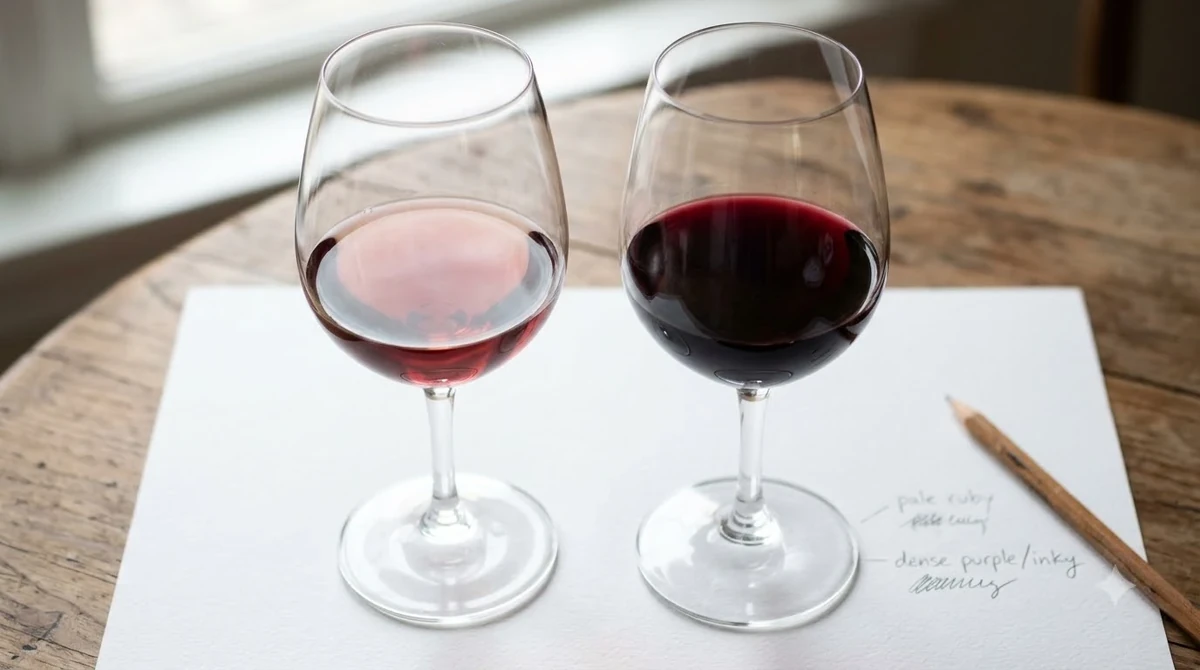
The skin is pink rather than pale green, which is unusual for a white grape. VinePair’s Wine 101 guide on Gewürztraminer notes that this pigment gives the wine a medium or sometimes deep golden color in the glass. Taste France adds that the yellow can deepen toward gold as the wine ages. Cave de Ribeauvillé describes compact bunches with oval to slightly rounded berries, and says the exact shade depends on how ripe the grapes were and on the winemaking choices.
The aroma is the grape’s signature. Lychee and rose are the two notes most often mentioned, and many bottles add apricot, peach, ginger and white pepper. Taste France describes a powerful and complex bouquet of exotic fruit, roses, spices and citrus. Because the scent is so strong, many drinkers expect a sweet wine before they taste one, and that expectation is not always accurate. For a fuller list of aroma markers and how to pick them out, see gewurztraminer tasting notes.
The Flavor and Structure of Gewurztraminer
On the palate, Gewurztraminer feels round, full and rich, with low acidity and flavors that follow the aromas closely. Expect ripe tropical fruit first, then spice, with a faint bitterness on the finish in many bottles.
Taste France describes the wine as high in alcohol and not very acidic, with exotic fruit such as lychee, mango and passion fruit, along with rose and violet, cinnamon, clove, honey and citrus. VinePair adds that most versions have medium to full body and medium alcohol. Together those points explain the warmth and weight you feel in the mouth. A Gewurztraminer often feels fuller than a light white even when its sugar level is modest. That warmth is why the wine works so well with sweet and savory dishes that carry heat, a point the pairing section returns to.
Acidity is the clearest structural difference from Riesling. In his Decanter guide to Gewurztraminer, Thierry Meyer notes that the grape does not have as much acidity as Riesling, which is why its texture feels softer. Cave de Ribeauvillé still describes a fine acidity that gives the wine precision and balance, so the acid is present but quiet. The result is a wine that feels smooth rather than sharp, which is one reason it appeals to people who find very dry whites too tart.
Balance depends heavily on the grower. Decanter stresses that grapes must be picked at the right ripeness to avoid bitterness, high alcohol or overt sweetness, especially when noble rot raises the sugar level. A well-made bottle shows spicy fruit with a slightly bitter finish, which many drinkers count as part of the wine’s character. For a plainer description of how the wine moves from first sip to finish, read what does gewurztraminer taste like.
Sweetness Levels From Dry to Late Harvest
Gewurztraminer ranges from dry to very sweet, and the style matters more than the grape name when you choose a bottle. Most bottles sit in the off-dry middle, while the richest sweet wines follow strict minimum sugar rules.
Most Gewurztraminer is off-dry, with just a touch of sweetness, according to VinePair. Because the grape has low acidity and intense aromas, even a dry wine can taste sweeter than its sugar level suggests. Decanter notes that simple AC Alsace bottles, the entry-level appellation, are usually medium bodied and either off-dry or semi-sweet, with spicy fruit and a slightly bitter finish.
The sweet styles follow stricter rules. VinePair explains that Vendanges Tardives, or late harvest, must reach a minimum sugar ripeness of 257 grams per liter at harvest. Sélection de Grains Nobles must come from grapes affected by botrytis, the noble rot, and reach 306 grams per liter. Taste France calls these sweet wines even more aromatic and extremely refined. It also explains that a grand cru label shows whether the grapes come from a designated site, and those sites were set by France’s national appellation authority using climate and geology criteria. The table below sets out the main styles and the serving temperatures suited to each.
| Style | Typical sweetness | Minimum sugar at harvest | Serving temperature |
|---|---|---|---|
| Dry AC Alsace or grand cru | Dry, medium to full bodied | Standard harvest | 50 to 55 F |
| Off-dry AC Alsace | Touch of residual sugar | Standard harvest | 45 to 50 F |
| Vendanges Tardives | Sweet and luscious | 257 g/L | 43 to 50 F |
| Sélection de Grains Nobles | Very sweet, botrytis-affected | 306 g/L | 43 to 50 F |
Sweetness is hard to judge from the front label. Decanter notes that most good producers keep their sweetness levels consistent from vintage to vintage, and some print the level on the back label. Decanter also cautions that judging sweetness from the bottle alone is tricky, so a shop assistant’s advice is a practical step. Read the back label when it is available, then follow the producers whose bottles suit you.
Tip: Once you find a producer whose off-dry bottles suit your taste, buy from that producer again. Decanter points out that good producers tend to hold their sweetness steady from year to year, so a favorite name is a reliable guide.
Serving Gewurztraminer at the Right Temperature
Serve Gewurztraminer cool rather than cold, and use a glass that keeps the aromas close to the nose. Temperature shifts the balance of this wine more than many people expect.
A practical range is 50 to 55 F for dry bottles, 45 to 50 F for off-dry bottles, and 43 to 50 F for late harvest and other sweet styles. If the wine is too cold, the aromas stay closed and the sweetness can taste thin, so give it a few minutes in the glass to open up. If it is too warm, the alcohol feels hot and the wine loses freshness. A standard 750 ml bottle pours about five glasses at 5 ounces each, which makes it a good fit for a small group sharing a meal.
Taste France recommends a footed glass that narrows near the top, since the shape concentrates the aromas. A standard white wine glass with a tapered bowl does much the same job if you do not have one. Store unopened bottles on their side in a cool place near 55 F, away from light and heat. Residual sugar and alcohol both shape the energy content of a glass, and our calories in gewurztraminer guide covers how those numbers differ between styles.
Pairing Gewurztraminer With Food
Gewurztraminer pairs well with spice, rich dishes and desserts because its sweetness and aromatics can hold their own against bold flavors. Off-dry bottles are a versatile starting point, while sweet styles work best with dessert.
The guiding idea is to match intensity with intensity. Decanter says drier styles suit spicy food from Asia, North Africa, India and Latin America, and that the most powerful wines can handle lobster bisque, curry or tagine. Cave de Ribeauvillé names chicken curry, butter chicken and prawns in hot sauce as especially good matches. Asian dishes with ginger or chili show the wine’s perfume at its best, while the warm spices of tagine echo the wine’s own notes. Matching the wine to a dish from the same region often works well, since the spices in the food and the aromas in the glass tend to echo each other. For a broader look at how this style fits among other white wines, browse Wine by Type.
Heat needs careful handling. Alcohol and tannin tend to amplify chili heat, and Gewurztraminer carries noticeable alcohol, so an off-dry bottle is usually the safer choice for very hot dishes. Its touch of sweetness softens the burn, while the aromatics keep pace with dishes built on bold spice blends.
Cheese and dessert are the other strong categories. Taste France suggests pairing savory styles with Munster, Roquefort and onion tart, and sweet styles with kouglof, fruit tart or exotic fruit salad. Cave de Ribeauvillé adds that the wine’s sweetness and aromas complement the richness of strong cheeses such as Munster, Roquefort or Maroilles. For dessert, the general rule is that the wine should be at least as sweet as the dish, so a late harvest bottle suits fruit tarts and cinnamon desserts better than something very sugary.
Frequently Asked Questions
Can gewurztraminer age well?
Some bottles can. Decanter suggests laying down a few of the best bottles for 15 to 20 years, where patience is rewarded with much greater complexity. Most everyday bottles are better enjoyed while their aromas are fresh.
How long does an opened bottle keep?
An opened still wine like Gewurztraminer generally lasts about three to five days when it is recorked and kept in the refrigerator. The aromas fade gradually over that time, so the first day or two shows the wine at its most vivid.
Why does gewurztraminer smell so intense?
Taste France notes that no fewer than 500 different aromatic compounds have been identified in this type of wine. That large number of compounds helps explain why the bouquet reads as layered and complex rather than one-note. It also explains why the aroma can seem to shift as the wine opens in the glass.
Does the vineyard site change the taste?
Yes, and Decanter gives clear examples. It says marly limestone grands crus such as Hengst, Florimont, Mambourg and Marckrain produce deep, rich and spicy wines with a good acid backbone. Granite or sandstone sites such as Brand and Kessler, along with quartz soils at Fronholz, tend to yield more aromatic and elegant wines with lots of fruit.
How much of the world’s gewurztraminer comes from Alsace?
VinePair notes that Alsatian Gewürztraminer accounts for roughly one-quarter of the grape grown around the world. The rest is spread across other countries, so a bottle from Alsace is a useful reference point when you compare styles.
Gewurztraminer rewards curiosity more than most white wines do. Start with an off-dry bottle, serve it cool, and pair it with spice or fruit, and the style will make sense quickly. Once you know which sweetness level suits you, this grape becomes one of the most dependable choices on any white wine list.
More in Wine Types & Grapes
 Zinfandel Sugar Content: Dry Red vs. White Zinfandel GramsUpdated Nov 21, 2026
 Best Zinfandel Substitute Options for Sipping and CookingUpdated Nov 21, 2026
 Zweigelt Food Pairing: Best Dishes, Cheeses, and Serving TipsUpdated Nov 21, 2026
 Zinfandel Tannins Explained: How Structure Shapes Every BottleUpdated Nov 21, 2026
 Zinfandel Sweetness Level: Dry Red vs. Sweet White Zin ExplainedUpdated Nov 21, 2026
 Xinomavro Food Pairing: Best Dishes, Styles, and Serving TipsUpdated Nov 21, 2026