

We may earn a commission when you buy through links on this page, at no extra cost to you. Learn more.
To learn how to pronounce soave, say “soh-AH-veh,” with the stress on the middle syllable. The Italian name has three syllables: so-a-ve. Keep the vowels clear and separate, give “AH” the strongest beat, and finish with a short “veh” sound.
Soave is both a town in Italy’s Veneto region and the name of a familiar Italian white wine. A little practice makes the name easier to say at a restaurant, wine shop, or tasting, and knowing what the word refers to helps you recognize it on a wine list.
The Italian Sound Behind the Name
In Italian, Soave is pronounced approximately “soh-AH-veh,” not as a single English-style sound. The most useful detail is the written stress in the pronunciation /soˈa.ve/: the mark comes before the middle vowel, telling you to emphasize the “ah” in the second syllable.
The international English ear can make the ending seem slightly different from speaker to speaker. The Soave wine consortium writes an approachable guide as “S-oh-ah-Vay,” while the Italian transcription records the final vowel as /e/. For a natural Italian target, say a neat “eh” as in the beginning of “echo,” rather than stretching it into the moving “ay” sound in “day.” The two spellings are attempts to help English speakers, not two different names.
Think of the word as three linked vowel sounds rather than one long syllable. Begin with “so,” move directly into “ah,” then close with “veh.” The consonants are uncomplicated: the first letter is an ordinary s, and the v is voiced as it is in “vine.” There is no silent letter to remember, no extra consonant at the end, and no need to add a fourth syllable.
Break Soave Into Three Clear Syllables
Separating the word into three beats is the simplest way to make the pronunciation reliable. Each written vowel has a voice of its own, so avoid blending “so-a” into a single English diphthong.
| Syllable | Written part | Approximate sound | How to say it |
|---|---|---|---|
| 1 | so | soh | Light opening beat |
| 2 | à | AH | Main stressed beat |
| 3 | ve | veh | Short, clear ending |
Start slowly with “so,” using a rounded but relaxed vowel. Move to “ah” without inserting a pause or a new consonant. Finish with “veh,” making the final vowel short and steady. Once each part is clear, connect them at a conversational pace: soh-AH-veh. You should hear three vowel centers, not “swayv” or “swahv.”
One common mistake is adding a small “w” sound between the first two parts. English speakers may see the letters “oa” and instinctively read them as a single moving vowel, as in “boat.” Resist that shortcut: the Italian spelling keeps the two vowel sounds distinct. Another mistake is dropping the first vowel and compressing the name into “AH-veh.” Give the opening “so” enough space to be heard, then let the second syllable carry the emphasis. These details make the pronunciation recognizable even if your accent is unmistakably American.
A helpful practice method is to tap a finger once for each syllable. Tap one for “so,” two for the stronger “AH,” and three for “veh.” Repeat the sequence three times at a slow pace, then say the word once without tapping. This is a pronunciation drill rather than a rule that you must speak mechanically; in a normal sentence the syllables flow together, but the second beat should remain the most prominent.
Tip: Say “so” and “ah” as two distinct vowel sounds before you speed up. If they merge into “swah,” slow down and restore the middle syllable.
Give the Middle Syllable the Main Stress
The stress belongs on the second syllable: so-AH-ve. Keeping that middle beat strongest is more important than copying a particular English spelling, because stress helps listeners recognize the Italian word even when an accent changes the exact vowel quality.
English speakers sometimes place the emphasis at the beginning because many familiar English words begin with a strong first syllable. That produces “SO-ave,” which does not match the Italian stress pattern. Others push the final syllable too hard, saying something like “so-ah-VAY.” Instead, let the word rise slightly on “AH” and relax on the final “ve.”
Try a three-part contrast: say “so” quietly, give “AH” a clear lift, and let “veh” land gently. Do not make the middle syllable dramatically louder or longer; a modest emphasis is enough. In a sentence such as “I’ll have a glass of Soave,” keep the name’s rhythm intact even though the surrounding English words are spoken naturally. The name should sound like one connected Italian word, not three separate announcements.
It can help to compare Soave with a familiar English word that has a similar rhythm, rather than a similar spelling. Say “tomorrow” slowly and notice how a middle syllable can receive the strongest beat while the word remains connected. Then return to “so-AH-ve” and keep the same sense of forward motion. Do not copy the exact English vowel sounds from “tomorrow”; use the comparison only to remember where the emphasis falls. The Italian stress pattern is the reliable guide.
Why English Pronunciation Guides Spell It Differently
English guides use familiar letter combinations to suggest sounds that do not line up perfectly with English spelling. That is why you may see Soave rendered as “so-AH-vay,” “soh-AH-vey,” or “soh-AH-veh”; the central point remains three syllables and second-syllable stress.
The Soave consortium’s overview of the wine and its region prints the accessible form “S-oh-ah-Vay.” The Italian IPA /soˈa.ve/ is more exact about the final vowel: /e/ is a single vowel sound, while the English ending in “day” commonly glides from one vowel position toward another. You do not need to master phonetic notation to order the wine, but it explains why a guide written for English readers may not look exactly like an Italian pronunciation key.
Regional accents and individual speaking styles also affect how a word sounds. A speaker may use a more open or closed vowel, speak quickly, or soften an unstressed syllable. Those differences do not change the basic pattern. When practicing, aim for three distinct parts, a clear middle stress, and a final vowel that does not turn into a long two-part English glide. That target is accurate and easy for an English speaker to remember.
English spelling makes the ending especially confusing because readers may assume that a final “e” should be silent, as it often is in English words. It is not silent here: the final vowel is audible and forms the third syllable. At the same time, the word does not need an extra “ee” sound or a hard ending after the v. Keep the final vowel short and clean. If you remember only one correction to a familiar English reading, make it this one: pronounce the final e.
What the Name Refers to on a Wine List
Soave is not the name of a grape; it is a wine denomination from the Veneto region of northeastern Italy, east of Verona. Its principal grape is Garganega, and understanding that connection makes the name easier to identify when you see it beside other Italian whites.
The Soave production area lies in the hills of the province of Verona and includes all or parts of 13 municipalities, according to the denomination’s official consortium. Soave received DOC recognition in 1968. The rules require at least 70 percent Garganega, with up to 30 percent permitted for Trebbiano di Soave or Chardonnay; the regulations also allow a limited share of other locally grown neutral white varieties within that blend allowance. This is why Soave is a place-based wine name, not another way of saying “Garganega.”
Soave Classico refers to the historic core, where the grapes must be harvested and vinified in the municipalities of Soave and Monteforte d’Alpone. The hillside landscape has a mix of volcanic, limestone, alluvial, and clay soils, and some vineyard slopes are notably steep. Decanter’s reporting on the Soave hills and their producers describes the role of Garganega, the range of soils, and the difference that individual sites can make to a wine’s character.
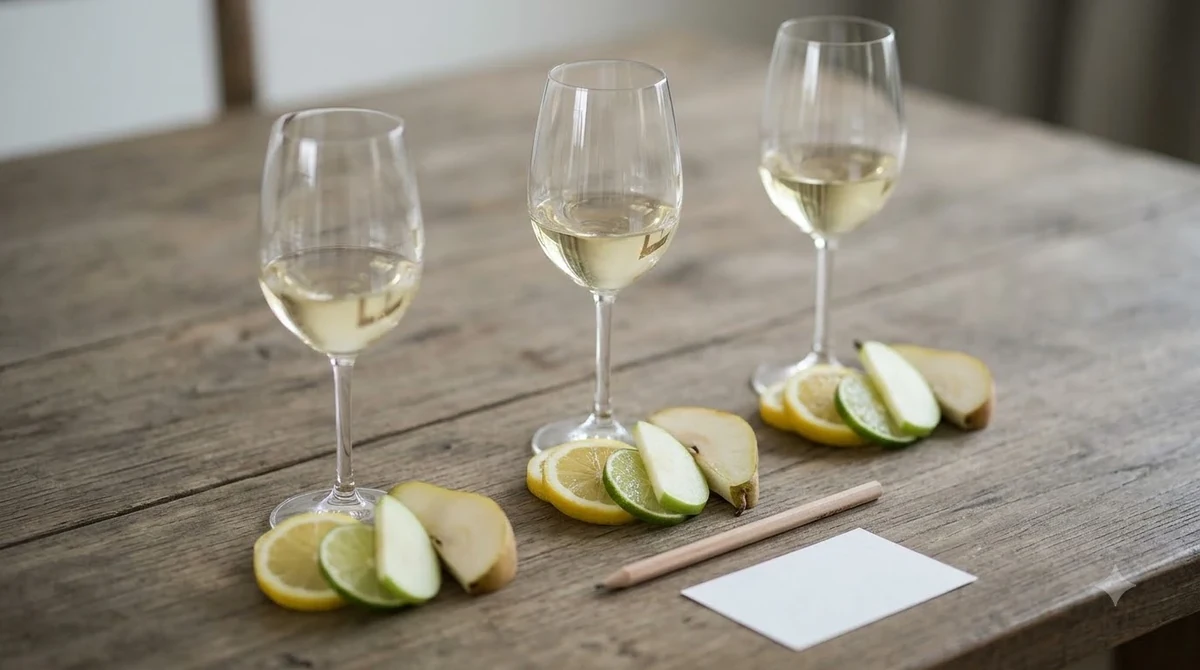
In the glass, Soave commonly offers a dry white-wine profile rather than the sweetness its name may suggest to an English speaker. Garganega can bring pear, melon, floral notes, and almond, while examples reviewed by Wine Enthusiast have shown green apple, orange peel, herbs, white flowers, and salted almond. Some bottlings are light and fresh; others have more body, texture, or mineral character. Knowing the name gives you a starting point, while the producer and bottling tell you which expression you are choosing.
That range makes sense in a denomination with several soil types and hillside exposures. Decanter describes pale limestone and tufa in parts of the west, as well as darker basaltic soils to the east around Roncà; the former can show more floral notes and brisk acidity, while volcanic sites can give a fuller feel and exotic-fruit character. The appellation also uses 33 additional geographical units, or UGAs, across about 38 percent of its area. You do not need to memorize those place names to pronounce Soave, but they show why the word on the label can lead to wines with different personalities.
Practice the Word at a Restaurant or Wine Shop
The easiest way to make the pronunciation stick is to use it in a simple sentence. Say “Do you have a Soave by the glass?” or “I’d like to try a Soave Classico,” putting the strongest beat on “AH” both times.
Practice with the bottle name as well as the wine name. Read “Soave” from a label, say it once slowly, then repeat it at a normal speaking pace. If the label also names Garganega, Monteforte d’Alpone, or Soave Classico, you can use those words as extra practice without trying to imitate an exaggerated accent. The goal is clear communication, not a performance. A wine professional will generally understand “soh-AH-veh,” and a natural delivery is better than stopping to overthink each vowel.
For the longer expression “Soave Classico,” say the wine name first and then add “CLAH-see-coh.” Keep the main Soave stress on its middle syllable; do not let the extra word shift it. A useful two-step drill is to say “soh-AH-veh” on its own, then say “soh-AH-veh CLAH-see-coh” in one smooth phrase. This is especially handy when comparing a Classico bottling with a more general Soave DOC on a restaurant list.
Italian wine lists often place Soave among regional white wines, so it can be useful to practice a few neighboring terms. Compare the rhythm with how to pronounce chardonnay, especially because Chardonnay may also appear in a Soave blend. Another useful exercise is how to pronounce cuvee, a term that may appear on labels for selected blends or bottlings. For a wider overview of styles and grapes, the Wine by Type section can help you put Soave alongside other whites rather than treating the name as an isolated vocabulary word.
For a quick rehearsal, say “so-AH-veh” three times, pausing briefly between repetitions. Then say the full phrase “a glass of Soave” without a pause before the wine name. If you can keep the middle syllable clear while speaking at an ordinary pace, you are ready to use it in conversation. You do not need to sound like a native speaker to pronounce the name respectfully and be understood.
Frequently Asked Questions
These quick answers cover a few extra details that can come up after you recognize the name. They distinguish the everyday Soave white from related terms and styles in the same part of Veneto.
What does the Italian word “soave” mean?
As an Italian adjective, soave can mean gentle, delicate, soft, or pleasant. That dictionary meaning is separate from the wine’s legal designation, which takes its name from the town and production area in Veneto.
Can Soave be sparkling?
Yes. The Soave DOC rules permit both still and sparkling versions, so the denomination is not limited to a quiet white wine. The label and producer details identify the style in the bottle.
What is Recioto di Soave?
Recioto di Soave is a separate sweet wine made from Garganega grapes that are air-dried for several months before pressing. The official production rules cap the yield at 40 percent, concentrating the grapes before fermentation.
Is Soave Superiore different from Soave DOC?
Yes. Soave Superiore carries the DOCG designation and has its own production rules, including a minimum of 70 percent Garganega. The Soave DOC and Soave Superiore DOCG are related but distinct categories.
How many vines are planted in a hectare of Soave vineyards?
The consortium’s regulations set a minimum planting density of 3,300 vines per hectare for new plantings. Vineyard training systems include forms of espalier and the traditional Veronese pergola.
Remember the three beats—so, AH, ve—and give the middle one the emphasis. With that small adjustment, you can say Soave clearly and recognize the Italian white wine when it appears on a menu or shop shelf.
More in Wine Types & Grapes
 Zinfandel Sugar Content: Dry Red vs. White Zinfandel GramsUpdated Nov 21, 2026
 Best Zinfandel Substitute Options for Sipping and CookingUpdated Nov 21, 2026
 Zweigelt Food Pairing: Best Dishes, Cheeses, and Serving TipsUpdated Nov 21, 2026
 Zinfandel Tannins Explained: How Structure Shapes Every BottleUpdated Nov 21, 2026
 Zinfandel Sweetness Level: Dry Red vs. Sweet White Zin ExplainedUpdated Nov 21, 2026
 Xinomavro Food Pairing: Best Dishes, Styles, and Serving TipsUpdated Nov 21, 2026