

We may earn a commission when you buy through links on this page, at no extra cost to you. Learn more.
Merlot sugar content is usually low, since most Merlot is made in a dry style with only a few grams of residual sugar per liter. Residual sugar is the natural grape sugar that yeast leaves behind after fermentation, and it is measured in grams per liter (g/L). Under EU labeling definitions, a still wine with up to 4 g/L is classed as dry, and most Merlot falls inside that range. The ripe plum and cherry flavors in the glass can make a Merlot seem sweeter than the sugar number suggests.
Ask a wine shop regular whether Merlot is sweet, and you will usually get a quick no. Yet plenty of drinkers still wonder why a soft, plummy red can feel so round and rich. The answer lies in how fruit, tannin, acidity and alcohol work together to shape what you taste, and only partly in the sugar itself. Knowing how merlot sugar content is measured, what counts as dry, and what changes perceived sweetness will help you choose bottles with more confidence and pair them better with food. The sections below cover the numbers, the reasons Merlot feels dry, and the cases where a bottle carries more sugar than you expect.
What Residual Sugar Means in a Glass of Merlot
Residual sugar is the main measure of sweetness in a finished wine, and most other sweetness signals are a matter of perception. The sugar that remains once the yeast has finished its work decides whether a wine is dry, medium or sweet.
During fermentation, yeast consumes the glucose and fructose in grape juice and converts them into alcohol and carbon dioxide. Wine Folly describes residual sugar, or RS, as the natural grape sugar left over once alcoholic fermentation ends, and it notes that a wine with 10 grams per liter has about 1 percent sweetness. That scale is easy to picture, and it shows that even a wine that is not bone dry is still quite low in sugar by weight.
Winemakers decide how much sugar stays in the bottle. Wine Enthusiast notes that a little residual sugar may be left behind on purpose to add a hint of richness, or it may remain because the yeast did not finish the job. Producers can also stop fermentation early by chilling the wine and filtering out the yeast, which locks in sweetness. Merlot is usually made to finish dry, which is why sweetness is rarely the first thing a Merlot drinker notices.
Because sugar levels are rarely printed on the bottle, you usually judge sweetness by the style words on the label and by the producer’s own description. Those clues are not perfect, but they give you a reliable starting point before you pour.
How Much Sugar a Typical Merlot Contains
Most Merlot falls in the dry category, which under EU definitions means 4 g/L or less, although some bottles with a dry label run higher. The table below shows how the still-wine terms line up with residual sugar and what each band means in a standard glass.
| Style term (EU still wine) | Residual sugar (g/L) | Approx. sugar per 5-oz glass | Typical Merlot placement |
|---|---|---|---|
| Dry | Up to 4 (up to 9 with high acidity) | About 0.6 g or less (up to about 1.4 g) | Most Merlot |
| Medium dry | 4 to 12 | About 0.6 to 1.8 g | Many grocery store bottles labeled dry, often near 10 g/L |
| Medium | 12 to 45 | About 1.8 to 6.8 g | Uncommon for Merlot |
| Sweet | More than 45 | More than 6.8 g | Not a Merlot style |
The EU scale for still wines is laid out in detail in Decanter’s guide to residual sugar. Dry is up to 4 g/L, medium dry runs from 4 to 12 g/L, medium from 12 to 45 g/L, and sweet is anything above 45 g/L. Decanter also notes that the dry ceiling can rise to 9 g/L when acidity is high enough to balance the sugar. That allowance matters most for high-acid wines, and Merlot has only moderate acidity, so it has less room to lift its sugar level before it leaves the dry band. Fortified styles sit far beyond this scale, and the port sugar content guide shows how much higher those numbers can go.
Real bottles do not always follow the rules neatly. Wine Folly reports that many grocery store wines labeled dry contain about 10 g/L of residual sugar. A bottle near that level will generally fall in the medium dry band under EU definitions, even though many shoppers read the front label as simply dry. That gap explains why two dry-labeled reds can feel quite different in the glass.
Decanter also points out that it is rare for a still wine to drop below 1 g/L, because some sugars cannot be consumed by yeast at all. A truly bone-dry Merlot therefore still carries a small trace of sugar, and that trace is normal. The practical lesson is to think of Merlot as a dry red with a small amount of sugar rather than a zero-sugar product.
Why Merlot Tastes Dry Even With Ripe Fruit
Ripe fruit, tannin, alcohol and oak all shape perceived sweetness, so a Merlot with some residual sugar can still taste dry, while a wine with very little sugar can sometimes seem sweet. Understanding those signals helps you judge a bottle before you open it.
Wine Enthusiast makes a useful distinction here. The impression of ripe cherries and plums is not the same as tasting sugar, even though both can read as richness. Merlot is known for its velvety, plummy fruit, and that fruit can make a wine feel fuller and rounder without adding any real sweetness. When someone calls a Merlot sweet, they are often responding to fruit intensity and texture rather than to sugar.
Decanter adds that several other elements change how sweet a wine seems, including oak, fruit flavors, alcohol levels and serving temperature. Acidity matters most of all. High acidity gives a wine freshness and a sense of lightness, even when it contains real residual sugar, and that is why the EU allows more sugar in dry wines with strong acidity. If you want to see how acidity changes the picture, the riesling sugar content guide is a good comparison, since Riesling is one of the most acid-driven white wines and can taste dry at sugar levels that would feel sweet in a softer wine. Merlot has only moderate acidity, so there is less of that lift to hide sugar.
Tannin is the third factor. Merlot has soft but present tannin, which creates a drying sensation across the gums and cheeks. That texture pulls against sweetness and makes the wine feel more structured than sugar alone would suggest. Oak adds vanilla and spice notes that can make the fruit seem richer, and alcohol adds weight and warmth that some drinkers read as sweetness.
Tip: If a bottle of Merlot seems sweeter than you expected, look first at the fruit and the oak before blaming the sugar. Jammy fruit and vanilla oak can push a dry wine toward a sweet impression, and serving it above the ideal range can make the alcohol feel hot and the fruit seem heavier.
How Merlot Compares With Other Red Wines
Merlot sits between the lighter reds and the firmer, more tannic ones. That middle position explains why it reads as soft and approachable rather than sweet, even though its sugar level is also low.
Wine Enthusiast describes Pinot Noir as a thin-skinned variety that makes wines of moderate color and alcohol, with high acidity and aromas of red fruit such as cranberry, raspberry and red cherry. Merlot, by comparison, has more tannin, body and alcohol, along with a darker hue. Those differences are about weight and texture, which is why the two wines feel so different in the mouth even though neither one tastes sweet.
Cabernet Sauvignon sits at the firmer end of the spectrum. Cabernet is high in tannin, so it feels more structured and drying on the palate than Merlot does. Merlot’s medium tannin and softer texture are a big part of its reputation for approachability, and that softness is one reason many drinkers describe it as smooth rather than sugary.
Climate changes the picture too. Wine Enthusiast notes that Merlot grown in cooler regions, such as its homeland of Bordeaux, develops firmer tannins, more structure and savory character than Merlot from warm climates. A cool-climate bottle may therefore taste drier and more serious, while a warm-climate bottle leans toward plush fruit. For a broader look at how these styles fit into the full range of red and white wines, browse Wine by Type.
Calories and Carbs in a Glass of Merlot
A typical dry Merlot has about 125 calories in a 5-ounce pour, and most of that energy comes from alcohol rather than sugar. Sugar content therefore has a smaller effect on the calorie count than many people expect.
Wine Enthusiast puts a 5-ounce serving of Merlot at around 125 calories, or roughly 625 calories in a 750 ml bottle. Alcohol contributes those calories directly, which is why a wine with little or no sugar still carries energy.
Carbohydrates follow the sugar more closely. Wine Enthusiast says dry wines usually range between zero and 4 grams of carbohydrates per 5-ounce serving, and a Merlot with a touch of residual sugar carries a small amount more. Each gram per liter of sugar works out to roughly 0.15 grams per 5-ounce glass, so even a medium dry bottle near 10 g/L adds only about 1.5 grams of sugar to the glass. That arithmetic shows why dry Merlot is light on sugar even when it is not bone dry.
Wine Folly points out that alcoholic beverages are not required to carry nutrition labels, so calorie and carbohydrate figures usually come from the producer or a reference guide rather than from the bottle. Measuring your pour is the most reliable way to know what you are drinking.
When a Merlot Can Carry More Sugar
Most dry Merlot stays in the dry band, but some bottles carry more residual sugar for reasons of style, price or production. The exceptions tend to be inexpensive blends and wines made in a softer, fruit-forward style.
Decanter notes that some everyday wines are made by adding sweeteners, such as preserved grape juice, to dry wines before bottling to make them more palatable. That practice is one reason an inexpensive bottle can taste sweeter than its style suggests. Winemakers can also stop fermentation before all the sugar is used up, a method more typical of sweet wines than of Merlot.
Chaptalization is a different practice, and it is often confused with sweetening. Wine Folly explains that some countries, including France and Germany, allow sugar to be added before or during fermentation to raise alcohol when grapes are underripe, and that the practice is not meant to increase sweetness. Because the added sugar is fermented into alcohol, a chaptalized Merlot generally finishes dry. That is another reason to read sweetness and alcohol as two separate signals.
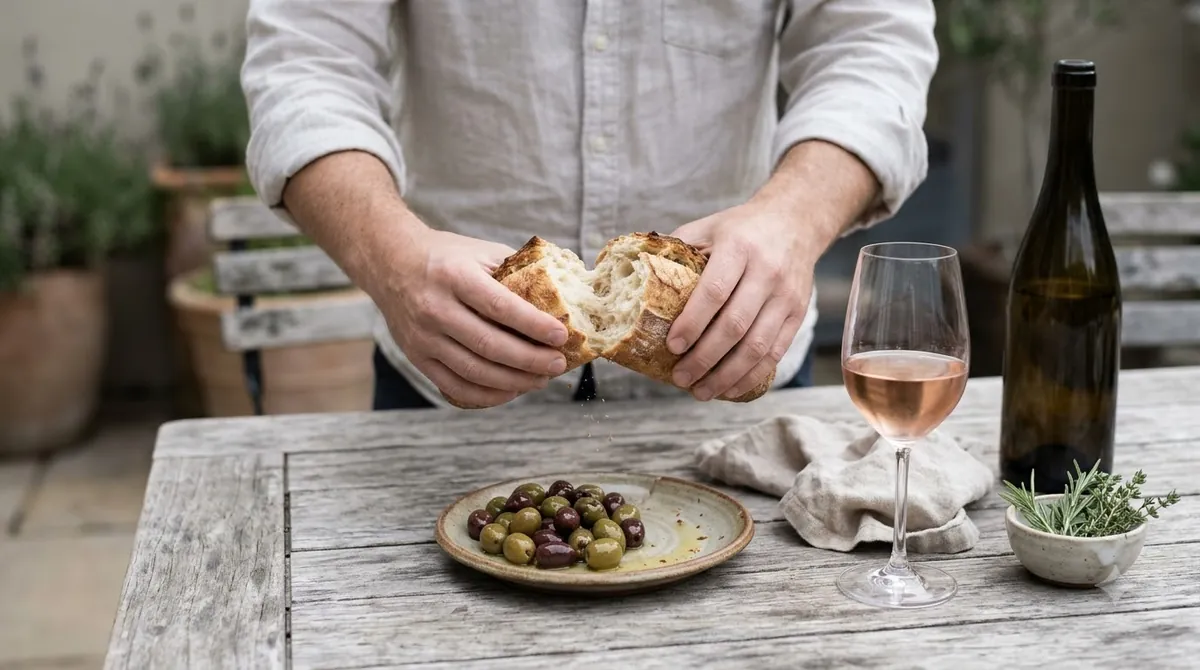
Merlot is also made into rosé and, less often, into white wine, according to Wine Enthusiast. Pink wines can sit at very different sweetness levels depending on style and producer, so if you are comparing lighter wines, the rose sugar content guide covers how sweetness shifts across that category. Reading the style name and the producer’s description gives you the clearest picture before you buy.
Serving and Pairing Merlot for Balance
Serve Merlot slightly cool, around 60 to 65 degrees Fahrenheit, and pair it with food that matches its weight. Temperature and food choices change how sweet or dry the wine seems more than many drinkers expect.
Wine Enthusiast recommends serving Merlot between 60 and 65 degrees Fahrenheit. It points out that a typical home at 70 to 75 degrees is too warm for red wine, and when Merlot runs hot, the alcohol tastes harsh and the flavors blur. If a bottle has been sitting on the counter, Wine Enthusiast says about 15 minutes in the refrigerator is enough to reach the target range. Serving it too cold mutes the aromas, so the goal is cool rather than chilled.
Sweetness matters most at the dessert table. A useful rule is that the wine should be at least as sweet as the dessert it accompanies, so a dry Merlot can taste thin or bitter beside a sugary dessert. Wine Enthusiast lists cocoa among the flavors in well-made Merlot, which is one reason dry Merlot works better with dark chocolate, where the sugar is lower, than with a caramel or a sugary cake. Matching the sugar level of wine and dessert is the simplest way to avoid that clash.
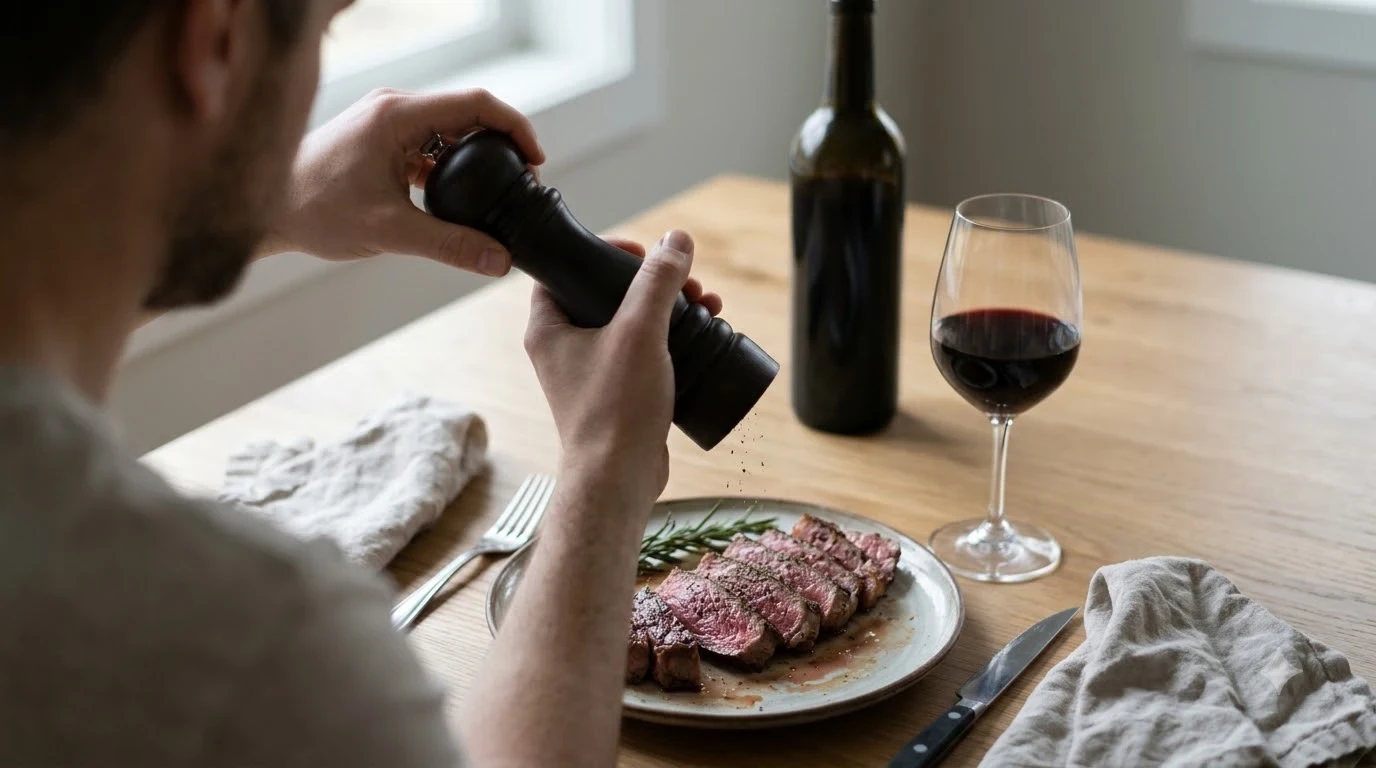
Savory food is where Merlot shines. Wine Enthusiast suggests fruit-forward Merlot with chicken, turkey, pork, weeknight pasta, burgers and pizza, and fuller, ripe styles with beef, lamb and game. Salt and fat soften tannin, so a steak or roast tames the wine’s drying edge, while spicy dishes can exaggerate the tannin and alcohol. Very acidic tomato dishes can make a moderate-acid Merlot taste flat, so lean toward roasted and braised meats.
Frequently Asked Questions
Is Merlot hard to tell apart from Cabernet Sauvignon?
In blind tastings it can be, especially when the wines come from cooler climates. Wine Enthusiast notes that the two grapes share a parent, Cabernet Franc, and that bell pepper and herbal notes are more prominent in cooler regions, which can blur the line between them.
How much alcohol is in a typical Merlot?
Merlot from cooler regions such as France often lands between 13 and 14 percent alcohol by volume. Warm climates like California, Chile and Australia can push it toward 14.5 percent, because heat drives grapes to higher ripeness.
How long does an opened bottle of Merlot keep?
Still wines such as Merlot generally keep for three to five days after opening when they are stored in the refrigerator. Replace the cork or use a stopper, and keep the bottle cold between pours to slow oxidation.
What can I cook with leftover Merlot?
Once a bottle has begun to oxidize, Wine Enthusiast suggests using it in a braised meat or vegetable dish. Much of the alcohol evaporates during a long simmer, leaving the fruit and tannin to season the sauce or stew.
How many glasses are in a bottle of Merlot?
A standard 750 ml bottle holds about five 5-ounce pours. Pouring a slightly smaller 4-ounce glass stretches the same bottle to about six servings, which is useful to know when you are estimating intake.
Merlot sugar content is low in most bottles, and the sweetness you perceive comes from fruit, oak, tannin and alcohol as much as from the sugar itself. Read the style words on the bottle, serve the wine cool, and pair it with savory food for the best balance.
More in Wine Types & Grapes
 Zinfandel Sugar Content: Dry Red vs. White Zinfandel GramsUpdated Nov 21, 2026
 Best Zinfandel Substitute Options for Sipping and CookingUpdated Nov 21, 2026
 Zweigelt Food Pairing: Best Dishes, Cheeses, and Serving TipsUpdated Nov 21, 2026
 Zinfandel Tannins Explained: How Structure Shapes Every BottleUpdated Nov 21, 2026
 Zinfandel Sweetness Level: Dry Red vs. Sweet White Zin ExplainedUpdated Nov 21, 2026
 Xinomavro Food Pairing: Best Dishes, Styles, and Serving TipsUpdated Nov 21, 2026