

We may earn a commission when you buy through links on this page, at no extra cost to you. Learn more.
How to pronounce concord: say KAHN-kord, with the emphasis on the first syllable and a clear second syllable that rhymes with “cord.” The American pronunciation is /ˈkɑːŋ.kɔːrd/, according to Cambridge Dictionary. You will encounter the name on bottles of sweet American red wine, grape juice, and products made from the familiar dark-purple grape. Learning its two syllables makes it easier to say the name naturally when ordering wine or discussing American grape varieties.
Concord is a recognizable name in American wine vocabulary. Although many people associate it with grape juice and jelly, the variety also produces sweet red wines with a distinctive fruit character. Its name has a straightforward pronunciation once you understand the vowel sounds, consonants, and syllable stress. This guide explains how to say Concord, where the name originated, and what to know when you see it on a wine list or bottle label.
The Correct American Pronunciation of Concord
In American English, Concord is pronounced KAHN-kord. The first syllable receives the stress, while the second syllable has a rounded vowel and a final D sound. Missouri Wines uses the pronunciation “kaan-kord” in its educational material about the grape variety.
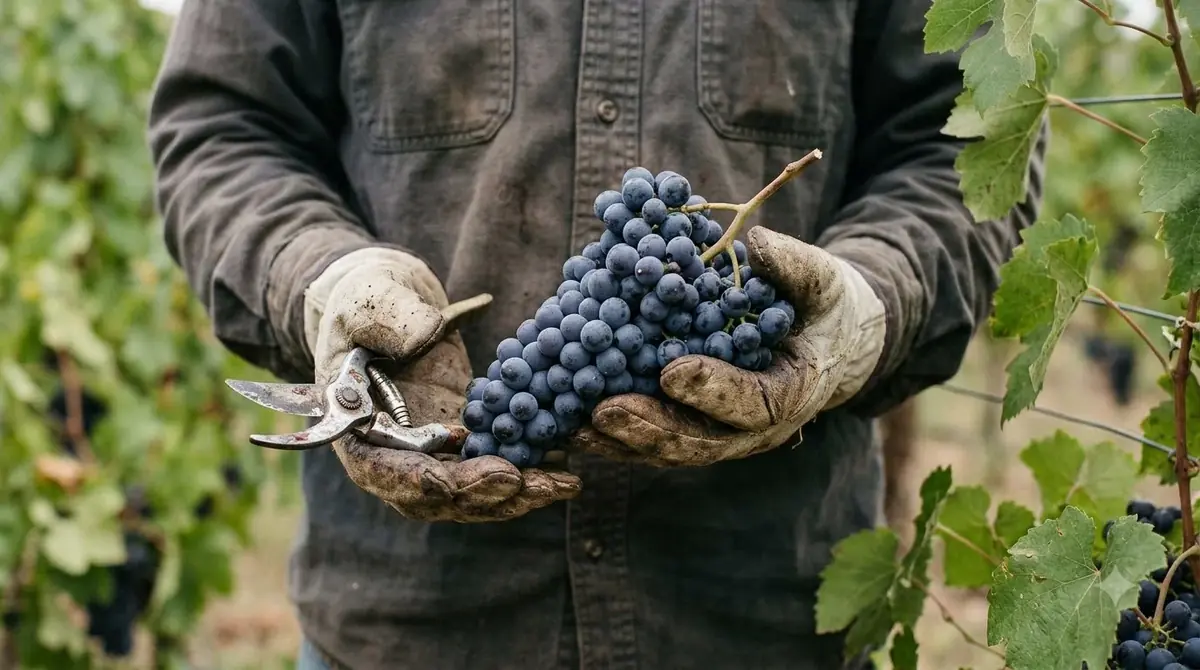
The easiest way to remember the pronunciation is to divide the word into two parts: KAHN and KORD. Begin with the open vowel sound in “father,” then move into the second syllable, which rhymes with “cord.” Avoid giving both syllables equal emphasis. The opening sound should be more prominent, while the ending should remain short and natural.
Cambridge Dictionary represents the American pronunciation using the International Phonetic Alphabet as /ˈkɑːŋ.kɔːrd/. The small mark before the first syllable indicates where the emphasis belongs. The symbol /ŋ/ represents the nasal consonant heard at the end of “sing,” while /kɔːrd/ describes the second syllable.
For everyday conversation, there is no need to memorize phonetic symbols. Remember the practical version: KAHN-kord. Say it once slowly, then repeat it at a normal conversational speed. The result should sound like one connected two-syllable word rather than two separate words.
You may hear slight differences in vowel quality depending on someone’s regional American accent. Speakers from different parts of the United States do not necessarily pronounce every vowel identically. Those small variations are normal and do not change the basic pronunciation or placement of the stress.
It is also helpful to distinguish the grape’s name from the ordinary English noun “concord,” which means agreement or harmony. Both share the same American pronunciation. The context tells listeners whether someone is discussing a relationship between people, a geographical place, or a grape variety.
How to Break Concord Into Two Syllables
Concord has two syllables, and understanding their individual sounds is the simplest way to pronounce the full name confidently. The first syllable sounds like KAHN, while the second sounds like KORD. The transition between them should be smooth, without adding an extra vowel or unnecessary pause.
First syllable: KAHN
Start with a firm K sound, made by briefly stopping airflow at the back of the mouth before releasing it. Follow this with the open American vowel heard in “father.” Finish the syllable with the nasal NG sound, similar to the ending of “sing.”
One common mistake is replacing this nasal ending with a completely separate N sound. In natural American speech, the transition should feel connected. Practice saying “sing” and then move into the opening sound of the second syllable.
Another mistake is pronouncing the opening vowel like the short O in “cot.” Although accents can influence vowel quality, the standard American dictionary transcription uses /ɑː/. The “father” comparison is therefore a useful starting point for getting the sound right.
Second syllable: KORD
The second syllable begins with another K sound. Its vowel resembles the sound in “cord,” “horse,” or “north” for many American speakers, although regional vowel differences can affect the exact quality. Finish with a clearly audible R and D.
Keep the ending compact. You do not need to stretch the vowel or make the final D unusually strong. The goal is a natural American pronunciation rather than an exaggerated phonetic performance.
Try the following practice sequence:
- Say “KAHN” slowly, concentrating on the open vowel and nasal ending.
- Say “KORD” separately, paying attention to the R and final D.
- Join the two sounds without inserting a pause.
- Repeat the complete word three times, giving the first syllable the strongest emphasis.
A useful comparison is the difference between saying the name slowly for pronunciation practice and using it in a sentence. During practice, you might deliberately emphasize KAHN-kord. In ordinary conversation, the emphasis remains present but sounds less pronounced.
Try placing the name in a simple sentence: “This winery makes a sweet Concord red.” Say the sentence at a comfortable speed. Hearing the word in context helps make the pronunciation feel less like a spelling exercise and more like ordinary conversation.
Tip: Remember the phrase “KAHN like father, KORD like cord.” These two familiar English sound references make the American pronunciation easier to remember without memorizing complicated phonetic notation.
American and British Pronunciation Differences
The American and British pronunciations of Concord are similar in their two-syllable structure and first-syllable stress, but their vowel sounds differ. Cambridge Dictionary gives /ˈkɑːŋ.kɔːrd/ for American English and /ˈkɒŋ.kɔːd/ for British English. The most noticeable differences involve the opening vowel and the treatment of the final R.
In American English, the first vowel is represented by /ɑː/, a sound similar to the vowel in “father.” The final R is also pronounced. This produces the familiar KAHN-kord sound used when discussing the American grape and its wines.
In British English, the first vowel is represented by /ɒ/, which is closer to the vowel in “lot” in many British accents. The final R is generally not pronounced in the same way because standard non-rhotic British accents do not usually pronounce R after a vowel unless another vowel follows.
These differences do not mean that one pronunciation is incorrect. They reflect the normal development of English across different regions. Both are recognizable forms of the same word, and listeners can generally identify the intended meaning from the surrounding conversation.
For American wine discussions, KAHN-kord is the most useful version to learn. It follows the pronunciation provided by Missouri Wines and the American entry in Cambridge Dictionary. If you are speaking with British English speakers, you may hear the alternative vowel and a softer or absent final R.
For another reference, consult Cambridge Dictionary’s Concord pronunciation entry, which provides both American and British phonetic transcriptions. Its sound-by-sound breakdown also makes it easier to compare the individual consonants and vowels.
The distinction is useful when discussing other wine terms, too. For example, the pronunciation of how to pronounce chardonnay follows a different pattern, with French-derived sounds that are less predictable from ordinary English spelling. Wine vocabulary includes many names borrowed from other languages, so learning each word individually can prevent confusion.
Where the Name Concord Comes From
Concord is named after Concord, Massachusetts, the town associated with its development in the nineteenth century. The name is therefore connected to an American place rather than a French, Italian, or other European wine region. Its pronunciation follows the American place name and grape variety tradition.

The grape is associated with Ephraim Wales Bull, who developed it from grape seeds planted in Concord, Massachusetts. UC Davis Foundation Plant Services records Ephraim Bull as the person who introduced the variety and lists 1843 as its release year. The grape subsequently became widely recognized in American agriculture and food production.
Its botanical background is more interesting than its familiar appearance might suggest. The Concord grape has genetic ancestry from both Vitis labrusca and Vitis vinifera. UC Davis classifies the variety as a cross involving these two grape species.
Vitis labrusca is a North American grape species associated with the characteristic aromas often described as foxiness. Vitis vinifera, by contrast, is the European grape species responsible for many familiar international wine varieties, including Cabernet Sauvignon, Chardonnay, and Riesling.
This background helps explain why Concord has a different personality from many traditional European wine grapes. Its familiar grape-juice aroma, dark berries, and characteristic fruit flavors distinguish it from varieties commonly used for dry Bordeaux-style reds or crisp European whites.
Concord is also a slip-skin grape. That term describes grapes whose skins separate relatively easily from the pulp, a characteristic that makes them different from many familiar European wine grapes. Its dark berries and distinctive aroma have helped establish its identity in American food culture.
According to UC Davis Foundation Plant Services’ Concord variety record, the grape originated in the United States, was introduced by Ephraim Bull, and was released in 1843. The same record identifies its berry color as black and lists its uses as canning, juice, table grapes, and wine.
For readers interested in the broader range of grape varieties and wine styles, the Wine by Type section provides a useful starting point for understanding how different grapes contribute to different wines.
What Concord Wine Tastes Like and How It Is Served
Concord wine is generally a sweet red wine with a pronounced grape-like character, jammy aromas, and a soft, medium-bodied texture. Missouri Wines describes its profile as balanced and identifies candy-like sweetness and jam as characteristic tasting notes. These qualities make it quite different from many dry red wines.
The grape’s familiar aroma is one reason its name is so recognizable. Many American drinkers associate Concord with the taste of traditional grape juice, grape jelly, and grape-flavored foods. In wine, that familiar fruit character can appear alongside concentrated berry flavors and noticeable sweetness.
Concord wines are not all identical. Winemaking decisions, fermentation, residual sugar, and blending can influence the final result. Some bottles emphasize fresh fruit, while others have a richer, sweeter profile. The variety’s natural character, however, is usually more immediately recognizable than the subtler flavors associated with many dry table wines.
Serving temperature and glassware
Missouri Wines recommends serving Concord chilled to approximately 45°F. This is a useful temperature for bringing out its fruit character while keeping its sweetness refreshing. A refrigerator can bring the bottle toward this temperature, although the exact chilling time depends on the starting temperature and bottle size.
A standard wine glass works well for serving Concord. There is no need for specialized glassware. A moderate pour allows room to observe the wine’s color and aroma, while also making it easier to appreciate its sweetness without filling the glass excessively.
Temperature can change how a wine feels in the mouth. Serving Concord chilled helps keep its sweet profile refreshing, particularly during warm weather or alongside picnic and barbecue dishes. If the bottle becomes too cold, allowing it to sit briefly before serving can help its aromas become more noticeable.
Food pairings for Concord
The sweetness and fruit character of Concord make it suitable for a range of savory and sweet dishes. Missouri Wines recommends cheddar, aged cheeses, barbecue beef, pork chops, orange chicken, spicy seafood, candied nuts, figs, and grape pie.
Cheddar and other aged cheeses provide a savory, salty contrast to the wine’s sweetness. Barbecue dishes can also work well because their smoky, sweet, and savory flavors complement the grape’s jammy character. Pork chops offer another practical pairing, especially when served with a fruit-based glaze or barbecue sauce.
For dessert, grape pie is a natural match because its fruit character echoes the wine. Figs and candied nuts provide additional options for a cheese board or dessert course. As a general pairing principle, a wine should be at least as sweet as the dessert served alongside it, so a distinctly sweet Concord is often a more suitable partner for sugary dishes than a dry red wine.
Peanut butter is another interesting pairing. Its creamy texture and savory flavor provide a contrast to Concord’s sweet fruit character. A peanut butter dessert, particularly one with chocolate or grape elements, can make a natural companion for this American wine style.
Here are some practical serving details:
| Characteristic | Typical Concord wine details |
|---|---|
| Color | Red to deep purple |
| Body | Medium-bodied |
| Sweetness | Generally sweet |
| Main flavor impressions | Grape, jam, and candy-like fruit |
| Recommended serving temperature | 45°F |
| Suitable cheese pairing | Cheddar and aged cheeses |
| Suitable savory pairing | Barbecue beef and pork chops |
| Suitable dessert pairing | Grape pie and figs |
These are typical characteristics rather than fixed specifications for every bottle. Individual producers can create different sweetness levels and styles. Nevertheless, the table provides a practical starting point when choosing a Concord wine for a meal or informal gathering.
Using Concord Correctly in Wine Conversations
Knowing the pronunciation is useful, but understanding how the word appears in conversation makes it easier to use naturally. Concord can refer to a grape variety, a wine made from that grape, or a product that uses the grape’s juice. The surrounding sentence usually makes the intended meaning clear.
When discussing the grape itself, you might say, “Concord is a well-known American grape variety.” When discussing a bottle, you could say, “I would like a chilled glass of Concord wine.” Both sentences use the same pronunciation, KAHN-kord.
At a wine shop, the term may appear on a bottle label as Concord, Concord Red, or another producer-specific description. It is helpful to understand that Concord is the grape name, not necessarily a designation of a particular wine region or a standardized sweetness category.
When speaking with a server, a simple question such as “Do you have a sweet Concord wine?” is clear and natural. If you prefer a less sweet style, asking about the wine’s actual sweetness is more useful than assuming every bottle made from the variety tastes exactly the same.
Concord can also appear in conversations about American wine history. Its association with Massachusetts, its nineteenth-century development, and its connection to Vitis labrusca make it an important name in discussions of American grape varieties.
The grape also has an interesting connection to American food culture beyond wine. Concord is widely associated with grape juice, jelly, and other preserved grape products. Its slip-skin structure and recognizable fruit character make it suitable for uses that extend well beyond the winery.
Missouri Wines has also documented the grape’s historical importance during Prohibition. Some Missouri vineyards continued growing Concord for juice and jam rather than relying exclusively on wine production. This illustrates why the variety became important to both agriculture and food manufacturing.
Other wine words can present similar pronunciation challenges. Claret, for example, is an established wine term associated with red Bordeaux-style wine, and its pronunciation is different from the spelling a beginner might expect. Learning how to pronounce claret alongside Concord can help build confidence with traditional wine vocabulary.
Likewise, the French term cuvée appears on many sparkling and still wine labels. It refers to a particular wine or blend, depending on the producer and context. Understanding how to pronounce cuvée gives you another useful word for conversations about wine styles and labels.
The most important point is to avoid overcomplicating the pronunciation. American English speakers can comfortably use KAHN-kord in a restaurant, tasting room, or everyday discussion. A clear first syllable and a natural second syllable are all you need.
Frequently Asked Questions
Is Concord pronounced the same way as the town in Massachusetts?
Yes, the American grape name follows the pronunciation of Concord, Massachusetts. The town is also associated with the historic Battle of Concord, fought in 1775 during the American Revolutionary War. The grape’s name reflects its geographical origin rather than a separate European naming tradition.
Is Concord a hybrid grape or a native American grape?
Concord has a hybrid genetic background involving European wine grape and North American fox grape ancestry. UC Davis identifies contributions from both Vitis vinifera and Vitis labrusca. Its breeding history helps explain its resemblance to native American grapes.
Can Concord grapes grow in very cold climates?
Yes. UC Davis Foundation Plant Services lists Concord as cold-hardy to approximately minus 25°F. This cold tolerance is one reason the variety became important in northeastern and other cold-climate American growing areas. Actual vineyard performance still depends on site conditions and winter protection.
Are Concord grapes used to make kosher wine?
Yes, Concord has been used in the production of kosher wine in the United States. Its recognizable fruit character and established place in American grape growing have made it an option for certain sweet wine styles. Kosher certification depends on the production process and supervision, not simply on the grape variety.
Can Concord wine be made without added sugar?
Yes, the sweetness of a finished Concord wine depends on the grapes and the winemaking choices. Fermentation can be managed to retain natural grape sugar, while other production approaches may result in a drier style. The variety’s recognizable fruit aroma does not automatically establish the wine’s final residual sugar level.
For American wine conversations, pronounce Concord as KAHN-kord, with the first syllable receiving the emphasis. Remember its connection to Concord, Massachusetts, and the familiar sweet red wine made from this distinctive American grape. Once you have practiced the two syllables, you can say the name naturally when ordering, discussing, or learning about Concord wine.
More in Wine Types & Grapes
 Zinfandel Sugar Content: Dry Red vs. White Zinfandel GramsUpdated Nov 21, 2026
 Best Zinfandel Substitute Options for Sipping and CookingUpdated Nov 21, 2026
 Zweigelt Food Pairing: Best Dishes, Cheeses, and Serving TipsUpdated Nov 21, 2026
 Zinfandel Tannins Explained: How Structure Shapes Every BottleUpdated Nov 21, 2026
 Zinfandel Sweetness Level: Dry Red vs. Sweet White Zin ExplainedUpdated Nov 21, 2026
 Xinomavro Food Pairing: Best Dishes, Styles, and Serving TipsUpdated Nov 21, 2026