

We may earn a commission when you buy through links on this page, at no extra cost to you. Learn more.
saint emilion wine tasting is best approached as a comparison of Merlot-led reds from different soils, vintages, and blends. The wines combine ripe red and black fruit with rounded texture, while Cabernet Franc and Cabernet Sauvignon add aromatic detail and structure. Compare the limestone plateau, clay-limestone slopes, and gravelly or sandy sites.
Saint-Émilion sits on Bordeaux’s Right Bank, east of the Dordogne, but its wines are not all alike. Use the grape blend as your starting point, then pay attention to the site, the wine’s age, its structure, and the way it feels after you swallow or spit. The method below works at a château, in a wine bar, or at home with a small flight of bottles.
What Saint-Émilion’s Terroir Adds to the Glass
Saint-Émilion’s style is shaped by a close patchwork of soils rather than one uniform vineyard floor. Decanter describes an appellation of about 5,450 hectares spread across eight communes, with limestone, clay-limestone, gravel, and sandy alluvial areas contributing different wine profiles.
The limestone plateau around the medieval town is a useful reference point. Porous limestone can retain winter and spring water and release it during drier periods, helping vines maintain balance through summer. Wines associated with this area are often described in terms of freshness, finesse, and firm but fine structure. In a glass, look for a line of acidity that keeps ripe plum and cherry flavors from feeling heavy, along with a more linear shape on the palate.
Move to the clay-limestone slopes around communes such as Saint-Christophe-des-Bardes, Saint-Hippolyte, and Saint-Laurent-des-Combes, and the profile can become denser and more structured. Clay holds water, while limestone influences drainage and root conditions; together they can support wines with depth, layered fruit, and substantial aging potential. The eastern sector near Saint-Étienne-de-Lisse and Saint-Pey-d’Armens can feel warmer, while gravel and sand closer to the Dordogne in Saint-Sulpice-de-Faleyrens and Vignonet often favor earlier-ripening, fruit-forward styles.
These are tendencies, not guarantees: producers may blend parcels from several soils and make cellar choices that shift the final balance. Compare wines from different sites at a similar stage of maturity. A closer look at Saint-Émilion vineyards helps explain why a few miles can make a difference.
How Merlot and Cabernet Build the Blend
Merlot is the leading grape in Saint-Émilion, with Cabernet Franc and Cabernet Sauvignon commonly used to add structure and aromatic complexity. The regional wine council gives a broad illustrative profile of roughly 70% Merlot, 20% Cabernet Franc, and 10% Cabernet Sauvignon, but individual château blends vary by site, vintage, and producer.
Merlot usually supplies the wine’s central shape: color, body, supple texture, and fruit ranging from red cherry and raspberry to plum, blackberry, and blackcurrant. On the nose, a young wine may lean toward fresh berries, while riper fruit or barrel aging can bring darker, jam-like notes, spice, or vanilla. On the palate, Merlot is generally softer in tannin than Cabernet Sauvignon, though Saint-Émilion Merlot can still feel concentrated and structured, particularly from older vines or sites with strong water regulation.
Cabernet Franc brings a different register. The Saint-Émilion wine council describes it as aromatic and structured, with freshness and subtlety; in a blend, it can make the fruit seem more lifted and add herbal, floral, or peppery details. Cabernet Sauvignon is often a smaller component, but its firmer tannins and deeper structure can extend a wine’s aging capacity. The balance changes from estate to estate, so a Saint-Émilion with a higher Cabernet Franc share may feel more perfumed and firm than a more Merlot-dominant bottling.
Other permitted varieties appear in smaller roles. The Saint-Émilion Grand Cru specification lists Carmenère and Cot, the local name for Malbec, among its principal varieties, with Petit Verdot as an accessory grape capped at 10% of plantings for the appellation. Rather than memorizing every component, notice whether the wine feels plush and fruit-led, floral and tense, or firm and tannic.
How to Taste a Glass Step by Step
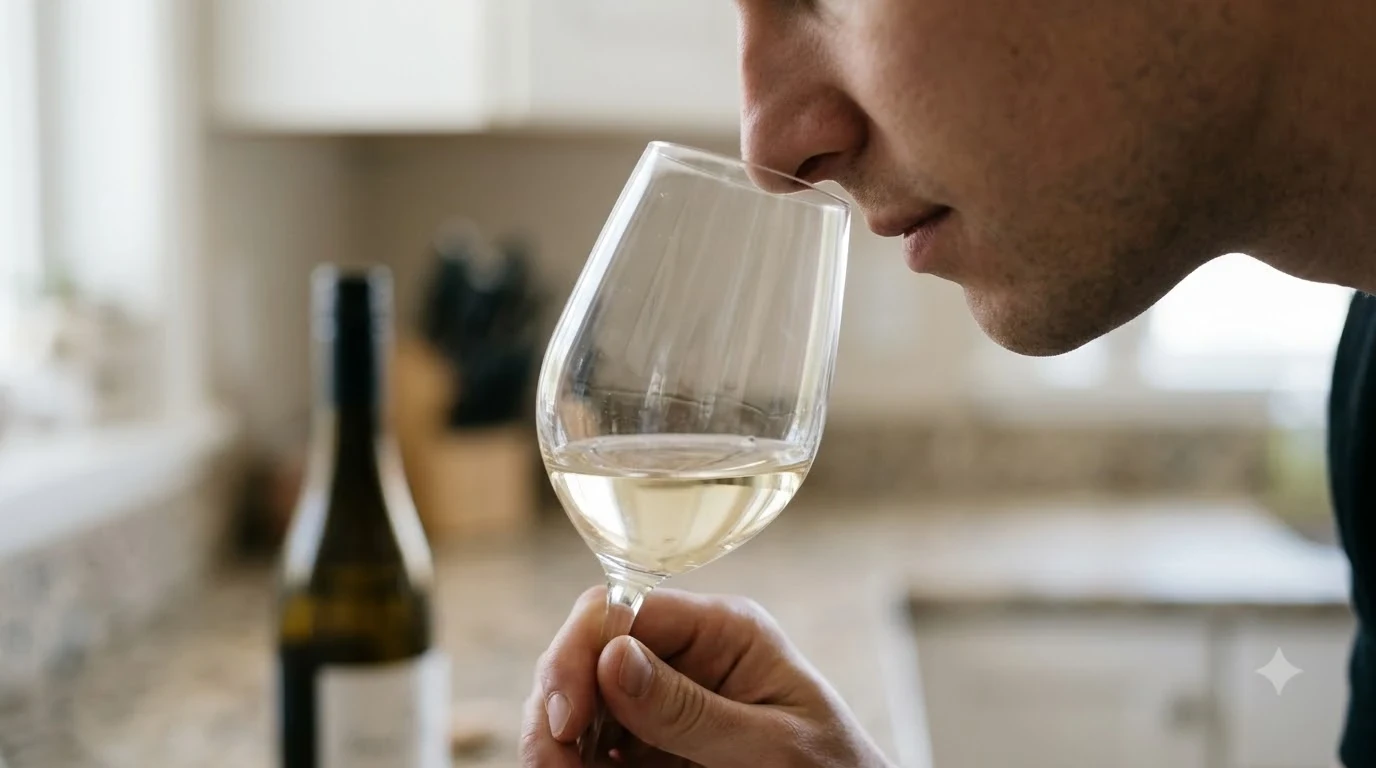
A consistent sequence makes a tasting more useful: look, smell, taste, and assess the finish. The Saint-Émilion wine council recommends holding the stem, examining the wine against a pale background, gently swirling it, and giving yourself a few seconds to assess the palate.
Begin by looking at the wine in a clear glass against a white or neutral background. Tilt the glass about 45 degrees and note the color at the rim and center. Young Saint-Émilion reds often show ruby or purple tones; with bottle age, the color can shift toward garnet, brick, and orange. Color is a clue rather than a verdict, since lighting and winemaking also affect appearance. Hold the glass by its stem so your hand does not warm the wine.
Next, smell before and after a gentle swirl. The first sniff may reveal broad fruit and oak notes; the second can make smaller details easier to notice. Try to name two or three aromas rather than searching for an elaborate list: cherry, plum, blackberry, violet, dried herbs, cedar, tobacco, or baking spice are useful reference points. If the wine smells muted, give it a few minutes in the glass and return to it.
On the palate, separate the parts of the experience. Ask whether the fruit tastes fresh or ripe, whether acidity gives the wine lift, and whether tannins feel fine, firm, drying, or coarse. Notice body and texture next: does the wine feel silky, broad, dense, or tightly wound? Finally, pay attention to the finish after the wine has left your mouth. A long finish is not simply a strong flavor; it is the persistence of flavor and texture after the sip. The official Saint-Émilion tasting method offers a useful checklist for this four-part approach.
Tip: Write down one fruit aroma, one structural feature, and one finish impression for every wine. For example: “black cherry; medium-firm tannin; fresh, savory finish.” This is more useful than a long list of flavors because it makes the next wine easier to compare.
Understand Appellation Names and Classification Terms
Saint-Émilion and Saint-Émilion Grand Cru are separate appellations, while “Grand Cru Classé” and “Premier Grand Cru Classé” are classification distinctions within the Grand Cru category. The key point for tasting is that a bottle labelled Saint-Émilion Grand Cru is not automatically from a classified château.
The French specification reserves Saint-Émilion Grand Cru for still red wines meeting defined geographic and production rules. Its requirements are stricter, including production limits and maturation conditions before release. Decanter notes that Grand Cru wines can come from classified or non-classified properties, so the words “Grand Cru” alone do not establish a château’s position in the official ranking.
The classification is a separate hierarchy. It distinguishes Grand Cru Classé estates and the higher Premier Grand Cru Classé level, and it is reviewed on a ten-year cycle. The distinction matters because a producer may make an excellent Saint-Émilion Grand Cru without belonging to either classified tier. A longer label does not guarantee a style you will prefer: an unclassified producer may make a fresh, balanced wine, while a classified château may favor density and age-worthiness.
When you compare labels, start with the appellation, producer, vintage, and any classification wording. Then look for clues about the wine’s style, such as the blend information or the producer’s description of its soils and élevage. For more background on the wider Saint-Émilion wine region, it helps to separate legal origin from estate reputation. That distinction also makes it easier to read other French labels; the broader Wine Regions overview can put Bordeaux in context with other appellations.
Choose a Tasting Visit That Matches Your Goals
A good visit should answer a question you have about the wine, not just fill a time slot. Decide whether you want a cellar introduction, a vineyard walk, a guided comparison of several wines, or a broader overview of the appellation before you book.
For a first visit, a classic château tasting can explain how grapes move from vineyard to cellar and how blending decisions shape the finished wine. Ask whether the visit includes the vineyard, fermentation area, barrel cellar, or only a guided tasting. A vineyard walk is especially useful if you want to connect limestone, clay, gravel, and slope exposure to what appears in the glass. In a cellar-focused visit, ask about fermentation vessels, extraction, and the proportion of new oak, since those choices can influence texture and aroma.
Plan a comparison rather than trying to taste as many wines as possible. Three or four wines can show useful contrasts: a young, fruit-forward Saint-Émilion; a more structured Grand Cru; a Cabernet Franc-led blend; and, if available, a mature bottle. Note each vintage and producer. If you visit more than one estate, choose different sites or cellar approaches rather than near-identical styles.
Appointments and formats vary by property, and harvest or cellar work can affect access. Confirm the language, duration, number of wines, and whether the tasting is included before setting out. The vineyards and châteaux are spread across several communes, so a visit outside the medieval center may require separate transport. Leave room to revisit a wine that stood out.
Serve, Decant, and Store Saint-Émilion Correctly
Temperature and air can change how a Bordeaux red feels. Serve most Saint-Émilion reds slightly cool rather than warm, and use decanting selectively for young, full-bodied bottles whose tannins and aromas benefit from a little oxygen.
A practical serving range for full-bodied reds is 60–65°F. A cooler bottle can show tighter fruit and firmer tannin; a warm one may seem broader and more alcoholic. If stored in a warm room, give it time in a cool place before serving. Pour a standard 5-ounce glass, leaving room to swirl. A 750-milliliter bottle provides about five servings.
| Serving detail | Useful guideline | Why it helps |
|---|---|---|
| Serving temperature | 60–65°F | Keeps a full red fresh without muting its aromas |
| Standard pour | 5 oz | Leaves room to swirl and compare |
| Bottle volume | 750 mL; about 5 pours | Helps size a tasting flight |
| Decanting a young, full red | 30–60 minutes | Can soften the first impression and open aromas |
| Cellar storage | Near 55°F, on its side | Supports steady storage and keeps the cork in contact with wine |
Decant a young, full-bodied Saint-Émilion for roughly 30–60 minutes when it tastes closed or tightly wound. Start with less time and taste again rather than assuming every bottle needs an hour of air. Older wines require more care: they may open quickly, and extended aeration can cause delicate aromas to fade. If sediment is present, pour slowly and stop before it enters the glass.
Store bottles away from heat and light, ideally near 55°F and on their sides when sealed with natural cork. After opening, keep still wine in the refrigerator and aim to finish it within three to five days; bring a remaining portion back toward serving temperature before pouring. For more comparisons across France, a Nuits-Saint-Georges wine tasting provides a useful contrast between Merlot-led Bordeaux and Pinot Noir from Burgundy.
Pair Saint-Émilion with Food
Saint-Émilion’s ripe fruit and moderate-to-firm tannins work best with dishes that have enough flavor and texture to meet the wine. Rich proteins, browned vegetables, mushrooms, and savory herbs are dependable partners, while very hot chili and delicate oily fish are less reliable matches.
Start with roast lamb, grilled beef, duck breast, or pork with a browned crust. Protein and savory cooking flavors give the wine a partner for its fruit and structure, while salt and fat soften the perception of tannin. A younger, firmer Saint-Émilion can stand up to grilled lamb chops or beef short ribs; a more mature bottle may be better with roast duck, mushroom dishes, or a simple roast with herbs. Keep sauces balanced rather than sweet, since a dry red can taste hard beside a dish that is much sweeter than the wine.
Vegetarian dishes work well when they have depth and umami. Try mushroom risotto, lentils with thyme, grilled eggplant, or roasted root vegetables. Aged hard cheeses can also suit the wine because salt and fat soften tannin. With tomato or another sharp acidic ingredient, choose a wine with enough freshness to keep pace.
Take care with chili heat: alcohol and tannin can amplify capsaicin, making a heavily spiced dish overpower the wine. Oily fish can also clash with tannic red wine and create a harsh impression, so choose a less tannic style or a different pairing. The aim is not to make every plate traditional; it is to keep the food’s intensity in balance with the wine’s fruit, acidity, and tannin.
Frequently Asked Questions
These answers cover the region’s heritage, history, and a few label details that often arise during a tasting.
Is Saint-Émilion a UNESCO World Heritage site?
Yes. The Jurisdiction of Saint-Émilion was inscribed on the World Heritage List on December 2, 1999, as a cultural landscape. The protected landscape includes the medieval town and seven surrounding villages, reflecting the interaction of viticulture, settlement, and local topography.
What is the Jurade of Saint-Émilion?
The Jurade is the region’s historic wine brotherhood and promotional body. The original Jurade dates to 1199, while the modern wine brotherhood was founded by local winegrowers in 1948 and revived the older name and tradition.
How far back does winegrowing in Saint-Émilion go?
Local historical accounts trace vine cultivation in the jurisdiction to more than 2,000 years ago. The Saint-Émilion tourism chronology specifically records the planting of the Biturica vine in the area during the third century.
What can visitors see in Saint-Émilion besides vineyards?
The medieval town is known for its monolithic church, underground quarries, cobbled streets, and Romanesque churches. These features form part of the cultural landscape recognized by UNESCO, alongside the surrounding vineyard villages.
Can a Saint-Émilion Grand Cru be made with Petit Verdot?
Yes, Petit Verdot is listed as an accessory variety in the Saint-Émilion Grand Cru specification. Its proportion is capped at 10% of the vineyard plantings covered by the appellation rules, so it is permitted but not a leading component of the region’s typical blend.
The most rewarding Saint-Émilion tasting compares wines rather than judging them by label rank alone. Start with Merlot’s fruit and texture, then look for the freshness of Cabernet Franc, the grip of Cabernet Sauvignon, and the imprint of the vineyard site. With a clear tasting sequence, a few well-chosen pairings, and the right serving temperature, the region’s differences become easier to recognize glass by glass.
More in Wine Regions
 Willcox Wine Trail: Discover Arizona’s High-Elevation Wine CountryUpdated Nov 20, 2026
 Yakima Valley Wine Region: Find the Best Styles to TryUpdated Nov 20, 2026
 Vosne Romanee Wine Tasting: Identify Aromas and Choose Better PairingsUpdated Nov 20, 2026
 Yakima Valley Wine Festival: Find the Best Seasonal Wine EventsUpdated Nov 20, 2026
 Wales Vineyards: Discover Cool-Climate Wines and Where to VisitUpdated Nov 20, 2026
 Yountville Wine Festival: Discover Napa Wines and Local FoodUpdated Nov 20, 2026