

We may earn a commission when you buy through links on this page, at no extra cost to you. Learn more.
Dominus wine is a Bordeaux-style red blend from Dominus Estate in Yountville, in the Napa Valley, made mainly from Cabernet Sauvignon. The estate is owned by Christian Moueix, and its wines come from the Napanook Vineyard at the foot of the Mayacamas mountains. Dominus is the flagship red, and the estate also produces Napanook and Othello from the same vineyard, each with a different character.
This guide covers what Dominus wine is, where it comes from, how the estate makes it, how the wine tastes, and how to serve and pair it. The details come from the estate’s own website and from reference material on the estate’s history, so you can judge whether a bottle suits your plans before you buy.
What Dominus Wine Is
Dominus is the main red wine of Dominus Estate, which sits in Yountville within the Napa Valley American Viticultural Area. The estate’s wines are built on the Bordeaux tradition of blending several red varieties, with Cabernet Sauvignon leading the blend. Reference material on the estate lists its blend as roughly 87 percent Cabernet Sauvignon, with smaller shares of Petit Verdot and Cabernet Franc, though the exact share changes from vintage to vintage.
The estate’s website describes Dominus as a wine of tight structure and depth, and presents it as built to age. That positioning matters for buyers: Dominus is usually a wine for a cellar or a special dinner rather than a casual weeknight bottle. Anyone searching for dominus wine is usually trying to decide whether it is worth the effort of finding and keeping, so the rest of this guide focuses on that question.
Where the Grapes Come From: The Napanook Vineyard
The wines are made from the Napanook Vineyard, which the estate describes as the source of its wines exclusively. According to the estate’s website, Christian Moueix first discovered the land in 1981 and believed it could eventually produce a wine of exceptional quality. The vineyard sits on deep, gravelly loam at the base of the Mayacamas range, and the estate’s own description of the soils is one of the reasons the wines show their depth.
Reference material on the estate notes that the estate covers 124 acres, with about 108 of them planted in 14 blocks. Some of the vines grow on older St. George rootstock, which resists phylloxera, a detail that reflects the property’s longer history. Those figures are worth knowing because they show a vineyard that is carefully divided by block rather than farmed as one uniform plot.
How the Estate Makes Dominus
The estate describes a minimalist approach once the grapes are in hand, as set out on its winemaking page. Clusters are hand sorted, and the berries are then passed through optical sorting. Winemakers use gentle pump-overs to draw out aroma, colour and tannin without harsh extraction, which helps the wine keep its shape.
After fermentation, the wine ages in barrel and is moved by hand from barrel to barrel about every three months, using a traditional racking method the estate calls esquive. That slow, labour-intensive routine is part of what gives Dominus its polish and its ability to develop over many years. The estate’s history also shows a long commitment to its own facilities: the early vintages were crushed and aged at a nearby winery before the estate built its own stone winery in the late 1990s.
Dominus, Napanook and Othello Compared
Dominus Estate produces three wines from the Napanook Vineyard, and each one has a different role. Dominus is the most structured and built for ageing. Napanook is described on the estate’s website as immediately enjoyable and also able to develop with time, which makes it a more approachable option. Othello is the lightest and most lively of the three, and the estate describes it as enjoyable in its youth.
The soils differ across the property, and the estate ties Othello to fine-grained silt and clay from the early flows of the Napa River. The table below sums up the three wines using the estate’s own descriptions.
| Wine | Estate’s description | Soil note (per estate) | Best use |
|---|---|---|---|
| Dominus | Tightly woven, complex, dark plum and chocolate | Deep stone and gravelly loam on the benchland | Cellaring and special occasions |
| Napanook | Profound, polished, pure and sculpted | Gravel and clay loam soils | Enjoyed young, rewarding with age |
| Othello | Bright, expressive and lively | Fine-grained silt and clay from the Napa River | Drinking in its youth |
Flavour Profile and What to Expect in the Glass
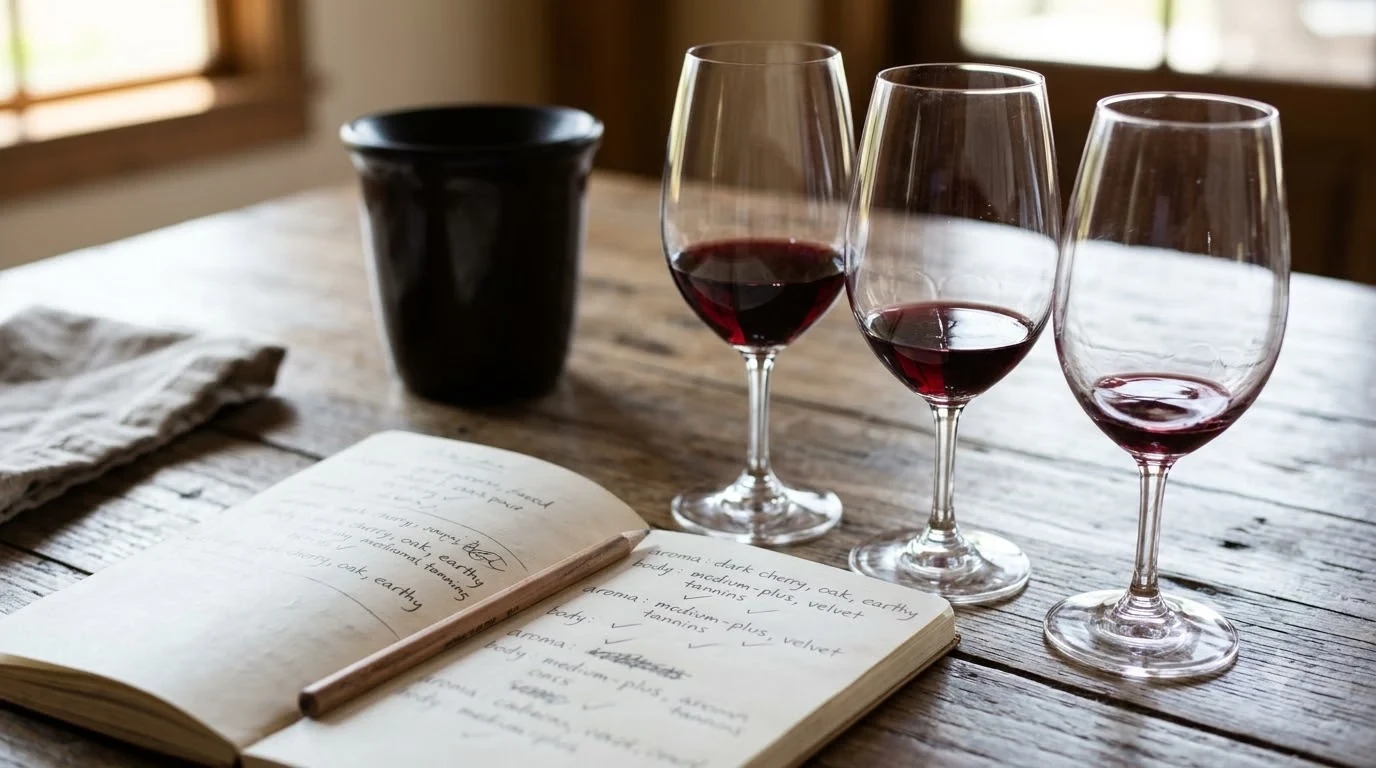
Dominus tends to show dark fruit, plum and deeper cocoa notes, with a firm, tightly knit structure that needs time to open. Tasting notes on the estate’s site describe the wine as complex and dark, which fits the Bordeaux-style blend.
Because the wine is built for ageing, a young bottle can taste closed and grippy. Many drinkers wait several years, or decant the wine ahead of a meal, to let the structure soften and the fruit come forward. Vintage conditions also affect the balance from year to year, so the back label and the estate’s current guidance are the best references for the bottle you have.
How to Serve and Pair Dominus Wine
Serve the wine at a cool room temperature rather than warm, and decant a young bottle for an hour or more, so the tannins soften and the aromas can open. A large Bordeaux-style glass gives the wine room to show its depth.
Dominus is a natural partner for rich, slow-cooked dishes. Roast lamb, braised short ribs, grilled ribeye and aged hard cheeses all suit its structure and dark fruit. A mushroom dish with a deep, savoury sauce also works well. Because the wine is dense, it is better matched with food of similar weight than with light salads or delicate fish.
Tip: If you are opening a young bottle, pour it into a decanter and come back to it over an hour or two. The change in texture is often more noticeable than the change in aroma.
Who Dominus Wine Suits and Who Might Skip It
Dominus suits collectors, people hosting a formal dinner, and anyone who enjoys the structured reds of Bordeaux and the Napa Valley. It also rewards drinkers who like to revisit a bottle over several years and watch it change. Shoppers who want a fresh, fruit-driven red for everyday drinking may find it too firm, and should look at the estate’s lighter Othello or a more casual Napa red instead.
If you are comparing Dominus with other premium reds, our guides to spottswoode wine and stella rosa red show how different producers approach the style and price of a bottle. For a broader look at how wineries and brands are grouped, the wine brands guide is a useful next step. Whatever you choose, buy from a reputable retailer and store the bottle in a cool, dark place.
Frequently Asked Questions
What grapes are in Dominus wine?
Dominus is a Bordeaux-style red blend led by Cabernet Sauvignon. Reference material on the estate lists roughly 87 percent Cabernet Sauvignon, with smaller shares of Petit Verdot and Cabernet Franc, and the exact mix can vary by vintage.
Where is Dominus Estate located?
The estate is in Yountville, within the Napa Valley American Viticultural Area in California. Its wines are made from the Napanook Vineyard at the base of the Mayacamas mountains.
Does Dominus wine need to age?
The estate describes Dominus as a wine built to age, with a tight structure that opens with time. Many people enjoy a young bottle after decanting, but a few years in the cellar usually brings out more of its complexity.
What is the difference between Dominus and Napanook?
Both come from the Napanook Vineyard. Dominus is the most structured and built for ageing, while Napanook is described by the estate as more immediately enjoyable and still able to develop over time.
Dominus is a serious Napa red that rewards patience and careful serving. If you enjoy structured Bordeaux-style blends, it is worth trying one bottle with a meal that suits its weight, and then deciding whether to add a few bottles to your cellar. The estate’s own website is the best place to check current release details before you buy.
More in Wine Brands
 Underwood Wine Price: Compare Bottles, Cans, and Pack SizesUpdated Nov 21, 2026
 Zenato Wine Price: Compare Styles and Choose the Right BottleUpdated Nov 21, 2026
 Zuccardi Wine Price: Compare Bottles and Find the Right RangeUpdated Nov 21, 2026
 Yellow Tail Moscato Review: Taste, Sweetness and Serving TipsUpdated Nov 21, 2026
 Wolf Blass Yellow Label Review: Choose Your Best StyleUpdated Nov 21, 2026
 Wolffer Estate Rose Review: Choose the Right Bottle for Your TableUpdated Nov 21, 2026