

We may earn a commission when you buy through links on this page, at no extra cost to you. Learn more.
Mud House Wine is a New Zealand wine brand best known for fresh, aromatic Sauvignon Blanc from Marlborough, alongside Pinot Gris and Pinot Noir from South Island regions. The name comes from the earth-built home its founders made after arriving in New Zealand, and the range now includes both approachable regional bottlings and limited single-vineyard wines. Knowing the grape and place on the label is the easiest way to choose a bottle that fits your meal and preferred style.
Mud House is a useful introduction to the bright, fruit-forward character associated with New Zealand wine, but it is not a one-grape label. Its Sauvignon Blanc has the strongest connection to Marlborough, while its Pinot Noir points toward cooler South Island sites such as Central Otago. This guide explains the brand’s background, the regions behind its wines, what the main grapes tend to taste like, and how to serve and pair the bottles.
The Mud House name and its New Zealand beginnings
Mud House is a New Zealand wine brand named for the home its founders built from local earth after falling in love with the country during a sailing trip more than twenty years ago. That origin story explains the label’s emphasis on place: the house was built from the land, and the wines are presented as expressions of the vineyards where their grapes grow.
The phrase house wine often means a restaurant’s by-the-glass selection; Mud House is a named producer whose bottles carry grape and regional descriptions. It is one entry in the wider Wine Brands landscape, where origin and variety are more useful clues to style than the name alone.
South Island regions shape the wines
Mud House’s New Zealand identity is closely tied to three South Island wine regions: Marlborough, Central Otago, and Waipara Valley. Each brings a different combination of climate, soil, and grape strengths, so the regional name on the bottle is a useful first guide to its likely character.
Marlborough sits at the northern end of the South Island and is best known for Sauvignon Blanc. New Zealand Wine’s regional profile describes its cool climate, abundant sunshine, low rainfall, and free-draining soils; nearly 31,000 hectares of vines represent about two-thirds of the national vineyard area. Wairau Valley has old river gravels, the Southern Valleys tend toward heavier clay, and Awatere is cooler, drier, and windier, helping create styles from tropical to herbal and mineral.
Mud House identifies its Woolshed Vineyard west of Blenheim, in the upper Wairau Valley. The producer says a steep-sided hill known as the Delta shelters the site from spring frost, while the vineyard’s different slope aspects provide blending options. Fruit from Woolshed is used in the producer’s Marlborough Sauvignon Blanc as well as its Woolshed Sauvignon Blanc and Dambuster Pinot Noir, making this a particularly important site in the brand’s portfolio.
Central Otago is the range’s red-wine anchor: Mud House describes it as the world’s highest and most southerly wine region, with glacial soils containing mica and schist and a semi-continental climate. Its Claim 431 Vineyard is in Bendigo, an old gold-mining area, and supplies fruit for Central Otago Pinot Noir. Waipara Valley is represented by the Home Block and Mound sites in the single-vineyard collection.
Grapes and bottle styles to look for
The easiest way to read the Mud House range is by grape variety first, then by region and collection. Sauvignon Blanc is the clearest entry point, Pinot Gris gives a softer aromatic white-wine alternative, and Pinot Noir provides the principal red-wine comparison across the South Island range.
Marlborough Sauvignon Blanc is the bottle most closely associated with the brand. The grape naturally has high acidity, and the regional style often combines citrus, green herbs, passion fruit, and other tropical fruit notes. Mud House’s own winemaking description emphasizes fruit expression and fresh, linear acidity. That makes the wine a sensible choice for drinkers who like a crisp white with a lively finish rather than a broad, heavily oaked texture.
Pinot Gris is an aromatic white alternative, often showing pear, apple, stone fruit, and floral notes with more moderate acidity than Sauvignon Blanc. Mud House’s single-vineyard collection includes Home Block Pinot Gris from Waipara. Sweetness can vary by bottling, so distinguish a dry style from an off-dry one rather than assuming every Pinot Gris tastes alike.
For red wine, look for Pinot Noir from Central Otago. Pinot Noir typically has low-to-medium tannin and high acidity, with red cherry, raspberry, plum, and savory or earthy notes depending on site and winemaking. Mud House says Pinot Noir accounts for 80% of Central Otago plantings; its Claim 431 wines come from Bendigo, while Dambuster Pinot Noir is linked to Woolshed Vineyard in Marlborough. The regular range is positioned for everyday occasions, while the limited Single Vineyard collection focuses on a particular site and vintage, with Woolshed Sauvignon Blanc, Home Block Pinot Gris, and Claim 431 Pinot Noir among its named wines.
What Mud House wine tastes like
Expect the wines to show their grape and region clearly, with fresh fruit and acidity a recurring theme in the New Zealand selections. The standard Marlborough Sauvignon Blanc is the most direct expression of that profile, while the single-vineyard bottles are intended to show more detail from an individual site.
A Wine Enthusiast review of the 2024 Mud House Marlborough Sauvignon Blanc awarded it 90 points and listed 13% alcohol by volume in a 750-milliliter bottle. The review describes aromas of peach, lime, guava, and pineapple with dried herb and spice notes, followed by a dry, textured palate with herbal and tropical flavors. Those notes are a helpful snapshot of one vintage, not a guarantee that every bottle from every year will smell or taste exactly alike. Read the Wine Enthusiast review of the 2024 Marlborough Sauvignon Blanc for the full tasting assessment.
The Woolshed single-vineyard Sauvignon Blanc provides another reference point. Decanter lists the 2024 wine as dry, medium-bodied, unoaked, and made from 100% Sauvignon Blanc, with 13% alcohol and a screwcap closure. Those details support a picture of a fresh, varietal white rather than an oak-led or sweet style. The distinction is useful: the standard Marlborough bottling and the Woolshed wine share a grape and regional identity, but one is a broader regional selection and the other has a named vineyard focus.
Vintage variation is normal in a cool-climate region because growing-season conditions affect ripeness and flavor. One year may lean toward passion fruit and ripe citrus; another may show more green herbs, lime, or mineral edge. Comparing vintages is especially interesting with a single-vineyard wine, where site remains more consistent while the season changes. For a first choice, start with Marlborough Sauvignon Blanc for brisk citrus-herb freshness, Pinot Gris for a rounder aromatic white, or Central Otago Pinot Noir for bright red fruit and lighter tannin.
Food pairings for whites and Pinot Noir
Mud House’s crisp whites work especially well with foods that welcome acidity, while Pinot Noir is a flexible red for dishes that do not need heavy tannin. Match the wine’s weight and acidity to the dish: a sharp vinaigrette needs a wine with enough freshness, and delicate fish is usually better with white wine or a low-tannin red than a powerful, tannic one.
Pair Marlborough Sauvignon Blanc with oysters, shrimp, grilled white fish, goat cheese, or a salad with lemon and fresh herbs. Its high acidity refreshes the palate after briny shellfish, while citrus and herbs in the food echo the wine. Fish tacos with cabbage and lime are another good match. For vinegar- or citrus-heavy dishes, choose a wine with equal or higher acidity.
Pinot Gris works with roast chicken, pork tenderloin, vegetable fritters, and mild curries with ginger or fresh herbs. A dry version suits savory food, while a slightly off-dry wine can handle gentle sweetness or mild chile. Keep the spice moderate because alcohol can intensify chili heat.
Central Otago Pinot Noir suits roast chicken, duck, mushroom risotto, grilled salmon, and seared tuna. Its low-to-medium tannin makes it more adaptable than high-tannin Cabernet Sauvignon with delicate or oily fish. Mushrooms, thyme, and browned poultry skin add savory depth, while tomato-based pasta works when the sauce is not excessively sweet. Preparation matters: creamy sauces can make lean whites seem sharper, heavy smoke or sweet barbecue glaze can dominate delicate Pinot Noir, and salt and fat soften tannin without making every red suitable for every dish.
Serving, storage, and choosing a bottle
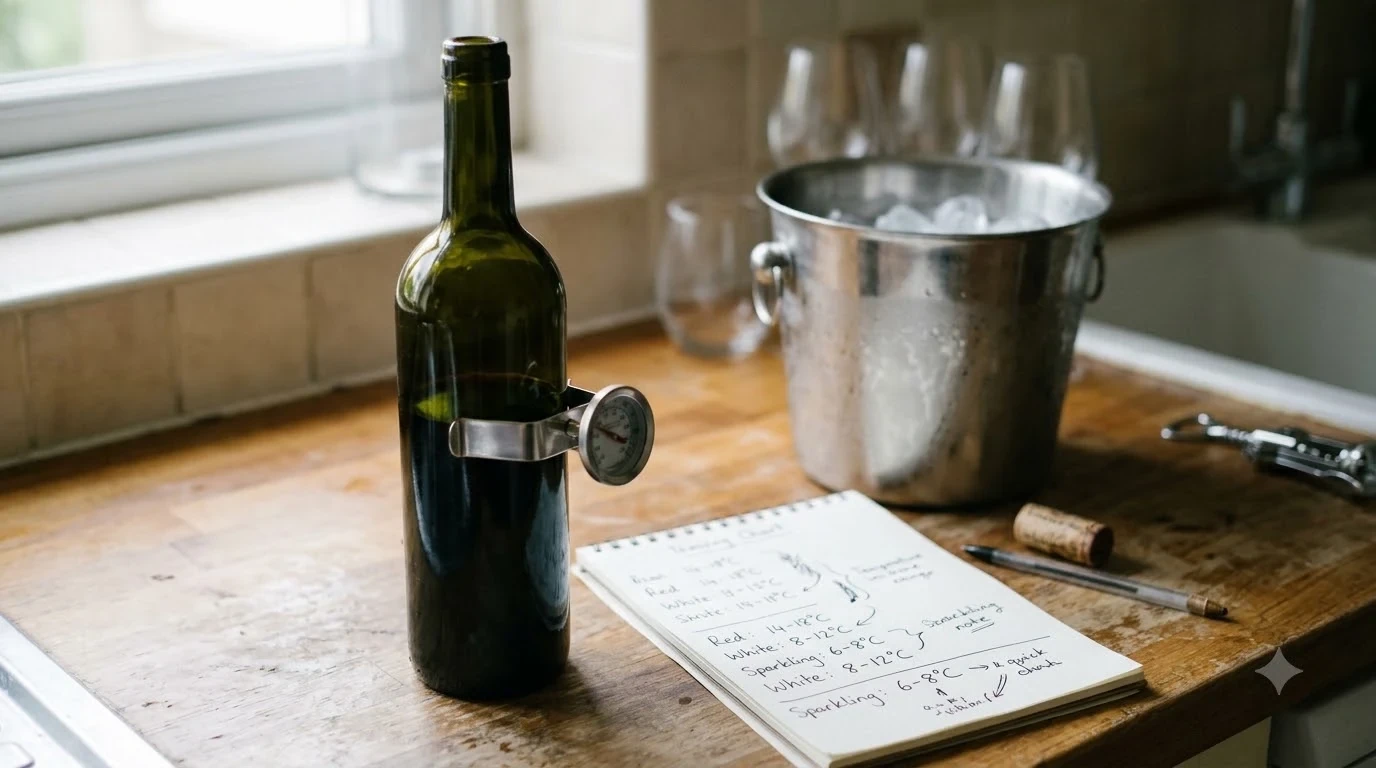
Serve Mud House’s light whites cool enough to feel refreshing but not so cold that their aromas disappear. Pinot Noir is better slightly cooler than a warm room, while careful storage helps preserve freshness after the bottle is opened.
For Marlborough Sauvignon Blanc and Pinot Gris, aim for 45–50°F. That range keeps their citrus, herb, and orchard-fruit character vivid. Serve a fuller white at 50–55°F, and bring Pinot Noir to about 55–60°F rather than pouring it at the warmer temperature often used for full-bodied reds. If a white has been in a very cold refrigerator, allow it a few minutes in the glass so its aromas can open.
| Wine or serving measure | Practical number | How to use it |
|---|---|---|
| Light white wine | 45–50°F | Serve Sauvignon Blanc and lighter Pinot Gris cool. |
| Light red wine | 55–60°F | Use this range for Pinot Noir. |
| Standard pour | 5 oz | Leaves room in the glass for aromas. |
| Standard bottle | 750 ml | Provides about five 5-ounce pours. |
| Opened still wine | 3–5 days | Refrigerate with the closure replaced. |
| Long-term bottle storage | About 55°F | Keep bottles on their sides in a cool, stable place. |
A 750-milliliter bottle gives about five standard 5-ounce glasses. Smaller pours leave room for aromas and allow a white wine to warm gradually in the glass. For a gathering, chill white wine ahead and keep the bottle cool between pours.
Opened still wine generally keeps for 3–5 days in the refrigerator with the bottle resealed; delicate whites are best in the first day or two. Refrigerate opened Pinot Noir as well, then let the glass warm slightly after pouring.
Tip: Choose by grape and regional wording before you choose by label design. For a crisp white, start with Marlborough Sauvignon Blanc; for an aromatic white with a softer shape, compare Pinot Gris; for a lighter red, look for Central Otago Pinot Noir.
When comparing bottles, pay attention to the named region, grape, vintage, and whether the label says Single Vineyard. Alcohol level can also help set expectations, though it does not tell the whole story about body or ripeness. For another alcohol-label comparison, readers can consult this explanation of Black Box Pinot Grigio alcohol content; it is a separate brand and style, but the same label-reading habit applies.
Single-vineyard wines are a reasonable option when you want a more place-specific bottle or a gift for someone who enjoys comparing wines by site. The standard regional wines make more sense when you want a familiar style for a casual meal. Shoppers comparing producers from different countries can also read about Baron Philippe de Rothschild wine to see how another producer’s portfolio spans regions and labels. The useful comparison is not which brand is universally better, but which grape, place, and style suit the occasion.
Frequently Asked Questions
These quick answers cover details that are useful when comparing Mud House bottles, including the brand’s name, its vineyard sites, and the way individual wines are categorized. Look at the grape and site together rather than relying on the producer name alone.
Why is the winery called Mud House?
The founders built their New Zealand home from local earth after arriving during a sailing journey. The founders were a couple who ended their worldwide sailing tour after one of their earliest stops in New Zealand. The house became the name of the wine brand; it is not a description of the wine’s flavor or texture.
Where is the Woolshed Vineyard located?
The Woolshed Vineyard is west of Blenheim in Marlborough, near the upper Wairau Valley. The producer says the site sits under a steep-sided feature called the Delta, which offers protection from spring frosts. The original woolshed building now serves as the vineyard office and a trade-hosting facility.
What is special about Claim 431?
Claim 431 is Mud House’s vineyard site in Bendigo, Central Otago. The area was once associated with gold mining and is framed by ancient, dry hills and westerly winds. The producer says its long growing season and summer warmth help shape the site’s bright red- and dark-fruit character.
Who is Mud House winemaker Krystal Palmer?
Krystal Palmer returned to Marlborough after four years of travel and earned a Bachelor of Viticulture and Oenology from Lincoln in 2012. Her experience includes work as an assistant viticulturist and winemaker, with vintages in Marlborough, Waipara, the United States, and China. She has said that Pinot Noir is her red-wine passion and favors a hands-off approach to that variety.
Does the Single Vineyard collection include wines from more than two regions?
Yes. Mud House identifies single-vineyard sites in Marlborough, Waipara Valley, and Central Otago. The collection includes Woolshed Sauvignon Blanc, Home Block Pinot Gris, and Claim 431 Pinot Noir. Mud House describes these wines as designed to reward with cellaring, though that does not establish one fixed aging period for every bottle.
Mud House is best approached as a range of New Zealand wines rather than a single fixed flavor profile. Marlborough Sauvignon Blanc is the clearest starting point, while Waipara Pinot Gris and Central Otago Pinot Noir offer useful alternatives when the meal or your preference calls for a different style. Choose by grape, region, and collection name, then serve the wine at a temperature that lets its freshness and fruit show.
More in Wine Brands
 Underwood Wine Price: Compare Bottles, Cans, and Pack SizesUpdated Nov 21, 2026
 Zenato Wine Price: Compare Styles and Choose the Right BottleUpdated Nov 21, 2026
 Zuccardi Wine Price: Compare Bottles and Find the Right RangeUpdated Nov 21, 2026
 Yellow Tail Moscato Review: Taste, Sweetness and Serving TipsUpdated Nov 21, 2026
 Wolf Blass Yellow Label Review: Choose Your Best StyleUpdated Nov 21, 2026
 Wolffer Estate Rose Review: Choose the Right Bottle for Your TableUpdated Nov 21, 2026