

We may earn a commission when you buy through links on this page, at no extra cost to you. Learn more.
Raventos wine refers primarily to the traditional-method sparkling wines made by Raventós i Blanc, a historic family winery in Catalonia, Spain. These wines feature native Spanish grapes such as Xarel·lo, Macabeu and Parellada, with a strong emphasis on vineyard origin and extended bottle aging. The winery identifies its wines with Conca del Riu Anoia rather than the Cava appellation, offering a distinctive expression of Catalonian sparkling wine.
Raventós i Blanc combines centuries of family winegrowing history with a modern focus on estate production, biodynamic viticulture and carefully aged sparkling wines. Understanding its location, grape varieties, bottle styles and winemaking decisions makes it easier to choose a bottle that suits your preferences, whether you enjoy crisp citrus-driven sparkling wine or something with greater texture and complexity.
What Raventós i Blanc Makes
Raventós i Blanc specializes in traditional-method sparkling wine from Catalonia, with its identity centered on indigenous grapes, estate vineyards and a minimum of 18 months of lees aging. Its wines offer a different perspective on Spanish sparkling wine from the familiar image of inexpensive, widely produced Cava.
The name most commonly associated with this producer is Raventós i Blanc, a winery in the Penedès area of northeastern Spain. It is important to distinguish the winery from the broader family history: the Raventós family has been connected with winemaking for centuries, while the modern winery was established in 1986. That history helps explain why the producer places so much importance on preserving local grape varieties and expressing the characteristics of its estate.
Traditional-method sparkling wine is the central category. This method involves a second fermentation in the bottle, which creates the carbonation naturally inside the sealed bottle. The resulting wine can develop flavors associated with yeast aging, including bread, pastry and nuts, alongside the fresh fruit and acidity of its base wine.
Raventós wines are generally a good starting point for people who enjoy Champagne or quality Cava but want to explore another Mediterranean sparkling wine tradition. They can also introduce drinkers to the difference between a wine identified mainly by its production method and one that places greater emphasis on a particular geographical origin.
The winery’s approach also fits into a wider category of family-owned European wine producers. Readers interested in comparing historic wine families can explore our article about baron philippe de rothschild wine for another perspective on how a family’s history can shape a wine producer’s identity.
The Family Estate and Its Catalonian History
The Raventós family’s documented winegrowing history reaches back to 1497, and its estate in Sant Sadurní d’Anoia covers approximately 90 hectares of vineyards and forest. The winery’s current leadership represents the twenty-first generation of family winegrowers, giving its emphasis on local tradition a particularly long historical foundation.
The family has played a significant part in the development of Spanish sparkling wine. According to the winery’s historical account, Josep Raventós Fatjó traveled to Champagne in 1872 and subsequently produced sparkling wine using the second fermentation in the bottle. He worked with native grapes from the family estate rather than simply copying the French grape varieties used in Champagne.
Another important development followed in 1888. Manuel Raventós Domènech established a blend based on three local grapes: Macabeu, Xarel·lo and Parellada. This combination helped establish the recognizable character of traditional-method sparkling wines from the Penedès area. It also demonstrated that local Spanish varieties could produce wines with the freshness and structure required for bottle-fermented sparkling wine.
The modern winery was founded in 1986 by Josep Maria Raventós i Blanc. Its goal was to produce high-quality sparkling wine connected to the family’s historical estate and the agricultural identity of the region. This focus has remained central to the winery’s approach under later generations, including Pepe Raventós, who farms 44 separate plots.
The estate’s surroundings are also important. The vineyard and winery are closely connected, allowing the producer to maintain a strong relationship between growing grapes and making wine. Rather than treating the vineyard as simply a source of fruit, the estate integrates vineyard management, local plant life, animals and agricultural resources into its production philosophy.
This history gives Raventós i Blanc a particular position among Spanish sparkling wine producers. Its wines are not simply expressions of a generic Spanish sparkling category; they are intended to reflect the grapes, farming practices and conditions of a defined Catalonian estate.
Conca del Riu Anoia and the Decision to Leave Cava
Conca del Riu Anoia is the geographical identity associated with Raventós i Blanc’s sparkling wines, referring to the Anoia River basin in Penedès between the Catalan Pre-Coastal and Coastal Ranges. The producer adopted this name after leaving DO Cava in 2012, emphasizing vineyard origin rather than relying exclusively on the broader Cava category.
Cava is a Spanish sparkling wine designation, and its wines are made using the traditional method. However, Raventós i Blanc wanted a more narrowly defined regional identity that placed greater emphasis on the specific vineyards, climate, soils and native varieties associated with its home territory.
In 2012, the winery decided to leave the Cava appellation and pursue the development of Conca del Riu Anoia. The decision reflected a preference for stricter winegrowing requirements and a more detailed connection between the finished wine and its place of origin. In a Decanter report on the proposed regional designation, the producer’s approach was described as an alternative to the wider Cava framework.
It is important to understand the terminology accurately. Conca del Riu Anoia is the geographical designation promoted by the producer, not another name for DO Cava. The winery’s stated ambition has been to establish a more formally recognized designation with its own geographical and production requirements. Its current materials continue to describe this regional project as part of its long-term commitment to the area.
The practical significance for wine drinkers is that the name tells you more about the producer’s intended identity. Instead of choosing a bottle only because it is Spanish sparkling wine made using the traditional method, you can look for wines associated with this particular river basin and its native grapes.
One of the defining elements is the attention given to lees aging. The producer requires at least 18 months of aging on the lees for its sparkling wines, allowing the wine to develop a more integrated texture and more complex secondary characteristics than a freshly bottled, youthful sparkling wine.
Native Grapes and the Character of the Wines
Raventós i Blanc builds its sparkling wines around native Catalonian varieties, particularly Xarel·lo, Macabeu and Parellada. The selection of grapes helps create wines with fresh acidity, restrained fruit expression and enough structure to develop complexity during bottle aging.
Xarel·lo is especially important to the character of the region. It provides structure and a firm foundation for sparkling wine, helping the finished blend retain freshness. It is often associated with citrus, green apple and savory mineral impressions. In a blend, it can contribute the substance necessary to balance lighter-bodied components.
Macabeu, also known as Macabeo, is another major traditional variety. It contributes fresh fruit characteristics and can give a sparkling wine a more open, approachable character. Its role is particularly useful in blends where Xarel·lo supplies structure and Macabeu contributes additional fruit expression.
Parellada generally brings a lighter, delicate component to sparkling blends. It can contribute floral impressions and freshness, helping balance the more substantial qualities of Xarel·lo. Together, these three varieties form the traditional foundation associated with sparkling wines from Penedès.
The estate also cultivates Monastrell, Bastard Negre, Sumoll and Xarel·lo Vermell. These varieties add diversity to the agricultural identity of the property. Monastrell is particularly useful for understanding the possibilities of rosé production because it is a red grape that can contribute color and berry characteristics while retaining the regional connection of the wine.
The winery says it began removing foreign grape varieties from the estate in 2011 to concentrate on native varieties that it considers better adapted to the local environment. This approach favors grape varieties that have developed alongside the area’s soil and climate over many generations.
The producer also describes its vineyard management as entirely biodynamic. Its farming system combines organic products, plant and animal fertilizers produced on the property, and an emphasis on the relationship between the vineyard and surrounding agricultural environment.
These farming decisions matter because sparkling wine quality begins with the base wine. Grapes need to retain sufficient acidity and develop suitable flavors before they undergo their second fermentation. A vineyard strategy centered on local varieties and careful farming gives the producer a consistent way to pursue freshness, structure and regional expression.
Raventós Bottle Styles and What to Expect
Blanc de Blancs and De la Finca illustrate two different expressions of the producer’s sparkling wines. Both come from Conca del Riu Anoia and use the traditional method, but their blends, sweetness designations and reported body classifications are different.
Blanc de Blancs is a useful introduction because it offers a relatively light-bodied interpretation of the estate’s white grape varieties. The 2022 Blanc de Blancs Extra Brut reviewed by Decanter contains Xarel·lo and Macabeu, has 12% alcohol by volume and carries the Extra Brut designation. Its light body makes it a natural choice for drinkers who prefer a fresh, delicate sparkling wine.
De la Finca Brut Nature provides a more structured example. Decanter’s 2021 entry identifies a blend of 50% Xarel·lo, 40% Macabeo and 10% Parellada. At 12% ABV, it is classified as medium-bodied and Brut Nature, making it a useful point of comparison with the lighter Blanc de Blancs.
| Wine | Vintage | Grape composition | Sweetness | Body | ABV |
|---|---|---|---|---|---|
| Blanc de Blancs Extra Brut | 2022 | Xarel·lo and Macabeu | Extra Brut | Light | 12% |
| De la Finca Brut Nature | 2021 | 50% Xarel·lo, 40% Macabeo, 10% Parellada | Brut Nature | Medium | 12% |
The table illustrates why it helps to examine the individual cuvée rather than assuming every bottle from one winery tastes the same. Grape proportions, vintage conditions, lees aging and sweetness designation all influence the resulting wine. A Blanc de Blancs may emphasize a lighter, more delicate expression, while a more substantial blend can offer greater breadth and structure.
Wine Enthusiast’s review of the 2021 Blanc de Blancs provides another reference point for the house style. The publication awarded it 93 points and described bread dough, almonds, bergamot, citrus, peach, vanilla, honeysuckle and brioche characteristics. These descriptors illustrate how the wine can combine fresh fruit and floral notes with the more developed flavors associated with traditional-method bottle aging. You can read the Wine Enthusiast Blanc de Blancs review for its full tasting assessment.
When comparing bottles, pay attention to the sweetness terms as well as the grape varieties. Brut Nature is the driest common sparkling-wine category, followed by Extra Brut and Brut. Extra Dry, despite its name, is sweeter than Brut, followed by Dry, Demi-Sec and Doux. Understanding this sequence prevents confusion when choosing a wine for someone who prefers particularly dry sparkling styles.
For a first bottle, Blanc de Blancs Extra Brut offers an approachable reference point for the producer’s style. De la Finca Brut Nature is an appealing comparison for drinkers interested in a blend with a greater proportion of Xarel·lo and a medium-bodied profile.
Serving Temperature, Food Pairings and Storage
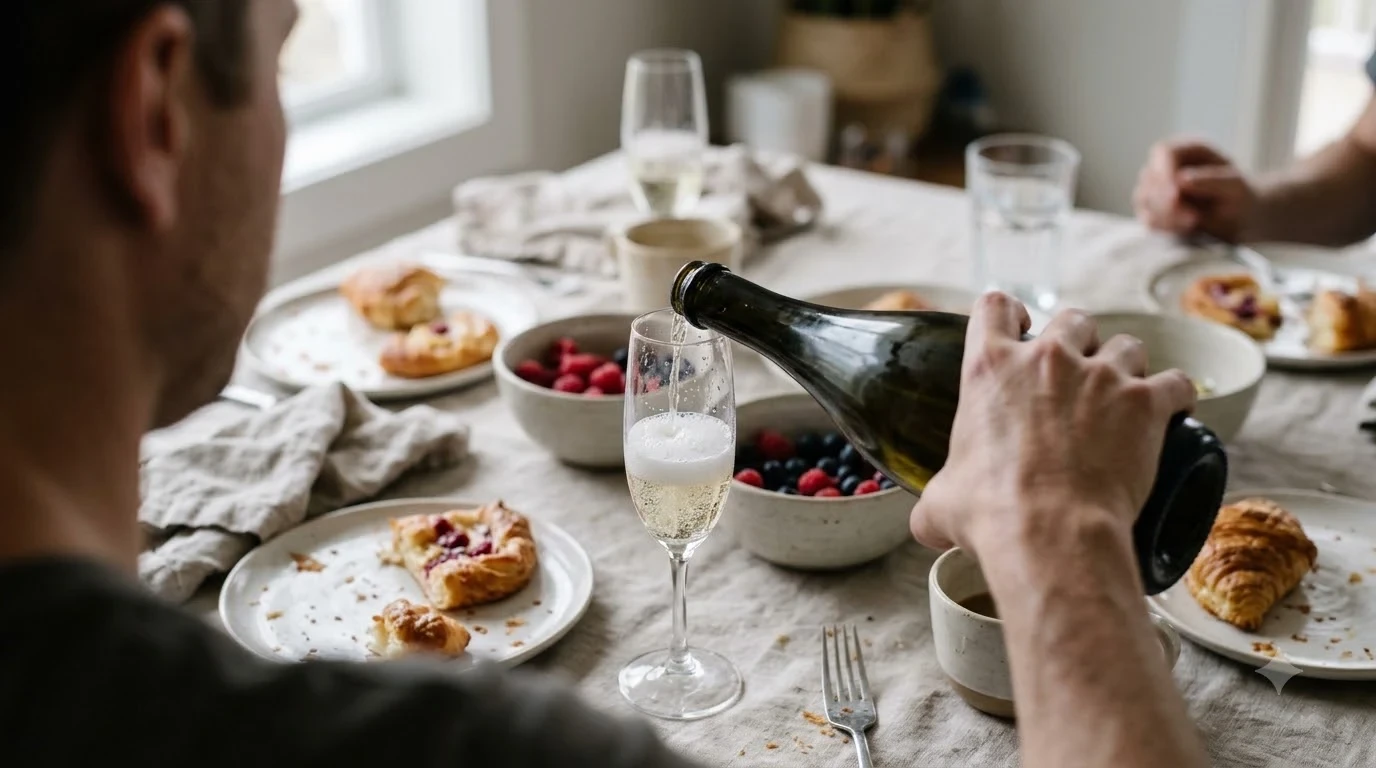
Raventós sparkling wine is best served well chilled, generally between 40 and 50 degrees Fahrenheit. A temperature in this range keeps the wine refreshing while allowing its citrus, fruit, floral and lees-derived aromas to remain perceptible.
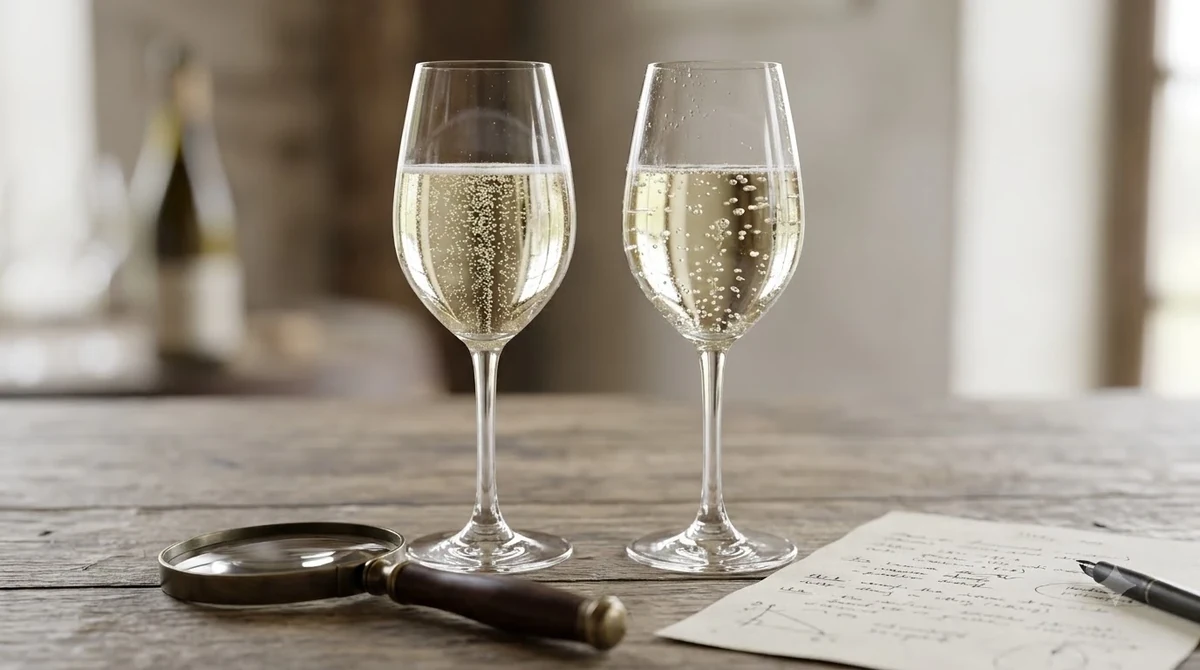
A standard 750 ml bottle provides approximately five glasses when poured at 5 ounces each. Use a clean sparkling-wine glass or a medium-sized white wine glass rather than choosing a very narrow flute automatically. A slightly wider bowl provides more space for the aromas to develop while retaining enough height to appreciate the bubbles.
Food pairing is one of the strengths of a traditional-method wine with fresh acidity and fine bubbles. Seafood is a natural match, particularly oysters, shrimp, scallops and grilled fish. The acidity refreshes the palate, while the carbonation complements the textures of many seafood dishes.
Fried foods also make excellent companions. Fried calamari, tempura vegetables, salted potato chips and breaded seafood benefit from the wine’s crispness. The acidity cuts through richness and helps keep each bite from feeling too heavy. Salty foods can also make the fruit characteristics of a dry sparkling wine seem more expressive.
For a more substantial pairing, try roasted chicken, grilled vegetables, creamy mushroom dishes or mild aged cheeses. A medium-bodied bottle such as De la Finca can stand up to richer dishes more comfortably than a particularly delicate sparkling wine. The key is matching the weight of the food with the body and structure of the wine.
Very sweet desserts require a different approach. A dry sparkling wine can seem harsh or thin beside a very sweet pastry or cake. Choose a wine at least as sweet as the dessert when pairing sparkling wine with sugary foods.
Spicy dishes also need some attention. Alcohol can intensify the impression of chili heat, so particularly hot dishes may overwhelm the subtler flavors of a delicate sparkling wine. Mildly seasoned seafood, grilled chicken and dishes with moderate spice are generally easier matches.
Tip: Chill Raventós sparkling wine to 40–50°F before opening. Pour approximately 5 ounces into each glass, and keep any remaining wine refrigerated with a proper sparkling-wine stopper. Opened sparkling wine generally retains its best character for about 1–3 days in the refrigerator.
For unopened bottles, store the wine in a cool, dark place with a relatively consistent temperature near 55 degrees Fahrenheit. Keep bottles on their sides when using traditional cork closures, protect them from direct light and avoid unnecessary temperature fluctuations. Sparkling wine does not need to be stored in an ordinary kitchen refrigerator for months; that appliance is better suited to chilling a bottle shortly before serving.
Raventós also offers a useful opportunity to explore Spanish wines beyond the sparkling category. Readers interested in contrasting Catalonian bubbles with still wines can compare the style with Campo Viejo red wine, which provides a different perspective on Spanish grape varieties and regional wine styles. Our broader Wine Brands section provides further opportunities to explore producers from different countries.
Frequently Asked Questions
These answers explain several useful terms and distinctions that can help you interpret Raventós labels and understand traditional-method sparkling wines more confidently.
What does Blanc de Blancs mean on a Raventós bottle?
Blanc de Blancs means white wine made from white grapes. The term describes the color of the grapes used rather than requiring the wine to contain only one grape variety. A bottle can therefore combine Xarel·lo and Macabeu and still be described as Blanc de Blancs.
Does Brut Nature mean that a sparkling wine contains absolutely no sugar?
Not necessarily. Brut Nature is the driest standard sparkling-wine sweetness classification, but the designation does not mean that the wine contains no naturally occurring grape sugars. The term relates to the wine’s dosage classification rather than guaranteeing a chemically sugar-free drink.
What does the vintage year on a Raventós sparkling wine label mean?
The vintage identifies the year in which the grapes were harvested, not the year the bottle was sold or released. Raventós i Blanc states that its sparkling wines are always vintage wines. This means the producer intends each bottle to reflect the characteristics of a particular growing season rather than a standard non-vintage blend.
What is disgorgement in traditional-method sparkling wine production?
Disgorgement is the cellar operation that removes the yeast sediment collected in the bottle after the second fermentation and lees aging. The sediment is concentrated in the neck before it is expelled. The producer can then complete the bottle with the appropriate finishing wine and dosage before fitting the final closure.
Does Conca del Riu Anoia mean that a wine comes from one vineyard?
No. Conca del Riu Anoia refers to a geographical area centered on the Anoia River basin rather than automatically identifying a single vineyard. A wine may combine fruit from several estate plots while still expressing the area’s general geographical identity. Individual vineyard names provide a more specific indication of a wine’s origin.
Raventós i Blanc is an excellent producer to explore if you enjoy Spanish sparkling wine with an emphasis on native grapes, careful farming and traditional bottle fermentation. Its combination of family history, regional identity and extended lees aging gives each cuvée a clear connection to Catalonia. Start with Blanc de Blancs Extra Brut or compare it with De la Finca Brut Nature to discover which expression best suits your palate.
More in Wine Brands
 Underwood Wine Price: Compare Bottles, Cans, and Pack SizesUpdated Nov 21, 2026
 Zenato Wine Price: Compare Styles and Choose the Right BottleUpdated Nov 21, 2026
 Zuccardi Wine Price: Compare Bottles and Find the Right RangeUpdated Nov 21, 2026
 Yellow Tail Moscato Review: Taste, Sweetness and Serving TipsUpdated Nov 21, 2026
 Wolf Blass Yellow Label Review: Choose Your Best StyleUpdated Nov 21, 2026
 Wolffer Estate Rose Review: Choose the Right Bottle for Your TableUpdated Nov 21, 2026