

We may earn a commission when you buy through links on this page, at no extra cost to you. Learn more.
Gaja red wine is the Nebbiolo-based range from the Gaja family estate in Barbaresco, Piedmont, built around a flagship Barbaresco and three single-vineyard crus: Sorì San Lorenzo, Sorì Tildìn and Costa Russi. The core Barbaresco wines are made from 100% Nebbiolo, sit at about 14% alcohol, and spend roughly two years in cellar before release. The single-vineyard crus draw the most questions from collectors, because each one has a different balance of fruit, tannin and readiness. This guide walks through the range, how the wines are made, how the labels changed over time, and how to serve them at home.
Gaja has been a reference point for Italian red wine for decades, and most of its reputation rests on Nebbiolo grown in the hills around the village of Barbaresco. The estate was founded in 1859 and has stayed in the family across five generations. For American drinkers, confusion usually starts with the labels, because the same vineyards have carried different appellation names over the years. Understanding that history makes the wines easier to shop for and easier to cellar, and it explains why the single-vineyard bottles are discussed so differently from the flagship.
Gaja Red Wine Range and Where Its Grapes Come From
The red range is anchored in Barbaresco, with a few wines from other Piedmont and Tuscan properties that the family also owns.
The family’s roots in the village are old. Giovanni Gaja founded the business in 1859, and the wines were first served and sold at the Osteria del Vapore beside the Tanaro river ferry dock. Clotilde Rey, known in the family as Tildìn, was widowed in 1944 and went on to buy new vineyards and lead the winery. By the time Angelo Gaja joined in 1961, the family had assembled about 30 hectares of vineyards, which gave the estate a working base for the changes that followed.
The core red is the flagship Gaja Barbaresco DOCG. The importer’s description of the 2023 release says it blends fruit from 14 vineyards in the municipality of Barbaresco, covering 21.4 hectares, with vines that average about 40 years old. Because the wine pulls from many sites, it reflects the character of the village more than any single hillside. The three single-vineyard wines are bottled separately, and they are where the estate’s reputation for precise expression of place is most visible.
Outside the Barbaresco zone, the range includes Barolo Sperss, which comes from a high plot in Serralunga, and Darmagi, a Cabernet Sauvignon planted in 1978. The family also owns Ca’ Marcanda in Bolgheri, Tuscany. If you are still sorting out which Italian producers to follow, our wine brands overview is a practical starting point before you compare estates like Gaja.
The Three Single-Vineyard Crus Explained
Sorì San Lorenzo, Sorì Tildìn and Costa Russi were released as single-vineyard Barbarescos starting in the late 1960s and 1970s, and each one has a distinct profile in the glass.
| Cru | First vintage | Decanter’s read on the 2013 | Cellar note |
|---|---|---|---|
| Sorì San Lorenzo | 1967 | Mighty tannins, monumental structure | Most long-lived of the three; 2013 not before 2024 |
| Sorì Tildìn | 1970 | More structure, polished and glossy fruit | Needs a few years before opening |
| Costa Russi | 1978 | Perfumed, forthcoming and delicious | Accessible at release |
Sorì San Lorenzo was the first of the three, with its first vintage in 1967. Decanter’s review of the 2013 trio describes it as typified by mighty tannins and monumental architecture, which makes it the most long-lived of the group. Young bottles can taste firm and closed, so they reward patience and a decant before dinner.
Sorì Tildìn followed in 1970. Decanter says it combines more structure with polished, glossy fruit and needs a few years before it is opened. In practice that puts it between its two siblings: more backbone than Costa Russi, with a fruit profile that feels less austere than San Lorenzo.
Costa Russi arrived in 1978 and is the most approachable of the group in its youth. Decanter describes it as perfumed, forthcoming and delicious, and it was accessible at the time of its 2013 review. For a first bottle of single-vineyard Gaja, that makes it the most forgiving choice, while still carrying the same Nebbiolo structure underneath.
How the Barbaresco Flagship Is Made
Gaja’s winemaking combines vineyard-by-vineyard fermentation with a two-stage aging process that moves from small French barriques into large traditional casks.
The first step is separation. Each vineyard is vinified on its own, a practice that Angelo Gaja began building in the 1960s and that carries into the flagship’s component lots. Fermentation and maceration are handled lot by lot, and the blend is assembled only after aging. Vinfolio’s estate profile says Nebbiolo maceration can run up to 30 days, a traditional approach that builds extract and tannin.
Aging follows two stages. According to Vinfolio, many of the wines spend their first 12 months in barriques, about one third of them new French oak, before finishing in large, old Slovenian oak casks called botti. The importer’s notes on the 2023 flagship describe the same logic: 12 months of oak aging before blending, followed by another 12 months of maturation. Angelo Gaja first trialed barriques in 1966, which was unusual in the area at the time.
The purpose of the barrique stage is to soften tannin and add flavor intensity, while the big casks keep the fruit more transparent. The result is a red with fine grip and a long finish, which is why the wine reads as both modern in polish and traditional in structure. For a home cellar, expect the flagship to show finesse before it shows power.
The 1996 Declassification and the Return to Barbaresco
A 1996 decision moved the three single-vineyard crus out of Barbaresco DOCG, and the 2013 vintage brought them back.
The reason was a rule, not a quality problem. Barbaresco DOCG requires 100% Nebbiolo, and Angelo Gaja wanted to blend in a small share of Barbera, about 5 to 6 percent, to adjust balance and acidity. Because the blend no longer met the DOCG requirement, the three crus were declassified to Langhe DOC starting with the 1996 vintage. Vinfolio notes that the flagship Barbaresco and one Barolo bottling were the exceptions that kept their DOCG status.
The return happened under Gaia Gaja, who took charge of the estate. In the 2013 vintage she moved the three crus back into the Barbaresco appellation and made them 100% Nebbiolo again. Decanter’s coverage of those wines calls the switch only a nuance in style, but says it produced a clearer, finer expression of terroir. You can read that coverage in Decanter’s review of the three 2013 crus.
The appellation history matters when you shop. Decanter notes that Barbaresco DOP is equivalent to DOCG under newer EU rules, so releases from 2013 onward carry the Barbaresco name in its top-tier form. A Costa Russi, Sorì Tildìn or Sorì San Lorenzo from 2013 or later should read Barbaresco, while bottles from the 1996 to 2011 span should read Langhe Nebbiolo.
Vintage Variation and How Long to Cellar Gaja Reds
Gaja has been willing to sell off whole vintages or skip single-vineyard bottlings when quality fell short, and each season shapes how long a cru needs.
| Year | Estate decision | What it signals |
|---|---|---|
| 1946 | Whole vintage sold in bulk | Quality did not meet the estate’s standard |
| 1972 | Whole vintage sold in bulk | Same threshold applied |
| 1984 | Whole vintage sold in bulk | Same threshold applied |
| 1992 | Whole vintage sold in bulk | Same threshold applied |
| 2002 | Whole vintage sold in bulk | Same threshold applied |
| 2012 | No single-vineyard wines produced | The crus were withheld that year |
| 2013 | Crus returned to Barbaresco and 100% Nebbiolo | Cool, late-ripening season |
Vinfolio notes that the estate has sold whole vintages in bulk when quality did not meet its standard, which happened in 1946, 1972, 1984, 1992 and 2002. No single-vineyard wines were produced in 2012. That willingness to skip releases is a useful signal when you buy older bottles, because a missing vintage usually means the estate chose not to bottle, not that stock went missing.
The 2013 vintage shows how conditions shape cellaring. Decanter describes it as cool and almost austere, with a late flowering and a harvest that ran into October. The slower ripening preserved natural acidity and aromatic complexity, which tends to favor longer aging. Decanter’s advice on the San Lorenzo is specific: do not open the 2013 before 2024. Costa Russi from the same vintage was described as accessible at release, so the three crus clearly do not share one timeline.
For a practical cellar plan, store bottles on their sides in a cool, dark place near 55°F (13°C), away from vibration. Think in terms of the cru first. Costa Russi suits earlier drinking, Sorì Tildìn rewards a few years, and Sorì San Lorenzo needs the longest rest. The flagship sits between them, and its 12 months of barrique plus 12 months of cask aging means it is already built for some time in the cellar.
Serving, Decanting and Food Pairing for Gaja Reds
Serve these Nebbiolo-based reds at about 60 to 65°F, and give young bottles time to open before dinner.
| Wine | Serving temperature | Decanting time | Food pairing |
|---|---|---|---|
| Costa Russi | 60 to 65°F | About 30 minutes | Herb-roasted pork loin |
| Sorì Tildìn | 60 to 65°F | 30 to 60 minutes | Braised beef short ribs |
| Sorì San Lorenzo | 60 to 65°F | 60 minutes or more | Aged hard cheese and grilled rib steak |
| Flagship Barbaresco | 60 to 65°F | 30 to 60 minutes | Truffle or mushroom pasta |
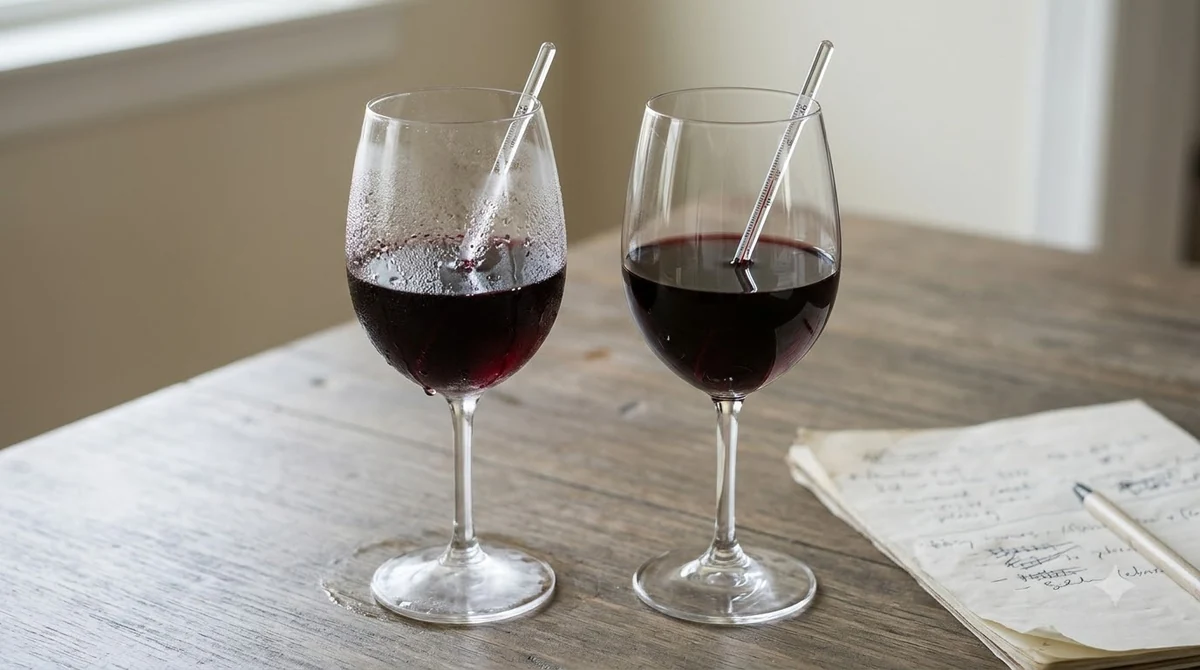
Serving temperature is the first lever. Full reds in the 60 to 65°F range show their aromatic lift and tannin balance, while warmer rooms push alcohol forward and make the palate feel heavy. Keep bottles out of direct sun and away from the stove until service.
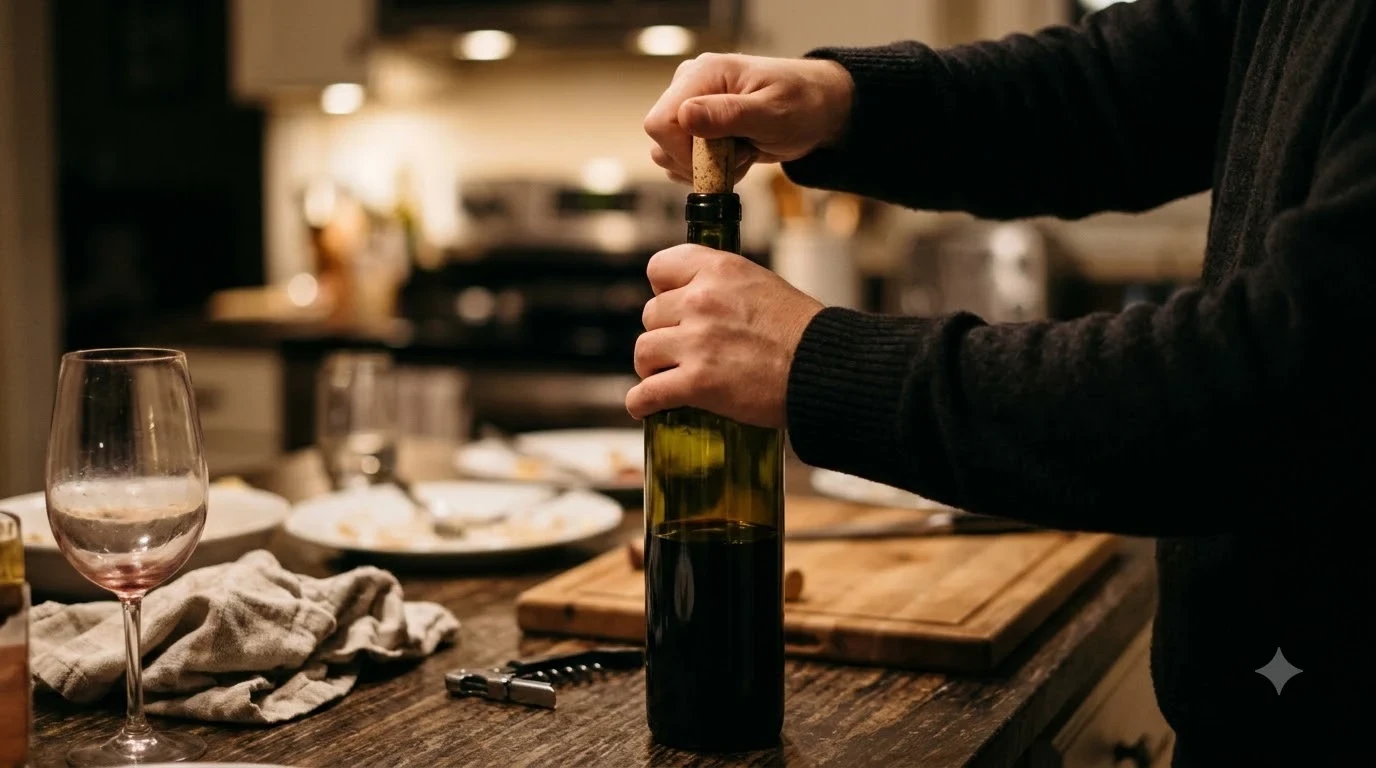
Decanting matters most for the younger wines. Costa Russi can open in about 30 minutes, while Sorì San Lorenzo, with its firm tannin, benefits from an hour or more. Pour a small glass first to check the aromas. If the wine still tastes tight, give it more time before you judge it.
Nebbiolo’s tannin pairs best with fat and salt, which soften the grip and let the fruit come forward. Braised beef, roast lamb and aged cheese do that well. Avoid chili-heavy dishes, since heat is amplified by alcohol and tannin, and skip oily fish, which clashes with a tannic red.
Tip: Decant a young Sorì San Lorenzo for at least an hour, and pour a small glass of Costa Russi first to check whether it needs longer. Store any opened bottle in the fridge and finish it within three to five days, as you would with most still reds.
Barolo Sperss, Darmagi and the Wider Estate Portfolio
Beyond the Barbaresco crus, the family’s red portfolio includes a Barolo, a Cabernet-led wine and a Bolgheri blend, plus a white side that is worth knowing.
Barolo Sperss comes from a high plot in Serralunga, in the Barolo zone. Angelo named it for his father’s memories of the site’s quality, which gives the family a second Nebbiolo voice shaped by the same focus on vineyard expression as the Barbaresco crus.
Darmagi is the estate’s Cabernet Sauvignon, planted in 1978 in what was then the first Cabernet vineyard in Piedmont. The name is a Piedmontese phrase meaning roughly “what a shame,” and Angelo’s father reportedly muttered it every time he walked past the young vines. In Bolgheri, Ca’ Marcanda’s Camarcanda is a blend of Merlot, Cabernet Sauvignon and Cabernet Franc. The family also bought Pieve Santa Restituta in Montalcino in 1994, though no wines were released from the 2002 and 2003 vintages because of tough weather.
The white side of the estate also shapes how the family works. Gaia & Rey is a Chardonnay from a vineyard planted in 1979 and first launched in 1983, and Alteni di Brassica is a Sauvignon Blanc launched three years later. If you are comparing the full estate output, our guide to gaja white wine covers those bottles in more depth.
Frequently Asked Questions
Is Gaja the most decorated producer in Barbaresco?
Vinfolio describes Gaja as Barbaresco’s most decorated producer, and notes that the winery has earned a record 53 Tre Bicchieri from Gambero Rosso in 29 years, more than anyone else in Italy. Treat those awards as context for the estate’s reputation rather than a guarantee of how a specific vintage will taste.
Who runs the Gaja estate today?
Rossana Gaja, born in 1981, joined the business in 2009 and works on the estate’s response to climate change. She has brought geologists, botanists, entomologists and geneticists into the winery’s work. Their brother Giovanni also works in the family business, and Angelo still works alongside his daughters.
Does Gaja use pesticides or herbicides in its vineyards?
According to Vinfolio, the vineyards are treated only with sulphur and copper, with no pesticides or herbicides. The family also applies plant extracts such as propolis, cinnamon, mint, seaweed and rosemary as natural defenses against pests and disease. These steps are part of a broader response to a warming climate and falling rainfall in the region.
What was the 2023 vintage like for the flagship Barbaresco?
The importer’s vintage notes describe severe water scarcity from October through April, with the Tanaro river dry in March. Abundant rain in May and June then increased vine productivity, and a July hailstorm hit the area only marginally. August swung between cool spells, extreme heat and storms, but the heat concentrated the fruit and balanced the skins and pulp.
Who founded Pieve Santa Restituta before Gaja took it over?
Roberto Bellini founded Pieve Santa Restituta in Montalcino in 1974, and the estate sits around a centuries-old church. The Gaja family later made the property part of its group, adding a Tuscan base to its Piedmont holdings.
Gaja’s red range rewards readers who learn the crus one at a time. Start with the appellation history, match each wine to the right vintage and cellar plan, and serve it with food that can handle firm tannin. With those basics in hand, the labels become much easier to read and the bottles much more rewarding to open.
More in Wine Brands
 Norton Wine Review: Choose the Right Mendoza WineUpdated Nov 21, 2026
 Noughty Wine Review: How to Choose the Right Alcohol-Free BottleUpdated Nov 21, 2026
 Odette Wine Price: Compare Estate and Reserve Bottles Before BuyingUpdated Nov 21, 2026
 Michael David Wine Review: Choose the Right Lodi BottleUpdated Nov 21, 2026
 Nicolas Feuillatte Brut Review: Taste, Quality and Buying TipsUpdated Nov 21, 2026
 Mud House Wine Review: Find the Right Bottle for Your TasteUpdated Nov 21, 2026