

We may earn a commission when you buy through links on this page, at no extra cost to you. Learn more.
The sagrantino grape is a deeply colored, thick-skinned red variety from Umbria, Italy, best known for the powerful wines of Montefalco Sagrantino DOCG. Its naturally high tannins give the wines a firm structure, while ripe blackberry, dark plum, spice, and floral notes provide depth. The grape is made into both dry red Secco and sweet Passito, and both styles are tied to a defined production area around Montefalco. Knowing the difference helps you choose a bottle, serve it well, and match it with the right food.
Sagrantino is one of Italy’s distinctive native red grapes, but it is not a casual, soft-fruited red. Its combination of concentrated fruit, firm tannin, and aging potential makes it rewarding with rich food or after time in the cellar. This guide explains where it grows, what it tastes like, how its two main styles differ, and what to look for on the label.
What the Sagrantino Grape Is and Where It Comes From
Sagrantino is an indigenous red grape of Umbria, with its identity most closely linked to Montefalco in Perugia province. Montefalco Sagrantino DOCG permits only 100% Sagrantino, and its growing area includes all of Montefalco plus parts of Bevagna, Gualdo Cattaneo, Castel Ritaldi, and Giano dell’Umbria.
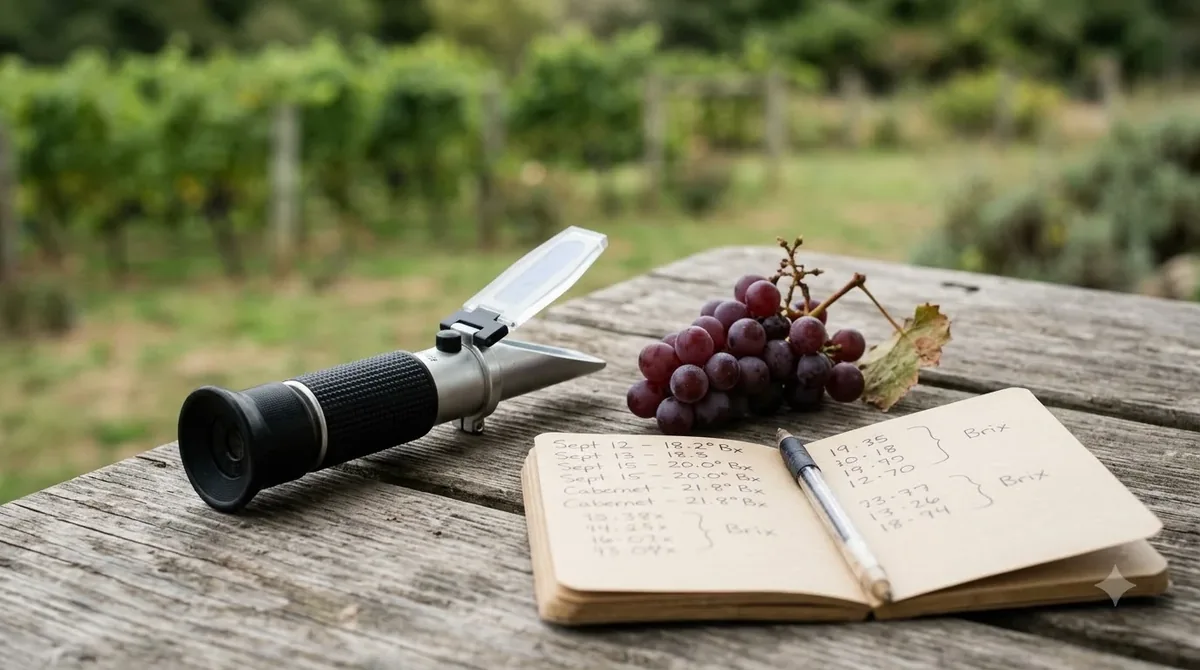
The grape has small berries, thick skins, and relatively large seeds. Skins and seeds contribute tannins, the compounds that create a drying, grippy sensation along the gums. Decanter describes Sagrantino as a late-ripening variety whose thick skin and large pips give it a pronounced tannic structure. Waiting for full ripeness is important: harvesting too early can leave hard, green-edged tannins that obscure the fruit.
Sagrantino’s regional history is long, although its modern comeback is relatively recent. Wine Enthusiast reports that the first written documentation dates to 1598. By 1971, when Marco Caprai’s family established its winery, only about 25 acres remained and just five producers were active, four of them small farms making wine mainly for themselves. The Caprai, Adanti, Benincasa, and Antonelli families helped revive the variety. Its powerful red style is quite different from the aromatic, often sweet Brachetto grape.
Montefalco’s Climate, Hills, and Vineyard Conditions
The heartland of Sagrantino is a compact inland zone in central Italy, where warm summers and cooler winters help a late-ripening red grape reach maturity. Vineyard elevation, exposure, and harvest timing all influence the balance between ripe fruit and firm tannin.
Wine Enthusiast places the DOCG vineyards at roughly 720 to 1,550 feet above sea level and describes hot, dry summers, cold winters, and moderate rainfall. The zone covers Montefalco and portions of four neighboring municipalities, not all of Umbria. Those boundaries matter because a wine labeled Montefalco Sagrantino DOCG must meet the appellation’s requirements, including the use of Sagrantino grown in the designated zone.
Clay soils are common around Montefalco, with limestone also present in many sites. Elevation and aspect affect how quickly grapes ripen: a cooler or more exposed vineyard may preserve freshness longer, while a warmer site may help the late-ripening berries develop ripe fruit. Growers therefore pay close attention to canopy management and crop levels. Wine Enthusiast notes that careful leaf management and green harvesting help the fruit reach phenolic ripeness, when skins and seeds are mature enough to give firm rather than harsh tannins. In warm years, that extended ripening can also raise alcohol; the publication notes that many recent examples are around 15% alcohol by volume, with some near 15.5%. Because Sagrantino ripens late, growers assess more than sugar alone: the maturity of skins and seeds affects whether the finished wine feels supple or aggressively drying. Picking decisions can therefore shape the wine’s texture as much as its fruit profile.
Flavor, Tannin, Acidity, and Body
Sagrantino generally makes a deeply colored, full-bodied red with assertive tannins and enough acidity to keep its dark fruit from feeling flat. Blackberry, black plum, rose, baking spice, and savory herbal notes are useful reference points.
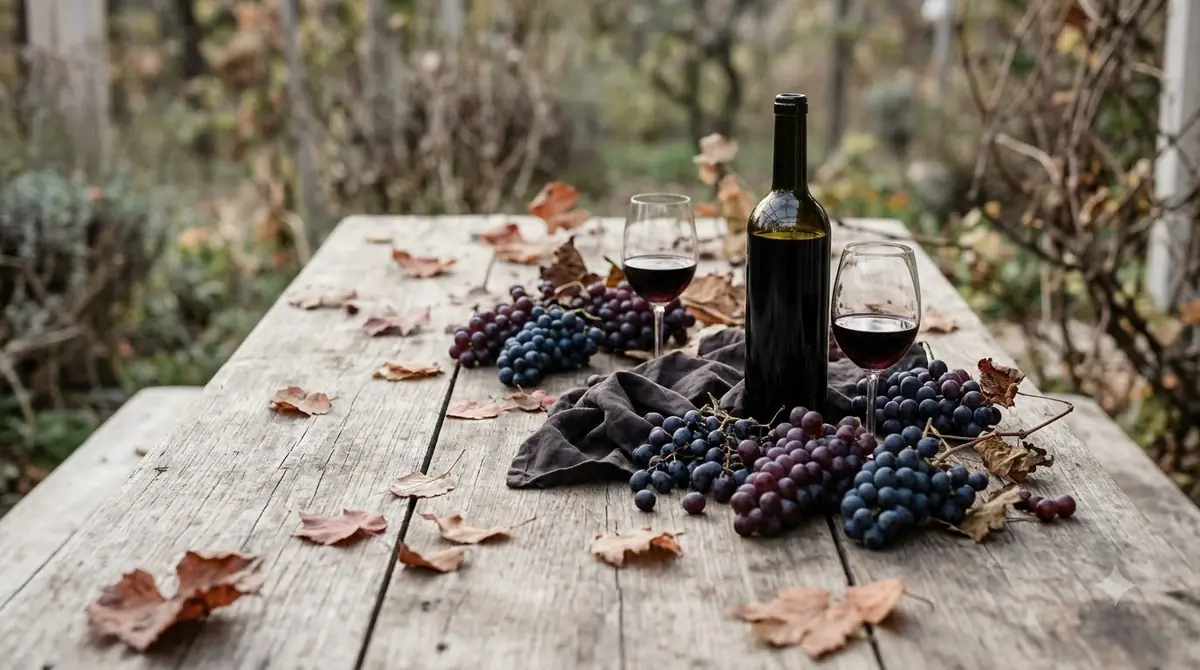
Young Secco wines often show concentrated blackberry and black cherry, sometimes alongside violet or rose. With bottle age, fruit can become more layered and may develop dried-fruit, leather, tobacco, earth, or balsamic impressions. Wine Enthusiast describes a spectrum that includes black-skinned fruit, rose, blackberry jam, baking spice, pine forest, and menthol. The exact mix changes with vintage, vineyard, extraction, oak, and bottle age.
The signature feature is tannin: the drying grip that comes from grape skins, seeds, and sometimes oak. Sagrantino’s thick skins and large pips help explain why its wines can feel especially firm in youth. Wine Enthusiast quotes producer Marco Caprai saying the grape has about twice the polyphenols of Cabernet Sauvignon and Merlot and three times those of Sangiovese. This is his comparison of phenolic concentration, not a promise that every bottle will taste twice as tannic as another wine.
Acidity gives freshness and makes the mouth water, while tannin creates grip. The DOCG rules set a minimum total acidity of 4.5 grams per liter for both Secco and Passito. Good dry Sagrantino balances its substantial tannin and alcohol with ripe fruit and lively acidity, so the finish feels structured rather than simply heavy. Body is usually full, and a young bottle may seem angular beside softer reds such as Merlot or Pinot Noir. Give it time in the glass and notice whether the fruit, acidity, and grip become more harmonious as it opens. A broad, warm impression should not be confused with sweetness: Secco is dry, and its dark-fruit flavors can seem ripe even when no perceptible sugar remains.
Secco and Passito: Two Different Sagrantino Styles
Montefalco Sagrantino DOCG is made in two styles: Secco, a dry red, and Passito, a sweet wine made from dried grapes. Both are 100% Sagrantino, but the drying process creates different drinking experiences.
Secco is the style most often associated with a powerful, ageworthy Italian red. It is fermented dry and emphasizes dark berries, firm tannins, spice, and savory complexity. Its concentration makes it suited to substantial meals, and the appellation requires extended maturation before release. A well-made Secco should not taste like raw tannin alone: ripe fruit, acidity, and careful extraction give the wine shape.
Passito is made by selecting Sagrantino bunches and drying them on racks for at least two months before fermentation. As water leaves the berries, sugars and flavors become more concentrated. The Consorzio Tutela Vini Montefalco describes the result as a dessert wine that can still seem partly dry because its tannins remain noticeable. The DOCG specification sets a minimum alcohol level of 18% by volume and residual sugar between 80 and 180 grams per liter, making it a substantial dessert wine rather than a lightly sweet red. Pair it with aged cheese, dry biscuits, fruit tarts, or dark chocolate; the dessert should not be sweeter than the wine.
Production Rules, Aging, and Cellaring
The Montefalco Sagrantino DOCG rules protect the grape identity and the time needed to mature the wine. Secco requires at least 12 months in oak, while both Secco and Passito must complete a defined aging period and additional bottle aging before sale.
The official specification requires at least 33 months of aging, counted from December 1 of the year in which the grapes were produced. For Secco, at least 12 of those months must be in oak; both styles then require at least four further months in bottle before release. The long schedule means Montefalco Sagrantino is not intended to move straight from fermentation to the shelf.
| Production detail | Montefalco Sagrantino Secco | Montefalco Sagrantino Passito |
|---|---|---|
| Grape composition | 100% Sagrantino | 100% Sagrantino |
| Maximum wine yield | 52 hectoliters per hectare | 28 hectoliters per hectare |
| Maximum grape-to-wine yield | 65% | 35% |
| Minimum mandatory aging | 33 months from December 1 of harvest year | 33 months from December 1 of harvest year |
| Oak aging | At least 12 months | No minimum oak period specified |
| Bottle aging before release | At least 4 months | At least 4 months |
| Distinctive processing | Dry red wine | Grapes dried for at least 2 months |
According to the DOCG specification, the maximum yield is 52 hectoliters per hectare for Secco and 28 for Passito. The maximum conversion from grapes to wine is 65% for Secco and 35% for Passito. These are production limits, not tasting scores or quality guarantees. Within them, producers choose cellar methods: large oak casks or smaller barrels, different fermentation temperatures, and shorter or longer maceration. These decisions influence how strongly tannins come through and how prominent oak flavor becomes.
For home cellaring, keep bottles in a cool, dark place with stable conditions, ideally near 55°F, and store cork-finished bottles on their sides. A young, full-bodied Secco can benefit from 30 to 60 minutes in a decanter, especially if its tannins feel tight. Wine Enthusiast notes that strong vintages can age 20 years and longer, but that is potential rather than a fixed timetable: vintage, producer, storage, and personal preference all matter.
Food Pairings and Serving Sagrantino
Dry Sagrantino is best with food that can meet its tannin and body, especially red meat, game, braised dishes, and aged cheese. Serve Secco around 60–65°F, close to the 18°C service temperature recommended by the Montefalco wine consortium.
Start with steak, grilled lamb, roast beef, or slow-braised short ribs. Protein, fat, and savory cooking juices soften the perception of tannin, making the wine feel less drying. Rich dishes such as beef stew, wild boar ragù, or venison can also match its dark fruit and firm structure. Rosemary, sage, and thyme are natural companions because they echo the wine’s savory side without adding sweetness.
Aged sheep’s-milk cheeses, including Pecorino, are reliable partners: salt and fat make tannins seem less aggressive, while the cheese’s savory intensity matches the wine’s concentration. Truffle-based dishes can work well, too. Avoid delicate white fish and oily fish, which can be overwhelmed by or clash with tannic red wine. Chili-heavy dishes are also difficult because alcohol and tannin can make perceived heat more intense.
Passito calls for a different approach. Serve it around 54°F, close to the 12°C temperature listed by the consortium, in smaller dessert-wine pours. Aged cheese, almond biscuits, fruit tart, and dark chocolate are natural matches, provided the dessert is not sweeter than the wine. Use a standard 5-ounce serving; a 750-milliliter bottle provides about five glasses. For a broader comparison of grape styles, consult wine by type to see how sweetness, acidity, tannin, and body influence food choices. After opening, reseal the bottle promptly and refrigerate it; most still wines are best used within three to five days, depending on how much air remains in the bottle. Bring the remaining wine back toward serving temperature before pouring.
Tip: Open a young Secco 30–60 minutes before dinner and pair it with fatty beef, roast lamb, or aged Pecorino. Keep Passito for the cheese course or dessert, and serve it cooler than the dry red.
Frequently Asked Questions
Questions about Sagrantino often involve the distinction between the DOCG and nearby wines, plus details printed on a regulated label. The answers below cover Montefalco Rosso, the meaning of Vigna, and several production requirements that are easy to miss.
How far back does the written history of Sagrantino go?
In 1925, Montefalco was named Umbria’s most important area at the region’s principal wine fair. The recognition came from the regional wine fair, not from a separate legal classification. The Montefalco Sagrantino DOCG designation followed in 1992, giving the wine a defined modern appellation.
Is Montefalco Rosso the same wine as Montefalco Sagrantino?
No. Montefalco Rosso is a separate DOC wine built around Sangiovese, with a permitted blend of 60–80% Sangiovese, 10–25% Sagrantino, and up to 30% other red grapes. Its minimum aging period is 18 months, so it is not subject to the same 100% Sagrantino rule as Montefalco Sagrantino DOCG.
What does Vigna mean on a Montefalco Sagrantino label?
Vigna is a regulated vineyard reference, not simply a decorative description. The term must be followed by the relevant place name or traditional vineyard name, and the wine must be vinified and stored separately from other wines. It identifies a specific site within the appellation rather than a different grape variety.
Can producers control the drying conditions for Passito grapes?
Yes. The DOCG specification allows natural drying and also permits humidity control, including dehumidification and a reduction in room temperature. It expressly prohibits using heating to dry the grapes, so the process is not equivalent to warming the fruit to speed evaporation.
Are there bottle and closure rules for Montefalco Sagrantino?
The production specification requires dark glass bottles with cork closures and a state control seal. Bottles may not exceed 5 liters in capacity. These packaging rules apply in addition to the grape, origin, and aging requirements of the DOCG.
Sagrantino rewards patience, both in the cellar and at the table. Choose Secco for a structured red alongside rich meat and aged cheese, or Passito for a distinctive sweet wine with dessert and savory cheese. Its powerful tannins are the defining feature, but ripe fruit, acidity, and careful aging make the best examples balanced and memorable.
More in Wine Types & Grapes
 Zinfandel Sugar Content: Dry Red vs. White Zinfandel GramsUpdated Nov 21, 2026
 Best Zinfandel Substitute Options for Sipping and CookingUpdated Nov 21, 2026
 Zweigelt Food Pairing: Best Dishes, Cheeses, and Serving TipsUpdated Nov 21, 2026
 Zinfandel Tannins Explained: How Structure Shapes Every BottleUpdated Nov 21, 2026
 Zinfandel Sweetness Level: Dry Red vs. Sweet White Zin ExplainedUpdated Nov 21, 2026
 Xinomavro Food Pairing: Best Dishes, Styles, and Serving TipsUpdated Nov 21, 2026