

We may earn a commission when you buy through links on this page, at no extra cost to you. Learn more.
santa ynez valley wine covers a remarkably broad range, from cool-climate Pinot Noir and Chardonnay in the west to Syrah, Cabernet Sauvignon, and other ripe varieties farther east. The reason is geographic: the valley opens toward the Pacific and warms as it stretches inland. Understanding its four nested sub-AVAs makes it much easier to choose a bottle by grape, climate, and style.
Santa Barbara County is often associated with coastal scenery, but its vineyards are shaped by mountain ranges, ocean air, and a pronounced change in temperature across a relatively compact area. For wine drinkers, that means a region where one appellation name can cover several very different expressions of California wine.
How the Valley’s East–West Geography Shapes Wine
The Santa Ynez Valley is unusual because it runs east to west rather than following the more familiar north–south pattern of many California valleys. Its transverse mountain ranges create openings for cool Pacific air to move inland, while the distance from the coast allows temperatures to rise toward the eastern end. The San Rafael Mountains form the northern backdrop, and the Santa Ynez Mountains stand to the south.
This orientation helps explain why a single broad appellation can support grapes associated with very different climates. The western Sta. Rita Hills area receives a strong maritime influence, while Happy Canyon, farther east, is warmer and better suited to later-ripening Bordeaux varieties. Decanter describes a useful local rule of thumb: on a summer day, temperatures may rise by about one degree Fahrenheit for each mile traveled east from the ocean. It notes a difference of roughly 25 degrees between the western and eastern ends under some conditions. That is an illustration of the gradient, not a promise of the temperature on every visit or in every vintage.
Cool air and sunshine work together rather than canceling each other out. Marine influence can moderate daytime heat, while sunny afternoons help grapes ripen; cooler conditions later in the day help retain freshness. This combination is one reason Santa Ynez wines can show ripe fruit without always feeling heavy. A cool-site Pinot Noir may emphasize red fruit and lively acidity, while an eastern Cabernet Sauvignon can develop darker fruit and firmer structure.
Four Nested AVAs, Four Distinct Starting Points
Four smaller American Viticultural Areas sit within the larger Santa Ynez Valley AVA, arranged broadly from cooler west to warmer east. Their boundaries give wine drinkers a useful map of the region’s best-known grape styles, though each AVA still contains variation among individual vineyards and producers.
| Sub-AVA | Established | Common reference point |
|---|---|---|
| Sta. Rita Hills | 2001 | Pinot Noir and Chardonnay |
| Happy Canyon of Santa Barbara | 2009 | Cabernet Sauvignon and Sauvignon Blanc |
| Ballard Canyon | 2013 | Syrah and Rhône varieties |
| Los Olivos District | 2016 | Bordeaux, Rhône, Spanish, and Italian varieties |
On the western side, Sta. Rita Hills is the clearest starting point for Pinot Noir and Chardonnay. Its proximity to the Pacific produces a cooler growing environment than the valley’s inland districts. Pinot Noir from this area is often sought for its red-fruit character, freshness, and site expression; Chardonnay can range from citrus-driven and taut to broader styles shaped by lees contact or oak. The district’s name is officially written “Sta. Rita Hills,” a detail worth recognizing when comparing labels.
Ballard Canyon occupies a middle position and is closely associated with Syrah. Rhône varieties such as Grenache Blanc also appear in the area’s wine conversation, giving it a different profile from the Pinot-focused western hills. Los Olivos District lies farther east on an alluvial fan between Ballard Canyon and Happy Canyon. Wine Enthusiast describes it as a place where Bordeaux, Rhône, Spanish, and Italian grapes can all find a home, so the district is a good place to look beyond the region’s best-known Chardonnay and Pinot Noir.
At the eastern end, Happy Canyon of Santa Barbara is the warmer sub-AVA and is recognized for Bordeaux varieties, particularly Cabernet Sauvignon, as well as Sauvignon Blanc. Its warmer conditions can support fuller-bodied reds and more generous fruit character than the western edge. These distinctions are summarized on the Santa Barbara Vintners’ overview of county AVAs, which also clarifies that Alisos Canyon is a separate county AVA rather than one of the four nested Santa Ynez Valley districts.
The Main Grapes and What They Taste Like
Pinot Noir and Chardonnay are natural reference points for the cooler western vineyards, but they are only part of the picture. Pinot Noir usually has low-to-medium tannin and high acidity, so it can feel relatively light on the palate while still carrying concentration and savory detail. Chardonnay has medium acidity and a much wider range of texture, from crisp citrus and green apple to ripe stone fruit, toast, or creamy notes when the winemaking choices encourage them.
Syrah is a useful grape for understanding Ballard Canyon and the Rhône influence in the valley. It can bring dark berry and plum flavors, peppery or savory notes, and medium-plus to high tannin. Grenache and Mourvèdre may appear in blends, while white Rhône grapes such as Grenache Blanc, Roussanne, and Viognier broaden the options beyond red wine. These varieties can offer a different combination of body, perfume, and texture from a Chardonnay grown closer to the coast.
Cabernet Sauvignon is a key eastern reference, especially in Happy Canyon, where warmer conditions can support ripe flavors and firm structure. Its naturally high tannin suits grilled beef and lamb; Merlot is generally softer, with medium tannin, and can appear alone or in blends. Sauvignon Blanc supplies a contrasting high-acid white style, often citrus-led or herbal. The Los Olivos District also supports Italian and Spanish varieties such as Sangiovese and Tempranillo. For more county-wide context, see Wine Enthusiast’s report on Santa Barbara County’s variety of wine styles.
Vineyard Sites, Harvest Choices, and Winemaking
Differences in exposure, elevation, soil, and access to ocean air shape the grapes before they reach a winery. A vineyard on a cool western slope may need a longer season to reach full ripeness than a warmer inland site, while a central vineyard may sit between those two conditions. The result is not simply a ranking from cool to hot; growers make choices based on the variety, slope, row orientation, and the balance they want between ripeness and freshness.
Harvest timing is one of the most important decisions. Picking earlier can help retain acidity and moderate alcohol, while leaving fruit longer on the vine can build riper fruit character and a fuller impression. Those choices vary by grape: Pinot Noir growers often pay close attention to the relationship between acidity, tannin, and delicate aromas, while Cabernet Sauvignon needs enough time for its tannins and flavors to mature. The same calendar date does not mean the same maturity in Sta. Rita Hills and Happy Canyon.
Winemaking then gives producers another set of tools. Fermentation vessels, whole-cluster use, extraction, oak selection, and time on lees can all affect the finished wine. For example, a Pinot Noir fermented with a gentle extraction may emphasize freshness and texture, while a more structured approach can give it greater tannin and depth. Chardonnay may be fermented or aged in stainless steel, neutral oak, or new barrels, and each choice changes the emphasis without changing where the grapes were grown.
Separate place from technique when comparing bottles. Two wines from the same sub-AVA can differ because of vineyard block, harvest date, fermentation vessel, and aging. A producer pouring fruit from several districts can also show the temperature gradient more clearly than one bottle can: the AVA gives the geographic frame, while cellar choices shape the finished wine.
Planning a Tasting Visit Around the Valley
The main tasting hubs are spread among towns with distinct characters, so choosing a base before setting out saves time. Los Olivos is a compact center for tasting rooms, Solvang is a convenient central base with dining and lodging, and Lompoc is an important wine hub toward the western side of the region. Buellton is another practical stop between the western vineyards and the central valley.
A good first visit does not need to cover every district. Choose two contrasting areas and taste them side by side: Sta. Rita Hills for Pinot Noir and Chardonnay, then Ballard Canyon for Syrah, or Los Olivos District followed by Happy Canyon for a comparison of warmer-climate varieties. This approach gives the day a clear theme and makes it easier to notice changes in acidity, tannin, body, and fruit character. A broad checklist of stops can turn tasting into a rushed exercise, so leave time for questions and a meal.
Before driving, confirm tasting-room hours, reservation policies, and whether a winery is open to walk-ins. Some tasting rooms pour wines from vineyards located elsewhere in the county, so ask where the fruit was grown rather than assuming that a tasting-room address identifies the wine’s origin. A planned Santa Ynez Valley wine trail can help group nearby stops, while this broader overview of Santa Ynez Valley wine country is useful for deciding where to stay and which towns to include.
Keep the day to two or three wineries so there is time to compare flights. Tasting the same grape from different sub-AVAs is more revealing than sampling unrelated varieties. Ask where the fruit was grown, what defines the vineyard, and how the wine’s acidity or tannin changes with food.
Serving, Food Pairing, and Storing Bottles
Serving temperature has a direct effect on how a wine feels. Light reds such as many Pinot Noirs are generally best around 55–60°F, while fuller reds such as Cabernet Sauvignon and Syrah are better around 60–65°F. Light whites and rosé work well at 45–50°F, and fuller-bodied Chardonnay is usually more expressive around 50–55°F. Very cold temperatures can mute aromas, while overly warm reds can make alcohol feel more prominent.
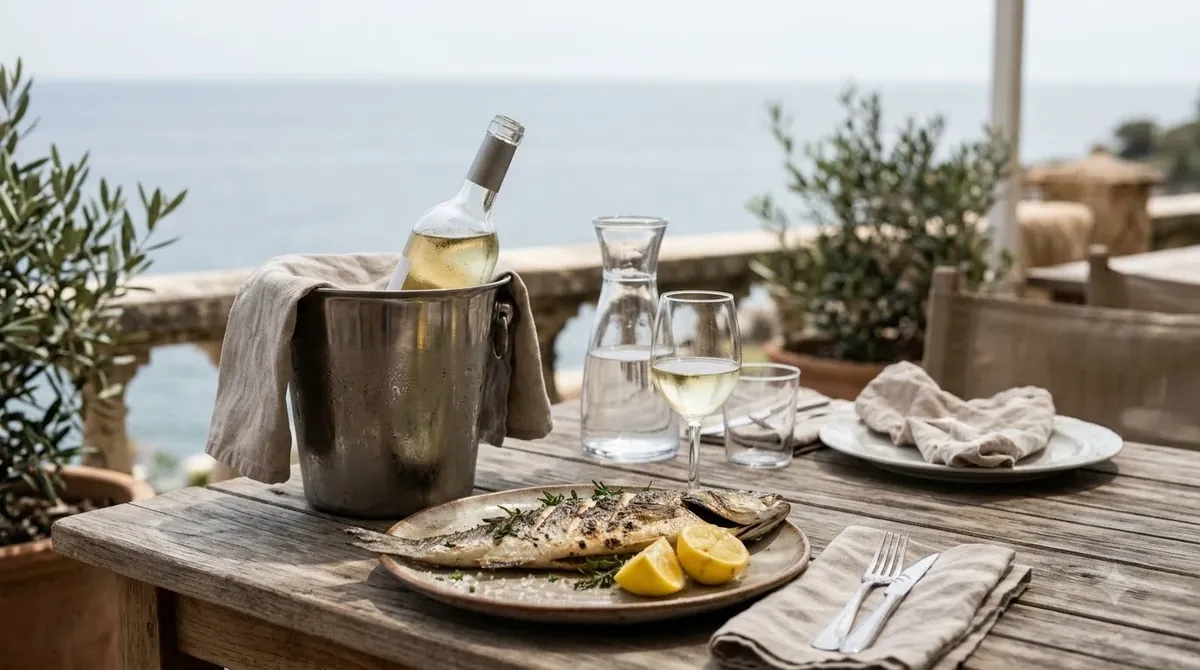
Match the structure of the wine to the food rather than relying on grape name alone. Pinot Noir’s acidity and lighter tannin make it flexible with roast chicken, duck, mushrooms, and salmon; avoid pairing a heavily tannic red with oily fish. Syrah and Cabernet Sauvignon can stand up to grilled meats and dishes with browned, savory flavors. Salt and fat soften the perception of tannin, which is why a Cabernet can feel more balanced beside a well-marbled steak than beside a delicate vegetable dish.
High-acid Sauvignon Blanc works with richer seafood, goat cheese, lemon, and fresh herbs; rounder Chardonnay suits roast poultry, cream sauces, or grilled halibut. Acidic food needs a wine with equal or higher acidity, or the wine can seem flat. Chili heat is amplified by alcohol and tannin, so a fresher white is often more comfortable with very spicy food than a high-alcohol Cabernet or Syrah.
Tip: For a tasting at home, pour about 5 ounces per glass; a standard 750 ml bottle yields roughly five pours. Open young, full-bodied reds 30–60 minutes before serving when they seem tight, and keep opened still wines in the refrigerator for about 3–5 days.
Store cork-finished bottles on their side in a dark place near 55°F, away from sunlight, kitchen heat, and vibration. Properly resealed sparkling wine generally keeps 1–3 days in the refrigerator; fortified wine can last several weeks, and bag-in-box wine often stays fresh for 4–6 weeks after opening. For a home comparison, serve bottles at similar temperatures, taste first without food, then revisit them with roast chicken or aged cheese. The site’s Wine Regions resource explains how appellations identify grape-growing places.
Frequently Asked Questions
The valley’s wine identity is tied to several historic and legal details as well as its climate. The questions below clarify the AVA label, the name Sta. Rita Hills, and the region’s early history.
What does an American Viticultural Area designation mean?
An AVA is a legally delimited grape-growing region distinguished by geographic features, and its name can be used as an appellation of origin on qualifying wine labels and in advertising. The federal definition is about identifying where grapes come from; it is not a government rating of wine quality or a promise that one AVA makes better wine than another.
Why is the western appellation written “Sta. Rita Hills”?
The appellation was originally named “Santa Rita Hills” when it was established in 2001. The federal government approved the abbreviated form “Sta. Rita Hills,” effective January 6, 2006, to prevent possible confusion with the Santa Rita brand name used by a Chilean winery.
Where did the name Santa Ynez come from?
The name was given to the mission established in the valley in 1804. The mission was dedicated to Saint Agnes, and the name Santa Ynez was then applied to the nearby town, river, and valley.
Was wine grown in the valley before the modern wine industry?
Yes. The federal notice establishing the AVA recorded that the valley had more than 5,000 acres of vineyards before Prohibition. Prohibition ended that earlier industry, and the notice identified 1969 plantings just east of Solvang as the first commercial vineyards in the valley after the ban.
How large was the original Santa Ynez Valley AVA?
The federal designation described an area of 285 square miles centered on the Santa Ynez River. At that time, the petition identified about 1,200 acres of vineyards within the proposed boundary, a historical figure that should not be mistaken for a current vineyard-acreage count.
Santa Ynez Valley is best understood as a collection of neighboring growing environments rather than one uniform wine style. Start with the sub-AVA and grape that match your taste, then compare producers to see how site and winemaking choices shape the final bottle.
More in Wine Regions
 Willcox Wine Trail: Discover Arizona’s High-Elevation Wine CountryUpdated Nov 20, 2026
 Yakima Valley Wine Region: Find the Best Styles to TryUpdated Nov 20, 2026
 Vosne Romanee Wine Tasting: Identify Aromas and Choose Better PairingsUpdated Nov 20, 2026
 Yakima Valley Wine Festival: Find the Best Seasonal Wine EventsUpdated Nov 20, 2026
 Wales Vineyards: Discover Cool-Climate Wines and Where to VisitUpdated Nov 20, 2026
 Yountville Wine Festival: Discover Napa Wines and Local FoodUpdated Nov 20, 2026