

We may earn a commission when you buy through links on this page, at no extra cost to you. Learn more.
Sta rita hills wine comes from a cold, coastal American Viticultural Area (AVA) in Santa Barbara County, California, celebrated primarily for structured Pinot Noir and briny, high-acid Chardonnay. Situated between the towns of Buellton and Lompoc in the western Santa Ynez Valley, this transverse east-west valley funnels cold Pacific Ocean fog and sea breezes directly onto ancient marine soils. Approved as an official AVA in 2001, the region spans roughly 30,720 total acres with about 3,000 acres planted to vine across approximately 60 vineyards.
Despite sitting closer to the equator than major European wine districts, this pocket of California’s Central Coast produces wines marked by vibrant natural acidity, moderate alcohol, and savory coastal tension. Understanding how its geography, ancient seabed geology, and pioneer winemakers work together explains why bottles bearing this appellation name command serious attention from cool-climate wine drinkers.
Overview of Sta. Rita Hills
The Sta. Rita Hills AVA is a compact, wind-scoured coastal corridor situated between the Purisima Hills to the north and the Santa Rosa Hills to the south in Santa Barbara County. Established in 2001 after local growers petitioned for recognition of its distinct microclimate, the appellation sits inside the broader western Santa Ynez Valley, just a few miles inland from the Pacific Ocean.
Unlike most North American mountain ranges that run north to south and block coastal weather, the Transverse Ranges here run east to west. According to the Sta. Rita Hills Wine Alliance, this rare geographic alignment acts like a natural wind tunnel, pulling thick morning fog and brisk afternoon ocean breezes directly through the valley. As a result, summertime daytime temperatures stay remarkably cool—often cooler than California’s Carneros or Russian River Valley—while cold nights preserve bright grape acidity.
This maritime cooling stretches the growing season by 35 to 40 days compared to warmer inland California regions, often running from February budbreak into October or November for late-ripening varieties. Even the punctuation in the appellation’s name carries a distinctive backstory. Originally approved as Santa Rita Hills in 2001, the federal government abbreviated the name to “Sta. Rita Hills” in early 2006 following trademark negotiations with Chile’s historic Viña Santa Rita winery, though locals still pronounce it “Santa Rita Hills.”
Sub-Regions and Terroir Zones
While the Sta. Rita Hills AVA does not contain formal sub-appellations, growers and winemakers divide the valley into distinct micro-zones shaped by elevation, proximity to the ocean, and ancient marine geology. Moving just a few miles from west to east or climbing from the valley floor onto lower hillside benches dramatically changes wind exposure, soil drainage, and ripening pace.

On the western edge near Lompoc, vineyards receive the strongest, coldest blast of Pacific fog and afternoon wind. Vines here struggle against stiff gusts that thicken grape skins and naturally restrict yields, resulting in dark, structured, herbal wines with pronounced savory grip. Further east toward Buellton, the marine layer burns off slightly earlier in the day, allowing marginally more afternoon sunshine while retaining brisk night-time cooling.
Soil diversity across these slopes also separates one vineyard block from the next. Over 20 million years ago, tectonic uplift pushed the ancient ocean floor above sea level, leaving behind a patchwork of sandy loams, clay, Monterey shale, fractured limestone, and chalky diatomaceous earth. As Wine Folly notes, northern slopes tend toward sand and clay, while southern hillsides feature decomposed marine rock known locally as Botella, giving roots superior drainage and imparting a signature salty, mineral edge to the finished wines.
| Terroir Zone / Aspect | Primary Soil Composition | Climatic Influence | Typical Wine Character |
|---|---|---|---|
| Western Corridor (Near Lompoc) | Diatomaceous earth, marine sand, shale | Heavy persistent fog, strongest afternoon ocean winds | Tightly wound, savory, herbal, high natural acidity |
| Southern Slopes (Santa Rosa Hills) | Decomposed Botella rock, sandy loam, clay | Direct coastal wind funneling, cool afternoon temperatures | Structured dark red fruit, firm tannins, saline minerality |
| Northern Slopes (Purisima Hills) | Sand, clay loam, calcareous deposits | More afternoon sun exposure, steady breezy airflow | Plush red berry fruit, floral aromatics, silky texture |
| Eastern Boundary (Near Buellton) | Alluvial silt, sandy clay loam | Earlier fog burn-off, slightly warmer daytime highs | Riper orchard and berry notes balanced by crisp evening chill |
Key Grapes and Wine Styles
Pinot Noir and Chardonnay dominate the Sta. Rita Hills landscape, thriving in a climate where warm-climate grapes struggle to ripen fully. Together, these two cool-climate varieties account for the vast majority of the region’s 3,000 planted acres, though roughly 18 other cool-climate grapes—including Syrah, Sauvignon Blanc, Pinot Gris, Grüner Veltliner, and Gamay—also grow in smaller pockets.
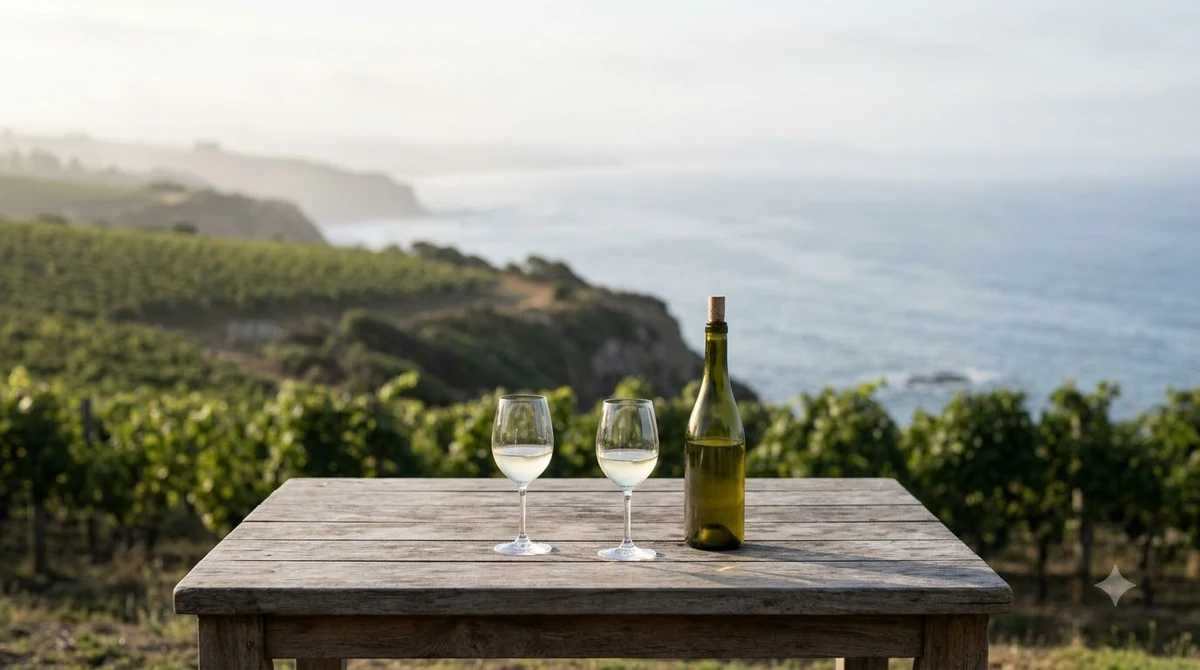
Sta. Rita Hills Pinot Noir is widely recognized for bridging Old World tension with California fruit purity. Reviewers at Wine Enthusiast and regional winemakers frequently highlight aromas of tart red cherry, pomegranate, and wild strawberry layered over dried herbs, white pepper, forest floor, and a distinct briny salinity. Because the long, cool growing season lets flavor compounds develop slowly without spiking sugar levels, these reds typically show moderate alcohol, brisk acidity, and fine-grained tannins capable of aging gracefully for a decade or more.
Chardonnay from this appellation is equally distinctive, earning praise for razor-sharp acidity and a mouthwatering, oyster-shell minerality. Rather than heavy tropical fruit or overt buttery oak, top bottlings lean toward Meyer lemon, green apple, white peach, and crushed chalk, often aged in neutral French oak or stainless steel to preserve crystalline freshness. The region’s natural high-acid grape chemistry has also fueled a growing movement in traditional-method sparkling wines, alongside peppery, Northern Rhône-style Syrahs harvested late in autumn.
Notable Producers and Historic Vineyards
Modern winemaking in the Sta. Rita Hills began in 1971, when Richard Sanford and botanist Michael Benedict planted the region’s landmark Sanford & Benedict Vineyard. At the time, conventional wisdom held that Santa Barbara County was too far south for fine Pinot Noir, yet Sanford Winery’s inaugural 1976 release proved that coastal wind and fog could rival classic cool-climate Wine Regions around the globe.
Following that breakthrough, a wave of dedicated pioneers and vineyard specialists established estates along Highway 246 and Santa Rosa Road during the 1980s and 1990s. Today, collectors seek out single-vineyard bottlings and estate wines from foundational producers and acclaimed contemporary houses alike, including:
- Sanford Winery & Alma Rosa Winery: Founded by regional trailblazer Richard Sanford, both estates helped establish the benchmark style for organic farming and age-worthy hillside Pinot Noir and Chardonnay.
- Babcock Winery, Longoria Wines & Melville Vineyards: Early champions of the 1997 AVA petition, with Melville notably pioneering high-density plantings and Dijon clones along Highway 246.
- Sea Smoke, The Hilt Estate & Tyler Winery: Acclaimed modern producers known for site-transparent, high-tension bottlings sourced from windswept hillside blocks.
- Foxen, Siduri, Ampelos, Chanin Wines & Flying Goat Cellars: Respected specialists spanning single-vineyard Pinot Noir, biodynamic farming, and traditional-method coastal sparkling wine.
Even Burgundian vignerons have taken notice of the region’s limestone-laced soils and cold maritime air, with Domaine de Montille establishing local vineyard holdings to explore cool-climate California Pinot Noir and Chardonnay.
Visiting Tips for Wine Travelers
Exploring the Sta. Rita Hills is unusually straightforward because the entire appellation stretches along two parallel east-west arteries—State Route 246 to the north and winding Santa Rosa Road to the south—connecting Buellton and Lompoc. Distances between estate vineyards are short, allowing visitors to experience dramatic shifts in wind and fog within a 15-minute drive.
Before setting out along the rural vineyard roads, keep a few practical logistics in mind so your tasting itinerary runs smoothly:
- Book estate appointments ahead of time: Many working vineyard estates along Santa Rosa Road and Highway 246 require advance reservations for seated tastings, which often take place overlooking the vines.
- Visit the Lompoc Wine Ghetto: Located in an industrial park on the western edge of the appellation, this dense cluster of urban tasting rooms lets you sample small-lot Pinot Noir, Chardonnay, and Rhône varietals from boutique producers without driving between rural ranches.
- Pack warm layers year-round: Even when inland Santa Ynez towns feel sunny and warm, afternoon winds ripping off the Pacific can drop temperatures dramatically by mid-afternoon.
Tip: Start your tasting route on the western side near Lompoc in the morning before afternoon gusts peak, then work east toward Buellton for lunch and warmer late-day patio tastings.
How to Buy and Pair Sta. Rita Hills Wine
When shopping for sta rita hills wine, look closely at the label for single-vineyard designations alongside the AVA name. Because hillside orientation and soil type dictate flavor so strongly here, bottles naming specific heritage sites—such as Sanford & Benedict, Fiddlestix, Radian, or La Rinconada—offer a clear window into how coastal wind shapes the grape. If you enjoy the earthy elegance of aloxe corton wine or spend weekends exploring beaune wine tasting flights in Burgundy, single-vineyard Sta. Rita Hills Pinot Noir delivers a familiar balance of red fruit, savory spice, and firm mineral backbone.
Vintage selection also helps match a bottle to your palate. Cooler, foggier vintages emphasize bright cranberry, tart cherry, dried thyme, and snappy acidity, whereas slightly sunnier years yield rounder raspberry fruit and plush mid-palate texture without losing coastal freshness. For Chardonnay, check technical notes for oak treatment: bottlings aged mostly in neutral barrels highlight crisp citrus and sea-spray salinity, while higher proportions of new French oak add toasted brioche and hazelnut richness.
At the dinner table, the natural acidity and savory edge of these wines make them remarkably versatile partners for food. Pair Sta. Rita Hills Pinot Noir with herb-crusted roast salmon, duck breast with tart cherry reduction, wild mushroom risotto, or grilled pork tenderloin. Serve chilled Sta. Rita Hills Chardonnay alongside Dungeness crab, seared sea scallops, roast chicken with lemon and thyme, or creamy goat and triple-cream cheeses—an approach that works just as well for boutique domestic wine country discoveries as it does when exploring emerging destinations like augusta vineyards.
Frequently Asked Questions
Why is Sta. Rita Hills abbreviated as “Sta.” instead of “Santa”?
The appellation was originally approved as Santa Rita Hills in 2001, but the Chilean winery Viña Santa Rita raised trademark objections over potential consumer confusion. Following negotiations, federal regulators officially abbreviated the AVA name to Sta. Rita Hills in January 2006, though growers and wine lovers still pronounce it “Santa Rita Hills.”
What makes Sta. Rita Hills different from the rest of Santa Ynez Valley?
Located at the far western mouth of the Santa Ynez Valley, Sta. Rita Hills sits closest to the Pacific Ocean and features an east-west mountain corridor that funnels cold fog and wind directly across the vines. Moving east toward Ballard Canyon or Happy Canyon, mountains block the marine layer and temperatures climb sharply, shifting the focus from Pinot Noir and Chardonnay to warmer-climate Syrah and Cabernet Sauvignon.
What grapes grow best in Sta. Rita Hills?
Pinot Noir and Chardonnay are the flagship grapes of the appellation, accounting for the vast majority of its roughly 3,000 planted acres. The cold coastal climate also excels with traditional-method sparkling wines and small plantings of cool-climate Syrah, Sauvignon Blanc, Grüner Veltliner, and Gamay.
How should you serve and cellar Sta. Rita Hills Pinot Noir and Chardonnay?
Serve Sta. Rita Hills Pinot Noir slightly cool—around cellar temperature rather than warm room temperature—to keep its bright red fruit and savory herbal notes crisp, and serve Chardonnay chilled but not ice-cold so its saline minerality shines. Well-structured single-vineyard bottlings from top producers can easily develop complex earthy and forest-floor nuances over 7 to 12 years in a cool cellar.
Whether you are pouring a crisp, ocean-inflected Chardonnay with fresh shellfish or decanting a single-vineyard Pinot Noir alongside roasted poultry, sta rita hills wine showcases how dramatic coastal geography can transform California winemaking. Seek out bottles from wind-exposed hillside sites to experience the bright acidity, savory depth, and unmistakable marine character that define this Central Coast benchmark.
More in Wine Regions
 Willcox Wine Trail: Discover Arizona’s High-Elevation Wine CountryUpdated Nov 20, 2026
 Yakima Valley Wine Region: Find the Best Styles to TryUpdated Nov 20, 2026
 Vosne Romanee Wine Tasting: Identify Aromas and Choose Better PairingsUpdated Nov 20, 2026
 Yakima Valley Wine Festival: Find the Best Seasonal Wine EventsUpdated Nov 20, 2026
 Wales Vineyards: Discover Cool-Climate Wines and Where to VisitUpdated Nov 20, 2026
 Yountville Wine Festival: Discover Napa Wines and Local FoodUpdated Nov 20, 2026