

We may earn a commission when you buy through links on this page, at no extra cost to you. Learn more.
The best metal wine rack depends on how many bottles you own and where you plan to put them, with label-forward wall racks taking the top spot for most living spaces and high-capacity wire shelving winning for cellar storage. Countertop geometric frames work well for a small weekly rotation of six to twelve bottles, while lockable wrought iron cabinets protect valuable collections. Modular steel systems offer the cleanest path for collectors whose bottle count grows steadily each year.
Metal frames hold more weight per square inch than wood without warping in damp basements or humid kitchens, and slim steel rods leave air circulating freely around every bottle. Whether you are outfitting a dedicated cellar room or looking for a sharp way to display a dozen weeknight reds on an empty dining wall, choosing the right structural style prevents sagging shelves, scratched labels, and dry corks. A reliable wine rack keeps bottles cradled horizontally while fitting naturally into your room’s layout.
Quick Comparison
Different metal rack architectures trade off floor footprint, bottle visibility, and total capacity depending on how and where you store your collection.
| Rack Type | Typical Capacity | Bottle Orientation | Mounting Style | Best Space |
|---|---|---|---|---|
| Label-Forward Wall Rack | 9 to 36 bottles | Sideways (label visible) | Wall stud or drywall anchor | Dining rooms, kitchens, feature walls |
| High-Capacity Wire Shelving | 100 to 200+ bottles | Neck-out or sideways | Freestanding (wall-tethered) | Basements, closets, dedicated cellars |
| Countertop Geometric Frame | 6 to 12 bottles | Neck-out horizontal | Freestanding tabletop | Kitchen counters, bar carts, sideboards |
| Modular Stackable Grid | 12 to 72+ bottles | Neck-out or label-forward | Freestanding expandable | Pantries, under-stair nooks, growing cellars |
| Lockable Wrought Iron Cabinet | 40 to 150+ bottles | Neck-out horizontal | Freestanding floor unit | Open living areas, shared spaces, seismic zones |
Best for Label-Forward Wall Display
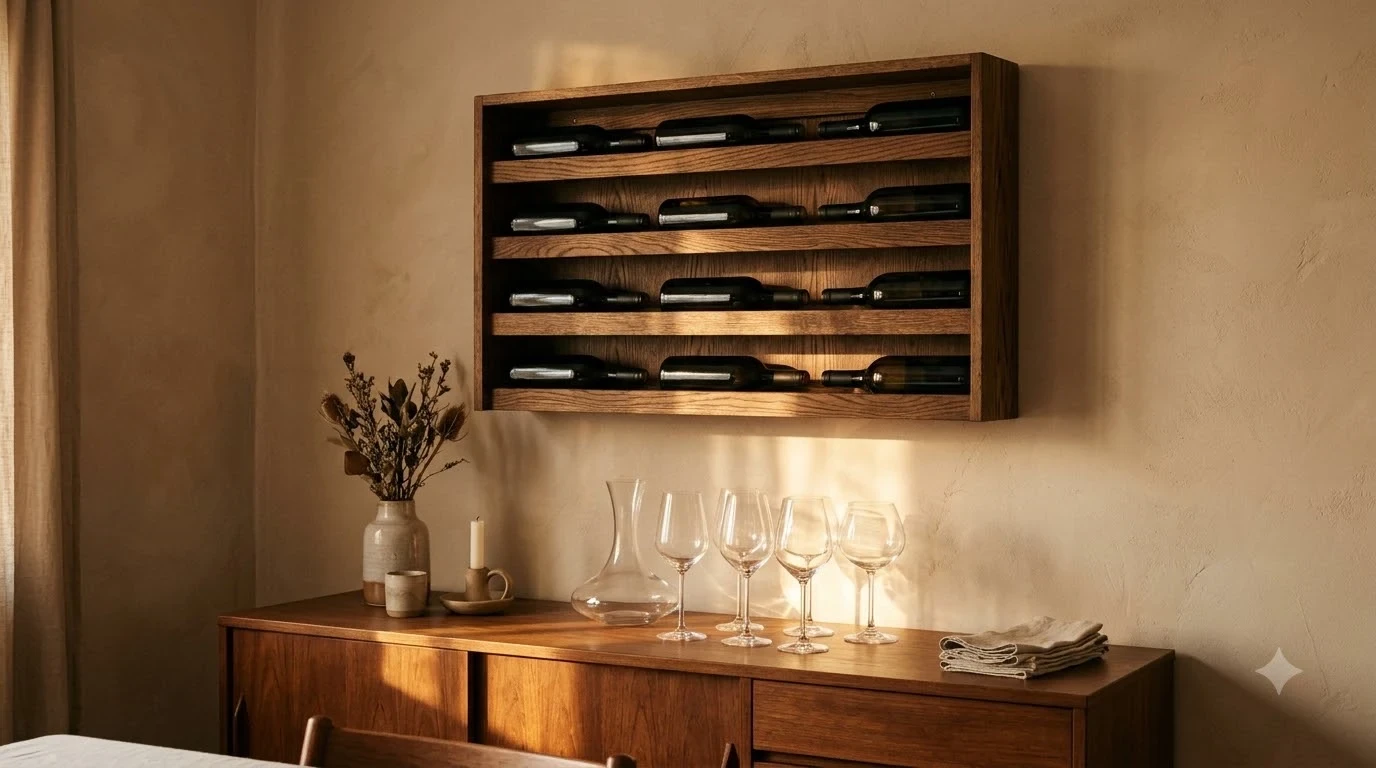
Label-forward steel wall racks cradle bottles horizontally along two parallel rods so the front label faces directly into the room, turning your collection into readable wall art without eating up a single inch of floor space.
Reviewers at Wine Enthusiast highlight label-forward steel designs for fast bottle recognition, since you can scan vintages and producers at a glance instead of pulling bottles out by the neck and disturbing settled sediment. Powder-coated steel and anodized aluminum finishes resist rust and scratches, while slim mounting profiles sit flush against drywall or wood paneling. This layout keeps natural corks continuously wet against the wine while displaying labels cleanly.
Keep in mind that loaded wine bottles weigh roughly three pounds apiece, so vertical rails must anchor directly into wall studs or heavy-duty toggle bolts rated for the full load. Standard spacing accommodates 750ml Bordeaux and Burgundy shapes easily, though wider Champagne or magnum bottles usually require dedicated wide-cradle rails. This style is best for homeowners, apartment dwellers, and entertainers who want a wall mounted wine rack that doubles as modern dining room decor.

- Capacity
- 12 bottles (750 ml)
- Mount
- Wall mount
- Material
- Alloy steel
- Size
- 48 x 13 x 5.25 in
A wall-mounted steel rack that stores twelve 750 ml bottles label forward, so the display works like wall art. It measures 48 by 13 by 5.25 inches with bottles loaded, can be stacked or combined with other W Series racks, and is backed by a lifetime warranty. Installation uses an interactive app, and hardware is included for drywall or wood-backed walls.
Pros & ConsView
- Label-forward display of twelve bottles
- Backed by a lifetime warranty
- Modular, stackable with other W Series racks
- Wall mounting requires installation
- Holds only twelve bottles per unit
Best for High-Capacity Cellar Storage
Tall, heavy-gauge wire shelving racks pack well over a hundred bottles into a compact rectangular footprint using scalloped metal cradles that keep rows separated and well ventilated.
Industry professionals interviewed by Wine Enthusiast point out that open wire racks provide clear visibility across deep rows and encourage steady airflow, which prevents musty odors or label mold in cool basement environments. Adjustable shelf tiers let you customize vertical clearance for taller Riesling flutes or wider sparkling wine bottles without wasting overhead space. Heavy chromed or powder-coated carbon steel handles hundreds of pounds of static weight without bowing over decades of use.
Keep in mind that industrial wire frames prioritize function over living-room polish, making them better suited to closets, utility rooms, or temperature-controlled cellars than formal dining spaces. Any freestanding rack taller than four feet must be tethered to a wall stud at the top so the unit cannot tip forward when upper shelves are loaded first. This type is best for serious buyers who purchase wine by the case and need maximum bottle density per square foot.

- Capacity
- 150 bottles
- Tiers
- 15
- Size
- 38 W x 60 H x 9 D in
- Mount
- Freestanding or wall
Built for cellars, basements and home bars, this 15-tier rack stores up to 150 bottles horizontally, ten per shelf, on scalloped wave-shaped rows. It stands 60 inches tall and 38 inches wide in a smooth black metal finish, and it can be placed on the floor or mounted to the wall. Step-by-step instructions and hardware are included.
Pros & ConsView
- Holds 150 bottles across 15 tiers
- Horizontal storage keeps wine fresh longer
- Instructions and hardware included
- Needs 38 by 9 inches of floor and 60 inches of height
- Assembly required, unlike tabletop racks
Best for Small Countertop Collections
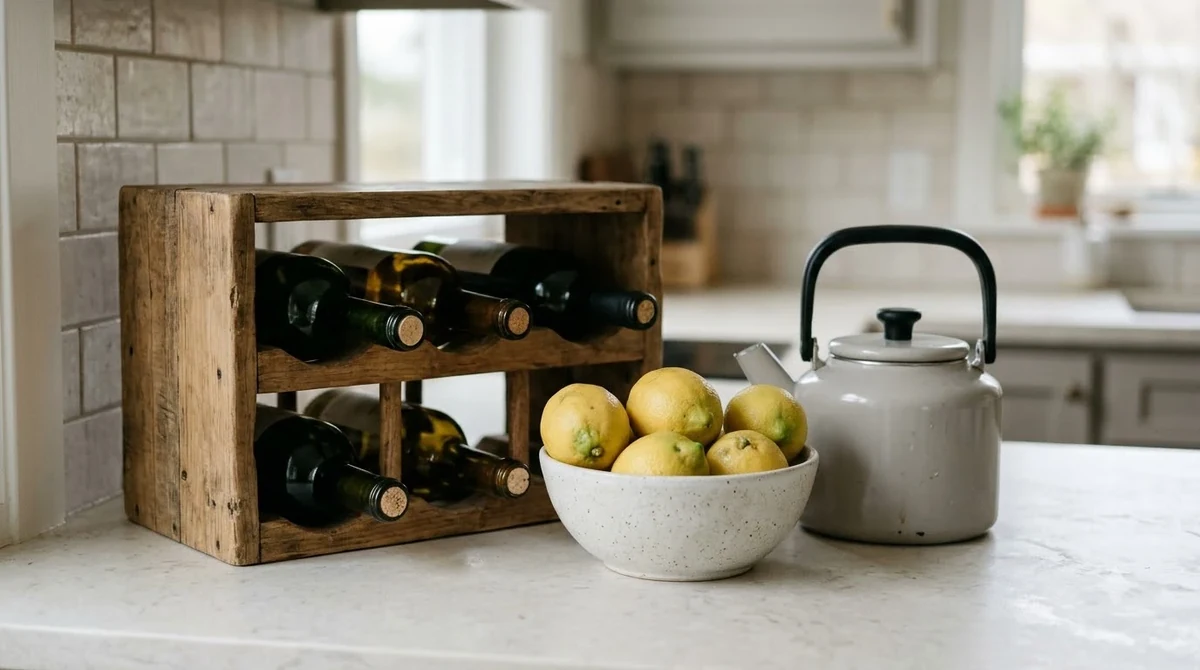
Compact tabletop frames built from welded iron or brushed stainless steel hold six to twelve bottles horizontally on a kitchen counter, pantry shelf, or bar cart with zero installation required.
Honeycomb, wave, and minimalist X-frame geometries keep bottles cradled securely on their sides so corks stay moist during short-term storage, while open ends make grabbing a Tuesday night bottle effortless. Rubberized feet protect stone countertops and wood sideboards from metal scratches, and welded joints eliminate wobbling when you slide bottles in and out. Because the frame sits out in the open, sleek matte black, brass, or brushed nickel finishes blend naturally with modern kitchen hardware.
Keep in mind that kitchen counters sit near ovens, dishwashers, and sunny windows, all of which create temperature swings and ultraviolet exposure that degrade wine over time. Limit tabletop storage to bottles you plan to open within a few weeks or months rather than age-worthy reds. This style is best for casual drinkers, renters, and hosts keeping a curated weeknight lineup within arm’s reach.
- Capacity
- 5 bottles
- Material
- Iron, powder coated
- Size
- 10 x 7.28 x 9 in
- Weight
- 1.5 lb
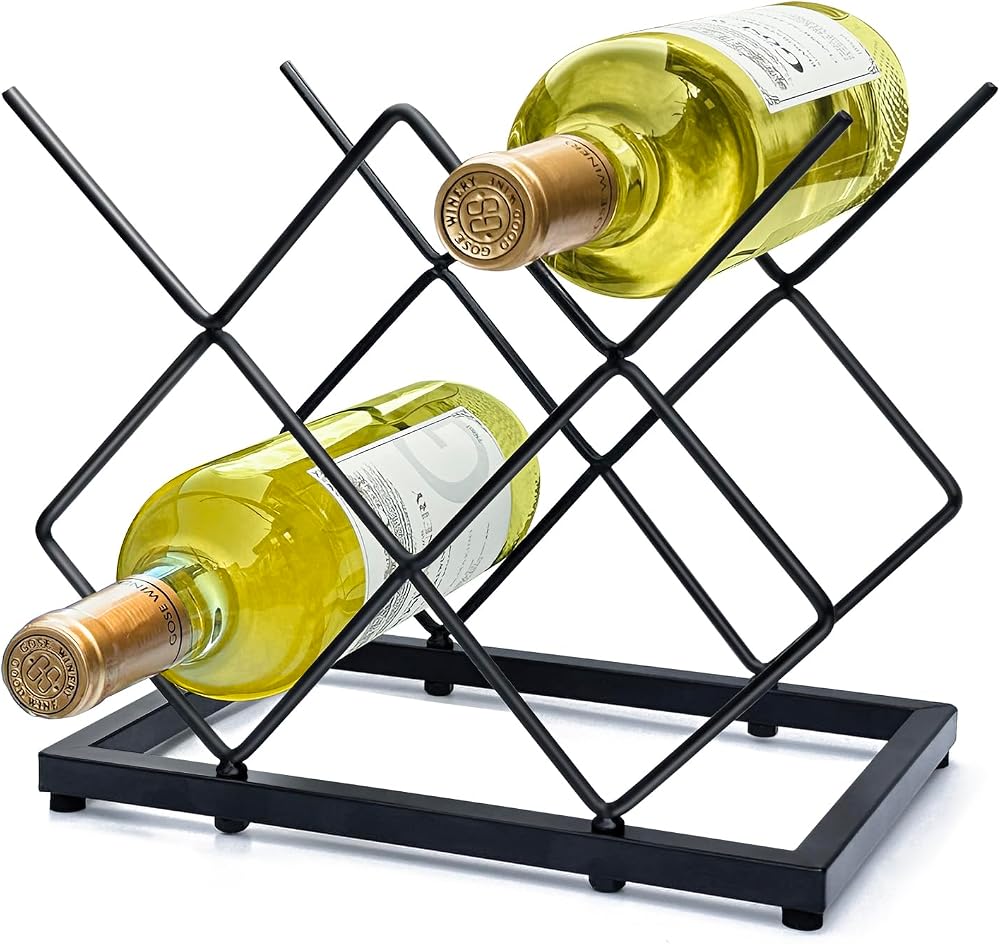
For small collections, this black iron rack keeps five bottles on a kitchen counter, in a pantry or inside a cabinet. The frame is described as steady, with no wobbling or tilting, and the rust-resistant finish wipes down with a damp cloth. It goes together without tools, so a few favorites can be on display within minutes.
Pros & ConsView
- Five-bottle capacity fits small collections
- No tools needed for assembly
- Rust-resistant finish wipes clean
- Too small for a growing collection
- Single fixed layout, no expansion
Best for Growing Collections and Modular Expansion
Modular metal wine racks use interlocking steel grids, stackable tiers, or connectable vertical posts that let you start with a single twelve-bottle section and add matching units as your cellar expands.
Instead of forcing you to buy an oversized unit upfront or replace a small rack once it overflows, modular systems snap or bolt together vertically and horizontally to fit awkward under-stair closets, pantry alcoves, or uneven basement walls. Open steel grid systems also make it simple to organize bottles by region, varietal, or drinking window using lettered columns and numbered rows. Many modular frames mix powder-coated steel uprights with subtle wood trim for a warmer transitional look.
Keep in mind that multi-tier modular setups require careful leveling on uneven concrete or tile floors before you load glass bottles into upper sections. Check whether your chosen system uses proprietary connectors so you can reliably source matching expansion kits down the road. This option is best for budding collectors building a customized Racks & Storage setup step by step.

- Capacity
- 4 bottles per rack
- Stacking
- Up to 3 tiers
- Material
- Steel
- Assembly
- None required
Modular storage for collections that grow slowly. Each unit holds four bottles, and up to three tiers can stack for expanded capacity. Wave-shaped recessed holders stop bottles from rolling, tipping or slipping, and the smooth steel build arrives ready to use with no assembly. It sits on a tabletop and wipes clean with a dry cloth.
Pros & ConsView
- Stacks up to three tiers
- Wave holders prevent rolling and slipping
- No assembly required
- Each unit holds only four bottles
- Tabletop design, not for floor storage
Best for Security and Statement Furniture
Lockable wrought iron wine cabinets—often called wine jails—enclose horizontal metal bottle cradles inside an ornate, latchable steel frame that protects valuable bottles while serving as freestanding furniture.
Heavy-duty wrought iron scrolls and mesh panels allow ambient air to circulate around the collection while keeping curious kids, guests, or household staff from opening special-occasion vintages unannounced. As Wine Folly notes, keeping age-worthy bottles secured out of easy reach helps prevent premature temptation while everyday drinkers stay accessible elsewhere. Many wrought iron cabinets arrive fully welded with integrated latches ready for a padlock, plus top surfaces sturdy enough to hold a decanter or tasting glasses.
Keep in mind that wrought iron units are heavy to move once assembled and take up dedicated floor space similar to a narrow bookcase or bar cabinet. Narrow slot openings on traditional iron cradles fit standard 750ml Bordeaux bottles snugly but can pinch wider Burgundy or Champagne shoulders. This style is best for collectors with young children, shared households, or prized bottles that warrant physical lock-and-key protection.

- Capacity
- 14 bottles
- Material
- Iron, powder coated
- Size
- 17.2 x 11.6 x 5.5 in
- Assembly
- None required
A geometric black iron rack that doubles as a statement piece on a counter or inside a cabinet. It holds 14 bottles, with 11 slots for standard bottles and 3 on top for oversized ones. The powder-coated finish is rust resistant, and no assembly is required. At 17.2 by 11.6 by 5.5 inches, it stays modest in size.
Pros & ConsView
- Holds 14 bottles, three of them oversized
- Rust-resistant powder-coated finish
- No assembly required
- Open rack with no locking feature
- Countertop size, not for a large cellar
How to Choose
Start by measuring both your physical space and your realistic bottle turnover so the rack protects your wine rather than exposing it to heat or tight bottlenecks.
- Bottle diameter compatibility: Standard Bordeaux bottles measure roughly 2.9 inches across, whereas Burgundy, Pinot Noir, and Champagne bottles swell to 3.25 inches or wider. Verify cradle spacing before buying so wider bottles do not scrape labels or jam between metal bars.
- Finish and corrosion resistance: In damp basements or high-humidity cellars, choose powder-coated steel, stainless steel, or anodized aluminum over bare painted iron to prevent rust transfer onto damp labels.
- Structural load and wall anchoring: A full case of twelve standard bottles weighs nearly forty pounds. Ensure wall-mounted brackets align with standard 16-inch stud spacing and tether tall freestanding wire racks to the wall.
- Horizontal cork contact: Any bottle sealed with natural cork must rest horizontally or at a gentle downward tilt so wine stays in contact with the cork, preventing air from shrinking the seal and oxidizing the wine.
Tip: Place your metal rack away from kitchen stoves, refrigerator exhaust vents, radiators, and direct window sunlight—consistent temperatures between 45°F and 65°F matter far more for wine longevity than the material of the rack itself.
Frequently Asked Questions
Do metal wine racks scratch wine labels or damage bottles?
Well-made metal racks finished with smooth powder coating, vinyl sleeves, or brushed stainless steel will not scratch glass or tear paper labels during normal sliding. Avoid racks with rough welds, exposed sharp wire ends, or tight metal rings that force you to twist wider Burgundy bottles to get them out.
Should wine bottles sit completely flat or at an angle on a metal rack?
Either completely horizontal or tilted slightly downward works well as long as the wine inside remains in continuous contact with the bottom of the cork. Keeping the cork wet prevents it from drying out and shrinking, while screw-cap and synthetic-cork bottles can rest at any angle without risk of oxidation.
How much capacity do I actually need if I buy wine by the case?
Understanding how many bottles in a case of wine—twelve standard 750ml bottles—gives you a clear baseline for sizing your rack. Always buy at least 25 to 30 percent more capacity than your current bottle count so new purchases and odd-shaped sparkling bottles fit comfortably without overcrowding.
Are metal wine racks better than wood wine racks for damp basements?
Yes, powder-coated steel and aluminum outperform unfinished wood in damp basements because metal will not swell, warp, split, or harbor mildew in high humidity. Just inspect the rack periodically for chipped paint if relative humidity regularly climbs above 70 percent.
Matching the right metal wine rack to your room and collection size keeps every cork moist, every label readable, and every bottle safely supported. Measure your available wall or floor footprint, account for wider Burgundy and sparkling bottles, and leave room to grow so your storage works just as well ten cases from now as it does today.
More in Racks & Storage
 Best Wine Barrel Racks for Distinctive Bottle StorageUpdated Nov 20, 2026
 Best Wine Storage Tower: Sizing, Protection and Room LayoutUpdated Nov 18, 2026
 Best Pyramid Wine Rack: Materials, Sizes and Where It FitsUpdated Nov 18, 2026
 Best Kitchen Cabinet Wine Rack Insert for Built-In Bottle StorageUpdated Nov 18, 2026
 Best 16 Bottle Wine Rack Options for Kitchens, Bars and CellarsUpdated Nov 18, 2026
 Best 48 Bottle Wine Rack Options for Cellars, Kitchens, and Tight SpacesUpdated Nov 18, 2026