

We may earn a commission when you buy through links on this page, at no extra cost to you. Learn more.
The best wall wine rack depends on how many bottles you keep on hand and whether you want labels displayed or tucked compactly against the wall, with label-forward steel rail racks standing out as the strongest all-around option for most homes. Minimalist wall pegs work well when you want a custom gallery look in a dining room or hallway, while compact vertical holders fit tight kitchen walls without taking up floor space. For larger collections or multi-case storage, high-capacity modular wall grids and combination wood-and-metal shelves hold dozens of bottles safely.
Keeping wine off your kitchen countertops and out of warm cabinets frees up valuable workspace while keeping corks properly moistened on their sides. Because a loaded wine bottle weighs roughly three pounds, choosing the right wall-mounted structure comes down to matching bottle capacity, orientation, and mounting hardware to your wall type and drinking habits.
Quick Comparison
Different wall-mounted designs trade off bottle capacity, label visibility, and installation complexity depending on where you hang them.
| Rack Type | Typical Capacity | Bottle Orientation | Wall Footprint | Best Placement |
|---|---|---|---|---|
| Label-Forward Metal Rails | 9 to 36 bottles | Horizontal, label out | Narrow depth, tall | Dining rooms, wine walls |
| Minimalist Wall Pegs | 1 to 24+ bottles | Horizontal, label out | Ultra-low visual profile | Feature walls, modern kitchens |
| Compact Vertical Holders | 5 to 12 bottles | Horizontal, cork out | Very slim width | Narrow kitchen walls, pantries |
| High-Capacity Wall Grids | 36 to 100+ bottles | Horizontal, cork or label out | Full wall coverage | Basements, dedicated wine rooms |
| Wood-and-Metal Stemware Shelves | 6 to 18 bottles | Horizontal plus hanging | Deep shelf profile | Home bars, entertaining spaces |
Best for Label Visibility: Label-Forward Metal Rail Racks
Label-forward metal rail racks cradle bottles horizontally along parallel steel rods so every label faces directly outward, letting you pick a bottle without pulling it from the cradle.
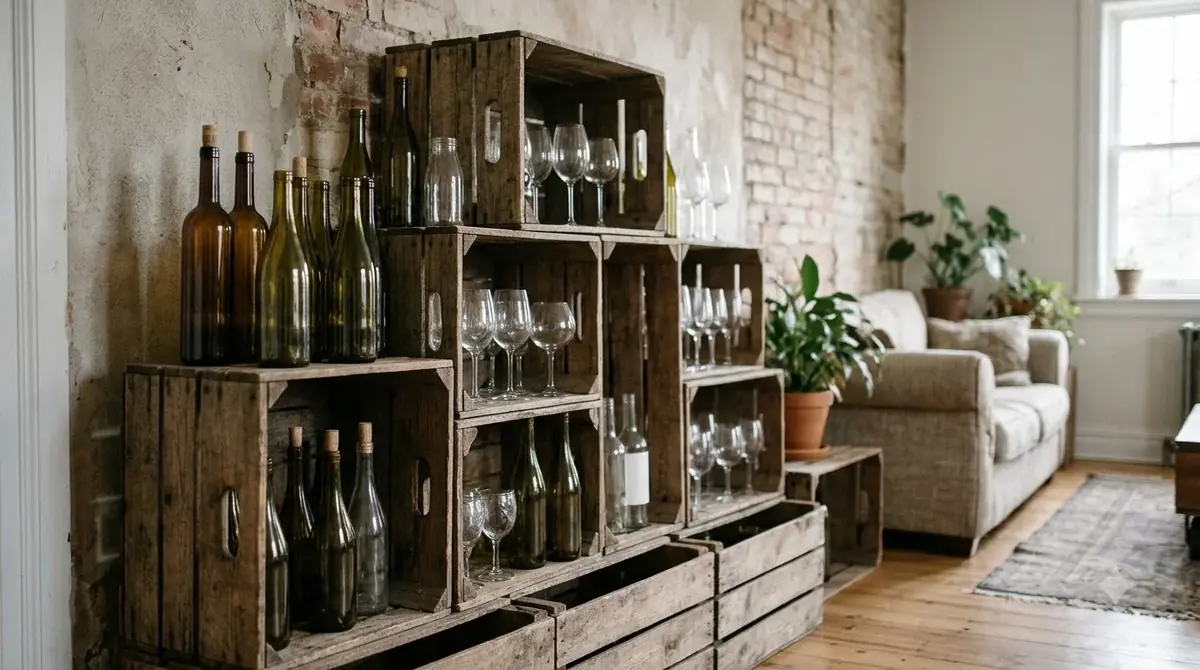
Why it stands out: According to Wine Enthusiast’s guide to wall-mounted wine racks, steel construction provides the structural rigidity needed to support heavy glass bottles safely over time. Label-forward rail systems stack multiple columns vertically in one-, two-, or three-bottle depths, keeping labels readable at a glance so you never disturb sediment in older reds while searching for a specific vintage. Many rail frames also connect end-to-end, allowing you to expand a small dining room display upward toward the ceiling as your collection grows.
Keep in mind and best for: Because bottles rest sideways with their full length parallel to the wall, single-deep racks stick out roughly four to five inches, while double- and triple-deep versions protrude farther into walkways. Larger Champagne or Burgundy bottles sometimes need slightly wider rail spacing than standard Bordeaux shapes. This style is best for everyday drinkers and entertainers who want clear label visibility and durable steel framing in a dining room or climate-controlled cellar.

- Capacity
- 12 bottles (750 ml)
- Mount
- Wall mount
- Material
- Alloy steel
- Size
- 48 x 13 x 5.25 in
A wall-mounted steel rack that stores twelve 750 ml bottles label forward, so the display works like wall art. It measures 48 by 13 by 5.25 inches with bottles loaded, can be stacked or combined with other W Series racks, and is backed by a lifetime warranty. Installation uses an interactive app, and hardware is included for drywall or wood-backed walls.
Pros & ConsView
- Label-forward display of twelve bottles
- Backed by a lifetime warranty
- Modular, stackable with other W Series racks
- Wall mounting requires installation
- Holds only twelve bottles per unit
Best for Minimalist Feature Walls: Individual Wall Peg Systems
Individual wall peg systems use pairs of machined metal rods anchored directly into a wall or wood backer board to create the illusion that bottles are floating in midair.
Why it stands out: Unlike framed racks with visible vertical bars, peg systems strip away the surrounding structure so the glass, foil, and label become the focal point of the room. Each bottle rests across two pegs—one supporting the heavier base and another cradling the neck—which keeps the bottle level and ensures wine stays in contact with the cork. You can arrange pegs in tight geometric grids, staggered patterns, or single-column accents around doorways and cabinetry.
Keep in mind and best for: Installing individual pegs demands careful measuring and drilling, because every single pair of rods must be leveled and anchored securely into studs, masonry, or a thick plywood backing panel. Drywall alone rarely holds the cantilevered load of full bottles without specialized toggle hardware or a solid backer board. These systems are best for homeowners and design-minded hosts building a custom visual centerpiece on a drywall, brick, or paneled accent wall.

- Capacity
- 9 bottles
- Material
- Black metal
- Size
- 10.25 x 28 x 3 in
- Install
- 2 screws, 2 anchors
A single slim column can anchor a minimalist feature wall without crowding it. This black metal rack holds nine bottles in tiers spaced 3.5 inches apart, enough for most standard wine, liquor, or champagne bottles. It clicks together in two parts and uses just two screws and two anchors, so hanging it is quick. The 3 inch depth keeps it close to the wall.
Pros & ConsView
- Slim 3 inch depth stays close to the wall
- Clicks together in two parts
- Only two screws and anchors needed
- Nine-bottle capacity fills up quickly
- Narrow design offers no room for glasses
Best for Small Spaces: Compact Vertical Wall Holders
Compact vertical wall holders use a single slim spine with welded rings, loops, or curved cradles to stack six to twelve bottles straight up a narrow strip of wall.

Why it stands out: When you have an awkward twelve-inch gap beside a pantry door, china cabinet, or structural column, a vertical spine turns dead wall space into accessible storage. Most units require only two or three mounting points along the central spine, making installation fast with a standard level and drill. Storing bottles cork-forward keeps the rack’s overall width tight against the wall while holding your favorite weeknight pours within easy reach.
Keep in mind and best for: Cork-forward storage hides the front label, meaning you either need to remember where you placed each bottle or add small neck tags for quick identification. If you are looking for a broader wall mounted wine rack setup, keep in mind that compact kitchen units work best for short-term bottles you plan to open within a few months rather than bottles meant for multi-year aging, since kitchens run warmer than basements. They are best for apartment dwellers and small-kitchen cooks who want a simple, low-footprint rack for everyday bottles.

- Capacity
- 4 bottles, vertical
- Material
- Paulownia wood
- Finish
- Walnut, matte
- Size
- 6.7 x 19 x 4.5 in
Tight corners and narrow stretches of wall suit a holder this slim. It stores four bottles vertically on a single shelf, taking only about 6.7 inches of width. The lightweight paulownia wood has a walnut stain with a country rustic look, which blends into a kitchen, dining room, or living room. Mounting hardware is included, and it also works as a rolling pin rack.
Pros & ConsView
- Slim vertical layout fits tight spots
- Lightweight paulownia wood in walnut stain
- Mounting hardware is included
- Only four bottles fit
- Wood style leans rustic, not modern
Best for Growing Collections: High-Capacity Modular Wall Grids
High-capacity modular wall grids combine interlocking steel frames or individual cubbies that bolt straight to wall studs to store several cases of wine off the floor.
Why it stands out: When a single ten-bottle rack stops cutting it, modular wall grids scale smoothly from three dozen bottles to well over a hundred without eating into floor space. As Wine Folly’s wine cellar organization guide points out, arranging larger collections in a clear grid makes it much easier to track bottles by variety, region, or drinking window. Open wire and steel grid frames also promote steady airflow around every bottle while keeping individual slots separated so you can slide one bottle out without shifting its neighbors.
Keep in mind and best for: Full grids carry serious weight—once you understand how many bottles in a case of wine add up across multiple rows, three or four cases alone can exceed 120 pounds of static load. You must anchor modular grids directly into wood or metal wall studs rather than relying on plastic drywall plugs. This category is best for serious collectors outfitting a cool basement wall, under-stairs alcove, or walk-in wine closet.

- Capacity
- 36 bottles
- Units
- 12 modules, 3 bottles each
- Material
- Black metal
- Mounting
- Screw-mounted
Growing collections need a layout that can keep expanding, and this grid is built that way. Twelve modules each hold three bottles, so you can run them in a block or spread them out as stock increases. Reinforced welding carries full bottles, and the vertical design keeps labels and corks visible. It fits kitchens, bars, and wine rooms, and it is screw-mounted for stability.
Pros & ConsView
- Adds up to 36 bottles on one wall
- Modules can be rearranged as stock grows
- Reinforced welding supports full bottles
- Many modules take time to position
- Screw mounting means permanent wall holes
Best for Entertaining Stations: Wood-and-Metal Stemware Shelves
Wood-and-metal stemware shelves pair horizontal bottle cradles with a top wooden ledge and underside tracks for hanging stemmed wine glasses in one wall-mounted unit.
Why it stands out: Instead of walking between a pantry rack and an upper kitchen cabinet every time guests arrive, a combination shelf keeps bottles, stemmed glasses, and bar tools together in one spot. The top plank offers a sturdy landing zone for a corkscrew, decanter, or decorative glassware, while under-shelf stemware channels protect delicate rims from chipping inside crowded cupboards. Combining warm hardwood tones with powder-coated steel brackets also softens the industrial look of all-metal racks.
Keep in mind and best for: Because the shelf has to clear the base diameter of hanging wine glasses, these units project ten to twelve inches from the wall, so avoid hanging them in narrow hallways where people might brush past. Check the spacing between the stemware rails as well, since oversized Bordeaux or Burgundy bowls need wider clearance than standard white wine glasses. These shelves are best for home bartenders and hosts creating a dedicated coffee-and-wine station in a dining area or breakfast nook.

- Pack
- 2 shelves
- Material
- Steel and reclaimed wood
- Size
- 16.9 x 5.9 x 0.7 in
- Holds
- Glasses and 2 bottles
An entertaining station works best when glasses sit next to the bottles. Each of these two shelves pairs a steel frame with a baked-finish reclaimed wood top, giving a vintage look over a bar or pantry. They hold stemware and can also hang mugs, cookbooks, or small plants. Instructions are included, so mounting the pair above a drink cart or buffet is simple.
Pros & ConsView
- Pairs steel with reclaimed wood top
- Two shelves per pack suit a bar setup
- Also holds mugs, cookbooks, or plants
- Bottle capacity is only two
- Retro look may not suit modern rooms
How to Choose
Before drilling into your wall, match the rack’s construction and capacity to your room’s conditions and structural support. Whether you are browsing general Racks & Storage options or narrowing down a wall-mounted unit, these four criteria prevent sagging hardware and ruined bottles:
- Wall structure and anchoring: Standard 750-milliliter bottles weigh between 2.6 and 3.5 pounds each. Any rack holding more than six to eight bottles should fasten directly into wall studs or masonry, or mount onto a thick plywood backer board secured across multiple studs.
- Bottle diameter compatibility: Standard Bordeaux bottles measure roughly 3 inches across, while Burgundy, Pinot Noir, and sparkling wine bottles flare out to 3.5 inches or more. Look for cradles or rail spacing that accommodate wider silhouettes if you drink plenty of sparkling wine or Chardonnay.
- Room temperature and light: Wall racks look striking in bright kitchens, yet heat from stoves, refrigerators, and direct sunlight accelerates wine aging. Reserve warm living spaces for bottles you plan to drink within a few months, and save long-term bottles for a cool, dark interior wall or basement.
- Cork orientation: Natural corks need steady contact with liquid wine to stay expanded and prevent oxidation. Always choose a horizontal rack rather than vertical upright slots unless you strictly buy screw-cap bottles.
Tip: Hold a blue painter’s tape outline of your rack’s exact dimensions on the wall before drilling, and make sure the highest row sits comfortably within shoulder or eye reach so you never have to balance on a stool while handling heavy glass bottles.
Frequently Asked Questions
Can you mount a wine rack on drywall without hitting a stud?
Small racks holding six or fewer bottles can sometimes mount into drywall using heavy-duty metal toggle bolts rated well above the loaded weight. For anything larger, anchoring directly into wood studs or installing a solid wood mounting board across two studs is much safer. Wine bottles create constant downward leverage that can pull standard plastic drywall anchors loose over time.
Is it safe to hang a wall wine rack in the kitchen?
A kitchen wall is fine for bottles you plan to drink within a few weeks or months, provided the rack hangs away from heat sources. Keep racks well clear of ovens, stovetops, dishwashers, and the warm exhaust vents above refrigerators, as well as sunny windows. For long-term cellaring over a year or more, choose a cooler, darker wall in a basement or interior closet.
Should wall wine racks store bottles label-forward or cork-forward?
Both orientations keep wine horizontal so the cork stays moist, so the choice comes down to visibility versus depth. Label-forward racks make browsing easy and look clean on a feature wall, though they protrude slightly farther into the room. Cork-forward racks tuck closer to the wall and fit narrower spaces, especially if you pair them with simple neck tags.
What is the best material for a wall-mounted wine rack?
Powder-coated steel and solid aluminum offer the highest strength-to-thickness ratio, letting thin rails or pegs support heavy bottles without bending. Solid hardwoods like mahogany, walnut, and oak also work well for framed wall shelves and peg backer boards. Avoid thin, unreinforced wire or brittle plastics that can flex under a full load of glass.
Finding the right wall setup comes down to balancing your available wall width, wall stud placement, and whether you want every label on display. Compare your top style against a classic freestanding wine rack if you rent or prefer not to drill into your walls, and pick a spot that keeps your favorite bottles cool, secure, and ready to pour.
More in Racks & Storage
 Best Wine Barrel Racks for Distinctive Bottle StorageUpdated Nov 20, 2026
 Best Wine Storage Tower: Sizing, Protection and Room LayoutUpdated Nov 18, 2026
 Best Pyramid Wine Rack: Materials, Sizes and Where It FitsUpdated Nov 18, 2026
 Best Kitchen Cabinet Wine Rack Insert for Built-In Bottle StorageUpdated Nov 18, 2026
 Best 16 Bottle Wine Rack Options for Kitchens, Bars and CellarsUpdated Nov 18, 2026
 Best 48 Bottle Wine Rack Options for Cellars, Kitchens, and Tight SpacesUpdated Nov 18, 2026