


We may earn a commission when you buy through links on this page, at no extra cost to you. Learn more.
The best wine preserver depends on how long you plan to keep a bottle open and whether you drink still or sparkling wine. For everyday bottles finished within a few days, a manual or electric vacuum pump removes air quickly and affordably. Collectors pouring single glasses over weeks or months need an inert argon needle system, while sparkling wine drinkers require a pressurized clamp stopper to trap carbonation.
Once you pull a cork, oxygen immediately begins altering the aromas, fruit character, and structure of the wine. Left on the counter with a loose cork, most bottles flatten out within a day or two, turning bright notes dull and nutty. Choosing the right preservation tool slows down that chemical reaction so you can pour a single glass on a Tuesday without feeling pressured to finish the rest of the bottle before Friday.
Quick Comparison
Different preservation methods protect wine for vastly different timelines, ranging from a few extra evenings to several months.
| Preserver Type | How It Works | Typical Freshness Window | Best Wine Style | Ongoing Supplies |
|---|---|---|---|---|
| Argon Needle System | Pierces cork and replaces poured wine with inert argon gas | Weeks to months | Age-worthy still reds and whites | Argon capsules |
| Manual Vacuum Pump | Extracts air through a one-way rubber stopper | 3 to 5 days | Everyday still table wines | None |
| Electric Vacuum Sealer | Automatically pumps air out to a set pressure | 4 to 7 days | Frequent weeknight drinkers | Rechargeable battery |
| Inert Gas Spray Canister | Blankets wine surface with heavy argon or nitrogen | 1 to 2 weeks | Occasional multi-day pours | Replacement canisters |
| Sparkling Clamp Stopper | Locks onto bottle lip to retain internal CO2 pressure | 2 to 4 days | Champagne, Prosecco, Cava | None |
Best for Long-Term Cellar Bottles: Argon Needle Systems
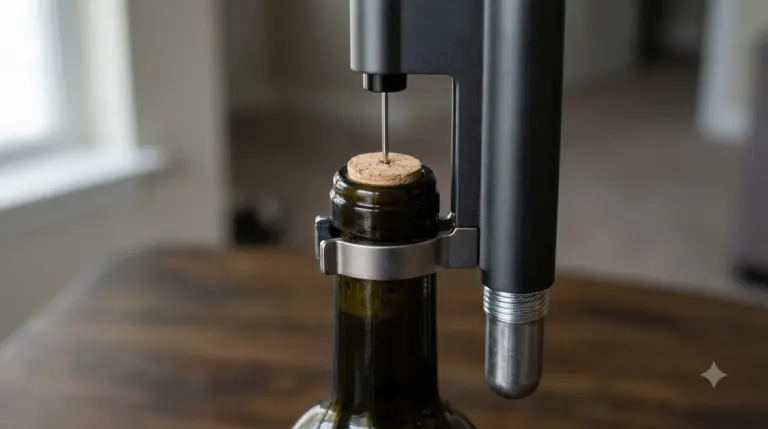
An argon needle preserver lets you pour wine without ever removing the natural cork, keeping the remaining liquid completely untouched by ambient oxygen. It is the gold standard for collectors and slow sippers who want to sample an expensive bottle over several weeks or months.
Why it stands out: Unlike tools that try to remove air after a bottle has already been opened, an argon needle system prevents oxygen exposure from the very first pour. As you tip the bottle, a thin hollow needle passes through the cork and injects food-grade argon gas, which is denser than air and forms a protective blanket over the wine. Once you pull the needle out, the natural cork expands back into place, sealing the bottle as if it had never been opened. Reviewers at Wine Folly note that bottles accessed with an argon needle system can stay remarkably fresh for months when stored properly.
Keep in mind: These devices require ongoing purchases of proprietary argon gas capsules, and standard needles only work with natural cork closures rather than synthetic corks or screw caps unless you buy specialized adapter caps. Best for: Wine enthusiasts who enjoy a single glass of fine red or white wine per week and want zero flavor degradation between pours.

- Type
- Argon gas capsules
- Quantity
- 6 capsules
- Purity
- Over 99.9% argon
- Pours
- Up to 15 glasses per pod
Refills for people who sip from cellar bottles over weeks rather than finishing them in one night. Each capsule holds more than 99.9 percent argon, an inert gas that does not react with the wine, and a sealed design keeps the gas from escaping during pouring. One pod can serve up to fifteen glasses, so the six-pack stretches across many bottles. They are made for Coravin by-the-glass systems.
Pros & ConsView
- Over 99.9% inert argon gas
- Each pod pours up to 15 glasses
- Hermetic capsule seal limits gas loss
- Refill only, a Coravin system is required
- Capsules are used up and need replacing
Best for Everyday Weeknight Bottles: Manual Vacuum Pumps
A manual vacuum pump uses a small handheld plunger and reusable rubber stoppers to pull oxygen out of an opened bottle, creating a partial vacuum inside the headspace. It is the most practical, low-maintenance tool for households that routinely finish a bottle over three to five days.
Why it stands out: There are no batteries to charge, no gas canisters to replace, and almost zero learning curve. You simply press a one-way silicone or rubber stopper into the bottle neck and pump the handle until you feel resistance or hear a subtle click indicating the air pressure has dropped. Editors at Wine Enthusiast highlight vacuum stoppers as a lightweight, portable choice that slows oxidation far better than pushing the original cork back in, especially when paired with refrigeration. Check out our roundup of the best wine stoppers if you prefer an airtight seal without a separate pump handle.
Keep in mind: A hand pump cannot remove every molecule of oxygen, and pumping too aggressively on delicate, older wines can strip away subtle volatile aromas. Best for: Casual wine drinkers who open everyday bottles during the week and want a reliable, reusable preserver with no recurring supply costs.

- Type
- Manual vacuum pump
- Stoppers
- 4 reusable, BPA-free
- Freshness
- Up to 10 days
- Material
- Plastic, black
A straightforward weeknight tool for anyone who opens a bottle, pours a glass or two and wants the rest to last. Pump out the air until the stopper clicks, and the vacuum seal slows oxidation for up to ten days on red or white. Four reusable stoppers cover several bottles at once, and the compact pump stores neatly in a kitchen drawer or on a bar cart.
Pros & ConsView
- Click signals the vacuum seal is set
- Four reusable BPA-free stoppers included
- Compact enough for a drawer or bar cart
- Manual pumping takes a few strokes
- Plastic construction rather than metal
Best for Effortless Convenience: Electric Vacuum Sealers
Electric vacuum sealers automate the air-extraction process with a compact, battery-powered unit that sits over a specialized stopper and stops automatically once the optimal seal is reached. They deliver consistent vacuum pressure without manual pumping, making them ideal if you open multiple bottles each week.

Why it stands out: Consistency is the main advantage over manual pumps, because built-in pressure sensors remove guesswork and ensure every bottle reaches the same tight seal. Many electric models also include digital or dial date markers on the stoppers so you can track exactly when each bottle was opened, plus internal sensors that re-engage the pump if air slowly leaks back in over several days. Because the units are compact and cordless, they tuck easily into a kitchen drawer or bar cart alongside your corkscrew.
Keep in mind: You will need to recharge the device periodically via USB or swap out batteries, and electronic components make them less forgiving if wine accidentally splashes into the valve. Best for: Frequent home entertainers and busy drinkers who want one-touch preservation for several open bottles at once.

- Set Size
- 7-piece deluxe set
- Opener
- Up to 30 corks per charge
- Preserver
- Electric vacuum pump, dated stoppers
- Base
- Blue LED charging base
The preserver is the reason a solo sipper might choose this one. An electric pump removes air from the open bottle and seals it with date-stamped stoppers, so a single glass tonight does not spoil the rest. The kit also has a touch-button corkscrew, an aerator, a foil cutter, and a blue LED charging base that keeps everything together.
Pros & ConsView
- Electric vacuum pump with date-stamped stoppers
- Charging base keeps all pieces organized
- Corkscrew opens up to 30 corks per charge
- Opener gives about 30 corks per charge
- Mostly plastic parts in the set
Best for Occasional Sips Without Hardware: Inert Gas Spray Canisters
Inert gas spray canisters release a quick burst of food-safe argon, nitrogen, or a blend of both directly into an opened bottle before you re-cork it. Because argon is heavier than oxygen, the gas sinks to the surface of the wine and creates an invisible barrier against oxidation.
Why it stands out: Inert gas sprays give you the chemical protection of argon without investing in a mechanical needle device or proprietary stoppers. You simply insert the thin straw nozzle into the bottle neck, spray for a second or two, and immediately push the original cork or a tight silicone stopper back into place. According to wine storage experts, pure argon or argon-heavy blends perform better than plain nitrogen because argon’s higher density keeps it resting undisturbed on the liquid surface rather than mixing with ambient air.
Keep in mind: You cannot see or hear how much gas remains inside the lightweight aerosol can, so it is easy to run out unexpectedly, and tipping or shaking the bottle disturbs the protective gas layer. Best for: Drinkers who occasionally open a nice bottle and want a simple, portable way to stretch its freshness for one to two weeks.

- Gas
- 100% food grade argon
- Quantity
- 2 cans
- Use
- Wine, liquor, oils, finishes
- Origin
- Made in USA
Occasional sippers who would rather not buy a pump or needle device can simply spray and re-cork. The gas is heavy argon that settles over the contents and displaces oxygen, forming a protective barrier. It works beyond wine on liquor, olive oil and coffee beans, and it comes as two cans with a satisfaction guarantee. Nothing to charge, pump or store beyond the cans.
Pros & ConsView
- Pure food grade argon, no hardware needed
- Also protects liquor, oils and coffee beans
- Two cans with a satisfaction guarantee
- Not made specifically for wine
- You still need your own cork or stopper
Best for Bubbly and Prosecco: Sparkling Wine Clamp Stoppers
Sparkling wine preservers use hinged metal arms or locking collars to clamp tightly over the thick glass lip of a Champagne bottle, trapping internal carbon dioxide pressure inside. Standard vacuum pumps and corks fail on bubbly because negative pressure actually pulls dissolved carbonation out of the wine faster.
Why it stands out: Carbonated wines face two enemies after opening: oxidation and the rapid loss of effervescence. A dedicated clamp stopper features an interior silicone gasket that presses down against the bottle opening while side wings lock beneath the neck ring, holding back high internal pressure without popping off in the refrigerator. When paired with cold storage, a well-fitted clamp keeps Champagne, Cava, and Prosecco crisp and lively for two to four days. You can explore more specialized designs in our guide to the best champagne stoppers.
Keep in mind: Sparkling stoppers are built specifically for the wider rims of Champagne-style bottles and will not lock securely onto standard still wine necks. Best for: Anyone who enjoys a celebratory glass of sparkling wine without wanting to finish the entire bottle in one sitting.

- Pack
- 2 stoppers
- Material
- Stainless steel, silicone
- Fit
- Necks 0.65-0.8 inch
- Lock
- Double safety clip
Made for bubbly nights when half a bottle of prosecco is left and the carbonation matters. A double safety clip locks the stopper over the neck so it will not pop off in the fridge, and a longer silicone seal helps hold the fizz that an ordinary wine stopper would lose. Two stoppers fit standard 75cl sparkling bottles, and a gift box is included.
Pros & ConsView
- Double safety clip holds the stopper in place
- Longer silicone seal protects carbonation
- Fits standard sparkling bottle necks
- Fit is limited to 0.65 to 0.8 inch necks
- Designed for sparkling bottles, not still wine
How to Choose
Matching a preserver to your habits starts with looking at how fast you drink and what styles sit on your counter. Keep these four factors in mind before buying:
- Drinking timeline: If you finish a bottle within two or three days, a simple vacuum pump or tight stopper is plenty. If a bottle sits open for two weeks or longer, choose an inert argon spray or an argon needle system.
- Bottle closures: Needle systems require natural cork so the puncture hole seals cleanly afterward. If you buy mostly screw-cap wines, look for vacuum stoppers, inert gas sprays, or a stopper-based argon system.
- Wine style: Still reds and whites tolerate vacuum pressure well, whereas sparkling wines require a positive-pressure clamp stopper to keep bubbles intact.
- Recurring costs: Vacuum pumps and clamp stoppers require a one-time purchase, while argon sprays and capsule-based systems require ongoing refills.
For a deeper breakdown of shelf life across reds, whites, and fortified bottles, read our guide on how long wine lasts after opening.
Tip: Always store opened bottles upright in the refrigerator—even full-bodied red wines. Standing the bottle up shrinks the surface area exposed to oxygen, and cold temperatures dramatically slow down oxidation; just let reds sit on the counter for 20 to 30 minutes before serving.
Frequently Asked Questions
Do vacuum wine preservers actually work?
Yes, vacuum wine preservers measurably slow down oxidation by removing a large portion of the air inside an opened bottle. While they do not create a complete laboratory vacuum, they typically keep still red and white wines tasting fresh for three to five days longer than simply pushing the original cork back in.
Should I refrigerate red wine after using a wine preserver?
Yes, storing preserved red wine in the refrigerator is one of the easiest ways to extend its shelf life. Colder temperatures slow the chemical reactions that cause wine to taste flat or vinegary, and storing the bottle upright minimizes the liquid surface area touching any remaining oxygen.
Can you use a vacuum pump on Champagne or sparkling wine?
No, you should never use a vacuum pump on sparkling wine. Pumping air out of the bottle lowers internal pressure and actively draws carbon dioxide bubbles out of the liquid, leaving your Champagne or Prosecco flat within hours.
Is argon or nitrogen better for preserving wine?
Argon is generally more effective than nitrogen because it is roughly 38 percent denser than air, allowing it to sink and form a stable blanket directly over the wine’s surface. Nitrogen has nearly the same density as air, so it mixes more easily inside the bottle and works best only when you re-cork immediately and finish the wine within a few days.
Whether you want an effortless vacuum pump for weeknight pours or an argon system for cellar treasures, the right tool pays for itself by saving half-finished bottles from the sink. Browse our full collection of Preservation & Stoppers to find the setup that fits how you drink.
More in Preservation & Coravin
 Coravin Model Eleven Review: Preserve Wine Without Opening BottlesUpdated Nov 20, 2026
 Is Coravin Worth It? A Practical Guide to Its Real ValueUpdated Nov 20, 2026
 Coravin Timeless Six: Pour a Glass Without Opening the BottleUpdated Nov 20, 2026
 Coravin Pivot Plus Review: Keep Open Wine Fresh for WeeksUpdated Nov 20, 2026
 Coravin Screw Caps Review: Specs, Lifespan, and Real-World PreservationUpdated Nov 20, 2026
 Coravin Alternatives That Keep Open Wine Fresh LongerUpdated Nov 20, 2026