

We may earn a commission when you buy through links on this page, at no extra cost to you. Learn more.
The best wine preservation system for most home drinkers is an inert-gas dispenser or needle-access argon system, which blankets remaining wine to prevent oxidation for weeks rather than days. For casual weeknight bottles finished within three to five days, a simple manual or electric vacuum pump offers reliable everyday protection without consumable cartridges. Meanwhile, dedicated carbon-dioxide pressurizers keep sparkling wine bubbly, and single-use oxygen-absorbing stoppers provide effortless, gadget-free sealing for travelers and occasional drinkers.
Once a bottle of wine is uncorked, oxygen immediately begins altering its fruit character, flattening aromas, and turning vibrant acidity dull. While slipping the original cork back in and placing the bottle in the refrigerator buys a couple of days, matching the right preservation technology to your drinking pace protects both delicate everyday pours and cellar-worthy bottles from premature spoilage.
Quick Comparison
Different preservation mechanisms trade off longevity, ongoing cartridge costs, and bottle compatibility depending on whether you want a few extra days or several months of freshness.
| Preservation Type | Primary Mechanism | Typical Freshness Window | Closure Compatibility | Ongoing Supplies Needed |
|---|---|---|---|---|
| Needle-Access Argon System | Pierces cork and pressurizes bottle with pure argon gas | Several weeks to months | Natural cork (screwcaps with special adapters) | Pressurized argon capsules |
| Inert-Gas Blanket & Stopper System | Displaces headspace oxygen with heavier argon or gas blends | 1 to 4 weeks | Cork, synthetic cork, and screwcap bottles | Gas canisters or capsules |
| Manual or Electric Vacuum Pump | Extracts air from the headspace to create a partial vacuum | 3 to 7 days | Most standard 750ml still wine bottlenecks | None (reusable rubber stoppers) |
| Oxygen-Absorbing Chemical Stopper | Actively scrubs oxygen from bottle headspace and wine | Up to 1 to 2 weeks | Standard still wine bottles | Single-bottle disposable stoppers |
| Pressurized CO2 Sparkling System | Replaces lost bottle pressure with food-grade carbon dioxide | 2 to 4 weeks | Standard 750ml sparkling wine necks | Pressurized CO2 capsules |
Best for Long-Term Cellar Tasting: Needle-Access Argon Systems
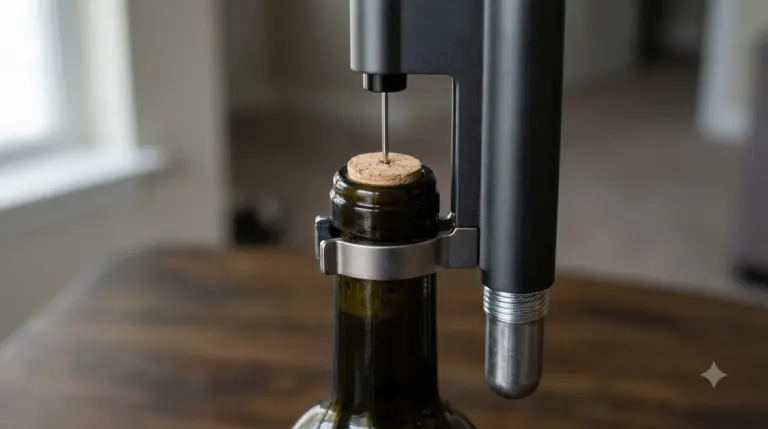
Needle-access systems allow you to pour a single glass without ever removing the cork, keeping the remaining wine virtually untouched by ambient air for months or even years. By sliding a thin, hollow coated needle through a natural cork and injecting pure argon gas, these devices displace poured wine with an inert blanket while letting the cork reseal itself upon withdrawal.
Reviewers at Decanter note that needle-based argon devices deliver unmatched longevity compared to standard stoppers or pumps, making them especially valuable for collectors checking how age-worthy vintages are evolving. Because pure argon is heavier than air and completely flavorless, it sits directly over the surface of the wine without altering delicate aromatics or tannin structure. Many modern kits also offer specialized silicone-lined screwcap adapters so you can use the same pouring wand on modern Stelvin closures.
Keep in mind that needle-access units require ongoing replacement of proprietary argon capsules and work poorly on synthetic plastic corks, which do not reseal cleanly after being pierced. You also need to store accessed bottles on their sides in a temperature-controlled cellar or wine fridge so the natural cork remains moist and swollen. This category is best for serious collectors, sommeliers, and home enthusiasts who like sampling rare or structured bottles one glass at a time over several months.

- Type
- Needle-access argon system
- Includes
- 2 argon capsules, 2 screw caps
- Extras
- Wine aerator, needle clearing tool
- Material
- Plastic, stainless steel
Aimed at collectors who want to taste a bottle from the cellar without committing to the whole thing. The system lets you pour a glass without pulling the cork, then protects what remains with pure argon gas. The kit ships with two argon capsules, two screw caps, a wine aerator, and a needle clearing tool for upkeep.
Pros & ConsView
- Pours without pulling the cork
- Uses 100% pure argon gas capsules
- Includes aerator and needle clearing tool
- Argon capsules are consumable and need replacing
- Needle needs upkeep with the clearing tool
Best for Everyday Still Wines: Manual & Electric Vacuum Pumps
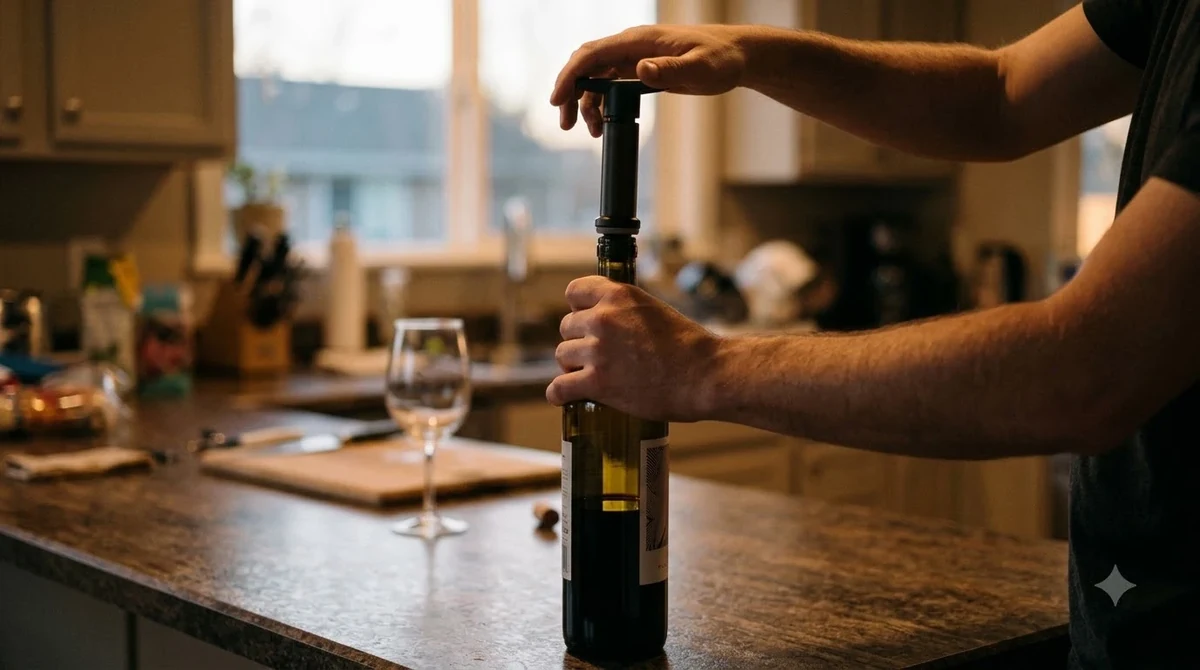
Vacuum pump preservers remove a portion of the air from an opened bottle through a slotted rubber stopper, slowing oxidation enough to keep weeknight reds and whites fresh for several days. Available as classic hand-pumped plungers that click when optimal resistance is reached or rechargeable electric wands that stop automatically, they represent the simplest reusable upgrade over a standard wine stopper.
Wine educators at Wine Folly highlight vacuum pumps as a practical, reliable staple for everyday drinkers because they work across virtually any bottle shape, require zero ongoing gas cartridges, and fit easily inside a kitchen drawer. When paired with refrigerator storage—even for red wines, which can be warmed slightly before serving—a tight vacuum seal reliably stretches drinkability from two days to roughly five to seven days. Electric models add convenience for households opening multiple bottles at once, eliminating manual pumping fatigue.
The primary limitation is that household pumps create only a partial vacuum rather than removing every trace of oxygen, and aggressive pumping can gradually strip volatile fruit esters from delicate aromatic whites or aged Pinot Noir. Additionally, you should never use a vacuum pump on bubbly, as negative pressure actively pulls dissolved carbonation out of the liquid. Choose a vacuum system if you routinely finish opened still bottles within a week and want an economical, zero-waste routine.

- Type
- Inert gas spray
- Gas Blend
- CO2, nitrogen, argon
- Uses
- 120 per can
- Pack
- Pack of 2 cans
A low-effort way to keep everyday bottles of still wine fresh after the first pour. You spray a non-toxic blend of carbon dioxide, nitrogen, and argon into the open bottle, then re-cork right away and store it upright. Each can covers 120 uses, so a two-can pack lasts a long time and also works on port, sake, whiskey, and oil.
Pros & ConsView
- Each can gives about 120 uses
- Non-toxic inert gas blend
- Two cans in one pack
- Gas must be sprayed again after each pour
- Needs re-corking and upright storage
Best for Multi-Bottle Hosting: Inert-Gas Blanket & Pouring Systems
Inert-gas blanket systems replace the oxygen inside an uncorked bottle with food-grade argon or a blend of argon, nitrogen, and carbon dioxide, preserving opened wine for up to four weeks. Unlike needle devices, these tools work after you pull the cork—either via aerosol canisters with slender applicator straws or countertop pour-through stoppers powered by small gas capsules.
Blind tastings conducted by winery educators and independent reviewers consistently show that inert-gas blanketing keeps fruit flavors brighter and more authentic over two to four weeks than vacuum extraction. Because the gas does not rely on piercing a natural cork, aerosol sprays and replacement pouring caps work smoothly across screwcaps, synthetic corks, and glass closures alike. Countertop pour-through stoppers are especially handy during dinner parties or holidays when hosts open several bottles simultaneously and want effortless glass-by-glass dispensing afterward.
The main trade-off is managing consumable gas canisters or cartridges, which eventually run empty and require reordering. Aerosol spray cans are very lightweight and economical per use, though it can be hard to gauge how much invisible gas remains inside a nearly empty canister. This format is best for households that regularly keep three to six different bottles open across a few weeks without wanting to commit to a needle-piercing system.

- Gas
- 100% food grade argon
- Quantity
- 2 cans
- Use
- Wine, liquor, oils, finishes
- Origin
- Made in USA
Occasional sippers who would rather not buy a pump or needle device can simply spray and re-cork. The gas is heavy argon that settles over the contents and displaces oxygen, forming a protective barrier. It works beyond wine on liquor, olive oil and coffee beans, and it comes as two cans with a satisfaction guarantee. Nothing to charge, pump or store beyond the cans.
Pros & ConsView
- Pure food grade argon, no hardware needed
- Also protects liquor, oils and coffee beans
- Two cans with a satisfaction guarantee
- Not made specifically for wine
- You still need your own cork or stopper
Best for Sparkling Wine & Champagne: Pressurized CO2 Systems
Pressurized sparkling wine systems lock onto the lip of a Champagne or Prosecco bottle and inject food-grade carbon dioxide to maintain internal pressure, keeping bubbles lively for two to four weeks. While a traditional hinged champagne stopper traps existing gas for two or three days, active CO2 pressurization prevents dissolved carbonation from escaping into the empty headspace as the bottle empties.
Tasting panels at Decanter tested pressurized CO2 systems against conventional hinged clamp stoppers and found that active gas replenishment preserved a noticeably creamier mousse and fresher citrus aromatics even four weeks after opening. The locking collars are engineered to withstand high internal pressure safely and feature controlled pressure-release valves so the stopper never pops off unexpectedly when you remove it for your next pour.
Because these systems use carbon dioxide rather than argon, they are strictly for sparkling wines and should never be used on still reds or whites, where dissolved CO2 would add unwanted spritz. They also require proprietary CO2 cartridges and can struggle to grip non-standard bottle necks on certain grower Champagnes or magnums. Invest in a pressurized sparkling system if you love celebratory bubbles on a Tuesday night without feeling pressured to finish the entire bottle in one sitting.
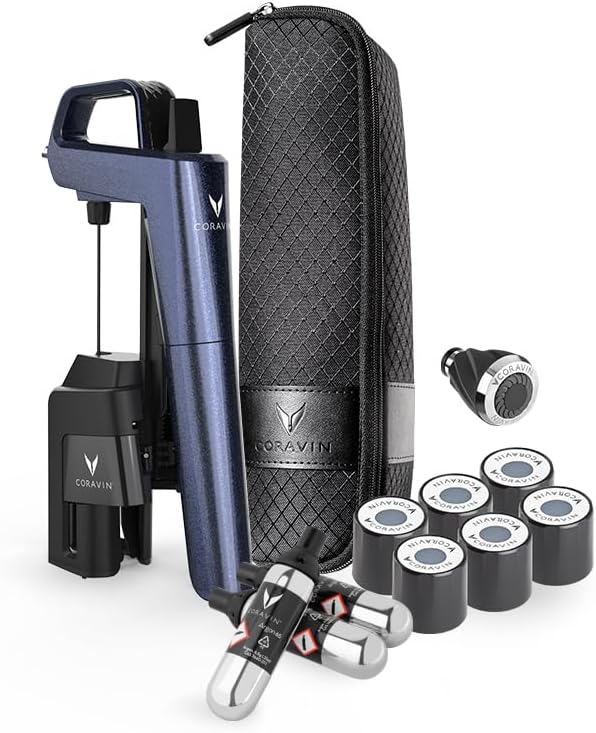
- Type
- Wine by-the-glass system
- Includes
- 3 argon capsules, 6 screw caps
- Extras
- Aerator, sleeve, carrying case
- Material
- Plastic, stainless steel
A fuller kit for people who pour by the glass often or take bottles to a friend's house. Besides the Timeless Six system, the box adds three argon capsules, six replacement screw caps, an aerator, a bottle sleeve, a needle clearing tool, and a carrying case. Cleaning is simple: rinse the spout with warm water, press the trigger, and wipe dry.
Pros & ConsView
- Carrying case and bottle sleeve included
- Three argon capsules and six screw caps
- Rinse-and-wipe cleaning after each use
- Not dishwasher safe and must not be submerged
- Argon capsules will need replacing over time
Best for Travel & Zero-Gadget Simplicity: Oxygen-Absorbing Stoppers
Oxygen-absorbing stoppers look like simple tapered plugs, yet their internal cartridges contain food-safe reactive material that chemically scrubs oxygen from both the bottle headspace and the wine itself. You simply peel off the protective foil seal and press the stopper firmly into the bottleneck—no pumps, needles, batteries, or gas canisters required.
Winery tasting trials indicate that oxygen-scavenging stoppers keep opened reds and whites remarkably fresh for one to two weeks, outperforming basic vacuum pumps while requiring zero mechanical skill. Because each stopper is compact, self-contained, and pocket-sized, they are easy to toss into a weekend bag, picnic basket, or vacation rental kitchen where bulky preservation hardware would be impractical.
Unlike reusable rubber plugs, the active oxygen-absorbing compound depletes once exposed to air, meaning each stopper is designed for a single bottle’s lifespan before being discarded. Over dozens of bottles, per-use supply costs add up faster than a reusable pump or bulk argon spray. These stoppers are ideal for occasional wine drinkers, travelers, and gift baskets where effortless plug-and-play reliability matters most.

- Type
- Inert gas spray, no gadget
- Gas Blend
- CO2, nitrogen, argon
- Uses
- 120 per can
- Size
- 2.5"W x 9.5"H, 1 can
One slim can and no gadgets: that is the whole system, which makes it easy to pack for a trip or keep in a bag. Spray the inert gas into the opened bottle, re-cork immediately, and stand it upright so a protective layer stays on the wine. Each can is good for about 120 uses and also suits cognac, port, and vinegar.
Pros & ConsView
- Single compact can needs no extra equipment
- About 120 uses per can
- Works on wine, port, cognac, and vinegar
- One can runs out sooner than a multi-pack
- Bottle must be re-corked and kept upright
How to Choose
Selecting the right tool comes down to matching preservation chemistry with your weekly habits and the closures in your rack.
- Typical Drinking Window: Match the system to how quickly you finish an open bottle. If you polish off leftovers within four or five days, a vacuum pump is plenty; if a single bottle stretches across three weeks, choose an argon blanket or needle-access system.
- Bottle Closure Type: Check whether you mostly buy natural corks, synthetic stoppers, or screwcaps. Needle systems require natural corks (or special screwcap accessories), whereas vacuum pumps and aerosol inert-gas sprays work on nearly every standard bottleneck.
- Still vs. Sparkling Habits: Keep still and sparkling preservation separate. Vacuum pumps flatten bubbly, while CO2 sparkling systems carbonate still wine.
- Ongoing Consumables: Factor in whether you prefer a one-time hardware purchase like a manual pump or don’t mind restocking argon capsules, CO2 cartridges, or disposable oxygen-absorbing stoppers.
- Storage Space & Orientation: Bottles sealed with vacuum pumps or open-neck stoppers should stand upright in the fridge to minimize the surface area exposed to air, while needle-accessed natural cork bottles must lie flat so the cork stays hydrated.
Tip: Regardless of which system you use, always store opened red, white, and rosé wines upright in the refrigerator—colder temperatures dramatically slow down the chemical oxidation reactions that dull flavor. Just pull reds out 20 to 30 minutes before pouring so they warm back to cellar temperature.
Frequently Asked Questions
How long does wine last after opening with a preservation system?
The exact timeline depends on the technology and wine style, as how long wine lasts after opening varies from a few days to several months. Manual vacuum pumps and basic stoppers reliably preserve still wine for three to seven days in the fridge, inert-gas blankets and oxygen-absorbing stoppers stretch freshness to two to four weeks, and needle-access argon systems can protect unopened corked bottles for months.
Can you use a vacuum wine preserver on Champagne or Prosecco?
No, you should never use a vacuum pump on sparkling wine. Drawing air out of the bottle creates negative pressure that actively pulls dissolved carbon dioxide out of the wine, leaving your bubbly flat within hours. Always use a dedicated locking Champagne stopper or a pressurized CO2 sparkling system instead.
Does argon gas change the taste of wine?
No, pure food-grade argon is completely colorless, odorless, and chemically inert, meaning it will not react with wine or alter its flavor profile. Because argon is heavier than oxygen and nitrogen, it settles gently over the surface of the liquid like an invisible blanket, blocking air contact without dissolving into the wine.
Do wine preservation systems work on screwcap bottles?
Yes, though you need the right style of preserver. Vacuum pumps, aerosol inert-gas sprays, pour-through gas stoppers, and oxygen-absorbing plugs all seal directly inside standard screwcap bottlenecks once the metal cap is removed. Standard needle-access systems cannot pierce metal screwcaps, though compatible silicone-lined screwcap adapters are available to bridge that gap.
Choosing a preservation setup removes the pressure to finish an entire bottle in one evening, letting you pair different wines with every course or enjoy a single midweek glass at peak freshness. Explore our full Preservation & Stoppers collection to match the right sealing system to your favorite bottles.
More in Preservation & Coravin
 Coravin Model Eleven Review: Preserve Wine Without Opening BottlesUpdated Nov 20, 2026
 Is Coravin Worth It? A Practical Guide to Its Real ValueUpdated Nov 20, 2026
 Coravin Timeless Six: Pour a Glass Without Opening the BottleUpdated Nov 20, 2026
 Coravin Pivot Plus Review: Keep Open Wine Fresh for WeeksUpdated Nov 20, 2026
 Coravin Screw Caps Review: Specs, Lifespan, and Real-World PreservationUpdated Nov 20, 2026
 Coravin Alternatives That Keep Open Wine Fresh LongerUpdated Nov 21, 2026