

We may earn a commission when you buy through links on this page, at no extra cost to you. Learn more.
The best single zone wine cooler is a front-venting compressor unit that maintains a steady temperature between 41°F and 68°F across the entire cabinet. Compact thermoelectric models work well for small countertop collections in climate-controlled rooms, while built-in compressor designs fit smoothly beneath kitchen cabinetry. Collectors aging mixed bottles over several years benefit most from full-height freestanding cabinets with UV-protected glass and adjustable shelving.
Unlike multi-chamber refrigerators that split interior space with thermal dividers, a single-zone cabinet dedicates every inch of storage to one uniform climate. As sommelier Stephanie Cain explained to VinePair, red and white wines store safely together at the same cellar temperature, making a single-chamber fridge practical for space-conscious homes. Selecting the right category depends on where the unit will live, how warm that room gets in summer, and whether you prioritize immediate serving temperatures or multi-year bottle aging.
Quick Comparison
Single-zone wine refrigerators fall into five distinct structural categories based on cooling mechanics, ventilation placement, and bottle capacity.
| Cooler Type | Cooling System | Typical Capacity | Ventilation | Best Placement |
|---|---|---|---|---|
| Compact Countertop | Thermoelectric | 6–18 bottles | Rear and side | Climate-controlled kitchens or bars |
| Built-In Undercounter | Compressor | 24–54 bottles | Front kickplate | Flush inside base cabinetry |
| Slimline Freestanding | Compressor | 15–34 bottles | Rear and side | Narrow kitchen nooks or apartments |
| Mid-Size Collector | Compressor | 50–90 bottles | Rear or front | Dining rooms, dens, or basements |
| Full-Height Wine Vault | Compressor | 150–300 bottles | Rear or front | Basements, garages, or dedicated cellars |
Best for Countertops and Apartments: Compact Thermoelectric Coolers
Compact thermoelectric coolers use solid-state Peltier modules rather than refrigerant compressors, creating a lightweight, virtually vibration-free unit for 6 to 18 bottles. Because they omit heavy mechanical compressors, these units sit easily on kitchen counters, bar carts, or sideboards without rattling delicate sediment.
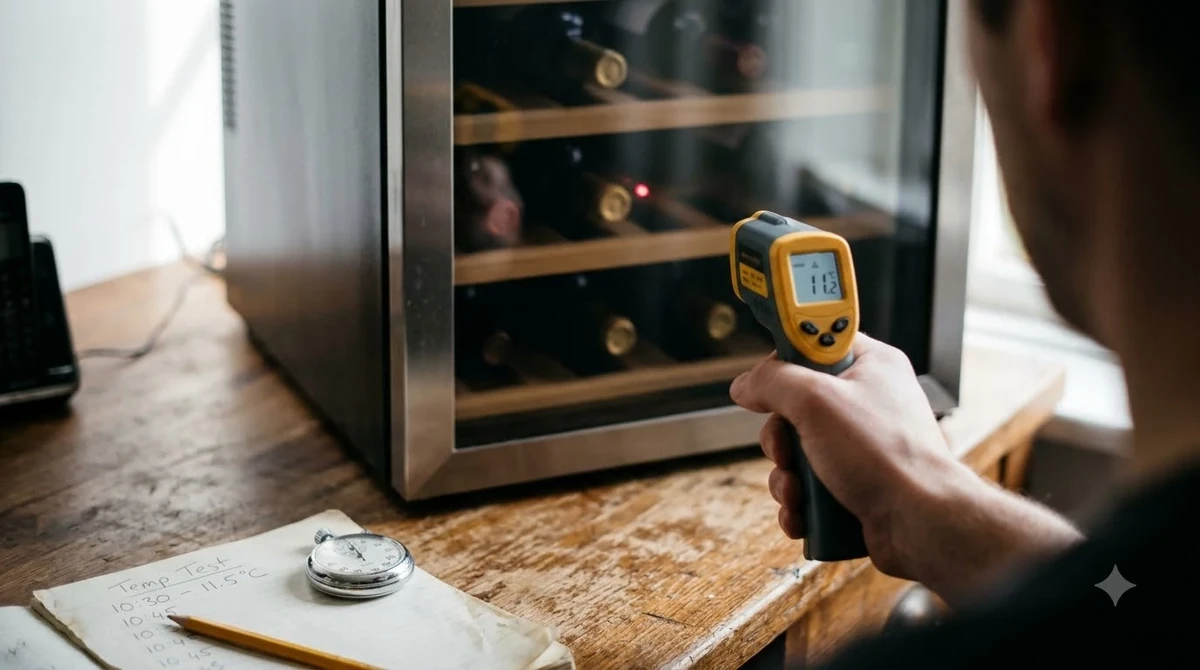
Why it stands out: Thermoelectric cooling relies on an electric current passing through a heat-transfer plate paired with a quiet internal fan, eliminating the intermittent compressor cycling found in standard kitchen refrigerators. Reviewers at Wine Enthusiast highlight slim countertop units—especially models featuring vertical racks for upright open bottles—as ideal starter appliances for apartment dwellers who keep a few favorite bottles chilled for weeknight pouring. When storing an unfinished bottle on an upright rack, knowing how long does wine last after opening helps prevent oxidation before you finish the pour.
Keep in mind and best for: Peltier modules cool relative to ambient air rather than maintaining an absolute thermostat target, typically lowering interior temperatures by 10°F to 15°F below the surrounding room. If your kitchen regularly climbs above 77°F in August, a thermoelectric model will struggle to hold crisp white-wine temperatures. Choose this category if you live in an air-conditioned apartment, want whisper-quiet operation near a living area, and drink through your bottles within a few months rather than aging them for years.

- Capacity
- 20 bottles (750 mL)
- Cooling
- Thermoelectric, dual unit
- Temp Range
- 46–66°F
- Shelves
- 5 removable wire racks
Apartment dwellers and anyone short on floor space can set this single-zone cabinet on a counter or tabletop. Dual-unit thermoelectric cooling runs without vibration, so bottle sediment stays settled, and external touch controls adjust 46–66°F without opening the door. Five removable wire racks, a mirrored double-paned UV door, and soft LED lighting round out the 20-bottle interior.
Pros & ConsView
- Vibration-free thermoelectric cooling
- Touch controls set 46–66°F from outside
- Five removable racks fit varied bottle shapes
- Lowest setting of 46°F is warmer than compressor models
- Holds only 20 bottles
Best for Kitchen Remodels: Built-In Undercounter Compressor Units
Built-in undercounter coolers feature front-facing exhaust vents at the base kickplate, allowing installers to slide the cabinet flush beneath standard 34-inch countertops without overheating. Powered by compact compressors, these units deliver reliable cooling from 41°F up to 68°F even inside warm, busy kitchens.
Why it stands out: Standard freestanding refrigerators vent heat through their back and side panels, meaning enclosing them inside cabinetry traps hot air and burns out the motor. Purpose-built under counter wine cooler models draw room air in through a slotted front grille and expel warm exhaust through the same toe-kick channel, requiring zero side clearance. Most 15-inch and 24-inch built-in units also feature reversible doors, tinted double-pane UV glass, and smooth-gliding wooden racks that pull out cleanly without bumping adjacent cabinet frames.
Keep in mind and best for: Compressor motors generate a gentle hum when cycling on, typically rated between 38 and 43 decibels—roughly equivalent to a quiet library or modern dishwasher. Because single-chamber built-ins skip the internal partition required by a dual zone wine fridge, they squeeze roughly 15 to 20 percent more bottle capacity into the exact same 24-inch cabinet cutout. This type fits homeowners remodeling a kitchen island, wet bar, or pantry who want integrated millwork aesthetics and maximum bottle count per linear inch.
Best for Tight Floor Spaces: Slimline Freestanding Compressor Fridges
Slimline freestanding compressor fridges combine narrow footprints—often between 10 and 18 inches wide—with true refrigerant cooling capable of holding crisp white and sparkling temperatures. They bridge the gap between small countertop appliances and bulky full-width cabinets for homes short on floor space.
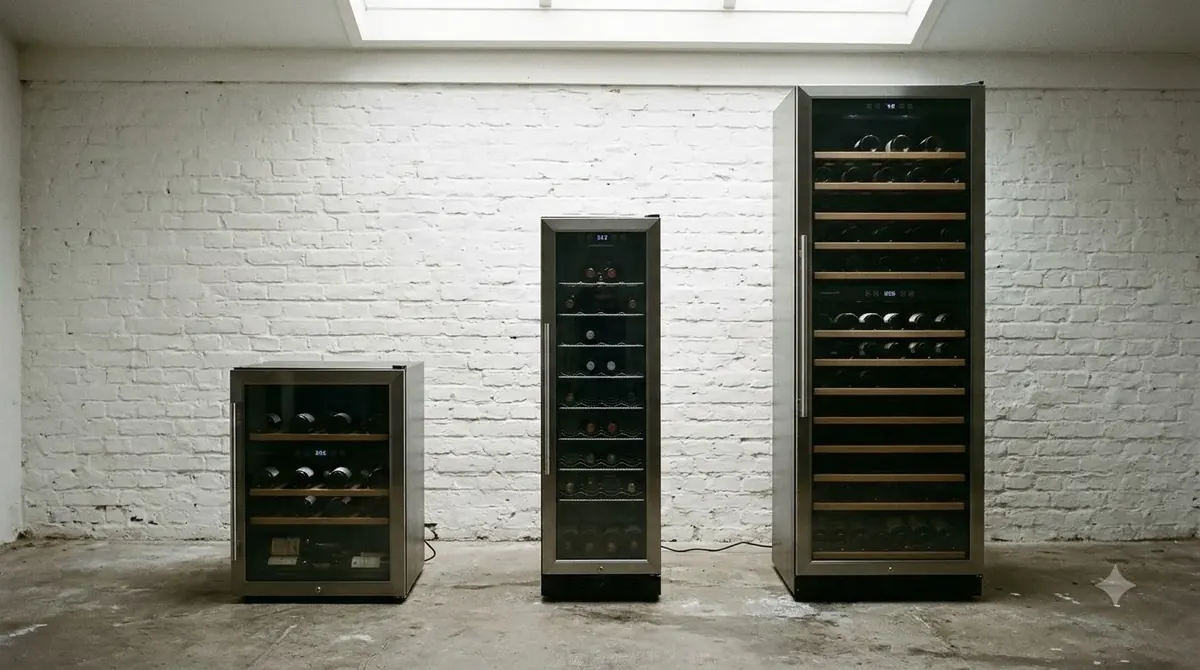
Why it stands out: Unlike thermoelectric mini-fridges that falter during summer heatwaves, a slimline compressor cabinet maintains its digital set point regardless of ambient room swings. Many tall, narrow models hold 20 to 34 bottles while occupying less than two square feet of floor space, sliding neatly beside a pantry, desk, or dining buffet. Select configurations also swap one horizontal wire rack for a dedicated vertical cradle, letting you chill opened sparkling or white bottles upright without risking cork leaks.
Keep in mind and best for: Because freestanding slimline units dissipate heat through their rear and side walls, you must leave two to four inches of breathing room around the exterior cabinet. Pushing the back panel flush against drywall restricts airflow, forces the compressor to run continuously, and shortens appliance lifespan. This category works best for renters and condo owners who need dependable compressor power in warm rooms, want easy plug-and-play setup without carpentry, and prefer a narrow footprint.

- Capacity
- 12 bottles
- Cooling
- Compressor with fan
- Zones
- Single zone
- Install
- Freestanding
Cabinetry builds need clearance planning, and this unit is sold as freestanding, so treat it as a standalone piece beside the cabinets. Inside, six removable racks hold 12 bottles, with a compressor and fan keeping the temperature steady regardless of room heat. Touch controls, soft LED lighting and a UV-resistant double-paned glass door round out a single-zone cooler.
Pros & ConsView
- Compressor cooling is unaffected by outside heat
- Six removable racks flex for bottle sizes
- UV-resistant double-paned glass door
- Freestanding design, not made for cabinet installation
- Single zone only
Best for Growing Collections: Mid-Size Freestanding Cellar Cabinets
Mid-size freestanding cellar cabinets hold between 50 and 90 bottles, offering dedicated storage for enthusiasts outgrowing starter fridges. These units prioritize interior racking flexibility, steady humidity retention, and low-vibration compressor mounts suitable for multi-year bottle aging.
Why it stands out: Once a collection passes four cases, standard wire racks spaced strictly for narrow Bordeaux bottles become frustrating when storing wider Burgundy, Rhône, or Champagne silhouettes. Mid-size cellar cabinets address this with roller-mounted beechwood or coated steel shelves that slide out smoothly, letting you read labels in the back row without disturbing neighboring bottles. Higher-tier models also incorporate active carbon air filters to block ambient kitchen odors from seeping through natural corks, alongside winter heating elements that prevent interior temperatures from dipping too low in chilly basements.
Keep in mind and best for: Listed bottle capacities on mid-size cabinets assume uniform 750 mL Bordeaux bottles stacked neck-to-base; mixing in heavy-bottomed Pinot Noir bottles or magnums reduces real-world capacity by 15 to 25 percent. Check shelf spacing measurements before buying if your cellar leans heavily toward sparkling wines or New World Pinot Noir. This category suits dedicated wine lovers building a 5- to 7-case rotation who want true cellar conditions in a dining room, study, or finished basement without committing to a full-height monolith.

- Capacity
- Up to 173 bottles
- Shelves
- 14 sliding rail shelves
- Temp Range
- 40–65°F, digital touch
- Door
- Reversible, key lock
Growing collections need room and easy access, and this 24-inch cabinet stores up to 173 bottles. Fourteen sliding rail shelves pull out to reach bottles at the back, while a larger top tier and bottom shelf take bigger bottles with fewer scratched labels. Digital touch control holds 40–65°F with memory, and two fans spread the compressor's cooling evenly.
Pros & ConsView
- Holds up to 173 bottles
- Sliding rail shelves ease access
- Reversible door with key lock
- Wide 24-inch cabinet needs dedicated floor space
- Reversing the door needs seller guidance and accessories
Best for Long-Term Aging and Bulk Storage: Full-Height Wine Vaults
Full-height single-zone wine vaults stand 65 to 75 inches tall and store 150 to 300 bottles under uniform cellar conditions. Engineered for serious collectors, they pair heavy-duty insulation with commercial-grade cooling systems designed to run reliably across wide ambient temperature swings.
Why it stands out: As Wine Folly notes in its storage guidelines, wine stored at standard room temperature ages roughly four times faster than bottles held at a steady 55°F to 59°F. Full-height single-zone cabinets replicate underground cave conditions by maintaining tight thermal consistency, balanced relative humidity between 55 and 75 percent, and minimal mechanical vibration. Heavy-duty models rated for ambient environments up to 100°F can even operate safely inside unconditioned garages or utility rooms where standard kitchen appliances would fail.
Keep in mind and best for: A loaded 200-bottle cabinet weighs well over 700 pounds, requiring level flooring—ideally concrete slab or reinforced joists—and a dedicated electrical circuit. When browsing cabinets by type, verify whether a full-height unit features solid insulated doors for maximum thermal efficiency or triple-pane UV-tinted glass for display. Choose a full-height vault if you buy wine by the case, age age-worthy reds and vintage Champagne for five to twenty years, and want the lowest cost per bottle stored.
How to Choose
Matching a single-zone wine refrigerator to your household comes down to evaluating five practical specifications before measuring your floor or cabinet opening:
- Cooling Mechanism and Room Temperature: Choose thermoelectric cooling only if the room stays below 75°F year-round and you store fewer than 18 bottles. Choose a compressor model for kitchens, sunny dining rooms, garages, or any collection exceeding 20 bottles.
- Ventilation and Installation Clearance: Front-venting units install flush under counters with minimal gaps, whereas rear-venting freestanding models require at least two to four inches of clearance behind and beside the cabinet for heat exhaust.
- Shelf Spacing and Slide Mechanisms: Look for telescopic ball-bearing rollers and at least 3.5 inches of vertical clearance between shelves if you collect wider Burgundy, Rhône, or sparkling bottles rather than exclusively slim Bordeaux shapes.
- Glass Glazing and Lighting: Double- or triple-pane tempered glass with low-E or UV-blocking coatings shields wine from ultraviolet light damage, while low-heat interior LEDs illuminate labels without warming the top shelf.
- Temperature Range and Controls: Verify that the thermostat spans at least 41°F to 65°F so you can shift between crisp white serving temperatures and classic 55°F long-term cellar storage as your habits change.
Tip: Always buy one size larger than your current bottle count—most collectors fill a new cabinet within six months, and leaving 15 percent open shelf space improves internal air circulation and accommodates oversized Pinot Noir or Champagne bottles.
Frequently Asked Questions
Can you store red and white wine together in a single zone wine cooler?
Yes, red, white, rosé, and sparkling wines can all age and store together safely at a single universal cellar temperature around 55°F. Storage temperature differs from serving temperature, so you simply pull whites out 20 minutes early to chill in an ice bucket or kitchen fridge, and let reds warm slightly on the counter before pouring.
What is the ideal temperature setting for a single zone wine fridge?
For mixed collections or multi-year aging, set your single-zone cooler to 55°F, which slows premature oxidation while keeping corks supple. If you exclusively drink crisp white, rosé, or sparkling wines within a few weeks of purchase, setting the cabinet between 45°F and 50°F keeps bottles ready to serve immediately.
Is a thermoelectric or compressor wine cooler better for home use?
Compressor coolers are better for most homes because they hold exact temperatures in warm kitchens, reach colder settings for sparkling wine, and scale to larger capacities. Thermoelectric units work well only for small countertop collections in consistently air-conditioned rooms where whisper-quiet, vibration-free operation outweighs cooling power.
Why does my wine cooler hold fewer bottles than the advertised capacity?
Manufacturers calculate maximum bottle counts using standard 750 mL Bordeaux bottles arranged alternating neck-to-neck without extra headroom. Wider Burgundy, Champagne, Riesling, or Magnum bottles take up extra horizontal and vertical space, typically reducing actual capacity by 15 to 25 percent unless you remove a shelf.
Finding the right single-zone wine refrigerator starts with an honest look at your room’s ambient summer temperatures and how quickly you rotate through bottles. Once you match the cooling system, ventilation style, and shelf spacing to your space, a dedicated single-chamber cabinet keeps every bottle protected from heat swings and premature aging.
More in Wine Fridges by Type
 Best White Wine Fridge for Reliable Chilling and StorageUpdated Nov 20, 2026
 Best Smart Wine Fridge for Steady Temperatures and Remote ChecksUpdated Nov 18, 2026
 Best Black Under Counter Wine Fridge Options for Kitchens and IslandsUpdated Nov 18, 2026
 Best Black Slim Wine Fridge for Narrow Gaps and Dark KitchensUpdated Nov 18, 2026
 Best Built In Dual Zone Wine Fridge Options by Kitchen LayoutUpdated Nov 18, 2026
 Best Slim Built in Wine Cooler: 5 Space-Saving Styles for Tight KitchensUpdated Nov 18, 2026