

We may earn a commission when you buy through links on this page, at no extra cost to you. Learn more.
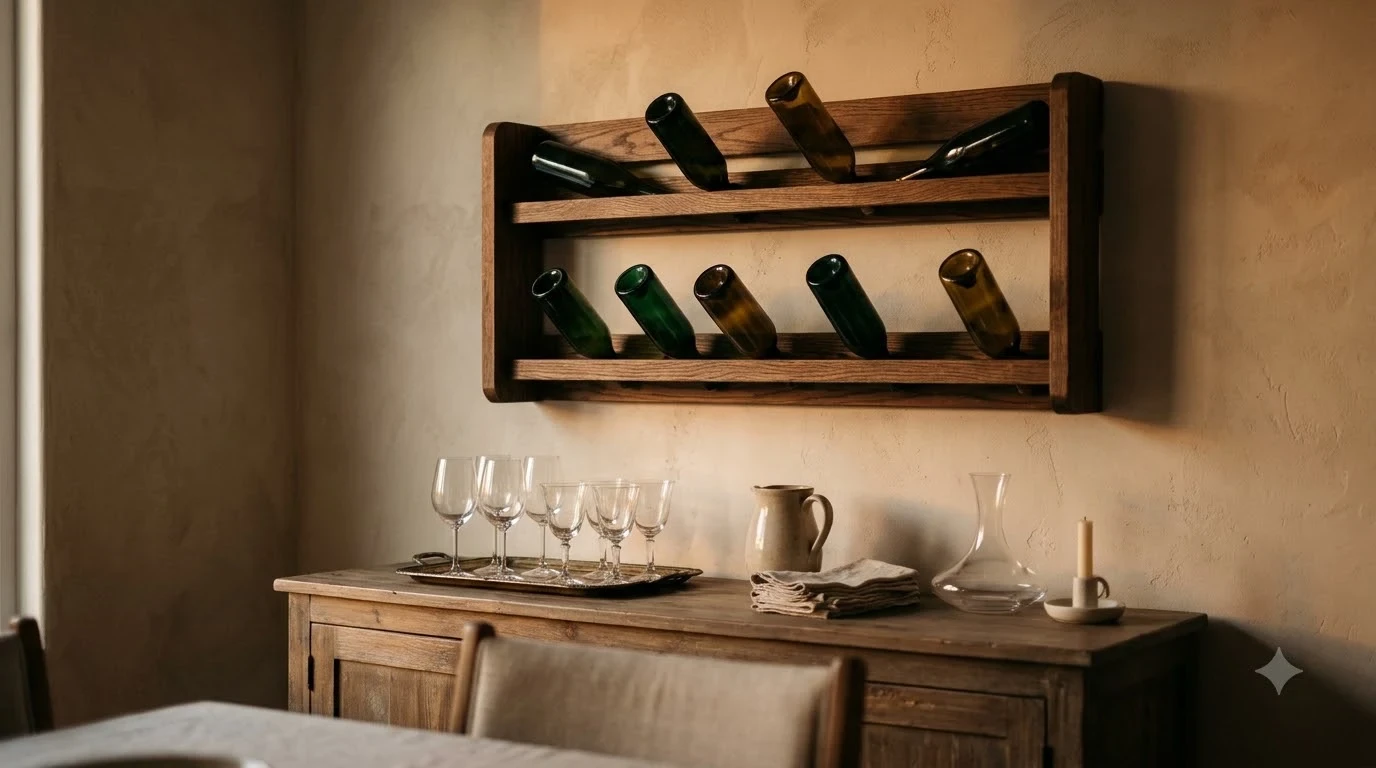
The best wall mounted wine rack for most homes is a steel label-forward column rack anchored directly into wall studs, because it keeps corks moist while turning your bottle labels into an easy-to-scan display. If you want a minimalist architectural look, individual metal pegs give you total grid freedom, while tensioned cable systems suit open dining walls. For small kitchens and apartments, compact wood-and-metal racks with built-in stemware holders store bottles and glasses in one narrow footprint.
Floor-standing wine racks eat up valuable square footage in kitchens, dining rooms, and hallways. Mounting your storage on the wall solves that problem while keeping bottles horizontal—a must for natural-cork wines that need liquid contact to prevent the cork from drying out and letting oxygen spoil the wine. Below, we break down the five main wall-mounted rack designs by room layout, capacity, and installation style so you can match the right build to your wall.
Quick Comparison
Each wall-mounted rack style balances bottle capacity, visual presentation, and mounting complexity differently depending on your space.
| Rack Type | Typical Capacity | Bottle Orientation | Mounting Requirement | Best Room Fit |
|---|---|---|---|---|
| Label-Forward Steel Columns | 6 to 36+ bottles per column | Horizontal, label facing out | Wood wall studs or masonry | Dining rooms, wine walls, cellars |
| Frameless Wall Pegs | Custom (1 to 100+ bottles) | Horizontal, label-forward or cork-out | Studs, masonry, or heavy-duty backing board | Modern living spaces, feature walls |
| Compact Rack with Stemware Holder | 4 to 10 bottles plus 4 to 8 glasses | Horizontal or slight cradle tilt | Wall studs or heavy-duty anchors | Small kitchens, apartments, bar nooks |
| Neck-Out Modular Wood or Metal Grid | 12 to 48+ bottles | Horizontal, neck or base facing out | Multiple wall studs | Pantries, basements, under-stair alcoves |
| Tensioned Cable Wine System | 6 to 24+ bottles per bay | Horizontal, suspended cradles | Ceiling and floor or upper/lower wall brackets | Open-concept dining areas, glass partitions |
Best for Label-Forward Display: Steel Wall Columns
Label-forward steel column racks hold bottles parallel to the wall so you can read every producer and vintage at a glance without pulling bottles out of cubbies. They come in single-, double-, or triple-bottle depths, letting you scale storage from a modest six-bottle dining room accent to a full-wall collection.
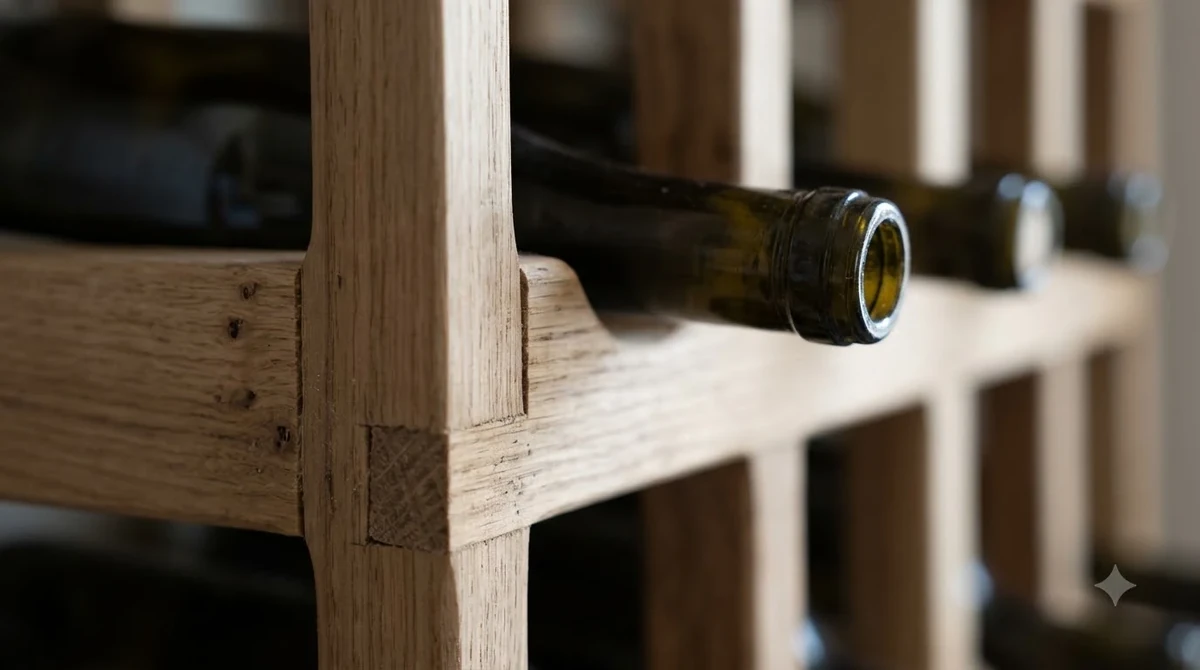
Why it stands out: Industry professionals interviewed by Wine Enthusiast point out that steel wall-mounted racks deliver the cleanest, sleekest profile while easily supporting heavy glass loads. Because bottles rest horizontally across two parallel steel rods, corks stay fully submerged and the labels face outward like a restaurant wine wall. Modular strips can also be stacked vertically or installed side by side as your collection grows.
Keep in mind and best for: Multi-deep columns project farther into the room—often 10 to 13 inches for triple-deep configurations—so single-deep columns work better in narrow hallways. This style is best for wine drinkers who want quick visual inventory, scalable capacity, and straightforward stud-to-stud mounting.

- Material
- Metal, powder coated
- Capacity
- 8 bottles
- Size
- 10.83"W x 28.15"H x 3.54"D
- Color
- Black
Suited to display-minded walls, this black powder-coated metal column holds eight bottles in one tidy stack, with each tier showing off a different bottle. It stands 28.15 inches tall and only 3.54 inches deep, and it is fixed to the wall with multiple screws for stability. Numbered parts and included tools keep assembly manageable for a living room or kitchen wall.
Pros & ConsView
- Holds eight bottles in a slim column
- Welded metal with multiple screw mounts
- Numbered parts simplify assembly
- Fixed eight-bottle capacity cannot be expanded
- Needs wall drilling and about 28 inches of height
Best for Minimalist Feature Walls: Frameless Metal Wine Pegs
Frameless peg systems use pairs of machined aluminum or stainless steel rods mounted straight into the wall so bottles appear to float without visible brackets or rails. You choose the exact spacing between rows and columns, making the layout as tight or airy as your wall allows.
Why it stands out: Unlike fixed-width frames, individual pegs adapt to awkward wall dimensions, narrow pillars, and sloped under-stair angles. You can orient pegs for a label-forward horizontal profile or a traditional cork-out grid, and many designs include rubber O-rings along the shafts to cradle the glass and prevent bottles from slipping when bumped.
Keep in mind and best for: Installing dozens of individual pegs demands careful measuring with a laser level, and hollow drywall alone cannot safely bear the weight without a solid wood or plywood backing panel anchored to studs behind the finished surface. Choose pegs if you want a custom gallery-style wall in a modern dining or living room.

- Capacity
- 36 bottles
- Units
- 12 modules, 3 bottles each
- Material
- Black metal
- Mounting
- Screw-mounted
Growing collections need a layout that can keep expanding, and this grid is built that way. Twelve modules each hold three bottles, so you can run them in a block or spread them out as stock increases. Reinforced welding carries full bottles, and the vertical design keeps labels and corks visible. It fits kitchens, bars, and wine rooms, and it is screw-mounted for stability.
Pros & ConsView
- Adds up to 36 bottles on one wall
- Modules can be rearranged as stock grows
- Reinforced welding supports full bottles
- Many modules take time to position
- Screw mounting means permanent wall holes
Best for Small Kitchens and Apartments: Compact Rack with Stemware Holder
Compact combination racks pair a horizontal bottle cradle—usually holding four to ten bottles—with underside rails that suspend stemmed glassware by the base. By stacking bottles above your wine glasses, these units turn a narrow slice of empty wall into a self-contained pouring station.
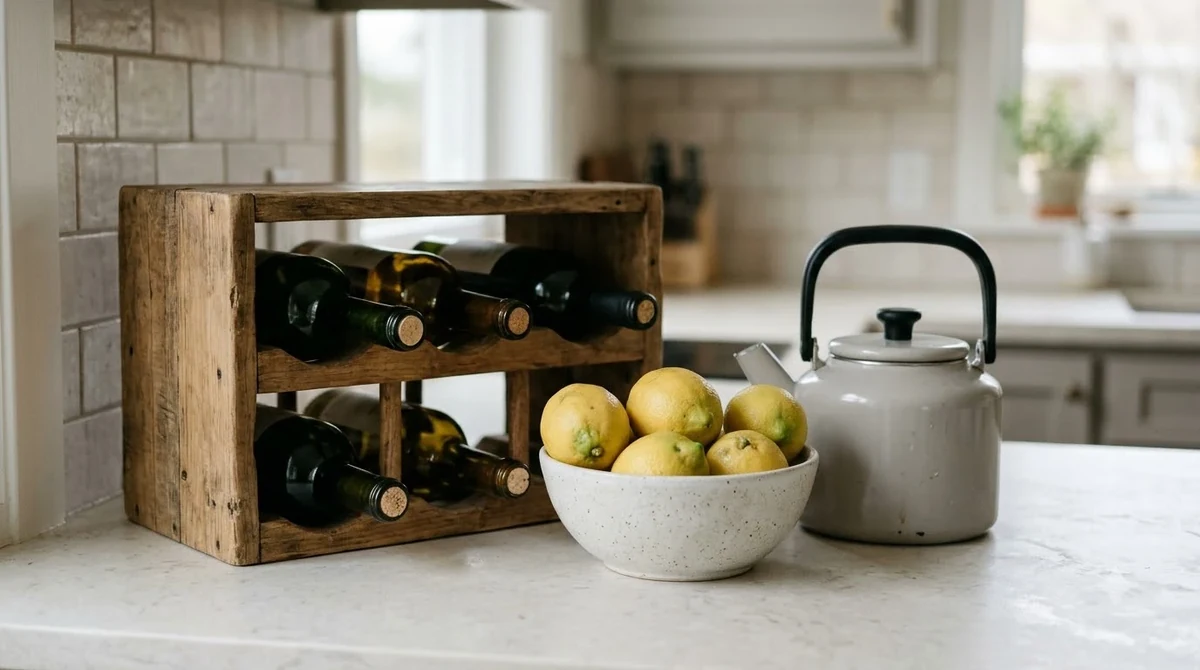
Why it stands out: Hanging stemware upside down by the foot keeps dust out of the bowls and frees up crowded kitchen cabinets, while keeping your everyday bottles within arm’s reach. Most compact units combine powder-coated steel frames with a warm wood shelf on top for decanters, corkscrews, or stoppers, giving smaller spaces functional bar storage without needing a bar cart.
Keep in mind and best for: Because kitchens experience frequent heat spikes from ovens, dishwashers, and stovetops, these racks are best reserved for bottles you plan to open within a few weeks or months rather than long-term aging. They suit apartment dwellers and compact kitchens where every inch of cabinet and counter space counts.

- Material
- Pine wood and metal
- Capacity
- 6 bottles, up to 40 lbs
- Length
- 17.32 inches
- Finish
- Black
Small kitchens benefit from one wall piece that stores both bottles and glasses, and this 17-inch pine shelf with a black metal bracket does exactly that. It carries up to 40 lbs, includes a protective ledge to keep items from sliding off, and the stemware hanger underneath frees counter space. The listing also notes it can hold cookware and utensils.
Pros & ConsView
- Combines bottle shelf and stemware hanger
- Supports up to 40 lbs
- Protective ledge helps stop items falling
- Holds only six bottles
- A single 17-inch shelf limits large collections
Best for High-Capacity Storage: Modular Wood or Metal Grid Racks
Modular grid racks store bottles neck-out or base-out in tight vertical columns, packing maximum bottle count into minimal wall width. Available in unfinished hardwood, stained oak, or welded steel, these racks prioritize dense, practical organization over label visibility.
Why it stands out: When you buy wine by the case—if you have ever wondered how many bottles in a case of wine fit on a single wall, a standard 12-bottle case takes up surprisingly little space in a neck-out grid—high-density racks keep everything sorted by varietal or region. Solid hardwood and welded steel grids resist sagging over years of continuous load, especially compared to thin veneer or particleboard alternatives.
Keep in mind and best for: Neck-out storage hides the front label, so adding reusable neck tags makes it much easier to find a specific bottle without disturbing neighboring wines. This format works best in cool basements, walk-in pantries, and dedicated home cellars where storage volume matters more than display.

- Capacity
- 9 bottles
- Material
- Black metal
- Size
- 10.25 x 28 x 3 in
- Install
- 2 screws, 2 anchors
A single slim column can anchor a minimalist feature wall without crowding it. This black metal rack holds nine bottles in tiers spaced 3.5 inches apart, enough for most standard wine, liquor, or champagne bottles. It clicks together in two parts and uses just two screws and two anchors, so hanging it is quick. The 3 inch depth keeps it close to the wall.
Pros & ConsView
- Slim 3 inch depth stays close to the wall
- Clicks together in two parts
- Only two screws and anchors needed
- Nine-bottle capacity fills up quickly
- Narrow design offers no room for glasses
Best for Open-Concept Dining Spaces: Tensioned Cable Wine Systems
Tensioned cable systems suspend bottles between vertical stainless steel cables anchored to structural points at the top and bottom of a wall or room divider. Slim metal clamps grip each bottle at the neck and base, creating an airy, floating display that lets light pass right through.
Why it stands out: Cable racks double as architectural room dividers between a kitchen and dining area without blocking sightlines or natural daylight. The cables hold bottles completely horizontal, and spacing between tiers can be adjusted during installation to accommodate standard 750ml Bordeaux bottles alongside wider Burgundy or sparkling shapes.
Keep in mind and best for: Cable systems require precise tensioning and solid structural blocking at both anchoring points so the cables never slacken under a full load. They are best for open-plan dining rooms and contemporary renovations where the wine display serves as a centerpiece.

- Material
- Pine wood and metal
- Capacity
- 6 bottles
- Size
- 7.9"W x 40.2"H x 6"D
- Finish
- Matte, red wine color
Open-concept dining rooms call for a rack that reads like furniture, and this barrel-stave design leans into wine-country style. Pine and metal form a 40-inch tall board that holds six bottles across multiple rows, with mounting hardware and instructions included. The red-wine finish adds a warm accent against a plain wall without taking much floor space.
Pros & ConsView
- Barrel-stave look suits dining spaces
- Includes hardware and mounting instructions
- Pine and metal build with matte finish
- Six-bottle capacity is modest for its height
- Tall 40-inch size needs clear wall space
How to Choose
Before drilling into your wall, match the rack’s construction and dimensions to both your collection and the room’s environment:
- Calculate total loaded weight: A full 750ml glass wine bottle weighs roughly 2.65 to 3 pounds. A 12-bottle rack easily exceeds 30 to 36 pounds once you include the steel or solid wood frame, so always anchor structural brackets into wood wall studs (typically spaced 16 or 24 inches on center) or solid masonry rather than relying on basic drywall anchors.
- Check bottle diameter and depth: Standard Bordeaux bottles measure about 3 inches across, while Burgundy, Pinot Noir, and Champagne bottles have wider bases that can jam in tight metal loops. Check how far the rack projects from the wall too—a 7-inch-deep frame leaves bottle necks extending forward, whereas a 10- to 12-inch frame cradles almost the entire bottle.
- Pick a cool, dark location: As Wine Folly notes in its wine cellaring guide, keeping corked bottles on their sides in a stable environment prevents corks from shriveling and oxidizing your wine. Mount your rack away from sunny windows, ovens, refrigerators, and heating vents.
- Favor durable materials: Powder-coated steel, machined aluminum, and solid kiln-dried hardwood handle sustained weight and ambient humidity far better than MDF or soft plastics, which can warp or bow over time.
Tip: Buy a rack with roughly 25 percent more bottle capacity than you currently own, and mount the bottom row at least 36 to 42 inches off the floor so everyday bottles stay at an easy, comfortable reach.
Frequently Asked Questions
Do all wine bottles need to be stored horizontally on a wall rack?
Bottles sealed with natural cork should always be stored horizontally or at a gentle downward angle so the wine stays in contact with the cork and keeps it from drying out. Wines sealed with screw caps or synthetic closures do not dry out, though horizontal wall racks still hold them securely without issue.
Can you mount a wine rack directly into drywall without studs?
For anything larger than a lightweight two- or three-bottle rack, mounting directly into hollow drywall is risky because the sustained weight of full glass bottles can pull anchors through the sheetrock. Always drive lag screws into wood wall studs or masonry, or mount a solid plywood backing board across two studs first.
Is a kitchen wall safe for storing wine long term?
Kitchens experience daily temperature swings from cooking, dishwashers, and appliance exhaust, which can age wine prematurely over several years. A kitchen wall rack is ideal for everyday bottles you plan to drink within a few months, while long-term aging belongs in a cool basement, interior closet, or climate-controlled cellar.
Will wide Champagne and Pinot Noir bottles fit in standard wall-mounted racks?
Many label-forward steel racks and open-cradle designs accommodate wider Burgundy and sparkling bottles, though doing so may reduce the total bottle count if adjacent rows sit close together. Check the manufacturer’s spacing specs—at least 3.75 to 4 inches between cradles ensures wider bottles slide in without scratching labels.
Choosing the right wall-mounted wine rack comes down to balancing your wall’s structural support with how quickly you drink through your bottles. Whether you install a sleek label-forward column in the dining room or a compact stemware rack near the kitchen counter, properly anchored horizontal storage keeps your collection safe, organized, and ready to pour—explore more Racks & Storage options as your lineup grows.
More in Racks & Storage
 Best Wine Barrel Racks for Distinctive Bottle StorageUpdated Nov 20, 2026
 Best Wine Storage Tower: Sizing, Protection and Room LayoutUpdated Nov 18, 2026
 Best Pyramid Wine Rack: Materials, Sizes and Where It FitsUpdated Nov 18, 2026
 Best Kitchen Cabinet Wine Rack Insert for Built-In Bottle StorageUpdated Nov 18, 2026
 Best 16 Bottle Wine Rack Options for Kitchens, Bars and CellarsUpdated Nov 18, 2026
 Best 48 Bottle Wine Rack Options for Cellars, Kitchens, and Tight SpacesUpdated Nov 18, 2026