

We may earn a commission when you buy through links on this page, at no extra cost to you. Learn more.
The best corkscrews depend on how often you open bottles and the condition of the cork, with a double-hinged waiter’s friend serving as the gold standard for everyday reliability. Lever-style openers prioritize speed when hosting a crowd, while electric models take physical strain out of the process. If you are uncorking aged vintages with dry, fragile closures, a two-prong cork puller prevents crumbling far better than a traditional spiral.
Walking into a kitchenware store or browsing wine openers and corkscrews online can leave anyone overwhelmed by gears, hinges, and battery packs. Every mechanical style solves a slightly different problem, whether that is fitting inside a server’s apron pocket or rescuing a brittle thirty-year-old cork from falling into your glass. Understanding how each mechanism grips and lifts a stopper makes it easy to match the right tool to your regular drinking habits.
Quick Comparison
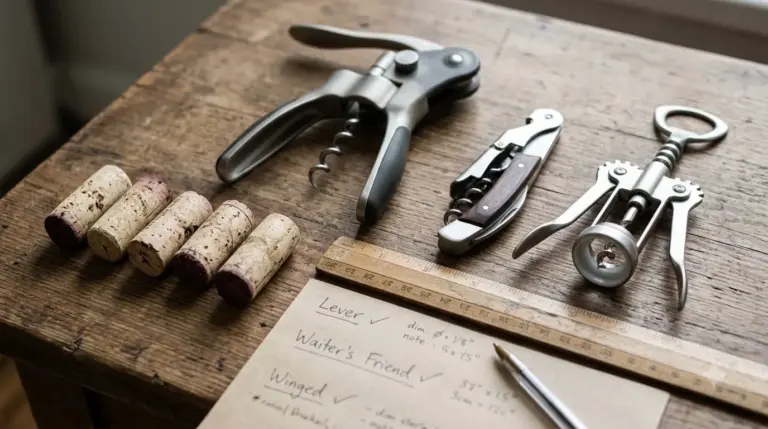
Comparing the five primary opener designs reveals clear trade-offs between physical effort, portability, and how gently each mechanism treats delicate corks.
| Corkscrew Type | Best For | Physical Effort | Portability | Fragile Cork Safety |
|---|---|---|---|---|
| Double-Hinged Waiter’s Corkscrew | Everyday use and travel | Moderate (controlled) | Pocket-sized | High (with proper technique) |
| Lever-Style Corkscrew | Effortless speed and entertaining | Very low | Bulky (countertop/drawer) | Moderate |
| Winged (Butterfly) Corkscrew | Casual home cooks and beginners | Low to moderate | Medium drawer tool | Low |
| Electric Wine Opener | Limited hand strength and hands-free ease | Minimal (push-button) | Low (requires charging base) | Low to moderate |
| Two-Prong Cork Puller (Ah-So) | Aged vintages and crumbly corks | Moderate (requires finesse) | Slim and pocket-sized | Very high (does not pierce) |
Best for Everyday Use and Travel: Double-Hinged Waiter’s Corkscrew
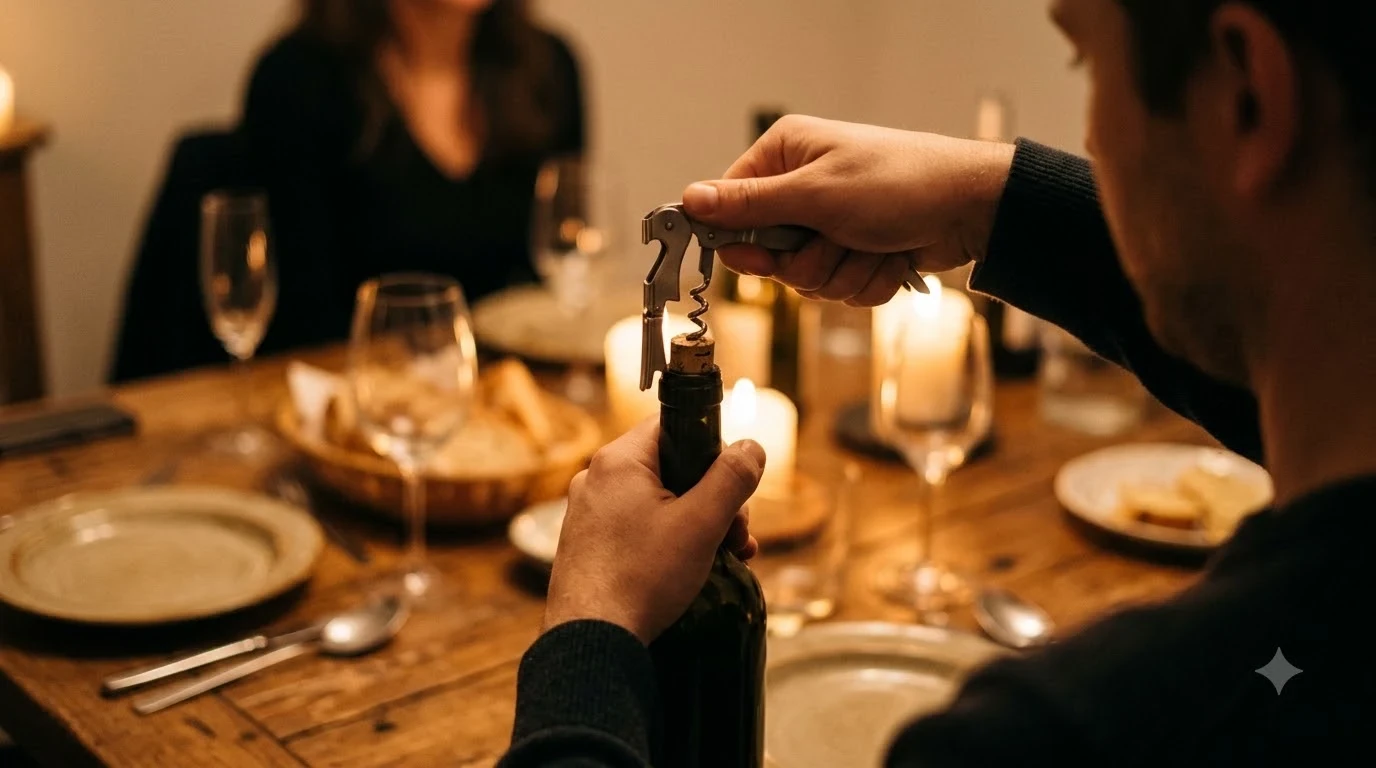
Often called a sommelier knife or waiter’s friend, the double-hinged waiter’s corkscrew is the compact, folding workhorse favored by hospitality pros and daily wine drinkers alike. By combining a serrated foil cutter, a coated spiral worm, and a two-step fulcrum lever into a pocket-sized frame, it handles virtually any bottle with total control.
Why it stands out: Unlike older single-hinge designs that pull the cork at a sharp, awkward angle, a two-step fulcrum lifts the stopper straight up in two smooth stages. Sommeliers interviewed by VinePair frequently point to this double-boot design as virtually bulletproof because it keeps the spiral aligned with the bottle neck, drastically reducing the chance of snapping a stubborn cork in half. When you master how to open a wine bottle with a two-step hinge, the entire motion takes less than ten seconds and requires very little wrist torque.
Keep in mind and best for: There is a brief learning curve if you have never seated a fulcrum notch against a glass lip, and standard models are hinged for right-handed operation unless you specifically seek out a left-handed frame. Still, because it folds flat like a pocketknife and includes its own foil blade, it is unmatched for anyone wanting one dependable tool for kitchen drawers, picnic baskets, and restaurant shifts. If you are shopping specifically for compact folding wine keys, look for a non-stick coated helix with five full turns.

- Type
- Double-hinged waiter's key
- Material
- Stainless steel and plastic
- Extras
- Foil cutter, bottle opener
- Weight
- 2.24 oz
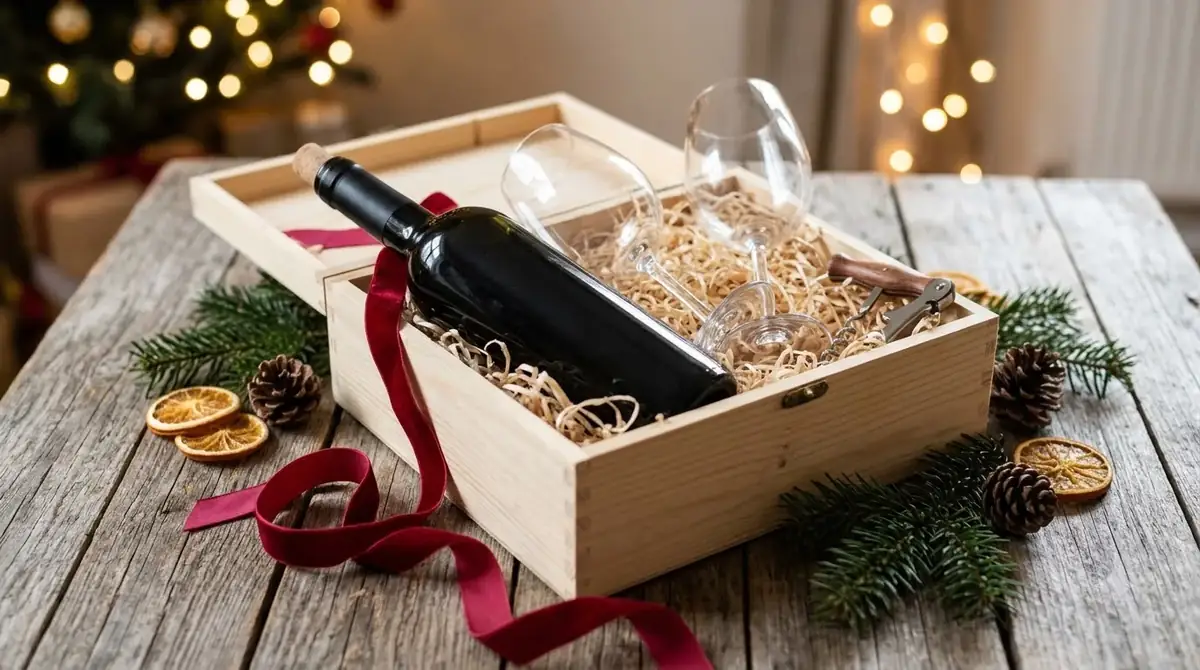
A practical pick for home bars and weekend hosting, this double-hinged corkscrew gives two-step leverage without much effort. The flat-blade foil cutter and built-in bottle opener keep the essentials in one slim tool. Stainless steel and plastic construction keeps it light at 2.24 ounces, so it fits easily in a kitchen drawer or on a bar cart.
Pros & ConsView
- Double-hinged arm for two-step leverage
- Built-in foil cutter and bottle opener
- Light at 2.24 ounces
- Plastic parts in the body
- Compact 4.75-inch size leaves little grip room
Best for Speed and Entertaining: Lever-Style Corkscrew
Built with ergonomic handles that clamp onto the bottle neck and a long overhead arm, lever-style openers—often nicknamed rabbit corkscrews—use compound mechanical advantage to drive and extract a cork in two swift motions. You simply squeeze the side grips, pull the top lever down to sink the spiral, and lift the lever back up to pop the cork free.
Why it stands out: Nothing matches the sheer throughput of a well-calibrated lever opener when you are hosting a dinner party or opening multiple bottles back to back. As wine educators at Wine Folly note, this style is remarkably approachable for beginners because the frame automatically centers the worm directly over the cork, eliminating user error and providing a deeply satisfying pop without straining your shoulders.
Keep in mind and best for: That heavy-duty mechanical linkage comes at the cost of size and complexity. Lever openers take up substantial drawer or counter space, rarely include an attached foil blade (relying instead on a separate plastic ring cutter), and contain internal gears that can eventually wear down after hundreds of uses. They are best suited for frequent home entertainers who prioritize speed and low physical effort over compact storage.

- Type
- Vertical lever corkscrew
- Material
- Stainless steel, die-cast zinc handle
- Screw
- Non-stick, spare included
- Extras
- Removable foil cutter
Counter speed is the draw here: squeeze the handles around the bottleneck, then pull the lever down and up, and the cork comes out in two moves. The non-stick screw releases both natural and synthetic corks with another pump of the lever. A soft, nonslip grip keeps pressure controlled, and the foil cutter detaches for use and stores back on the body.
Pros & ConsView
- Two-motion lever pulls corks in seconds
- Soft nonslip grip keeps control
- Spare non-stick screw included
- Larger than a folding waiter's key
- Heavier zinc and steel build at 483 grams
Best for Casual Home Use: Winged Corkscrew
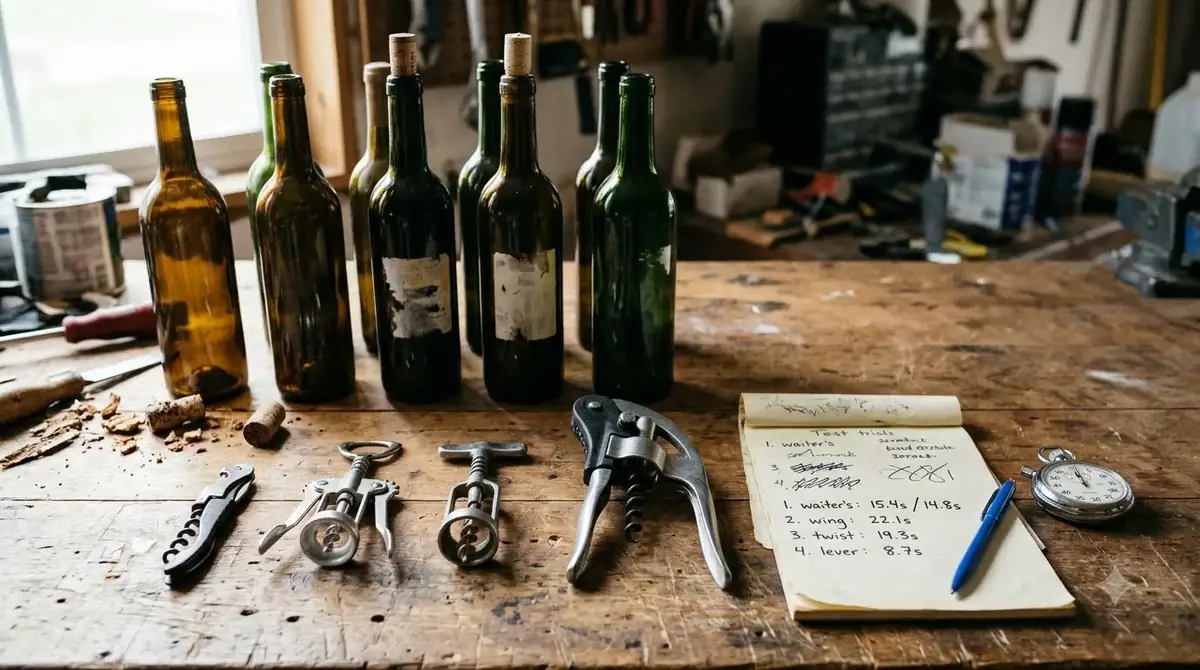
Recognizable by the two curved arms that rise like wings as you twist the top knob, the winged or butterfly corkscrew is a familiar staple in home kitchens across the country. Once the arms reach their peak, pushing them back down simultaneously levers the cork upward out of the neck.
Why it stands out: The mechanics are completely intuitive—even guests who rarely open wine can immediately see how the gears work without needing instructions. A circular collar at the base rests squarely over the rim of the bottle, stabilizing the central shaft so the spiral enters straight down the middle rather than wandering off-center into the glass.
Keep in mind and best for: Wine professionals tend to avoid butterfly openers for two practical reasons: they lack a built-in foil cutter, and many entry-level versions use a thick, solid auger-style screw rather than an open helical wire. Thick screws displace too much cork material and can shred softer stoppers from the inside out. If you prefer this classic tabletop silhouette for casual weekend dinners, choose a heavier cast-metal frame fitted with a thin, hollow-core spiral.

- Type
- Winged corkscrew
- Material
- Stainless steel
- Included
- Stopper, foil cutter
- Extras
- Beer cap opener
A starter kit for casual home use that bundles the basics in one box. The winged corkscrew uses two arms for extra leverage, then lets you open beer caps as well. A foil cutter and an airtight stopper come with it, so you can reseal a half-finished bottle and keep it fresh for a few days. Good for new wine drinkers and gift sets.
Pros & ConsView
- Wings add leverage for easier cork removal
- Includes stopper to reseal opened bottles
- Also opens beer caps with the same tool
- Winged design is bulkier than a waiter's key
- Stopper fits most, not all, standard bottles
Best for Limited Hand Strength: Electric Wine Opener
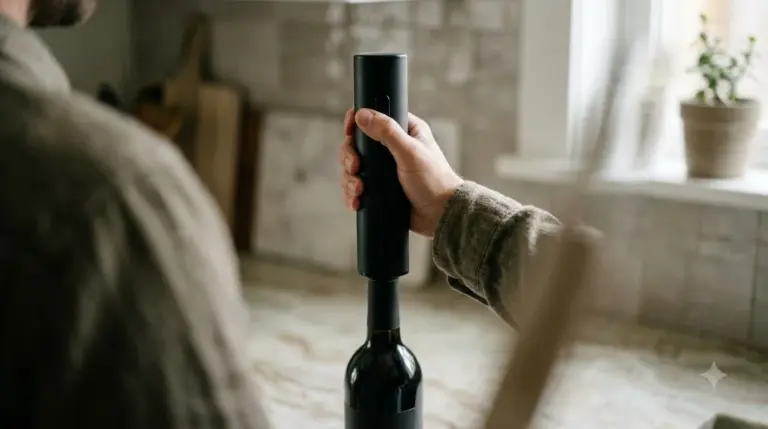
Powered by a rechargeable battery or replaceable cells, an electric wine opener automates the entire extraction sequence with the press of a rocker switch. Holding the cylindrical housing steady over the bottleneck lets an internal motor spin the worm into the cork, pull it clear, and reverse-spin it off the coils.
Why it stands out: Removing a tight synthetic or natural cork requires zero grip strength, wrist twisting, or upward pulling force. Reviewers at Wine Enthusiast and other consumer gear publications frequently highlight automatic openers as an indispensable accessibility tool for anyone dealing with arthritis, carpal tunnel, or temporary hand injuries, as well as hosts who want hands-free convenience at the bar cart.
Keep in mind and best for: Convenience depends entirely on battery readiness; a dead motor mid-party forces you to hunt for a backup tool or figure out how to open wine without a corkscrew. Electric units also operate slightly slower than manual levers and add another charging dock to your countertop. They are ideal for wine lovers who want effortless, push-button operation and keep a simple manual backup tucked in a drawer just in case.

- Type
- Cordless electric opener
- Power
- Rechargeable base, 110-120V
- Per charge
- Up to 30 bottles
- Extras
- Foil cutter, soft grip handle
Casual drinkers who open a bottle now and then can keep this cordless opener ready on its base. A simple push button controls the cork removal, and a single charge handles up to 30 bottles, so it rarely needs attention. The soft grip handle and built-in foil cutter round out the basics without extra accessories or a pile of parts to store.
Pros & ConsView
- Simple push-button operation
- One charge opens up to 30 bottles
- Includes foil cutter and recharging base
- No aerator or stoppers in the package
- Plastic body weighs 16 ounces
Best for Aged Vintages and Fragile Corks: Two-Prong Cork Puller (Ah-So)
Instead of boring a metal spiral through the center of the stopper, a two-prong cork puller—widely known as an Ah-So—uses two thin, flat spring-steel blades to hug the outside of the cork. You gently rock the blades downward between the cork and the inner glass wall, then twist and pull to slide the entire stopper out intact.
Why it stands out: Older bottles stored for a decade or more often develop dry, spongy, or saturated corks that disintegrate the moment a traditional worm twists into them. Because an Ah-So never pierces the cork, it preserves structural integrity and keeps crumbly debris out of your decanter. In fact, once the stopper is removed, the two prongs can even be used to ease the intact cork back into the neck if you do not finish the bottle.
Keep in mind and best for: Sliding thin metal blades down a tight bottleneck takes patience and practice; pushing straight down too hard without rocking side to side can accidentally shove a loose cork straight into the wine. It also struggles against rigid synthetic plastic stoppers, which create too much friction against the steel prongs. Keep one in your bar kit specifically for cellared wines, older vintages, or rescuing a cork that has already broken halfway through extraction.

- Type
- Ah-So two-prong puller
- Material
- Stainless steel
- Size
- 4.3" L x 2.4" W
- Weight
- 2.08 ounces
Collectors with aged red wine need a gentler approach than a screw. This two-prong puller is designed to protect the cork while lifting it out, which matters when the cork is old and brittle. It is made from stainless steel, measures about 4.3 inches long, and weighs roughly two ounces, so it stores easily in a drawer. Expect a short learning curve.
Pros & ConsView
- Two prongs protect old, fragile corks
- All stainless steel construction
- Compact 4.3-inch body stores easily
- No foil cutter included in the listing
- Technique takes practice versus screw-style openers
How to Choose
Before settling on a specific opener, evaluate three mechanical details that separate frustrating gadgets from lifelong kitchen tools:
- Inspect the worm design: Look for a thin, open-coil wire helix—often called a French spiral or hollow-core worm—rather than a thick, solid auger. An open spiral grips a wider column of cork fibers without boring a wide hole that causes crumbling, and a non-stick Teflon or titanium coating helps it glide smoothly through dense synthetic stoppers.
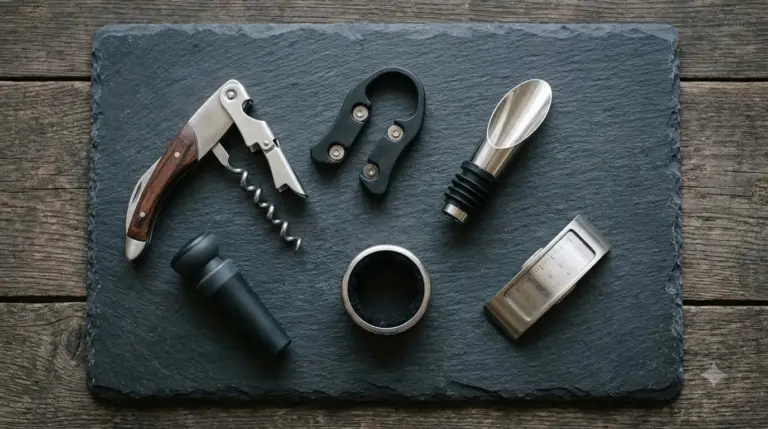
- Check for an integrated foil cutter: Cutting the capsule cleanly below the lip prevents wine from dribbling over foil edges while pouring. Waiter’s corkscrews build a small folding blade directly into the handle, whereas lever, winged, and electric models usually bundle a separate four-wheel foil cutter that is easy to misplace in a crowded drawer.
- Match the mechanism to your storage and grip: If drawer space is tight or you frequently pack bottles for travel, a folding two-step wine key wins easily. If arthritis or wrist fatigue makes twisting uncomfortable, an electric model or wide-armed lever design eliminates the strain.
Tip: Stop turning the spiral when roughly half a coil remains visible above the top of the cork. Driving the tip all the way through the bottom pushes cork dust directly into your wine.
Frequently Asked Questions
Why do sommeliers prefer double-hinged waiter’s corkscrews over other styles?
Hospitality professionals rely on double-hinged waiter’s corkscrews because they fold small enough to fit in a pocket, include a built-in serrated foil knife, and use a two-step lever that pulls corks straight out without bending them. Fewer moving parts also mean there are no internal gears to strip or batteries to die during a busy dinner service.
What is the difference between a solid auger screw and an open-coil worm?
A solid auger resembles a thick wood screw with a central metal shaft that displaces cork material and often shreds older stoppers. An open-coil worm looks like a twisted piece of wire with hollow space down the center, allowing it to thread smoothly through the cork and grip firmly without tearing it apart.
Which corkscrew works best on synthetic plastic corks?
A double-hinged waiter’s corkscrew or a lever-style opener with a non-stick coated spiral handles dense synthetic corks best. Avoid using a two-prong Ah-So puller on plastic stoppers, as the tight friction between the synthetic material and the glass neck makes it nearly impossible to slide the steel blades down.
Can you use an electric wine opener on sparkling wine bottles?
No, you should never use an electric opener—or any corkscrew—on Champagne or sparkling wine. Sparkling wine bottles are under high internal pressure and use mushroom-shaped corks secured by a wire cage, which must be twisted out carefully by hand while holding the cork firmly.
Choosing between a pocket-sized sommelier knife, a counter-ready lever, or a push-button electric opener comes down to how you enjoy wine at home. Most seasoned enthusiasts eventually pair a reliable double-hinged waiter’s corkscrew for everyday bottles with a two-prong puller tucked away for older vintages, ensuring every bottle opens cleanly from the first cut of the foil to the final pour.
More in Openers & Corkscrews
 Best Two Step Corkscrew Options for Home, Travel, and Old CorksUpdated Nov 18, 2026
 Best Foil Cutter for Clean Cuts at Home, on the Road and in Your KitUpdated Nov 18, 2026
 Best Cordless Wine Opener Styles for Easy Uncorking AnywhereUpdated Nov 18, 2026
 Best Champagne Opener for Sabrage, Everyday Use and GiftsUpdated Nov 18, 2026Best Air Pressure Wine Opener Styles for Easy, Cork-Safe OpeningUpdated Nov 18, 2026
 Best Wine Opener Set for Home Use, Hosting, and Hands-Free OpeningUpdated Nov 18, 2026