

We may earn a commission when you buy through links on this page, at no extra cost to you. Learn more.
Ruffino wine is made by a Tuscan producer that uses the date 1877 in its brand name, and its range covers Chianti Classico, Brunello di Montalcino, and several other Italian appellations. According to the company’s website, the winery has more than 140 years of winemaking heritage across seven estates in Tuscany. Its best-known label is the Chianti Classico Riserva Ducale, which the site says ranked number 17 in Wine Spectator’s Top 100.
This guide walks through what the Ruffino name covers, how the main wines differ, and how to choose a bottle if you are new to the brand. It relies on the producer’s own published descriptions and on general guidance about Tuscan red wines, so the details are the company’s own claims unless noted otherwise.
What the Ruffino name stands for
Ruffino is one of the best-known names in Italian wine, and its brand identity leans heavily on history. The company’s website presents the label as Ruffino 1877 and describes a winemaking heritage of more than 140 years. That long timeline is part of why the brand is recognized in Italy and abroad, and it explains why the company describes itself in terms of estates, appellations, and tradition rather than a single flagship.
The producer operates across Tuscany and works with several distinct zones. The website lists seven Tuscan estates by name: Poggio Casciano, Montemasso, Santedame, Gretole, Greppone Mazzi, La Garzaia, and La Solatìa. Spreading production across different estates means the wines can reflect different soils, altitudes, and microclimates, even when they share the Ruffino house signature.
The main appellations in the range
The site highlights Chianti Classico above all, including the Riserva Ducale, which is the producer’s most recognized bottling. Chianti Classico is the historic heart of Chianti, the central Tuscan zone where red wines are built largely on Sangiovese. Riserva designations generally mean the wine has spent longer ageing before release, and the Riserva Ducale is presented as a benchmark within that category.
Beyond Chianti Classico, the producer lists Brunello di Montalcino, Bolgheri Superiore, Vino Nobile di Montepulciano, Morellino di Scansano, and Orvieto Classico. Those names span very different parts of Tuscany and even reach into Umbria with the Orvieto white. For a buyer, the practical point is that the same producer can offer a wide stylistic range, from structured, long-lived reds to lighter, everyday styles.
| Appellation or line | Where it comes from | Typical role for a buyer |
|---|---|---|
| Chianti Classico Riserva Ducale | Central Tuscany | The flagship Chianti Classico benchmark |
| Brunello di Montalcino | Montalcino, southern Tuscany | Structured, age-worthy Sangiovese-based red |
| Bolgheri Superiore | Coastal Tuscany | Warmer-climate red blends in a different style |
| Vino Nobile di Montepulciano | Montepulciano, Tuscany | Mid-weight Sangiovese-based red |
| Orvieto Classico | Umbria, near the Tuscan border | A white option from the same producer |
Recognition and what it signals
Recognition from critics and industry groups gives shoppers a way to read the brand’s reputation. The company’s site says four Ruffino wines were named among the best new releases in a 2025 Wine Spectator issue, and that Alauda and Romitorio di Santedame were recently included in the World’s Best Sommeliers’ Selection. These are the producer’s own claims about external recognition, so they are best treated as signals to check against the original sources rather than as final verdicts.
A ranking from a single critic captures one moment, and wines change from vintage to vintage. The more useful habit is to notice which bottlings keep appearing in critics’ lists over several years, since that suggests a consistent house style rather than a one-off success.
Visiting the estates and the wider experience
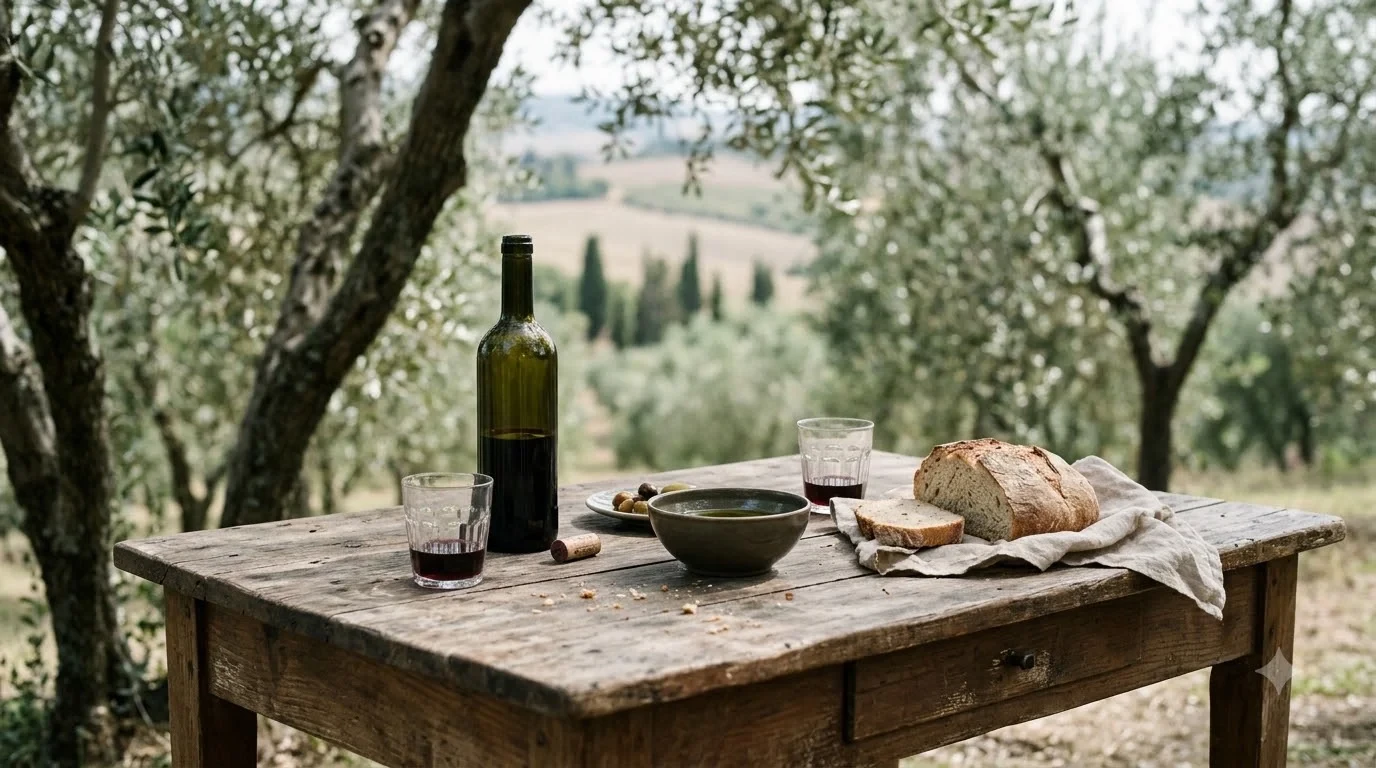
The company offers tours and tastings at its winery, along with a restaurant called Tre Rane and the Wine Relais Ruffino, a Renaissance villa surrounded by vineyards. Visiting a Tuscan estate is one of the easiest ways to understand how the landscape shapes the wine, because the hills, the soil colour, and the mix of olive groves and vines show the context that a label cannot.
The producer’s website also lists olive oils, spirits, dessert wines, and a sparkling line, Ruffino Sparkling. If you are shopping for a gift or a dinner party, the broader catalogue means you can choose an Italian food-friendly bottle alongside a complementary oil or sparkling wine from the same house.
How to serve and pair Ruffino wines
Serving temperature and glassware change how a Tuscan red shows. Reds built on Sangiovese usually taste best slightly below room temperature, and a generous glass helps the aromas open. Riserva wines and Brunello-style reds often benefit from a short period of air before they are poured, especially when they are young and tightly structured.
Italian reds pair naturally with the food of their own region. Tomato-based pasta, grilled meats, roast poultry, and aged hard cheeses all suit Sangiovese-led wines, because the acidity and tannin balance the fat and richness on the plate. Lighter white wines such as Orvieto Classico fit fish, salads, and fresh vegetable dishes.
How to choose a bottle from the range
Start with the occasion and the food. For a classic Tuscan dinner, a Chianti Classico is the most direct choice and gives you the style most people associate with the region. For a long, serious meal or a bottle to cellar, a Brunello di Montalcino or a Riserva is the better pick, because these wines are built with more structure and longer ageing.
If you want something lighter for an everyday meal, look at the mid-weight Vino Nobile di Montepulciano or a Morellino di Scansano. For a white option, the Orvieto Classico brings freshness and an easy drinking style. Whatever you choose, read the vintage on the label, since weather in each year shapes the balance between fruit, acidity, and tannin.
Common mistakes with Italian labels
Italian wine labels can look dense, and the most common mistake is confusing the producer with the appellation. Ruffino is the producer name, while Chianti Classico, Brunello di Montalcino, and the others are legal designations that describe where and how a wine can be made. Knowing the difference helps you compare bottles across the range fairly.
Another mistake is judging a young Riserva too quickly. Structured Tuscan reds can taste tight and austere on release, and their character often opens with time in the glass or in the cellar. Give a bottle a short rest and serve it with food before deciding whether it suits you.
Frequently Asked Questions
What is Ruffino best known for?
According to the producer’s website, Ruffino is known for its Chianti Classico wines, including the Riserva Ducale, and for a range of Tuscan appellations that also includes Brunello di Montalcino and Bolgheri Superiore.
Where are Ruffino wines made?
The producer works across Tuscany, with seven estates listed on its site, including Poggio Casciano, Montemasso, and Santedame. Its Orvieto Classico white comes from Umbria, next to the Tuscan border.
What does the 1877 in the Ruffino name mean?
The company uses Ruffino 1877 as its brand identity and describes more than 140 years of winemaking heritage. That date reflects the house’s history as presented on its own website.
Is Ruffino a good choice for a first Italian red?
It can be, especially if you want a classic Tuscan style. Start with a Chianti Classico for a traditional profile, then move to a Brunello or Riserva once you know what structure and ageing mean to you.
If you want a broader view of how Italian brands differ, the guide to wine brands compares producers by style and approach. For a contrast in style, the guide to La Marca Prosecco shows how an Italian sparkling wine differs from a Tuscan red. For the producer’s own history and current releases, the Ruffino official website is the primary source.
More in Wine Brands
 Underwood Wine Price: Compare Bottles, Cans, and Pack SizesUpdated Nov 21, 2026
 Zenato Wine Price: Compare Styles and Choose the Right BottleUpdated Nov 21, 2026
 Zuccardi Wine Price: Compare Bottles and Find the Right RangeUpdated Nov 21, 2026
 Yellow Tail Moscato Review: Taste, Sweetness and Serving TipsUpdated Nov 21, 2026
 Wolf Blass Yellow Label Review: Choose Your Best StyleUpdated Nov 21, 2026
 Wolffer Estate Rose Review: Choose the Right Bottle for Your TableUpdated Nov 21, 2026