

We may earn a commission when you buy through links on this page, at no extra cost to you. Learn more.
How long does red wine last unopened depends primarily on the style of the bottle and its storage conditions, with most everyday red wines staying at their peak for 2 to 5 years past their vintage date. Light-bodied, fruit-forward reds are best enjoyed within 1 to 3 years, while structured, tannic bottles from classic wine regions can evolve gracefully for 10 to 20 years or longer. Rather than having a strict food-safety expiration date, unopened wine follows a drinking window during which its flavors and aromas gradually peak and eventually fade.
Finding an older bottle tucked away in a pantry or basement often raises questions about whether the wine has improved with age or quietly gone past its prime. Because wine is a dynamic liquid that continues to react slowly inside the bottle even before you pull the cork, understanding its built-in preservatives and storage history will tell you exactly what to expect when you pour that first glass.
Unopened Red Wine Shelf Life by Style
Not all red wines are built to age, and most bottles sold in grocery stores and wine shops are crafted for immediate enjoyment rather than long-term cellaring. How long a sealed bottle stays vibrant comes down to its grape variety, winemaking style, and structural balance.
Everyday red wines—including approachable bottles of Merlot, Malbec, Garnacha, and easy-drinking Pinot Noir—generally taste best within 2 to 3 years of their vintage year, though well-stored examples can hold up for up to 5 years. Winemakers ferment and bottle these wines to highlight fresh berry notes, soft textures, and lively acidity right upon release. Holding onto an everyday red for a decade will not turn it into a rare collectible; instead, the bright fruit flavors slowly flatten out, leaving behind a thin, muted wine.
Fuller-bodied, age-worthy reds operate on a completely different timeline. Classic styles such as Napa Valley or Bordeaux Cabernet Sauvignon, Piedmontese Barolo and Barbaresco made from Nebbiolo, Tuscan Brunello di Montalcino, and Spanish Rioja Reserva rely on firm tannins and bright acidity to preserve their character. According to Wine Folly’s guide to age-worthy wines, structured Cabernet Sauvignon and Tempranillo can easily evolve for 10 to 20 years, while high-tannin Nebbiolo and Aglianico frequently hit their stride around the 20-year mark. For a broader overview of how these grapes differ from whites and sparklers, explore our guide to Wine by Type.
| Red Wine Style / Category | Typical Unopened Peak Window | Maximum Hold (Ideal Storage) | Primary Preserving Trait |
|---|---|---|---|
| Light-Bodied Reds (Beaujolais, Pinot Noir) | 1 to 3 years from vintage | 3 to 5 years (10 years for top Burgundy) | Bright acidity |
| Everyday Medium Reds (Merlot, Malbec, Zinfandel) | 2 to 5 years from vintage | 5 to 10 years | Moderate tannin and fruit concentration |
| Full-Bodied Structured Reds (Cabernet Sauvignon, Syrah) | 5 to 15 years from vintage | 15 to 20+ years | High tannin and balanced acidity |
| Long-Aging Classics (Barolo, Brunello, Rioja Gran Reserva) | 10 to 20 years from vintage | 20 to 30+ years | Very high tannin and firm acidity |
| Fortified Red Wine (Vintage Port, Ruby Port) | Decades from vintage | 50 to 100+ years | High alcohol (around 20% ABV) and sugar |
Why Some Red Wines Last Longer Than Others
The secret to a red wine’s longevity lies in its natural chemical structure—specifically its levels of tannin, acidity, alcohol, and residual sugar. These four components act as built-in shields against oxidation and microbial spoilage inside a sealed bottle.
Tannins are naturally occurring polyphenolic compounds extracted from grape skins, seeds, stems, and oak barrels during fermentation. They create that familiar mouth-drying, astringent sensation on your gums and tongue when you sip a young Cabernet Sauvignon or Nebbiolo. Inside an unopened bottle, tannins bind with oxygen molecules and pigment compounds, acting as natural antioxidants that protect the wine’s color and flavor from breaking down too quickly. Over several years, those harsh tannin chains link together and drop out of suspension as harmless sediment, making the wine feel noticeably silkier on the palate.
Acidity plays an equally vital role by keeping the wine’s chemical environment stable and preserving fresh fruit flavors. Wines with higher natural acidity—meaning a lower pH—resist bacterial spoilage and oxidation far better than low-acid wines, which tend to taste flabby and tired after just a couple of years. Alcohol and sugar also contribute to shelf life: while standard dry table wines sit between 12% and 15% ABV, fortified red wines like Port are boosted with grape spirit to roughly 20% ABV alongside concentrated residual sugar, allowing unopened bottles to remain vibrant for decades.
How Storage Conditions Change the Timeline
Even a cellar-worthy red wine will spoil within months if it sits in a warm, sunlit room, while an everyday bottle kept in cool, steady darkness can easily outlive its expected window. Storage environment is just as important as what is inside the glass.
Temperature is the single biggest factor governing how fast an unopened bottle ages. According to Wine Folly’s wine storage guidelines, the ideal temperature for storing red wine is a steady 55°F to 59°F (12°C to 15°C) with 55% to 75% relative humidity. Heat accelerates chemical reactions inside the bottle; sustained exposure to temperatures above 70°F (21°C) effectively cooks the wine, muting fresh berry aromas and replacing them with stewed, jammy, or flat flavors. Rapid temperature swings are equally damaging because they cause the liquid and air inside the bottle to expand and contract, which can push the cork slightly outward and allow excess oxygen to seep in.
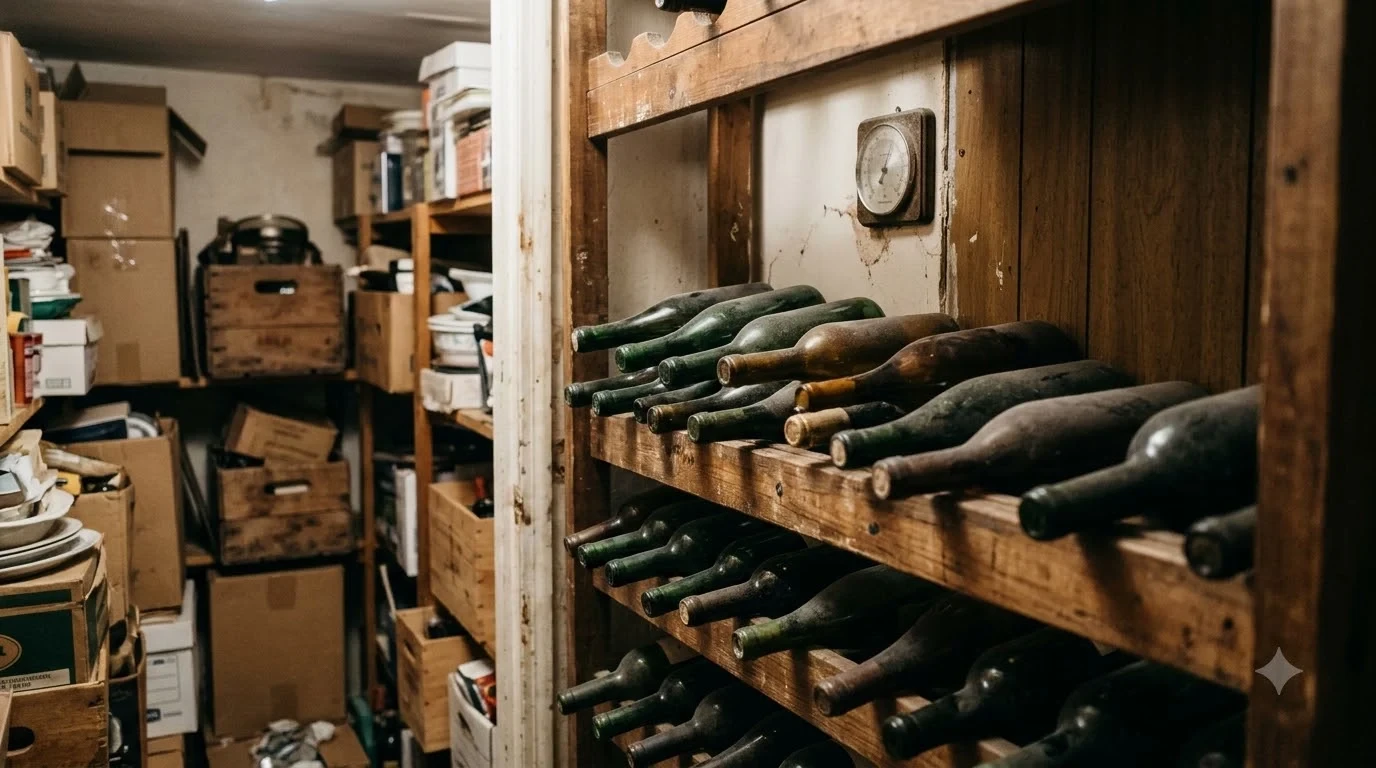
Light, humidity, and bottle orientation also affect how long your red wine stays fresh. Ultraviolet rays from direct sunlight or harsh fluorescent bulbs break down organic compounds in wine, creating unpleasant cardboard or cooked-cabbage aromas even through dark green glass. If your bottle is sealed with a natural cork, storing it horizontally on its side keeps the wine in constant contact with the cork so it stays moist, swollen, and airtight. Bottles closed with screw caps or synthetic stoppers do not rely on liquid contact to maintain their seal and can be stored upright without drying out.
Tip: If you do not own a wine fridge or basement cellar, store unopened bottles on their side inside a dark interior closet on the lowest floor of your home, away from ovens, dishwashers, and exterior walls.
Does Unopened Red Wine Ever Truly Expire?
Unlike milk, meat, or fresh produce, unopened red wine does not carry a federally mandated expiration date in the United States, nor does it become hazardous to drink once it passes its peak window. The four-digit year printed on the front label is the vintage—the year the grapes were harvested—not a sell-by deadline.
When a sealed red wine moves past its ideal drinking window, it undergoes a gradual loss of quality rather than sudden spoilage. The vibrant ruby or purple hue slowly shifts toward brick red, mahogany, or tawny brown around the rim of the glass. Fresh aromas of cherry, blackberry, and plum fade away, leaving behind dried leaf, leather, or flat, watery notes. As long as the cork or screw cap remains intact and oxygen has been largely kept out, drinking an older red wine past its prime will not make you sick, though it may taste disappointing.
True spoilage in an unopened bottle only happens when the closure fails or the wine suffers severe heat damage. If a natural cork dries out, shrinks, or develops a tiny channel, oxygen floods the bottle and allows naturally occurring acetic acid bacteria to convert the alcohol into sharp-smelling vinegar. Similarly, a bottle exposed to extreme summer heat in a car trunk or uninsulated attic can leak wine past the cork, leaving sticky residue beneath the foil capsule and ruining the liquid inside.
Signs an Unopened Bottle Has Gone Bad
Before you even pull the cork, a quick visual inspection of an older bottle can tell you a great deal about how well it was stored. Looking at the fill level, cork position, and color helps you spot heat damage or seal failure right away.
Start by holding the bottle upright in good light and checking the headspace—known in the wine trade as ullage—between the bottom of the cork and the surface of the liquid. In a relatively young bottle, the wine should sit just below the base of the cork inside the neck. If the liquid level has dropped well down into the shoulder of the bottle, evaporation has occurred over time, meaning oxygen has almost certainly entered and oxidized the wine. Next, run your finger over the top of the foil capsule: if the cork is pushing upward against the metal or protruding slightly out of the glass rim, the bottle has likely experienced freezing temperatures or extreme heat expansion.
Once you open the bottle and pour a small splash, let your eyes and nose do the final check. A wine that has oxidized prematurely will look brownish-orange and smell like bruised apples, roasted nuts, or sharp nail polish remover. If you detect a pungent, musty aroma reminiscent of wet cardboard, damp basement, or moldy newspaper, the wine is suffering from cork taint caused by a harmless chemical compound called TCA—an issue that ruins flavor regardless of how young or expensive the bottle might be.
What Happens After You Pull the Cork
The moment you open a bottle of red wine, its timeline shifts dramatically from years to just a few days. Removing the closure introduces a rush of oxygen that immediately begins reacting with the wine’s alcohol, acids, and phenolic compounds.
Most opened red wines stay fresh and enjoyable for 3 to 5 days when re-corked tightly and stored upright in the refrigerator. Chilling an open red slows down the chemical rate of oxidation, whereas leaving the bottle sitting on a warm kitchen counter at 70°F (21°C) can flatten its flavors within 24 to 48 hours. Simply take the bottle out of the fridge 30 to 45 minutes before pouring so it warms back up to cellar temperature. Strong, high-tannin reds like Petite Sirah and Cabernet Sauvignon hold up best over several days, while delicate, thin-skinned reds like Pinot Noir tend to lose their perfume after a day or two.
Different wine formats and styles follow their own post-opening timelines as well. For instance, if you enjoy pouring a single glass at a time over several weeks, you might wonder how long does boxed wine last after opening—thanks to its collapsible, air-tight inner bag, boxed red wine easily lasts 2 to 4 weeks in the fridge. Sparkling bottles have much shorter lifespans once popped, as detailed in our guide on how long does prosecco last unopened and after opening, while fortified wines stay fresh far longer, which we cover in our breakdown of how long does sherry last after opening.
Frequently Asked Questions
Can I drink unopened red wine that is 10 years old?
Yes, a 10-year-old unopened bottle of red wine is safe to drink as long as the seal remained intact. Whether it tastes delicious depends on the style and storage: a structured Cabernet Sauvignon, Rioja, or Barolo stored in a cool, dark place can be at its absolute peak at 10 years, whereas an inexpensive, light-bodied red kept in a warm kitchen will likely taste flat and faded.
Should I store unopened red wine in the refrigerator?
A standard kitchen refrigerator is fine for chilling red wine for a few days or weeks, but it is not ideal for long-term storage spanning several months or years. Kitchen fridges run around 35°F to 40°F with very low humidity, which can eventually dry out natural corks and allow oxygen to seep into the bottle.
Does unopened red wine with a screw cap last as long as wine with a cork?
Yes, unopened red wine sealed with a screw cap lasts just as long—and often stays fresher—than bottles closed with natural cork. Modern screw-cap liners allow a tiny, consistent amount of oxygen transfer while eliminating the risk of cork taint or dried-out stoppers, making them highly reliable for both everyday drinking and multi-year aging.
What is the sediment at the bottom of an older unopened red wine bottle?
Sediment is a completely natural, harmless mixture of grape pigments, tannins, and tartrate crystals that bind together and settle out of the liquid as red wine ages. Seeing sediment in an older bottle is actually a reassuring sign of authentic aging rather than spoilage; simply stand the bottle upright for a few hours before serving and pour slowly so the solids remain in the bottle.
Knowing how long an unopened bottle of red wine lasts comes down to matching the bottle’s structure with smart, cool storage. Enjoy approachable everyday reds within a few years of their vintage, tuck structured, tannic bottles away in a dark, steady spot for special occasions down the road, and let your eyes and nose confirm that every pour is still at its best.
More in Wine Types & Grapes
 Zinfandel Sugar Content: Dry Red vs. White Zinfandel GramsUpdated Nov 21, 2026
 Best Zinfandel Substitute Options for Sipping and CookingUpdated Nov 21, 2026
 Zweigelt Food Pairing: Best Dishes, Cheeses, and Serving TipsUpdated Nov 21, 2026
 Zinfandel Tannins Explained: How Structure Shapes Every BottleUpdated Nov 21, 2026
 Zinfandel Sweetness Level: Dry Red vs. Sweet White Zin ExplainedUpdated Nov 21, 2026
 Xinomavro Food Pairing: Best Dishes, Styles, and Serving TipsUpdated Nov 21, 2026