

We may earn a commission when you buy through links on this page, at no extra cost to you. Learn more.
Umbria wine comes from central Italy’s only landlocked region, producing both crisp, mineral-driven whites led by Orvieto and deeply structured reds anchored by Sangiovese and native Sagrantino. Spread across two DOCG appellations and thirteen DOC zones, the region borders Tuscany, Marche, and Lazio. Its wines span from bright, easy-drinking Grechetto blends meant for young consumption to intense Montefalco Sagrantino reds aged for a minimum of 37 months before release.
Often called the green heart of Italy, Umbria sits among rolling hills, olive groves, and medieval hilltop towns without a mile of coastline. Because it shares a western border with Tuscany, wine drinkers outside Italy sometimes overlook the umbria wine region, yet its vineyards maintain a distinct identity built on indigenous varieties, volcanic and clay-limestone soils, and centuries-old cellar traditions.
Overview of Umbrian Viticulture
Umbria is a small, entirely landlocked central Italian wine region defined by 2 DOCG designations and 13 DOC appellations, where white wine production historically dominated but bold red wines now command international attention. While Orvieto accounts for the lion’s share of total volume, native red grapes have reshaped the region’s modern reputation.
Viticulture here dates back to the Etruscans and Romans, who carved deep underground cellars into the soft volcanic tufa rock beneath towns like Orvieto. Those subterranean caves, known locally as grotte, maintain naturally cool, stable temperatures year-round and remain in active use for fermenting and aging wine today. Despite this ancient lineage, Umbria spent much of the twentieth century in the shadow of neighboring Tuscany.
That dynamic shifted in the late twentieth century as local producers focused on indigenous varieties and stricter vineyard management. According to Wine Folly’s regional breakdown, Umbria encompasses 13 distinct wine zones where Sangiovese, Trebbiano, and Grechetto lead overall plantings, while Sagrantino serves as the region’s most distinctive calling card. Today, wine lovers browsing broad Wine Regions across Italy increasingly turn to Umbria for structured reds and characterful whites that offer serious aging capacity without losing their regional roots.
Key Sub-Regions to Know
Although Umbria contains more than a dozen appellations, three core sub-regions—Orvieto, Montefalco, and Torgiano—define its stylistic range and account for the vast majority of bottles exported to the United States. Each zone reflects a different combination of elevation, soil composition, and grape focus.
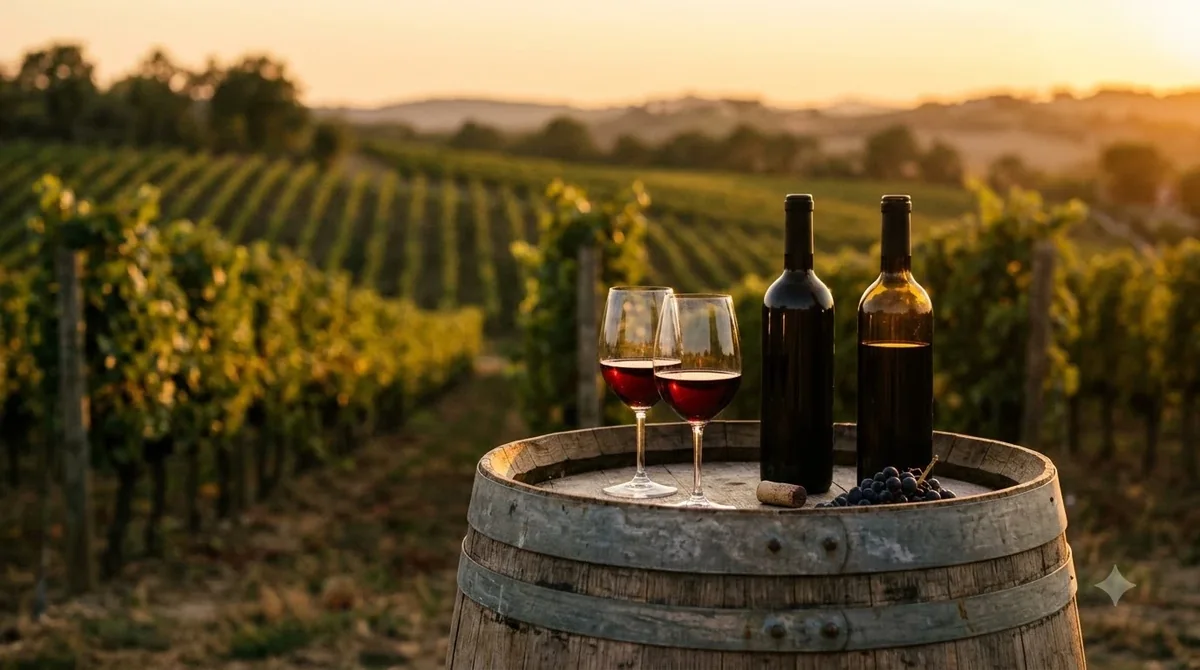
In the southwest near the Lazio border, Orvieto sits atop a dramatic volcanic tufa cliff and serves as the historical engine of Umbrian white wine. Vineyards across Orvieto DOC and Orvieto Classico DOC benefit from volcanic soils and morning river mists from the Paglia and Tiber valleys. While Orvieto was famous during the Renaissance as a sweet wine served at the Papal court, over 95 percent of modern production is dry, crisp, and built around local white varieties.
Roughly an hour northeast in the center of the region lies Montefalco, a walled hilltop town surrounded by undulating hills and olive trees. Montefalco is the homeland of Sagrantino, earning DOCG status in 1992 for dry and sweet wines made 100 percent from the grape, alongside the more approachable Montefalco Rosso DOC. Further north near Perugia, Torgiano became Umbria’s first DOC in 1968 and later earned DOCG recognition for Torgiano Rosso Riserva, an elevated, Sangiovese-led red capable of aging gracefully for decades.
| Appellation | Classification | Primary Grapes | Core Style | Minimum Aging / Key Rule |
|---|---|---|---|---|
| Montefalco Sagrantino | DOCG | 100% Sagrantino | Full-bodied, intensely tannic dry red (plus sweet Passito) | 37 months total aging (at least 12 months in oak, 4 in bottle) |
| Torgiano Rosso Riserva | DOCG | Minimum 70% Sangiovese | Savory, medium-to-full-bodied age-worthy red | 3 years total aging (including 6 months in bottle) |
| Montefalco Rosso | DOC | 60–80% Sangiovese, 10–25% Sagrantino | Structured, fruit-forward medium-to-full red | 18 months total aging before release |
| Orvieto / Orvieto Classico | DOC | Grechetto and Trebbiano (Procanico) | Crisp, mineral-driven dry white (plus rare sweet styles) | Minimum 60% combined Grechetto and Procanico |
Signature Grapes and Wine Styles
Umbria’s wines revolve around four primary grapes—Sagrantino, Sangiovese, Grechetto, and Trebbiano—that yield styles ranging from delicate, citrus-scented whites to some of the most tannic red wines in the world. Understanding how winemakers blend or bottle these varieties makes reading an Umbrian wine label straightforward.
On the red side, Sagrantino is the undisputed heavyweight. Grown almost exclusively around Montefalco, this thick-skinned grape packs an extraordinary concentration of polyphenols and tannins, resulting in a near-opaque purple color and aromas of blackberry jam, dark plum, cinnamon, and earth. Dry Montefalco Sagrantino DOCG must reach at least 13 percent ABV and undergo 37 months of aging, yet young bottles still feel firm and gripping. Winemakers also dry Sagrantino grapes on mats to produce Montefalco Sagrantino Passito, a traditional sweet red whose natural sugar balances the grape’s fierce structure. If you enjoy dense, dark-fruited reds like cahors wine, dry Sagrantino delivers a similarly commanding presence on the palate.
Sangiovese acts as Umbria’s versatile red workhorse, bridging the gap between elegance and power. In Torgiano Rosso Riserva DOCG, Sangiovese grown on elevated hillside plots produces translucent ruby wines with sour cherry, strawberry, violet, and leather notes that rival top Tuscan bottlings. In Montefalco Rosso DOC, winemakers blend 60 to 80 percent Sangiovese with 10 to 25 percent Sagrantino—and occasionally Merlot or Cabernet Sauvignon—to soften Sagrantino’s edges into an aromatic, food-friendly red. For white wines, Wine Folly’s guide to Umbrian wine highlights Grechetto as the region’s standout white grape, delivering crisp green apple, lemon, white peach, and subtle almond notes alongside Trebbiano Toscano, known locally as Procanico.
Notable Producers Shaping the Region
A mix of historic family estates and dedicated boutique wineries has driven Umbria’s modern quality revival, proving that both its native reds and volcanic whites belong among Italy’s finest bottles. Several benchmark producers consistently appear in international wine coverage and offer clear entry points into the region’s sub-zones.
In Torgiano, the Lungarotti family virtually put Umbrian fine wine on the modern map when Giorgio Lungarotti helped establish the Torgiano appellation in 1968. Their flagship Rubesco Riserva Vigna Monticchio, crafted primarily from hillside Sangiovese, remains a benchmark for longevity and savory complexity. Over in Montefalco, Arnaldo Caprai led the late-twentieth-century clonal research and vineyard revival that rescued Sagrantino from near-obscurity, while estates such as Giampaolo Tabarrini, Antonelli San Marco, Perticaia, and Scacciadiavoli showcase distinct expressions of Montefalco’s hills through traditional large-cask aging and single-vineyard bottlings.
Around Orvieto, producers have worked tirelessly to prove that white Umbrian wine can age with complexity rather than serving solely as a simple café pour. According to Decanter’s Umbria wine lover’s guide, estates like Palazzone—famous for its age-worthy Campo del Guardiano Orvieto Classico Superiore—and Cantine Neri, which produces intense Orvieto Classico Superiore alongside traditional-method Grechetto sparkling wines, demonstrate the serious potential of local white varieties. Meanwhile, boutique estates such as Madonna del Latte in the Orvieto countryside and Roccafiore near Todi highlight the region’s diverse terroir across both indigenous and international grapes.
Serving, Aging, and Food Pairing
Because Umbrian wines span from vibrant, unoaked whites to deeply tannic reds, matching serving temperatures, decanting times, and food textures to the bottle in front of you makes a noticeable difference at the table. Simple adjustments bring out the fruit and aromatic detail in every style.
Serve dry Orvieto Classico and varietal Grechetto well chilled at 46 to 50 degrees Fahrenheit (8 to 10 degrees Celsius) in a standard white wine glass. Most Orvieto bottlings are meant to be enjoyed fresh within two to three years of harvest alongside light, salty, or olive-oil-driven dishes—think grilled squid, white-flesh fish, prosciutto and aged sheep’s milk cheese, or classic Umbrian porchetta. However, top Superiore bottlings from volcanic soils can develop honeyed, nutty complexity over five to eight years in the cellar.
Red Umbrian wines demand warmer service and richer plates. Pour Montefalco Rosso, Torgiano Rosso Riserva, and Montefalco Sagrantino at cool room temperature between 60 and 65 degrees Fahrenheit (16 to 18 degrees Celsius). While Montefalco Rosso drinks well between three and ten years from vintage with pasta, tomato-based sauces, or roasted poultry, young Sagrantino requires fat and protein—such as wild boar ragù, braised beef, lamb, or hard aged pecorino—to tame its firm tannins. Well-stored bottles of Montefalco Sagrantino DOCG and Torgiano Rosso Riserva DOCG can easily evolve for 10 to 30 years.
Tip: If you open a Montefalco Sagrantino within its first few years after release, decant it for one to two hours before dinner so oxygen can soften its tight tannic grip and open up its dark fruit aromatics; for bottles over ten years old, stand the bottle upright beforehand and pour gently to leave sediment behind.
Tips for Visiting Umbria’s Wine Country
Umbria offers a quieter, less crowded alternative to neighboring wine regions, rewarding travelers who plan around its hilly geography and book winery tastings in advance. Splitting your itinerary by sub-zone keeps driving times short and leaves plenty of room for slow lunches in medieval hill towns.
Because winding country roads connect Umbria’s vineyards, trying to visit Orvieto in the southwest and Montefalco in the east on the same day feels rushed. Instead, base yourself in Orvieto to tour volcanic tufa cellars and Etruscan caves, then move toward Assisi, Perugia, or Bevagna to explore Torgiano and Montefalco. Several estates—including Palazzone in Orvieto, Lungarotti in Torgiano, and Roccafiore near Todi—offer on-site farmhouse accommodations, vineyard walks, and truffle-hunting excursions.
Beyond winery tasting rooms, make time for Torgiano’s Museo del Vino (MUVIT), established by the Lungarotti family in 1974 to house thousands of artifacts tracing wine culture from Etruscan times to the modern era. Travellers can also follow official regional wine routes such as the Strada del Sagrantino or the Strada dei Vini Etrusco Romana, which link family cellars, olive oil mills, and local trattorias across the countryside. Just as visitors exploring bold reds in calistoga wine country benefit from scheduling appointments ahead, calling or booking online a few days prior ensures personal attention at smaller Umbrian estates.
Frequently Asked Questions
Is Umbria wine similar to Tuscan wine?
Umbria shares a border and a strong Sangiovese tradition with Tuscany, so reds like Torgiano Rosso Riserva and Montefalco Rosso will feel familiar to Chianti or Brunello fans. However, Umbria sets itself apart through native Sagrantino, a grape not grown commercially in Tuscany that produces much darker, more tannic reds, as well as its strong focus on crisp, Grechetto-driven white wines in Orvieto.
Is Orvieto wine sweet or dry?
Today, over 95 percent of Orvieto wine is completely dry, offering bright acidity and notes of green apple, citrus, and white peach. Although Orvieto earned fame centuries ago as a sweet golden wine favored by Renaissance popes, sweet versions now represent a tiny fraction of production and are clearly labeled as Abboccato (semi-sweet), Vendemmia Tardiva (late harvest), or Muffa Nobile (noble rot).
Why is Montefalco Sagrantino so tannic?
Sagrantino grapes have unusually thick skins and a high skin-to-pulp ratio, which releases high levels of polyphenols and tannins during fermentation. Winemakers age Montefalco Sagrantino DOCG for a legally required minimum of 37 months—including at least 12 months in oak—to help round out that intense structure before the wine reaches the market.
Which Umbria wine is best for beginners?
For white wine drinkers, a dry Orvieto Classico DOC offers an approachable, refreshing introduction with clean fruit and mineral balance. If you prefer red wine, start with a Montefalco Rosso DOC, where Sangiovese’s bright cherry fruit softens a smaller percentage of Sagrantino into an expressive, medium-to-full-bodied bottle ready to drink upon release.
From the volcanic tufa cellars of Orvieto to the sun-drenched hills of Montefalco and Torgiano, Umbria wine rewards curiosity with authentic regional character. Whether you uncork a chilled bottle of Grechetto on a warm afternoon or cellar a structured Sagrantino for a special dinner, Italy’s green heart delivers memorable wines grounded in centuries of craft.
More in Wine Regions
 Willcox Wine Trail: Discover Arizona’s High-Elevation Wine CountryUpdated Nov 20, 2026
 Yakima Valley Wine Region: Find the Best Styles to TryUpdated Nov 20, 2026
 Vosne Romanee Wine Tasting: Identify Aromas and Choose Better PairingsUpdated Nov 20, 2026
 Yakima Valley Wine Festival: Find the Best Seasonal Wine EventsUpdated Nov 20, 2026
 Wales Vineyards: Discover Cool-Climate Wines and Where to VisitUpdated Nov 20, 2026
 Yountville Wine Festival: Discover Napa Wines and Local FoodUpdated Nov 20, 2026