

We may earn a commission when you buy through links on this page, at no extra cost to you. Learn more.
Low sugar champagne refers to sparkling wines from France’s Champagne region bottled with minimal or zero added dosage, resulting in less than 6 grams of residual sugar per liter. These wines are labeled as Brut Nature (0 to 3 grams per liter, with no added sugar) or Extra Brut (0 to 6 grams per liter). Because there is almost no sweetener to mask flaws, producers rely on fully ripe fruit and extended lees aging to create a crisp, mineral-driven wine.
While standard Brut remains the dominant category in the market, wine drinkers increasingly seek out drier bottles that showcase vineyard character without unnecessary sweetness. Understanding how dosage works—and how to read the subtle wording on a French label—helps you find a bottle with razor-sharp freshness and authentic structure.
What it is
Low sugar champagne is traditional-method sparkling wine from the Champagne appellation that skips or drastically reduces the final sweetening step before corking. Under regional regulations, these bottles fall into two strict sweetness tiers: Brut Nature and Extra Brut.
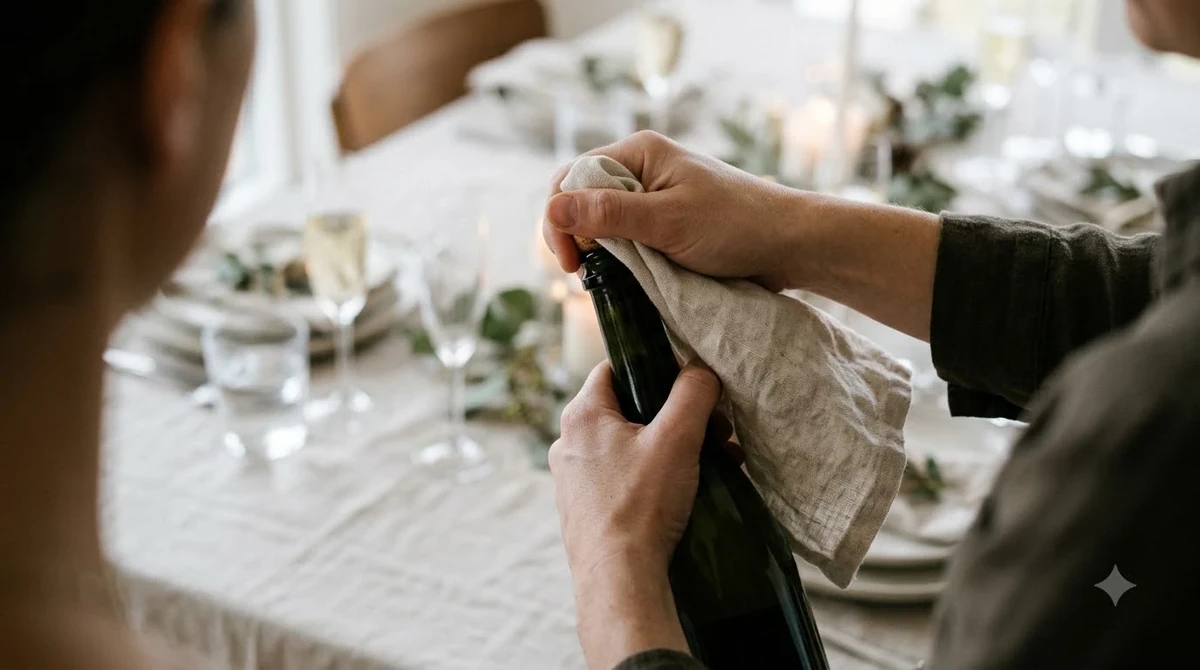
To understand why sugar levels vary in sparkling wine, you have to look at the final stage of production known as disgorgement. After the wine completes its secondary fermentation inside the bottle and ages on spent yeast cells (lees), the winemaker freezes the neck of the bottle and pops out the yeast sediment. This leaves a small gap of missing liquid that must be topped up before the final cork and wire cage go on.
Winemakers fill that gap with a mixture of wine and cane sugar called the liqueur d’expédition, or dosage. In the nineteenth century, Champagne houses routinely added 100 to 200 grams of sugar per liter to soften the biting acidity of underripe grapes. Today, warmer growing seasons and better viticulture allow grapes to ripen more fully on the vine, meaning producers can bottle Brut Nature (0 to 3 grams per liter) with zero added sugar or Extra Brut (0 to 6 grams per liter) with just a tiny drop to round out the edges. As Wine Folly’s breakdown of Champagne sweetness illustrates, a standard five-ounce pour of Brut Nature contains roughly half a gram of residual sugar, making it far drier than most other beverages.
Flavor and styles
Without a cushion of sugar to soften the palate, low sugar champagne delivers high tension, brisk acidity, and a distinctly savory, chalky finish. Instead of candied fruit or heavy pastry notes, these wines highlight citrus peel, green apple, wet stone, and subtle brioche from extended aging.
Within the low-sugar spectrum, labels use several terms that mean essentially the same thing, alongside classic Champagne style designations based on grape color and vintage. Knowing how these categories overlap makes shopping much easier:
| Label Term | Residual Sugar | Added Sugar? | Typical Profile |
|---|---|---|---|
| Brut Nature / Zero Dosage | 0–3 g/L | None permitted | Bone-dry, laser-focused acidity, prominent chalk and saline notes |
| Pas Dosé / Non Dosé | 0–3 g/L | None permitted | Identical to Brut Nature; French phrasing preferred by many grower-producers |
| Extra Brut | 0–6 g/L | Optional (up to 6 g/L) | Very dry and taut, with a whisper of roundness that softens sharp edges |
| Standard Brut (for comparison) | Up to 12 g/L | Usually 6–12 g/L | Dry and balanced, with broader fruit expression and a smoother mid-palate |
It is easy to get tripped up by traditional French terminology, especially when comparing Brut Nature to bottles labeled “Extra Dry”. Despite how it sounds in English, Extra Dry is actually sweeter than standard Brut, containing between 12 and 17 grams of sugar per liter. If you want the driest possible expression, skip Extra Dry and look exclusively for Brut Nature, Pas Dosé, or Extra Brut. Many drinkers who enjoy crisp Italian sparkling wines—such as low sugar prosecco labeled Brut Nature—find that zero-dosage Champagne offers a similar dry snap, though with much deeper toast and mineral complexity from longer lees contact.
Where it grows
Authentic Champagne comes exclusively from the Champagne wine region in northeastern France, located about ninety miles east of Paris. The appellation spans 319 distinct villages, known as crus, spread across cool-climate hills with deep, porous chalk subsoils.
Because Champagne sits near the northern limit for commercial viticulture, grapes historically struggled to reach full sugar ripeness, which is why heavy dosage became standard practice centuries ago. Producing a balanced wine with zero dosage requires vineyards with superior sun exposure, healthy soils, and careful canopy management so the fruit develops natural physiological ripeness and complex aromatics on the vine.
The region relies primarily on three grape varieties, each bringing a different structural element to low-dosage cuvées: Chardonnay lends crisp citrus acidity and chalky precision; Pinot Noir provides backbone, depth, and red-fruit structure; and Pinot Meunier adds approachable orchard fruit and supple texture in youth. Smaller grower-producers across sub-regions like the Montagne de Reims, Côte des Blancs, and Côte des Bar have led the modern shift toward Brut Nature and Extra Brut, focusing on single-vineyard farming and organic champagne practices to let raw terroir shine without makeup.
How to serve
Low sugar champagne shows best when served slightly warmer than ice-cold fridge temperature, ideally between 46°F and 50°F (8°C to 10°C) for young, crisp bottles, and up to 54°F (12°C) for mature vintage or prestige cuvées. Serving the wine at the right temperature preserves its lively effervescence without numbing your palate to its subtle aromatics.
Chilling a bottle straight down to standard refrigerator temperature—around 38°F to 40°F—locks up volatile aroma compounds and exaggerates the sharp bite of zero-dosage acidity. If your bottle has been sitting in the kitchen fridge overnight, pull it out fifteen to twenty minutes before pouring so it can warm slightly in the room. Alternatively, submerge a room-temperature bottle in a bucket filled with equal parts ice and cold water for twenty to twenty-five minutes to reach the ideal window quickly.
Glassware also plays a major role in how a dry sparkling wine tastes. Narrow flutes trap bubbles effectively, but they restrict airflow and funnel sharp acidity straight to the tip of your tongue. Pouring Brut Nature or Extra Brut into a tulip-shaped sparkling glass or a standard all-purpose white wine glass gives the wine room to breathe, releasing nuanced notes of toasted almonds, white flowers, and crushed oyster shell while keeping the bead fine and persistent.
Tip: Skip narrow flutes and serve zero-dosage Champagne in a tulip glass or standard white wine glass so its complex lees aromas can open up without feeling overly sharp.
Food pairing
Because low sugar champagne pairs mouthwatering acidity with a clean, bone-dry finish, it acts as a natural palate cleanser alongside salty, briny, and richly textured dishes. The absence of residual sugar prevents the wine from feeling cloying, allowing delicate flavors in the food to stand out.
Raw shellfish and ocean-driven starters are classic companions for Brut Nature. Fresh oysters on the half shell, sea urchin, scallop crudo, and simple sashimi mirror the wine’s saline, mineral-driven finish. Fried foods—such as vegetable tempura, crispy calamari, or classic French fries—also benefit from the scrubbing effect of high acidity and fine carbonation, which cuts right through cooking oils.
If you are pouring an Extra Brut with a higher proportion of Pinot Noir, the wine carries enough weight to handle richer, savory plates. Roast chicken with herb butter, duck rillettes, wild mushroom risotto, and aged hard cheeses like Comté or Gruyère all work remarkably well. As Decanter’s guide to Champagne sweetness labels points out, dosage is meant to balance acidity and carbonation, so you should avoid serving ultra-dry styles with sweet desserts, which will make the wine taste harsh and bitter.
How to choose a bottle
Shopping for low sugar champagne starts with checking the front label for the exact dosage category—Brut Nature, Pas Dosé, Zéro Dosage, or Extra Brut—and then looking at the back label for clues about aging and winemaking. Because sugar cannot hide unripe fruit or rushed production, quality cues matter far more here than in standard Brut.
Look for bottles that mention extended time on the lees (sur lattes) or include a disgorgement date on the back label. Non-vintage Champagne must age on its lees for at least fifteen months by law, while vintage bottles require three years, but top low-dosage producers frequently age their wines for four to seven years or longer. Extended lees contact naturally builds creamy texture and autolytic brioche complexity, which replaces the roundness that sugar would otherwise provide.
You can also look at the producer’s farming philosophy and grape blend to match your personal palate. Grower Champagnes—often identified by the tiny letters “RM” (Récoltant-Manipulant) near the bottom of the label—are made by the same estates that farm the vines, and many prioritize low-intervention cellar work. If you prefer a lean, laser-focused profile, choose a Blanc de Blancs made entirely from Chardonnay. If you want broader fruit and a softer feel without added sugar, seek out a Blanc de Noirs crafted from Pinot Noir—similar in spirit to fans of bright, terroir-driven organic pinot noir—or browse our Wine Buying Guides for more tips on decoding European appellation labels.
Frequently Asked Questions
Is Brut Nature the same thing as Zero Dosage Champagne?
Yes, Brut Nature and Zero Dosage refer to the exact same legal sweetness tier in Champagne, containing between 0 and 3 grams of residual sugar per liter with no sugar added after secondary fermentation. Producers also use terms like Pas Dosé, Non Dosé, and Brut Sauvage on labels to indicate that no sweetening liqueur was added at disgorgement. Any trace sugar present comes naturally from the grapes themselves.
How much sugar is in a glass of Extra Brut Champagne?
Extra Brut Champagne contains between 0 and 6 grams of residual sugar per liter of wine. In a standard five-ounce pour, that translates to less than one gram of total sugar. While a winemaker is permitted to add a tiny amount of dosage to balance high acidity, Extra Brut still tastes decidedly dry and crisp on the palate.
Why does low sugar Champagne often cost as much as or more than regular Brut?
Making a balanced wine without sugar requires exceptionally ripe, healthy grapes and longer aging in the cellar so the wine develops natural roundness and texture. Producers cannot rely on dosage to smooth out harsh acidity or minor flaws from cooler harvests. As a result, low-dosage cuvées often come from top vineyard parcels and spend extra years maturing on the lees before release.
Does Extra Dry Champagne have less sugar than Brut?
No, Extra Dry is actually sweeter than standard Brut despite its confusing name. Under European sparkling wine rules, Extra Dry contains between 12 and 17 grams of residual sugar per liter, whereas standard Brut must contain less than 12 grams per liter. If you want a genuinely dry bottle, always choose Brut Nature, Extra Brut, or standard Brut instead.
Choosing a bottle of low sugar champagne opens up a purer, more expressive side of France’s most famous sparkling wine region. By checking the label for Brut Nature or Extra Brut and serving the wine at a moderate cellar chill, you can experience the crisp acidity, chalky minerality, and layered complexity that only minimal-dosage winemaking delivers.
More in Wine Buying Guides
 Riesling Gift: Choose a Bottle They’ll LoveUpdated Nov 21, 2026
 Sweet Red Wine Gift: Choose a Bottle They’ll LoveUpdated Nov 21, 2026
 Malbec Gift: How to Choose a Memorable Bottle for Any OccasionUpdated Nov 21, 2026
 Sherry Gift Ideas That Match Every Wine LoverUpdated Nov 21, 2026
 Moscato Gift: How to Choose a Sweet Wine They’ll LoveUpdated Nov 21, 2026
 Merlot Gift: How to Choose a Bottle They’ll AppreciateUpdated Nov 21, 2026