

We may earn a commission when you buy through links on this page, at no extra cost to you. Learn more.
To learn how to chill wine fast, submerge the bottle in a 50-50 mixture of ice and cold water with a handful of salt, which cools a room-temperature bottle to serving temperature in 10 to 15 minutes. Adding water eliminates insulating air pockets around the glass, while salt lowers the freezing point of the bath to accelerate heat transfer. If you only have 5 minutes and do not mind decanting, pouring half the bottle into a sealed zip-top bag submerged in ice water chills the wine down to 36°F.
Forgetting to put a bottle in the refrigerator before dinner guests arrive is one of the most common hosting hiccups in wine culture. While a standard kitchen refrigerator takes up to two hours to cool a room-temperature bottle of sparkling or white wine, basic kitchen physics offers several reliable shortcuts that get your bottle into the ideal temperature zone without sacrificing flavor or carbonation.
The Salted Ice-Water Bath: Fastest Whole-Bottle Method
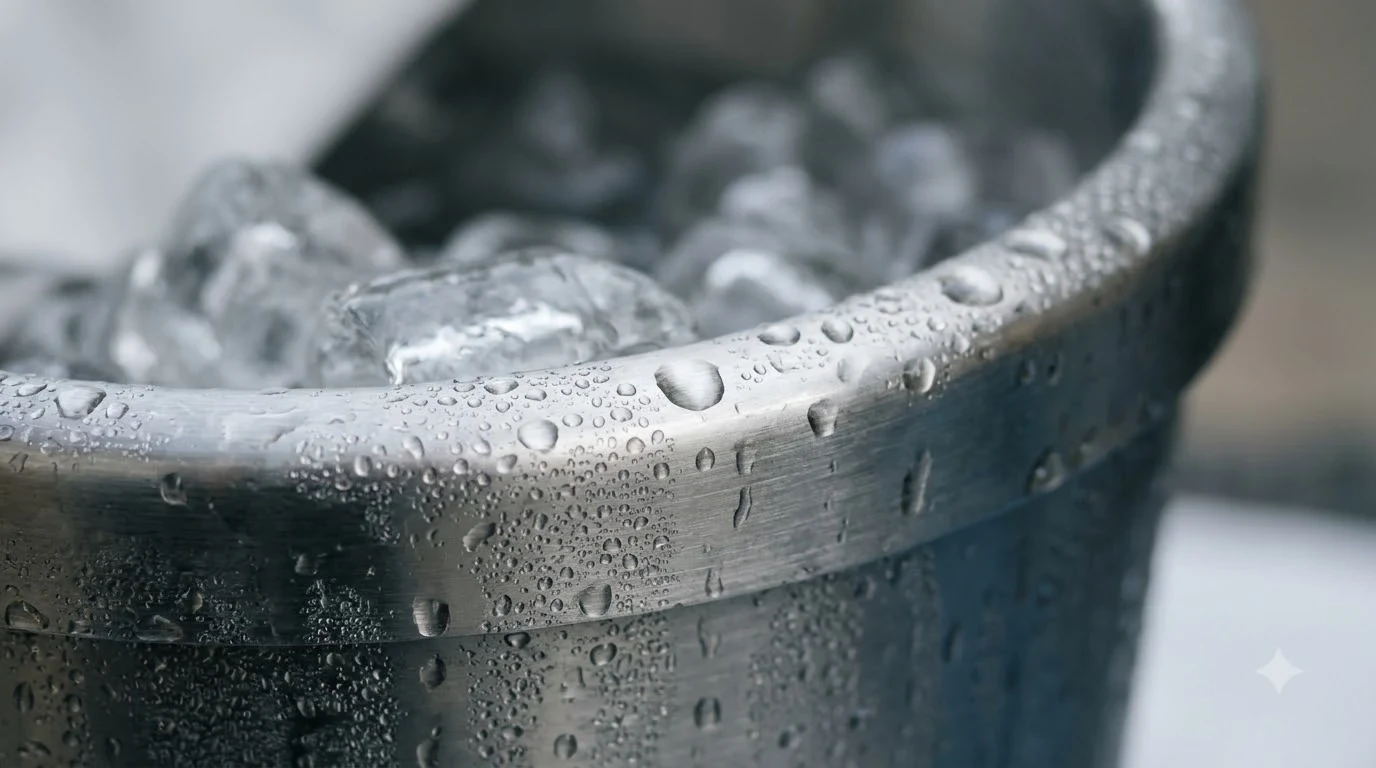
An ice-and-water bath outperforms a standard freezer because liquid water conducts heat away from glass much more efficiently than cold air. Stirring salt into the mixture drops the water temperature below freezing, cutting total chilling time by roughly a third.
When you place a dry bottle into a bucket filled solely with ice cubes, most of the glass surface area touches pockets of trapped air rather than ice. Filling a bucket or large stockpot halfway with cold tap water and halfway with ice creates full surface contact around the bottle. According to Wine Folly, maximizing contact between the liquid wine and the freezing-cold water bath is the primary driver behind rapid heat exchange.
Adding three to four tablespoons of kosher salt or table salt triggers an endothermic reaction that forces the ice to melt faster while pulling heat out of the surrounding water. Gentle rotation every two to three minutes keeps the wine inside moving against the chilled glass walls, preventing a cold outer layer from insulating the warmer core of the bottle. Most white and rosé wines reach an ideal 45°F to 50°F within 10 to 12 minutes, while sparkling wines need closer to 15 minutes.
Quick Comparison of Fast Wine-Chilling Methods
Different emergency cooling techniques trade convenience and presentation for sheer speed, making the right choice dependent on how many minutes you have before pouring. The table below outlines how each common household method performs starting from a typical 72°F room temperature.
| Chilling Method | Time to Target Temp | Best Wine Styles | Main Drawback |
|---|---|---|---|
| Salted ice-water bath with gentle spinning | 10 to 15 minutes | All styles (still, sparkling, red) | Soaks and loosens paper bottle labels |
| Zip-top bag submerged in ice water | 5 to 6 minutes | Casual still whites and rosés | Requires decanting; unsuited for bubbly |
| Wet paper towel wrap in the freezer | 15 to 20 minutes | Still white, rosé, and light red | Risk of freezing if you forget a timer |
| Standard freezer (dry bottle) | 25 to 35 minutes | White, rosé, and sparkling | Slowest fast method; cork push risk |
| Frozen grapes or chilling cubes in glass | 2 to 3 minutes | Crisp whites, rosés, patio reds | Slightly warms back up once removed |
Choosing between these methods comes down to the specific bottle on your counter and whether you plan to serve directly from the original glass. Whole-bottle baths preserve presentation for dinner parties, though moisture will eventually peel decorative labels away from the glue. If you are simply pouring a casual glass after work, faster single-serving tricks save counter space and ice.
Alternative Shortcuts When You Are Out of Ice
If your freezer ice bin is empty, you can still speed up cooling by combining evaporative moisture with freezer air or by increasing the liquid’s surface area. Each approach relies on simple thermal transfer principles using items already sitting in your kitchen.
Wrapping a bottle in a damp dish towel or two layers of wet paper towels before placing it on a freezer rack dramatically improves how cold air interacts with the glass. As the moisture in the fabric freezes, it draws heat out of the bottle faster than dry freezer air alone, bringing a white wine to serving temperature in roughly 15 to 20 minutes. Always set a loud phone timer with this approach, since leaving a sealed glass bottle in a 0°F freezer past 45 minutes can freeze the wine, push out the cork, or crack the glass.
When you only need two glasses right away, Wine Folly highlights the zip-top bag method as the fastest zero-equipment option. Pour half the bottle into a sturdy freezer-grade zip-top bag, press out the excess air, seal it tight, and submerge the bag in a bowl of ice water. Because the wine spreads into a thin layer with massive surface area, it drops to 36°F in about 5 to 6 minutes, after which you can pour it into a carafe or straight into stemmed glasses.
Tip: Keep a clean, empty wine bottle or glass carafe in your freezer so you can decant room-temperature wine directly into pre-chilled glass for an instant temperature drop.
Target Serving Temperatures by Wine Style
Knowing when to pull your bottle out of an ice bath is just as important as cooling it quickly, because over-chilling mutes delicate fruit and floral aromas. Serving every style at the right threshold keeps acidity crisp without hardening tannins.
Modern American homes typically stay around 68°F to 72°F, which is warmer than the ideal serving range for nearly every wine style—including red wine. As Wine Enthusiast notes in its serving temperature guide, chilling wine too cold masks aromatics and flattens the palate, while pouring wine too warm exaggerates alcohol heat. Understanding how temperature shapes structure helps you decide whether a bottle needs 5 minutes or 15 minutes in an ice bucket.
- Sparkling wine (41°F to 45°F): Champagne, Prosecco, and Cava need the deepest chill to keep dissolved carbon dioxide stable so bubbles stay fine and persistent rather than foaming over.
- Light-bodied white and rosé (45°F to 50°F): Sauvignon Blanc, Pinot Grigio, and dry rosé rely on cool temperatures to highlight crisp citrus notes and refreshing acidity.
- Full-bodied white and orange wine (50°F to 55°F): Oaked Chardonnay, White Burgundy, and skin-contact whites open up slightly warmer so oak spice and creamy textures shine through.
- Light-bodied red wine (54°F to 60°F): Pinot Noir, Gamay, and Beaujolais taste brighter and more vibrant after 10 minutes in the fridge or 5 minutes in an ice bath.
- Full-bodied red wine (60°F to 65°F): Cabernet Sauvignon, Syrah, and Malbec still benefit from a brief 15-minute chill if your kitchen sits above 70°F, preventing heavy alcohol notes from dominating.
Once poured, wine warms up by roughly 2°F to 4°F every ten minutes in a warm dining room. Pulling your white or sparkling wine out of the ice bucket at the lower end of its target range gives you a comfortable window to enjoy the glass as its aromatics gradually expand. If you want to explore proper glassware and storage alongside temperature control, check our guide to opening and serving wine.
What Not to Do When Chilling Wine in a Hurry
Rushing the cooling process with the wrong shortcut can dilute complex flavors, flatten carbonation, or ruin a collectible bottle. Avoiding a few common mistakes protects both your wine and your glassware.
Dropping regular freezer ice cubes directly into a glass cools the liquid in seconds, yet melting ice inevitably waters down the wine’s finish and throws off its acid-to-alcohol balance. If you must chill directly in the glass, use frozen seedless grapes or stainless-steel chilling cubes instead, which absorb heat without adding water. Save this tactic for casual weekday pours rather than age-worthy bottles where subtle nuances matter.
You should also avoid shaking or aggressively spinning sparkling wine in an ice bath if the bottle is already warm, and never leave Champagne unattended in a deep freezer. While gentle rotation in salted ice water safely chills bubbly, rapid freezing expands liquid volume and puts pressurized glass at risk of shattering. Similarly, older bottles with fragile corks and sediment—which you can read more about in our explainer on what vintage means in wine—should always be cooled gradually so sediment stays settled at the bottom.
Frequently Asked Questions
How long does it take to chill wine in an ice-and-water bath?
A standard 750ml bottle takes 10 to 15 minutes to chill in a 50-50 bath of ice and cold water. Stirring in a few tablespoons of salt and rotating the bottle gently every couple of minutes brings white wine to 45°F in closer to 10 minutes.
Can you put wine in the freezer to chill it fast?
Yes, placing a bottle in the freezer for 25 to 35 minutes will bring room-temperature wine down to serving temperature, or 15 to 20 minutes if wrapped in a damp towel. Always set a timer, as leaving wine in the freezer past 45 minutes can freeze the liquid and push out the cork.
Does adding salt to ice water really chill wine faster?
Yes, salt lowers the freezing point of water, allowing the liquid bath to drop below 32°F without turning solid. That colder liquid draws heat through the glass bottle roughly one-third faster than plain ice water alone.
Should you chill red wine before serving?
Most red wines taste noticeably better when served slightly below modern room temperature, ideally between 54°F and 65°F depending on body. Putting a room-temperature bottle of Pinot Noir or Cabernet Sauvignon in an ice bath for 5 to 8 minutes tames alcohol heat and sharpens fruit flavors.
Whether you use a salted ice bath for a dinner party bottle or a quick zip-top bag chill for a solo weeknight pour, matching your cooling method to the clock ensures every glass tastes balanced. Keep your favorite bottles in the right temperature window, and even last-minute pours will show off their best aromas and crisp structure.
More in Wine Basics
 Which Rose Is Best for Your Taste, Budget, and Food PairingsUpdated Nov 21, 2026
 Is Cheap Wine Bad? How to Find Bottles Worth DrinkingUpdated Nov 21, 2026
 What To Write On A Wine Gift Tag: Thoughtful Messages For Every OccasionUpdated Nov 21, 2026
 Which Wine Is Best For Weight Loss? Compare Lower-Calorie ChoicesUpdated Nov 21, 2026
 What Is The Best Wine For Mimosas? Choose Bubbly That Balances Orange JuiceUpdated Nov 20, 2026
 Which Prosecco Is Best for Your Taste and OccasionUpdated Nov 20, 2026