

We may earn a commission when you buy through links on this page, at no extra cost to you. Learn more.
How to store red wine well comes down to four things: a steady cool temperature, darkness, little vibration, and the right bottle position. Stable conditions slow the changes that make wine taste flat or stale. Most bottles bought for everyday drinking need only a cool, dark spot, while bottles meant for aging need more control.
This guide explains how temperature, light, humidity and bottle position affect red wine. It also covers the difference between short-term and long-term storage, and when a wine fridge is worth buying for a home collection.
Why Proper Red Wine Storage Matters
Proper storage keeps red wine tasting the way the winemaker intended. Conditions that stay steady are far less harmful than conditions that swing back and forth.
Wine is one of the few products that can improve with age, but it can also decline quickly in poor conditions. According to Wikipedia’s overview of wine storage, light, humidity and temperature have the most direct effect on a bottle. Most wine is opened soon after purchase, so storage matters most for bottles you plan to keep.
Storage also protects the cork. A cork that dries out can let oxygen into the bottle, and that slow exposure changes the flavor over time. Good habits at home protect both the liquid and the seal.
Ideal Temperature and Humidity for Red Wine
A steady temperature in the mid-50s Fahrenheit is the target most sources recommend. Humidity should be moderate, neither very dry nor very damp.
According to the Wine Folly cellar guide, the proper temperature is a constant 55-59°F (12-15°C), with 55-75% humidity. Wikipedia notes that many experts recommend constant temperatures between 50 and 59°F. The common thread is stability, because the exact number matters less than avoiding swings.
Heat is the bigger danger. Wikipedia reports that wine kept above 77°F (25°C) for long periods may spoil and develop raisiny or stewed off-flavors. Repeated temperature swings are also a problem, such as moving a bottle often between a warm room and a cold refrigerator.
Humidity keeps corks from drying. If the air is too dry, the cork can shrink and leak. If it is too damp, labels can be damaged and mold can appear. Most home drinkers do not need to measure humidity precisely, but a steady interior room usually works better than a hot kitchen cabinet.
Keeping Red Wine Away from Light and Vibration
Light and vibration both change wine over time, so a dark, still location offers good protection. Direct sunlight is the biggest concern for most home storage.
Wikipedia explains that direct sunlight or incandescent light can react with phenolic compounds in wine and create wine faults. Wine Folly also names ultraviolet rays as a cause of spoilage. Fluorescent lights can affect flavor and aroma too, so a bright room with overhead lighting is a poor choice for long holds.
Bottle glass offers some protection, but not all glass is equal. Wikipedia notes that clear, light green and blue bottles are the most vulnerable to light. Keeping bottles in their cardboard box or in a dark cabinet gives better protection than glass alone.
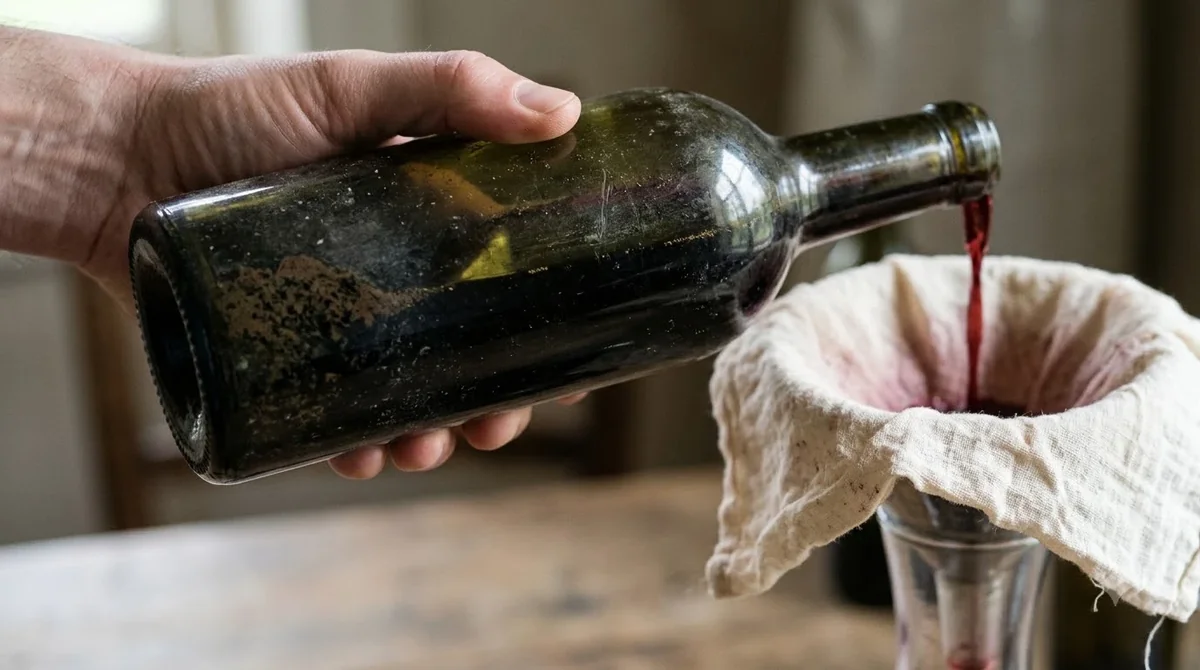
Vibration is less studied, but Wikipedia cites a research study that found vibrations can have distinct effects on wine chemistry. The study concluded that vibrations should be minimized when storing red wine. Avoid placing bottles beside a washing machine, a furnace or a large speaker, and avoid moving bottles around more than needed.
Storing Red Wine on Its Side: Does It Matter?
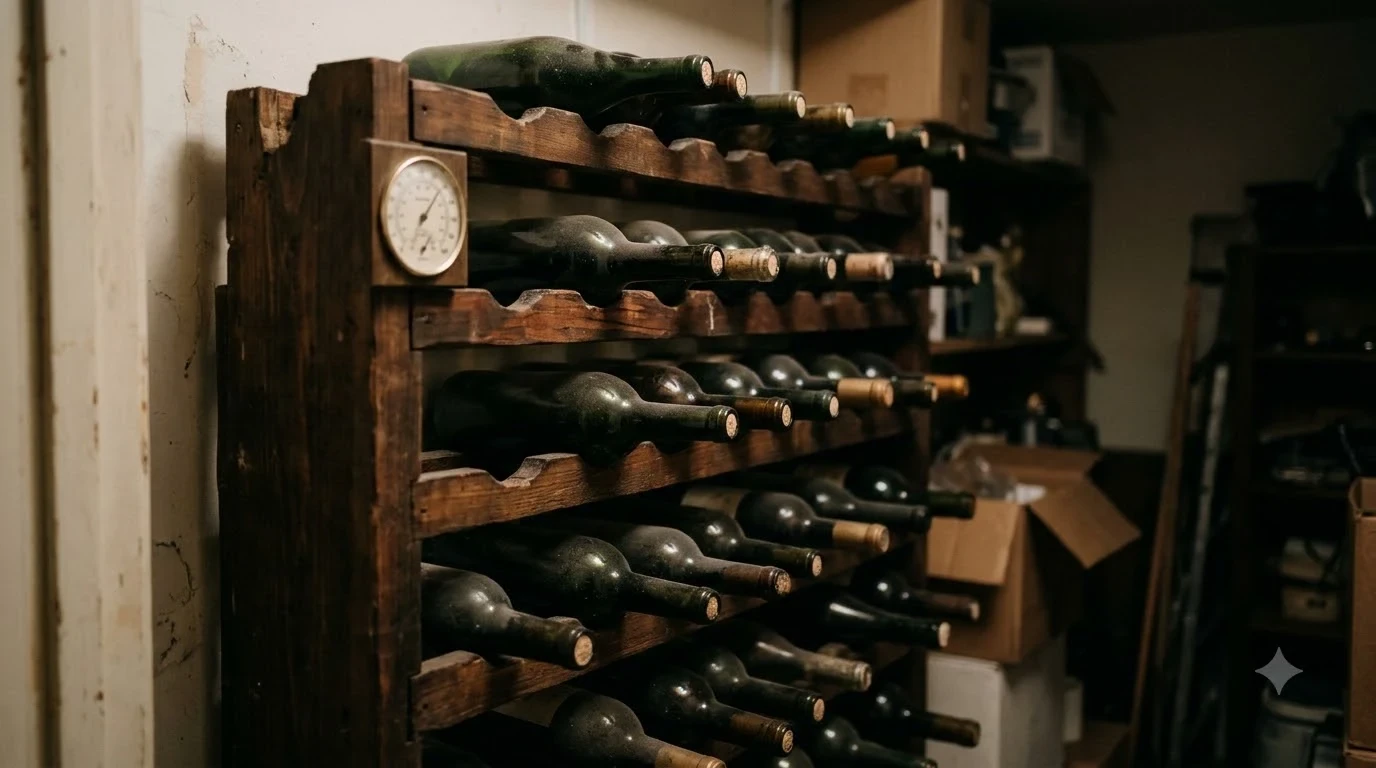
Storing cork-finished bottles on their side keeps the cork in contact with the wine. That helps the cork stay moist and reduces the chance of air entering the bottle.
Wine Folly advises that any bottle with a cork should be aged on its side, because the wine keeps the cork moist. A dry cork shrinks and lets air in, and oxidation can quickly damage the wine. Screw cap bottles store well too and do not need to lie down.
The picture is more nuanced than lying every bottle flat. Wikipedia reports research from the late 1990s suggesting that a slight angle may work better than fully horizontal. That angle keeps the cork partly wet while keeping the air pocket near the top. If a bottle lies completely flat, temperature changes can push some wine through the cork.
For a home rack, the practical rule is simple. Lay cork-sealed bottles down or at a slight tilt, and avoid packing them so tightly that they press against each other. Stand-up storage is fine for a short hold, but it protects less over the long term. You can read more about the source material in Wikipedia’s storage of wine article.
Short-Term vs. Long-Term Red Wine Storage and Wine Fridges
Short-term storage can be simple, while long-term aging needs more stable conditions. A wine fridge is most useful when you plan to age bottles for a year or more.
| Storage option | Best for | Main trade-off |
|---|---|---|
| Interior closet away from heat | Everyday bottles you will drink soon | Temperature can still shift with the seasons |
| Basement or steady interior room | Medium holds and moderate aging | Humidity may need checking |
| Dedicated wine refrigerator | Longer holds in a controlled space | Cost and the space it takes up |
| Home cellar or refrigerated storage facility | Serious collections | Access and rental arrangements |
Wine Folly advises that if you plan to age wine for more than a year, you should consider a wine cooler, a cellar, or renting space at a refrigerated storage facility. Most home drinkers find that the longer the hold, the more valuable steady conditions become.
Wine fridges can hold a steady temperature and shield bottles from light. Wikipedia notes that many models offer adjustable temperature settings, two chambers for red and white wine, and materials that protect bottles from the sun. A standard kitchen refrigerator is different. Wikipedia points out that refrigeration often dehumidifies, which can dry corks, so experts tend to advise against it for long storage.
A wine fridge is worth buying if you plan to hold bottles for a year or more, add to your collection regularly, or live with large temperature swings. If you only buy bottles to drink within a short time, a cool closet may be enough. Check the manufacturer’s temperature range before you buy, since some units are better suited to white wine.
Tip: Keep a simple log of which bottles you bought and when. Put the ones meant for aging in the coolest, darkest spot, and move the everyday bottles to an easy-to-reach shelf.
Storing Different Red Styles: Chianti and Other Reds
Not every red needs the same storage plan. Wines with more structure usually have more room to age, while lighter, fruit-forward reds are best opened sooner.
Wine Folly notes that red wines with higher tannin help stabilize color and flavor during aging. The same guide says moderate to high acidity matters, because wines lose acidity over time. Balanced wines with these traits are the ones most often set aside for longer holds.
Chianti is a useful example of a red that rewards careful storage. Many Chianti wines are built on sangiovese, a grape known for firm acidity and savory structure. You can learn more in the chianti grape guide, then store those bottles cool and still while you decide when to open them.
Lighter reds with soft tannins and bright fruit are often meant for early drinking. They still need cool, dark and steady conditions, but they gain less from long holds. Some white styles follow the same logic, and the colombard grape profile is a good example of a wine built for enjoying young. For background on how red styles differ, browse Wine by Type.
Frequently Asked Questions
Can I store red wine in the refrigerator?
A standard kitchen refrigerator is usually too cold and too dry for long storage. Wikipedia notes that refrigeration can dry out corks. Chilling a bottle shortly before serving is fine, but for aging, a wine fridge or cellar is the better choice.
How long does opened red wine last?
No single time frame fits every bottle, so check the producer’s guidance when you can. Re-cork the bottle tightly, keep it cool, and drink it sooner rather than later. Lighter reds usually fade faster than tannic, structured wines.
Does red wine need to be stored on its side?
For bottles with natural corks, lying the bottle down or tilting it slightly helps keep the cork moist. Wine Folly notes that screw cap bottles store well without lying down. Avoid lying a bottle fully flat if temperatures change often.
Is a wine fridge worth buying?
A wine fridge is worth considering if you plan to age wine for a year or more, or if your home has large temperature swings. For bottles you will drink within a short time, a cool, dark closet may be enough. Compare temperature ranges before you choose a model.
Good red wine storage comes down to steady cool temperatures, darkness, minimal movement, and bottles on their side when they have corks. Start with those basics for everyday bottles. Add a wine fridge only when your collection needs longer, more controlled holds.
More in Wine Types & Grapes
 Zinfandel Sugar Content: Dry Red vs. White Zinfandel GramsUpdated Nov 21, 2026
 Best Zinfandel Substitute Options for Sipping and CookingUpdated Nov 21, 2026
 Zweigelt Food Pairing: Best Dishes, Cheeses, and Serving TipsUpdated Nov 21, 2026
 Zinfandel Tannins Explained: How Structure Shapes Every BottleUpdated Nov 21, 2026
 Zinfandel Sweetness Level: Dry Red vs. Sweet White Zin ExplainedUpdated Nov 21, 2026
 Xinomavro Food Pairing: Best Dishes, Styles, and Serving TipsUpdated Nov 21, 2026