

We may earn a commission when you buy through links on this page, at no extra cost to you. Learn more.
Agiorgitiko wine is a medium- to full-bodied Greek red wine made from Greece’s most widely planted native red grape variety. Pronounced ah-yor-YEE-tee-ko, it originates primarily in the Nemea appellation of the northeastern Peloponnese and is recognized for plush red and black fruit, warm baking spices, and smooth, velvety tannins. Winemakers also craft the grape into dry rosés, light chillable reds, and rare sweet wines from sun-dried fruit.
Long known locally as St. George’s grape or the “Blood of Hercules,” Agiorgitiko offers a remarkably approachable gateway into Greek red wines. While northern Greece’s Xinomavro leans toward firm grip and high acidity, Agiorgitiko favors rounded texture and generous fruit, making it equally at home beside a casual weeknight meal or a slow-roasted Sunday feast.
What Is Agiorgitiko Wine?
Agiorgitiko is an indigenous red-skinned Vitis vinifera grape variety that anchors red wine production across southern Greece, particularly within the Nemea Protected Designation of Origin (PDO). Its name translates to “St. George’s grape,” a nod to the town of Agios Georgios—the former name of modern-day Nemea.
According to Wine Folly’s comprehensive guide to Agiorgitiko, the grape is the most widely planted red variety in Greece and adapts to several distinct winemaking interpretations. Because the berries accumulate generous natural sugars while maintaining balanced acidity at hillside elevations, producers can vinify the grape into everything from crisp, pale pink bottles to structured, age-worthy reds.
Within the broader spectrum of global Wine by Type, dry red Agiorgitiko occupies a middle ground between Merlot and Syrah. Reviewers frequently point to its plush, plummy mid-palate—reminiscent of Merlot—paired with a subtle peppery and herbal lift that recalls Syrah, yet without heavy gamey notes or aggressive astringency.
Flavor Profile and Winemaking Styles
Dry red Agiorgitiko typically displays ripe raspberry, red cherry, blackberry, and plum sauce aromas layered with sweet baking spices like nutmeg, cinnamon, and clove. Depending on elevation and barrel aging, bottles range from bright, unoaked, fruit-driven reds to dense, structured wines accented by vanilla, dark chocolate, and sweet pipe tobacco.
Winemakers divide Agiorgitiko into four main stylistic expressions. Fresh, unoaked reds—sometimes produced with carbonic maceration—highlight crunchy sour cherry, red berries, and violet notes with minimal tannic weight. Classic and Reserve PDO Nemea reds spend time in oak barrels, building volume, cedar complexity, and fine-grained, velvety tannins capable of evolving for 10 to 20 years in a cellar.
Rosé and dessert bottlings showcase the grape’s versatility outside standard dry reds. Brief skin contact yields salmon-pink or coral rosés brimming with wild strawberry, pomegranate, and citrus zest. In small quantities, traditional producers also dry harvested clusters under the autumn sun for three to four weeks to craft sweet, concentrated dessert wines.
| Wine Style | Key Aromas & Flavors | Body & Tannin | Aging Potential |
|---|---|---|---|
| Dry Rosé | Wild strawberry, pomegranate, red grapefruit zest | Light-bodied, crisp acidity, virtually no tannin | 1–2 years |
| Unoaked Young Red | Sour cherry, raspberry, fresh violet, subtle herbs | Light- to medium-bodied, soft and supple | 1–3 years |
| Classic PDO Nemea Red | Red cherry, plum sauce, black pepper, nutmeg | Medium- to full-bodied, velvety tannins | 3–8 years |
| Reserve Oak-Aged Nemea | Blackberry, dark plum, clove, vanilla, tobacco | Full-bodied, structured yet polished grip | 10–20 years |
| Sun-Dried Sweet Red | Dried fig, stewed plum, cocoa, cinnamon | Full-bodied, luscious sweetness, balanced acid | 10+ years |
Where Agiorgitiko Grows
Nemea, located in the northeastern Peloponnese peninsula roughly an hour southwest of Athens, serves as the undisputed homeland of Agiorgitiko wine. Producers also cultivate the variety in neighboring Peloponnesian zones, Attica, and parts of northern Greece, where it is frequently blended with Cabernet Sauvignon or Syrah.

Topography defines the character of Nemea’s vineyards, which climb from warm valley floors up into rugged mountainsides between 300 and 900 meters (roughly 980 to 2,950 feet) above sea level. Lower-elevation sites ripen early and produce lush, fruit-forward wines, while middle slopes around 450 to 550 meters—such as the semi-mountainous commune of Koutsi—yield grapes with concentrated structure and balanced acidity.
At the highest vineyard elevations above 650 meters, cool mountain nights slow ripening and preserve vibrant natural acidity. As Gaia Wines notes in its overview of Nemea viticulture, shallow clay layers resting over well-drained limestone mother soil combine with warm September days and chilly nights to create ideal conditions for slow phenolic maturation.
How to Serve Agiorgitiko Wine
Serve dry red Agiorgitiko slightly cooler than standard room temperature, between 60°F and 68°F (15°C to 20°C), in a large, oversized red wine or Bordeaux-style glass. Lighter, unoaked expressions shine closer to 55°F–59°F (13°C–15°C), while dry rosés belong straight from the refrigerator at around 45°F–50°F.
A wide bowl gives the wine’s aromatics room to open, allowing delicate red floral scents and baking spices to rise alongside dark fruit. If you pull a bottle straight from a warm kitchen counter, 15 to 20 minutes in the refrigerator will bring it into the ideal serving range so the alcohol stays integrated and the fruit tastes crisp rather than jammy.
Decanting depends on the bottle’s age and oak regimen. Younger, stainless-steel-fermented reds can be poured immediately after opening, whereas barrel-aged Nemea Reserves benefit from 30 minutes to one hour in a decanter to soften their structural grip and release secondary notes of cedar, espresso, and clove.
Tip: If you are opening an unoaked, fruit-forward Agiorgitiko on a warm evening, chill the bottle for 20 minutes before pouring to sharpen its red cherry brightness.
Food Pairing with Agiorgitiko
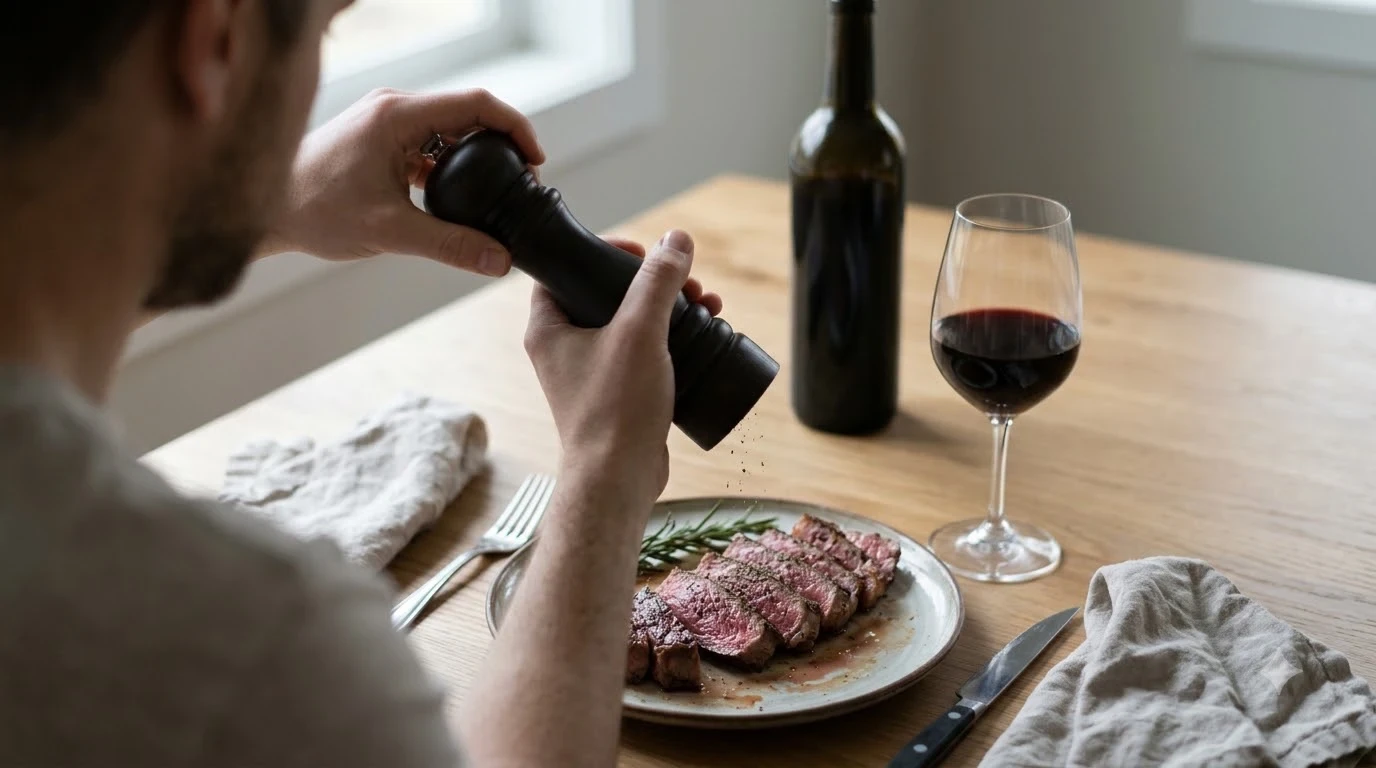
Agiorgitiko’s natural affinity for warm spices like cinnamon, clove, and nutmeg—combined with moderate acidity and supple tannins—makes it one of the most food-friendly red wines in the Mediterranean. It pairs effortlessly with grilled meats, slow-braised dishes, and tomato-based sauces without overwhelming delicate textures.
Traditional Greek dishes highlight the grape’s strengths with ease. Roasted lamb seasoned with oregano and garlic, beef stifado, grilled loukaniko sausage, and moussaka—whose spiced meat sauce and creamy béchamel echo the wine’s nutmeg undertones—all create natural harmony on the palate.
Beyond Greek cuisine, Agiorgitiko bridges the gap to Middle Eastern, North African, and Indian dishes seasoned with cumin, coriander, and cardamom, such as lamb tagine with dried apricots or mildly spiced curries. Vegetarian plates like roasted root vegetables, mushroom risotto, tomato-sauced pasta, and aged sheep’s-milk cheeses such as Greek graviera also match the wine’s savory depth. While red Italian varieties like the chianti grape rely on sharp acidity to cut through rich tomato dishes, Agiorgitiko cushions acidity with plush, rounded fruit.
How to Choose a Bottle
Reading the regional designation and aging terms on a Greek wine label is the quickest way to predict what is inside the bottle. Bottles labeled PDO Nemea (or OPAP Nemea) must be made from 100% Agiorgitiko grown within the official appellation boundaries and are exclusively dry red wines unless explicitly marked as sweet.
When shopping for an everyday table red, look for bottles labeled PGI Peloponnese or entry-level PDO Nemea without “Reserve” on the label. These wines typically emphasize fresh red berries, gentle spice, and early drinkability, offering immediate charm alongside grilled chicken, burgers, or pizza.
If you want a fuller, cellar-worthy red, seek out bottles carrying the Nemea Reserve or Grande Reserve designations, which require extended aging in oak barrels and bottle before release. You will also encounter PGI Peloponnese blends pairing Agiorgitiko with Syrah or Cabernet Sauvignon, which add darker color and firmer structure—a striking contrast to crisp Mediterranean whites like the catarratto grape or aromatic blending varieties such as the colombard grape.
Frequently Asked Questions
How do you pronounce Agiorgitiko?
Agiorgitiko is pronounced ah-yor-YEE-tee-ko, with the stress on the third syllable. In Greek, the “g” before an “i” or “e” sound softens to a “y” sound, and the “gi” combination becomes silent after the initial vowel.
Is Agiorgitiko wine sweet or dry?
The vast majority of Agiorgitiko wine is completely dry, including all standard red and rosé bottlings from PDO Nemea and PGI Peloponnese. Traditional producers do make a rare, sweet dessert style from sun-dried Agiorgitiko grapes, which is always clearly labeled as a sweet wine.
What does Agiorgitiko taste like compared to other red wines?
Agiorgitiko tastes like a cross between a plush Merlot and a spiced Syrah, offering ripe red cherry, raspberry, and plum flavors accented by nutmeg, cinnamon, and black pepper. Its tannins are noticeably softer and silkier than those of Cabernet Sauvignon or northern Greece’s Xinomavro.
Can you age Agiorgitiko wine?
Yes, oak-aged PDO Nemea and Reserve bottlings from higher-altitude vineyards can age gracefully for 10 to 20 years when stored in a cool, dark cellar. Lighter, unoaked reds and dry rosés are crafted for freshness and are best enjoyed within one to three years of the vintage date.
Whether poured slightly chilled as a bright, berry-driven rosé or decanted as a velvety, spice-layered Nemea Reserve, Agiorgitiko showcases the remarkable range of Greek winemaking. Exploring bottles from different vineyard altitudes is one of the easiest ways to see how terroir shapes a single native grape variety.
More in Wine Types & Grapes
 Zinfandel Sugar Content: Dry Red vs. White Zinfandel GramsUpdated Nov 21, 2026
 Best Zinfandel Substitute Options for Sipping and CookingUpdated Nov 21, 2026
 Zweigelt Food Pairing: Best Dishes, Cheeses, and Serving TipsUpdated Nov 21, 2026
 Zinfandel Tannins Explained: How Structure Shapes Every BottleUpdated Nov 21, 2026
 Zinfandel Sweetness Level: Dry Red vs. Sweet White Zin ExplainedUpdated Nov 21, 2026
 Xinomavro Food Pairing: Best Dishes, Styles, and Serving TipsUpdated Nov 21, 2026