

We may earn a commission when you buy through links on this page, at no extra cost to you. Learn more.
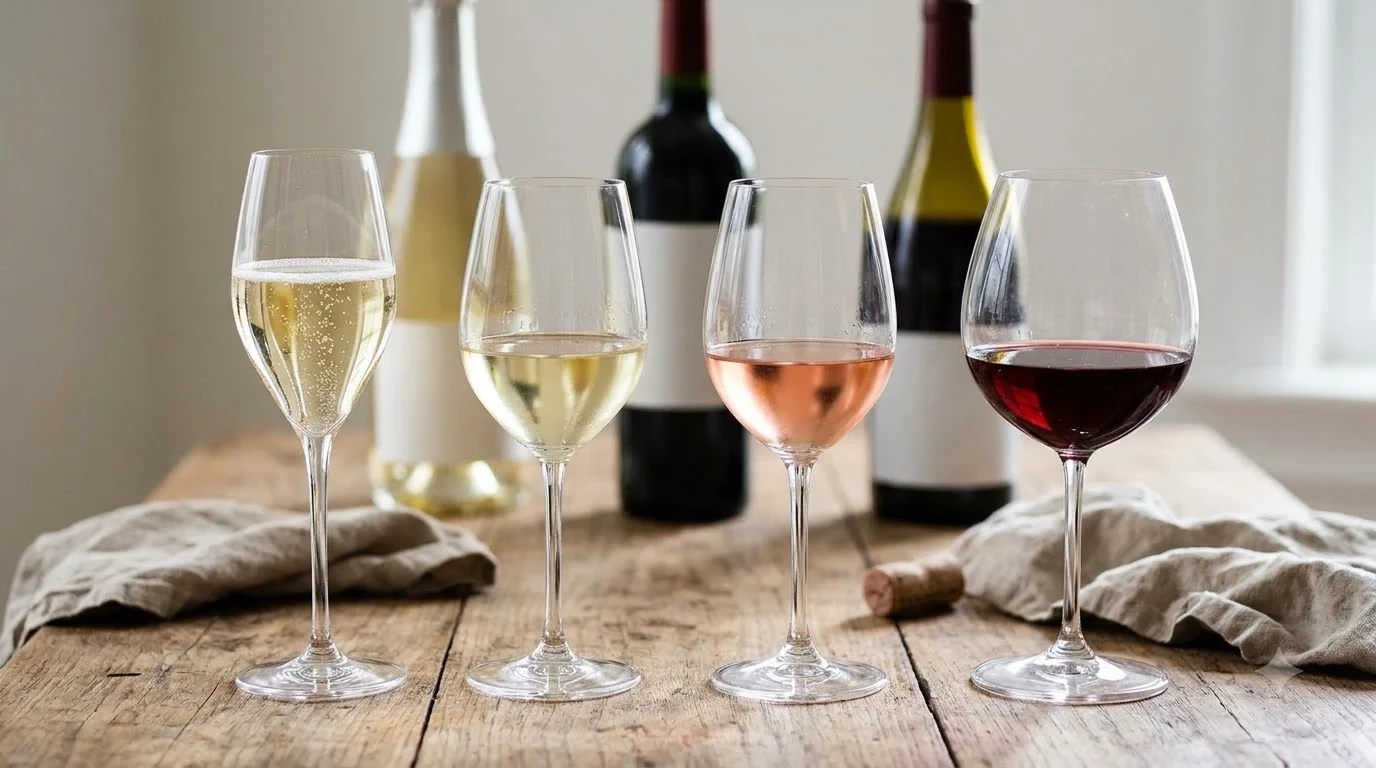
If you are wondering where is white wine from, the short answer is that winemaking originated in West Asia’s South Caucasus region around 6,000 BC, while modern white wine is produced across cool and temperate wine regions worldwide from both green-skinned and red-skinned grapes. Today, the most celebrated white wine regions span Europe’s historic benchmarks like Burgundy, the Loire Valley, and Germany’s Mosel alongside New World leaders such as California, Oregon, New Zealand, and Australia. Rather than coming from a single country or grape, white wine is defined by a winemaking method that presses juice away from grape skins before fermentation begins.
Understanding where white wine comes from means looking at two different stories: its ancient birthplace in the foothills between the Black and Caspian Seas, and the modern global map of vineyards that give each bottle its distinct personality. Because white wine styles depend heavily on climate, soil, and grape variety, learning how geography shapes the glass will help you pick bottles with confidence—whether you are exploring crisp coastal pours or rich barrel-aged classics alongside our broader guide to Wine by Type.
What Is White Wine?
White wine is an alcoholic beverage made by fermenting the clear juice of wine grapes without prolonged contact with their skins. While most bottles are crafted from green- or yellow-skinned varieties like Chardonnay and Sauvignon Blanc, winemakers also produce white wine from dark-skinned grapes such as Pinot Noir.
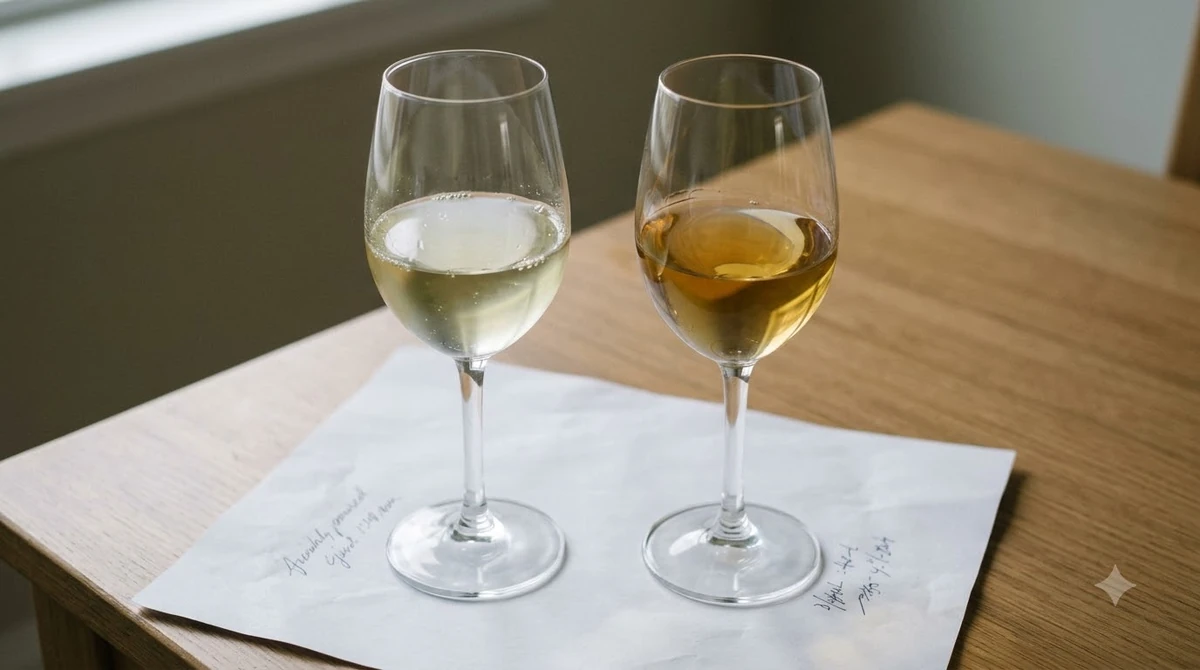
The secret behind white wine’s pale straw, lemon, or golden hue lies inside the berry itself. According to Wine Enthusiast, the pulp and juice of almost all wine grapes—red or green—are naturally colorless, because pigment and harsh tannins reside almost exclusively in the skins. When winemakers harvest grapes and press them immediately before yeast turns sugar into alcohol, the resulting liquid stays pale, crisp, and free of astringency.
In sparkling wine regions like Champagne, houses such as Bollinger, Billecart-Salmon, and Ruinart routinely press dark-skinned Pinot Noir and Pinot Meunier grapes gently to craft clear base wines. Still winemakers use the exact same technique to bottle rarities like White Pinot Noir, White Malbec, and Cabernet Franc Blanc. Following pressing, white wine typically ferments at cooler temperatures than red wine—often inside stainless steel tanks to preserve delicate citrus and floral aromas, or inside oak barrels when a producer wants added body, spice, and creamy texture.
The Ancient Origins of White Wine
Archaeological and genetic evidence traces the origins of cultivated grapevines and early winemaking to West Asia, specifically the South Caucasus and surrounding regions, roughly 8,000 years ago. From there, seafaring traders carried vines across the Mediterranean basin, establishing white wine traditions that shaped European agriculture for millennia.
Research highlighted by Wine Folly points to chemical residues found in ancient pottery vessels in Georgia dating between 6,000 and 5,800 BC, alongside an early winery unearthed in Armenia and wild vine genetic studies in southeastern Anatolia. In Georgia, winemakers still ferment white grapes in buried clay jars known as qvevri, keeping alive one of humanity’s oldest unbroken agricultural traditions.
Phoenician and Greek merchants transported Vitis vinifera vines westward across the Mediterranean, where local mutations gradually produced thousands of distinct grape cultivars adapted to new hillsides and coastlines. By the 5th century BC, the Greek physician Hippocrates prescribed white wines to patients, and later Roman writers like Pliny the Elder documented prized white appellations across Italy. After the fall of the Western Roman Empire, European monastic orders preserved vineyard records and planted white varieties across France, Germany, and Austria, laying the groundwork for the famous appellations wine lovers recognize today.
Where White Wine Grows Today
Modern white wine thrives across both Old World European regions and New World wine countries, with the finest examples generally coming from cool or coastal climates. Cooler temperatures slow down grape ripening, allowing fruit to build complex aromatics while holding onto refreshing natural acidity.
In France, geography dictates nearly everything in the glass. Burgundy is the spiritual home of Chardonnay, producing linear, mineral-driven bottles in northern Chablis and richer, oak-aged expressions farther south in Meursault and Puligny-Montrachet. To the west, the Loire Valley defines crisp, herbaceous Sauvignon Blanc in Sancerre and Pouilly-Fumé, alongside Chenin Blanc and Muscadet near the Atlantic coast. Bordeaux blends Sauvignon Blanc and Sémillon into structured dry whites in Graves and Pessac-Léognan, while Alsace specializes in aromatic Riesling, Pinot Gris, and Gewürztraminer.
Elsewhere in Europe, northern Italy’s mountainous Trentino-Alto Adige and Friuli-Venezia Giulia craft vibrant Pinot Grigio and Sauvignon Blanc, while Veneto produces crisp Soave and sparkling Prosecco. Germany’s Mosel and Rheingau valleys are famous for slate-driven Riesling, and Spain’s coastal Rías Baixas champions zesty Albariño. Across the globe in the New World, California’s Napa Valley, Sonoma Coast, and Santa Barbara produce a wide spectrum of Chardonnay and Fumé Blanc, while Oregon’s Willamette Valley excels with cool-climate Chardonnay. In the Southern Hemisphere, New Zealand’s Marlborough region became an international phenomenon for pungent, tropical Sauvignon Blanc, while Australia’s Margaret River and Chile’s Casablanca and Limarí valleys earn acclaim for coastal Chardonnay and Sauvignon Blanc.
Flavor Profiles and Major White Wine Styles
White wine spans a wide stylistic spectrum, ranging from bone-dry, razor-sharp bottles to lush, full-bodied whites aged in oak and sweet late-harvest wines. Rather than tasting uniform, white wines fall into clear flavor families shaped by grape genetics and cellar choices.
| Grape Variety | Key Regions | Typical Flavor Notes | Body & Style |
|---|---|---|---|
| Chardonnay | Burgundy, Napa Valley, Sonoma, Willamette Valley, Margaret River | Green apple, lemon, white peach, toasted oak, hazelnut | Light and crisp (unoaked) to full-bodied and creamy (oaked) |
| Sauvignon Blanc | Loire Valley, Marlborough, Bordeaux, Casablanca Valley, California | Lime, grapefruit, gooseberry, fresh-cut grass, passion fruit | Light-bodied, dry, high acidity, highly aromatic |
| Pinot Grigio / Pinot Gris | Trentino-Alto Adige, Friuli, Veneto, Alsace, Oregon | Pear, green apple, lemon zest, white blossom, subtle almond | Light and zesty (Italian style) to richer and spiced (Alsace) |
| Riesling | Mosel, Rheingau, Alsace, Australia, Finger Lakes | Meyer lemon, apricot, honeysuckle, wet slate, petrol with age | Light-bodied, high acidity, ranges from bone-dry to sweet |
Winemaking decisions heavily influence how those grapes taste in your glass. Bottles fermented and aged exclusively in stainless steel—such as Italian Pinot Grigio or Marlborough Sauvignon Blanc—highlight pure orchard fruit, citrus zest, and snappy acidity. By contrast, whites fermented or matured in French or American oak barrels gain notes of vanilla, baking spice, and toasted nuts, often accompanied by a rounder, creamier mouthfeel.
Alcohol levels also reflect origin and style. According to Wine Folly’s varietal data, leaner cool-climate styles like Chablis typically sit between 12 and 13.5 percent ABV, while sun-drenched, richer expressions from warmer regions can reach 14.5 to 15 percent ABV. If you normally gravitate toward structured reds—and have explored guides like where is merlot from or where is syrah from—barrel-aged Chardonnay or Rhône white blends offer a similarly weighty texture without red wine tannins.
How to Serve White Wine
Serving white wine at the proper temperature unlocks its aromatic complexity and keeps its acidity balanced. Pouring a bottle straight from a standard kitchen refrigerator often numbs its subtle fruit and floral notes, making the wine taste overly sharp or closed off.
Because household refrigerators typically run around 37 to 40 degrees Fahrenheit, light, crisp whites such as Sauvignon Blanc, Pinot Grigio, Albariño, and dry Riesling show best slightly warmer at 45 to 50 degrees Fahrenheit. Full-bodied, oak-aged whites like white Burgundy or barrel-fermented California Chardonnay need even more warmth—around 50 to 55 degrees Fahrenheit—so their toasted nut, stone fruit, and creamy textures can open up in the glass. Sparkling white wines like Champagne and Prosecco are the exception, thriving colder at 43 to 48 degrees Fahrenheit.
Tip: Follow the twenty-minute rule when serving from the fridge—pull white wine out about twenty minutes before pouring so it warms into its ideal tasting window, or chill a room-temperature bottle in a bucket of half ice and half water for twenty minutes.
Glassware also plays a practical role at the table. A standard tulip-shaped white wine glass with a narrower bowl concentrates delicate citrus and floral aromas while keeping the wine cooler longer than a wide red wine bowl. For richer, oak-aged Chardonnay, a slightly wider bowl allows oxygen to soften the wine’s texture and release layered aromatics.
Food Pairing and Choosing the Right Bottle
White wine’s natural acidity and lack of astringent tannins make it remarkably versatile at the dinner table, cutting through rich sauces while complementing delicate seafood and vegetables. Matching the weight and intensity of the dish to the style of the bottle is the easiest way to guarantee a harmonious pairing.
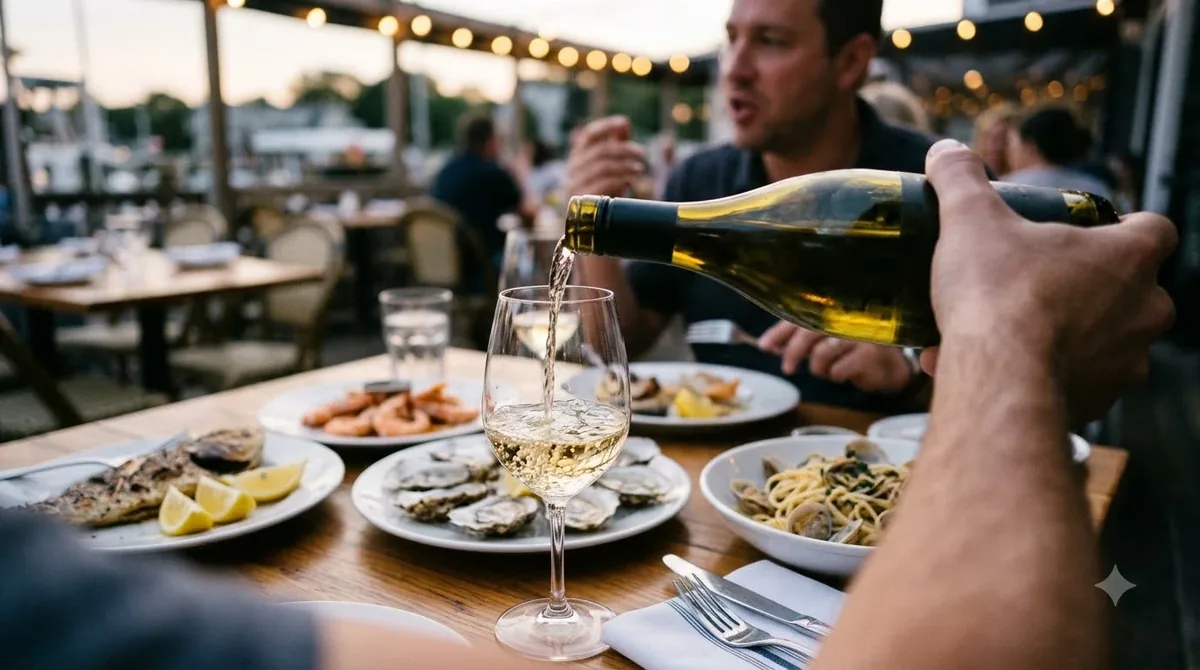
High-acid, unoaked whites like Sauvignon Blanc, Pinot Grigio, and Chablis pair naturally with oysters, grilled white fish, goat cheese, and herb-driven salads. Richer, barrel-aged Chardonnay stands up to roast chicken, lobster with drawn butter, creamy pasta dishes, and triple-cream brie. Meanwhile, off-dry Riesling and aromatic Gewürztraminer excel alongside spicy Thai, Indian, or Sichuan dishes, where a touch of residual sugar cools chili heat without clashing with bold aromatics. If you are shopping for a sweet finale instead of a table wine, fortified classics covered in our look at where is port from offer an entirely different style of after-dinner pour.
When browsing a wine shop shelf, let the label’s geographic clues guide your choice. Old World European bottles usually list the region rather than the grape—so a bottle labeled Chablis or Pouilly-Fumé tells you both where the grapes grew and what flavor profile to expect. New World bottles from the United States, Australia, Chile, and New Zealand typically highlight the grape variety front and center alongside a specific coastal valley or appellation, making it simple to compare cool-climate coastal styles against warmer inland bottlings.
Frequently Asked Questions
Can white wine be made from red grapes?
Yes, winemakers routinely produce white wine from dark-skinned red grapes such as Pinot Noir, Pinot Meunier, Malbec, and Cabernet Franc. Because grape juice itself is nearly colorless, pressing the fruit immediately and separating the skins before fermentation prevents red pigment and tannins from entering the wine.
What country produces the best white wine?
No single country holds a monopoly on great white wine, as different regions excel with specific grapes and climates. France sets the traditional standard for Chardonnay in Burgundy and Sauvignon Blanc in the Loire Valley, while Germany leads in Riesling and New Zealand, Italy, and the United States produce world-renowned expressions.
Why does some white wine taste buttery while other bottles taste crisp?
Crisp, zesty white wines are typically fermented and aged in stainless steel tanks to preserve pure citrus fruit and brisk acidity. Creamy or buttery white wines—most often Chardonnay—undergo oak barrel aging and a secondary winemaking process called malolactic conversion that softens sharp acids into rounder textures.
How long does an opened bottle of white wine last?
Most opened bottles of dry white wine stay fresh for three to five days when recorked tightly and stored upright in the refrigerator. Light, high-acid whites hold their brightness longest, whereas fuller-bodied, oak-aged whites tend to oxidize and flatten after two or three days.
From ancient clay vessels in the South Caucasus to cool coastal vineyards in Burgundy, Marlborough, and California, white wine reflects both centuries of craft and the specific landscape where each vine takes root. Whether you prefer a crisp, mineral-driven pour or a lush barrel-aged glass, paying attention to regional origins makes discovering your next favorite bottle effortless.
More in Wine Types & Grapes
 Zinfandel Sugar Content: Dry Red vs. White Zinfandel GramsUpdated Nov 21, 2026
 Best Zinfandel Substitute Options for Sipping and CookingUpdated Nov 21, 2026
 Zweigelt Food Pairing: Best Dishes, Cheeses, and Serving TipsUpdated Nov 21, 2026
 Zinfandel Tannins Explained: How Structure Shapes Every BottleUpdated Nov 21, 2026
 Zinfandel Sweetness Level: Dry Red vs. Sweet White Zin ExplainedUpdated Nov 21, 2026
 Xinomavro Food Pairing: Best Dishes, Styles, and Serving TipsUpdated Nov 21, 2026