

We may earn a commission when you buy through links on this page, at no extra cost to you. Learn more.
La Crescent wine is made from a cold-hardy white grape developed at the University of Minnesota. The grape was released in 2002 and patented in 2004, and its wines show aromas of citrus, apricot, pineapple and muscat, similar to Riesling or Vignoles. The vine survives winter temperatures down to about negative 36 degrees Fahrenheit, which is why it is planted across the northern United States and in British Columbia.
Most wine shoppers picture grapes from Napa, Bordeaux or Burgundy, so a white wine from the Minnesota cold-hardy breeding program can seem unusual. The grape has a clear story and a recognizable aroma, and it suits colder growing regions. This guide covers where La Crescent came from, what its wines taste like, and how to choose a bottle that suits your palate.
Where La Crescent came from
La Crescent was developed by the University of Minnesota’s cold-hardy grape breeding program, led by researchers James Luby and Peter Hemstad. The university received a U.S. patent for the variety in 2004, and the grape was released to the market in 2002. Its listed parentage is St. Pepin crossed with Elmer Swenson 6-8-25, two cold-tolerant hybrids from the same breeding effort.
The goal of programs like this one was to produce grapes that could survive harsh winters without losing the fruit quality that makes wine enjoyable. La Crescent is one of the most successful results. It has become a reference point for growers in regions where many European vines would not survive the cold.
How cold-hardy the vine is
The vine is cold-hardy to about negative 36 degrees Fahrenheit, or negative 38 degrees Celsius. That tolerance matters because many grapes planted in the upper Midwest and Northeast would be killed by a single severe winter. A vine that survives the cold means growers can produce a steady crop without the expense of protecting the vines every year.
The grape has been planted in Iowa, Minnesota, New York and Wisconsin, as well as British Columbia in Canada. Those states and provinces have cold winters and short growing seasons, so the grape’s performance there is the main reason it has spread. Propagating the variety requires a license from the university, which helps keep the plant material consistent.
| Feature | La Crescent |
|---|---|
| Origin | University of Minnesota cold-hardy breeding program |
| Parentage | St. Pepin crossed with Elmer Swenson 6-8-25 |
| Released | 2002, with a U.S. patent in 2004 |
| Cold tolerance | About negative 36 degrees Fahrenheit |
| Main aromas | Citrus, apricot, pineapple, muscat |
| Main states | Iowa, Minnesota, New York, Wisconsin |
What La Crescent wine tastes like
The aroma is the main reason to try a La Crescent. Wikipedia describes the wine’s aromas as citrus, apricot, pineapple and muscat, which is close to the profile of Riesling or Vignoles. For the grape itself, see the La Crescent grape guide, and for the wider context of cold-climate and aromatic whites, see albariño tasting notes. The bouquet is clean and fruity, and it lacks the foxy or herbaceous notes that some other cold-hardy species are known for. That clean profile is one of the features that made the variety attractive to winemakers.
The available description does not say how sweet or dry the wine is, so the label and the producer’s tasting notes are the best guide. Winemakers working with the grape can choose a dry, off-dry or sweeter style, and the bottle will usually say which. If you want to understand the fruit more clearly, look for words such as citrus or stone fruit in the tasting notes, since those match the aromas the grape is known for.

How to choose a bottle
Start with the label. The producer’s name and state or province will tell you a lot about the wine’s likely style, and the Wine by Type section shows how other grape styles are usually labeled. A bottle from a cold-climate region is likely to be crisp and aromatic, while one from a warmer area may show more ripe fruit. Read the back label for the words dry, off-dry or sweet, which the producer should state clearly.
If you enjoy Riesling, La Crescent is a natural next step to try. Its aromas overlap with Riesling’s, and the wine is often easy to drink on its own. If you enjoy the more floral style of Vignoles, you may also find La Crescent appealing. Both wines share an aromatic profile, which makes them good comparison bottles when you are exploring cold-climate whites.
How to serve La Crescent
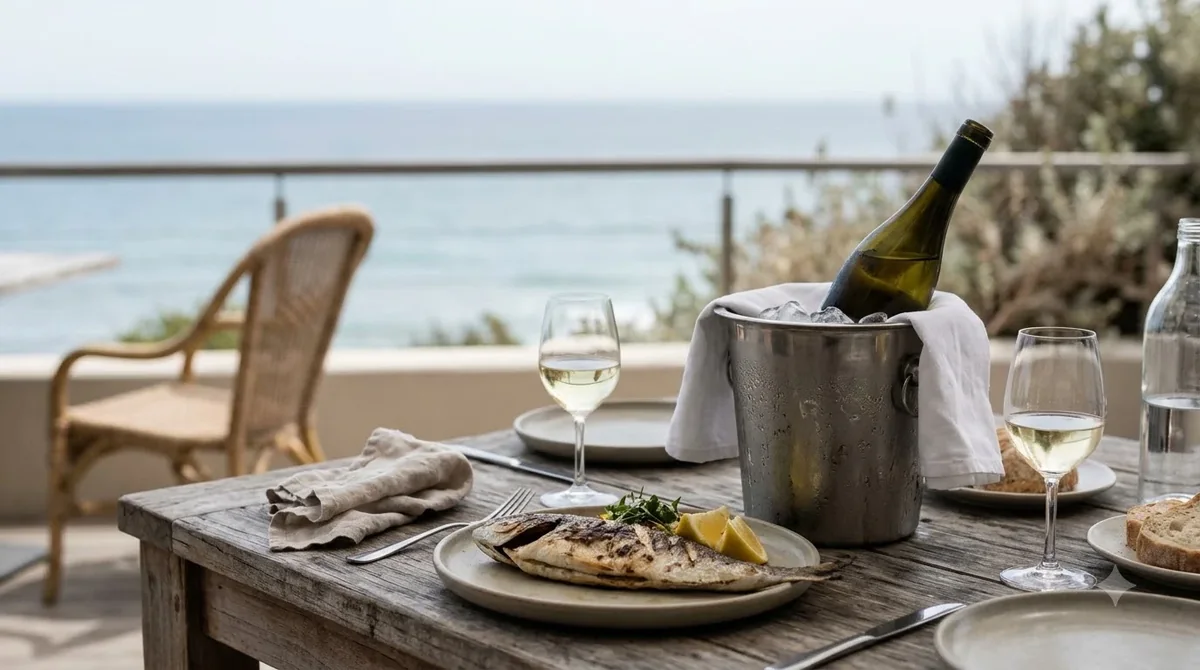
Serve La Crescent chilled, and use a standard white wine glass so the aromas can gather. The fruit and muscat-like notes make it a good match for lighter dishes, such as salads, fish, and soft cheeses. A slightly sweet bottle can also balance spicy food, because the sweetness softens the heat and the fruit keeps the palate fresh.
Because the wine is aromatic, avoid serving it too cold. Very low temperatures mute the bouquet, which is the best part of the glass. Pour a moderate amount and let the wine warm slightly in the glass to show its fruit.
Why cold hardiness matters to wine buyers
Cold hardiness is more than a growing detail. A vine that survives harsh winters gives a region a dependable grape source, and it lets local producers build a range of wines around a variety that suits their climate. For buyers, that means bottles made from fruit grown close to home rather than shipped from warmer regions.
Cold-climate wines have also become a regional identity in parts of the upper Midwest and Northeast. A La Crescent bottle from one of these states is a way to taste the local climate in the glass. The grape’s cold tolerance and its clean aroma together help explain why it has found a place in these regions.
How the variety is protected and grown
Because the grape is patented, its propagation is controlled. Wikipedia notes that growing the variety requires a license from the university. That control helps keep the plant material consistent across growers, which means a La Crescent in one state should share the same basic aroma profile as one in another.
For buyers, the practical point is simple. Check the label for the producer and the state or province, since that information tells you where the fruit came from. The grape’s history and cold-hardy traits are a good starting point, but the individual winemaker’s choices shape the final taste.
Frequently Asked Questions
What is La Crescent wine?
La Crescent is a white wine made from a grape developed at the University of Minnesota. It is valued for its cold hardiness and for aromas of citrus, apricot, pineapple and muscat.
Where is La Crescent wine made?
The grape is planted in Iowa, Minnesota, New York and Wisconsin, as well as British Columbia. Its cold tolerance makes it suitable for regions with harsh winters.
Is La Crescent sweet or dry?
The grape can be made in different styles, so the label is the best guide. Check the back label or the producer’s tasting notes for the dryness level of a specific bottle.
How is La Crescent related to other grapes?
Its parents are St. Pepin and Elmer Swenson 6-8-25, both cold-tolerant hybrids from the same University of Minnesota breeding effort. Its aroma is often compared to Riesling and Vignoles.
La Crescent is a cold-hardy white with a clear origin, a bright aroma and a useful role in cold-climate wine regions. Look for the producer’s style on the label, serve the wine chilled, and try it as a comparison to Riesling if you want to see how a northern grape handles similar fruit.
More in Wine Types & Grapes
 Zinfandel Sugar Content: Dry Red vs. White Zinfandel GramsUpdated Nov 21, 2026
 Best Zinfandel Substitute Options for Sipping and CookingUpdated Nov 21, 2026
 Zweigelt Food Pairing: Best Dishes, Cheeses, and Serving TipsUpdated Nov 21, 2026
 Zinfandel Tannins Explained: How Structure Shapes Every BottleUpdated Nov 21, 2026
 Zinfandel Sweetness Level: Dry Red vs. Sweet White Zin ExplainedUpdated Nov 21, 2026
 Xinomavro Food Pairing: Best Dishes, Styles, and Serving TipsUpdated Nov 21, 2026