

We may earn a commission when you buy through links on this page, at no extra cost to you. Learn more.
Learning how to store sparkling wine starts with a steady, cool temperature, a dark place away from vibration, and a tight stopper once the bottle is open. Constant temperature matters more than almost anything else, because heat and swings in temperature age the wine faster than it should. Bubbles fade quickly after opening, so the stopper and the way you pour both affect how the wine tastes on the second day.
This guide covers the ideal temperature for unopened bottles, whether to store them upright or on their side, what protects the bubbles, and what to watch for once a bottle is open.
Why Temperature Matters Most
Sparkling wine ages in the bottle, and the pace of that aging depends on temperature. The Wikipedia article on storage of wine cites the Champagne trade body CIVC, whose first golden rule is a constant, low ambient temperature of around 10°C (50°F). Jancis Robinson recommends constant temperatures between 50 and 59°F (10 and 15°C).
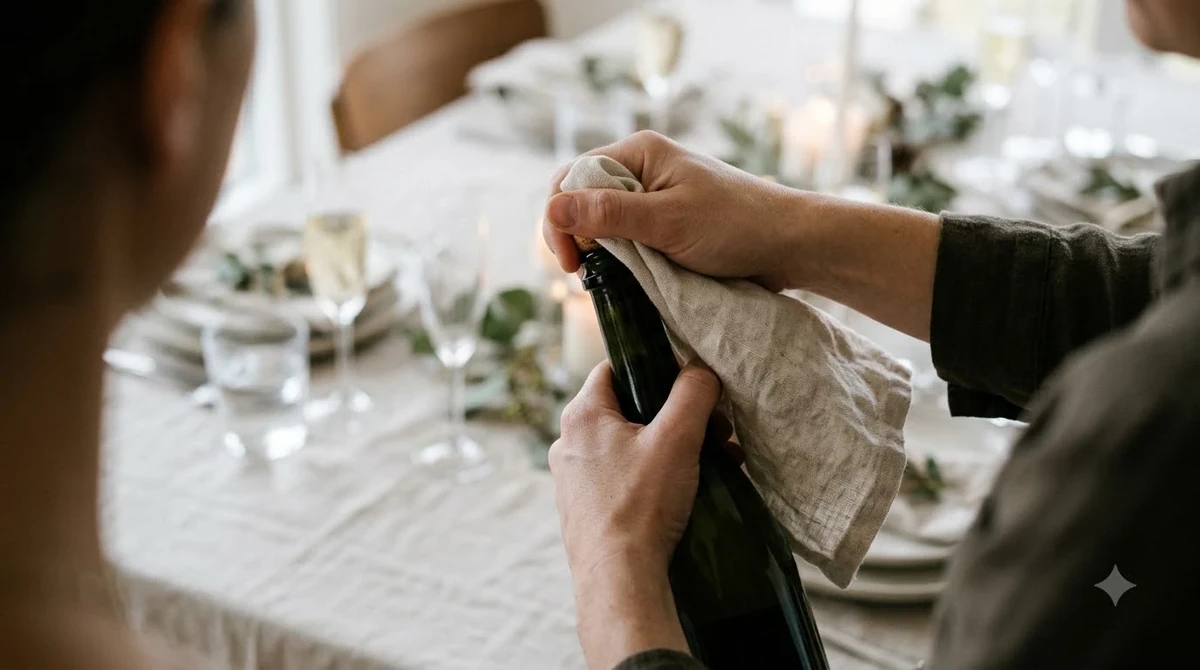
The same article notes that wine can tolerate temperatures as high as 69°F (21°C) without a long-term negative effect, but exposure above 77°F (25°C) for long periods risks spoiling it. That gives a useful range. A cellar, a closet on an interior wall, or a cool basement is ideal. A kitchen cabinet next to the oven or a shelf above the refrigerator is not, because those spots swing warm and cool through the day.
Upright or on Its Side?
Opinions differ on bottle position, and the Wikipedia article on storage of wine presents both sides. It notes that Champagne and other sparkling wines tend to age better when kept upright, since the internal pressure from trapped gas keeps some humidity in the cork and protects the wine from oxygen. A CIVC study, however, found that Champagne stored on its side aged more quickly, because oxygen seeped in after the corks lost their elasticity.
The CIVC still recommends side storage for bottles you plan to keep for several years, as long as they are in a cool, dark, draft-free place. For most people, the practical choice depends on how long the bottle will sit. A bottle you plan to open within a few weeks can stand upright without concern. A bottle you plan to keep for years is better stored on its side, so the cork stays moist, and the storage spot remains cool and still.
| Storage factor | Recommendation | Why it matters |
|---|---|---|
| Temperature | About 50°F (10°C), constant | Slows aging and keeps the wine stable |
| Acceptable range | 50 to 59°F (10 to 15°C) | Matches Jancis Robinson’s guidance |
| Upper limit | Avoid long periods above 77°F (25°C) | Long exposure risks spoilage |
| Position | Upright for short storage, on its side for long storage | Balances cork moisture with the risk of oxygen |
| Other factors | Humidity, no direct sunlight, no vibration | Protects cork, label and structure |
Light and vibration are easy to overlook. Direct sunlight warms a bottle and can affect its color over time, and constant vibration from a washing machine or a nearby speaker can disturb the wine. Store bottles where they are still and dark, and avoid storing them on top of appliances that hum or shake.
Keeping the Bubbles Lively After Opening
The bubbles in sparkling wine depend on the gas trapped in the bottle, and that gas escapes as soon as the bottle is opened. The Wikipedia article on sparkling wine notes that a poured glass loses its bubbles and carbon dioxide far more quickly than an open bottle does on its own. That is why the way you pour and the stopper you use both matter.
The same article states that a proper stopper is much more effective than other methods. It also says that putting a spoon in the bottle to keep the wine bubbly is a myth. A tight sparkling wine stopper that seals the neck is the most reliable option. Store the bottle in the refrigerator with the stopper in place, and pour only what you plan to drink.
What to Watch for Once a Bottle Is Open
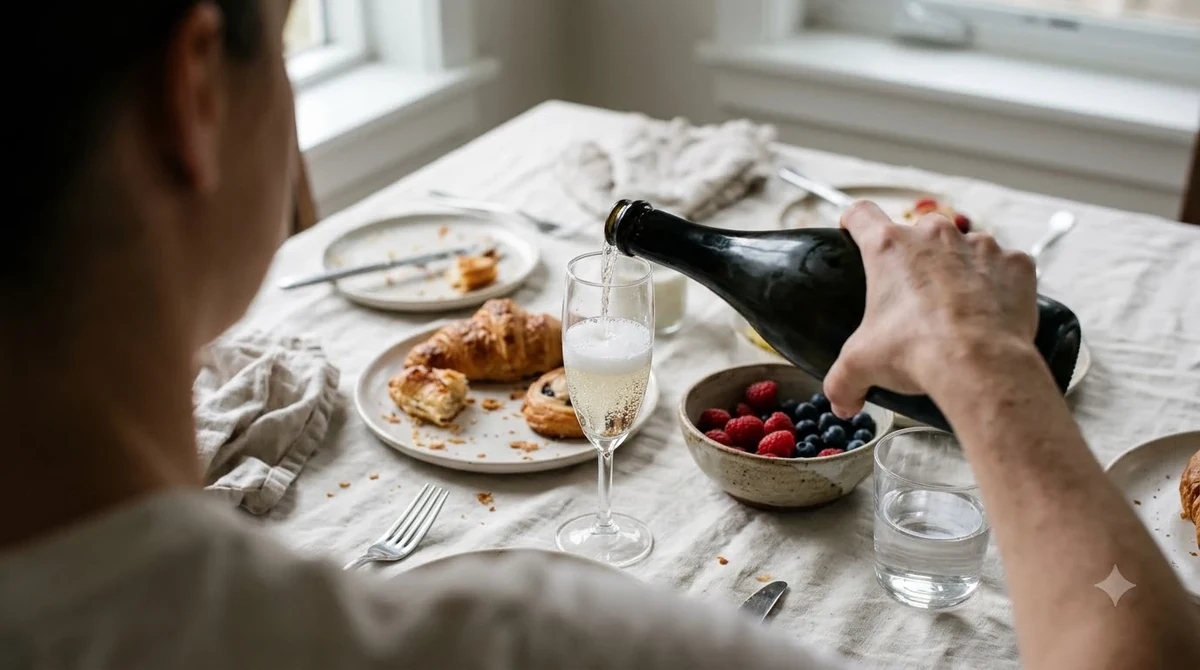
The sources on sparkling wine storage focus mainly on unopened bottles, so the advice for opened bottles is more general. Once the seal is broken, the wine begins to lose fizz and fresh character, and oxygen starts to work on it. Re-stopper the bottle as soon as you pour, keep it cold, and drink it sooner rather than later. If you are planning ahead for a bottle you have not opened yet, the guide to how long sparkling wine lasts unopened covers the timing for sealed bottles in more detail.
Leftover sparkling wine is worth using rather than pouring away. A bottle that has lost most of its fizz still works in a sauce, a batter, or a spritz with fresh fruit, and the flavor still adds brightness. Keep it cold, use it soon, and label the bottle with the date you opened it so you know when to stop using it.
Look at the wine before you pour. A bottle that has lost most of its bubbles, smells dull, or tastes flat has declined. For a fresh bottle, the bubbles should rise steadily in the glass, and the aroma should be clean and fruity. If the wine has lost its character, it can still be used in cooking or in a mixed drink, but it will not taste the same as it did on opening day.
Common Mistakes When Storing Sparkling Wine
The most common mistake is storing bottles in a warm spot. A closet near a heat source, a shelf above a radiator, or a garage that gets very hot in summer all put stress on the wine. Choose a spot that stays cool and steady, even if it is not perfect.
Another mistake is relying on a spoon or a loosely fitted cork to keep the wine fizzy. As the Wikipedia article on sparkling wine points out, the spoon idea is a myth, and a loose stopper lets the gas escape. A proper stopper is the simple fix.
A third mistake is leaving bottles in direct sunlight while they wait for a party. A sunny spot warms the bottle and can change its character before the cork is ever pulled. Keep bottles in a shaded place until you are ready to serve them.
Finally, avoid moving bottles back and forth between a warm room and a cold refrigerator. Repeated temperature swings stress the wine, so pick one cool storage spot and keep the bottles there until you are ready to chill them for serving.
Frequently Asked Questions
What is the best temperature to store sparkling wine?
The Champagne trade body CIVC recommends a constant, low temperature of about 10°C (50°F). Jancis Robinson suggests 50 to 59°F (10 to 15°C). Steady temperatures matter more than hitting an exact number.
Should sparkling wine be stored upright or on its side?
Both positions have arguments. Upright storage is common for short periods, while the CIVC still recommends side storage for several years in a cool, dark, draft-free place, since it keeps the cork moist.
Does a spoon keep sparkling wine bubbly?
No. The Wikipedia article on sparkling wine describes the spoon method as a myth. A proper stopper is much more effective.
How long does sparkling wine last once opened?
The sources used here do not give a shelf life for opened sparkling wine. Re-stopper it, keep it cold, and drink it soon, since the bubbles fade faster once the bottle is open.
Good storage for sparkling wine comes down to steady cool temperatures, a still and dark spot, and a tight stopper once the bottle is open. Start with those basics and the wine will taste the way it should when you pull the cork. Readers who also want the numbers behind a glass can check calories in sparkling wine before planning a party. For related storage questions, see how to store sake or the broader Wine by Type guide.
More in Wine Types & Grapes
 Zinfandel Sugar Content: Dry Red vs. White Zinfandel GramsUpdated Nov 21, 2026
 Best Zinfandel Substitute Options for Sipping and CookingUpdated Nov 21, 2026
 Zweigelt Food Pairing: Best Dishes, Cheeses, and Serving TipsUpdated Nov 21, 2026
 Zinfandel Tannins Explained: How Structure Shapes Every BottleUpdated Nov 21, 2026
 Zinfandel Sweetness Level: Dry Red vs. Sweet White Zin ExplainedUpdated Nov 21, 2026
 Xinomavro Food Pairing: Best Dishes, Styles, and Serving TipsUpdated Nov 21, 2026