


We may earn a commission when you buy through links on this page, at no extra cost to you. Learn more.
Calories in sparkling wine come from two sources: the alcohol and the residual sugar left after fermentation, while the bubbles themselves add nothing. A dry Brut has under 12 grams of sugar per liter, so most of its energy comes from alcohol. Sweeter styles such as demi-sec and doux carry more sugar, which raises the total per glass. The exact number depends on the style and the pour size.
Sparkling wine is a common choice for celebrations, and many people who count calories want to know how a glass compares with still wine. The answer is more practical than it first sounds. Once you understand the two drivers, the sweetness category on the label tells you most of what you need. This guide explains where the calories come from, how the sweetness styles differ, and how to estimate a glass.
Where the calories in sparkling wine come from
Wine gets its calories from alcohol and from sugar that remains after fermentation. Bubbles do not contribute energy, because carbon dioxide has no caloric value. That means two sparkling wines with the same alcohol and sugar will have the same energy, regardless of how lively the bead looks in the glass.
Alcohol is usually the larger share in a dry sparkling wine. Sparkling wines vary in strength. Wikipedia notes that German Sekt must contain at least 10 percent alcohol by volume, and that Moscato d’Asti is typically around 5.5 percent, while Asti is around 8 percent. A lower-alcohol sparkling wine therefore carries fewer calories from alcohol, even before sugar is considered.
Sugar is the second driver. The amount left in the bottle depends on how the producer stopped or completed fermentation and whether a sweetening dose was added before the final cork. That is why the sweetness label matters more than the grape or the brand when you are comparing bottles.
Sweetness categories and what they mean for sugar
Sparkling wines are sorted into sweetness categories by their residual sugar in grams per liter. Wikipedia lists the categories, and the table below turns them into the amount of sugar in a standard glass, so you can see the effect directly.
| Style | Residual sugar (g/L) | Approximate sugar in 150 ml |
|---|---|---|
| Brut natural / Brut zéro | Less than 3 | Under 0.5 g |
| Extra brut | Under 6 | Under 0.9 g |
| Brut | Under 12 | Under 1.8 g |
| Extra dry | 12 to 17 | 1.8 to 2.6 g |
| Dry (sec) | 17 to 32 | 2.6 to 4.8 g |
| Demi-sec | 32 to 50 | 4.8 to 7.5 g |
| Doux | More than 50 | More than 7.5 g |
Tip: Brut is the most common style on shelves. If you want the least sugar, look for Brut Nature or Extra Brut on the label.
A worked example for one glass
Estimating a glass takes two steps. First, convert the alcohol to grams: alcohol by volume multiplied by the glass size gives milliliters of ethanol, and ethanol weighs about 0.79 grams per milliliter. Second, add the sugar. Standard energy values are about 7 calories per gram of alcohol and 4 calories per gram of sugar.
Take a 150 ml pour of a sparkling wine at 11 percent ABV. That gives 16.5 ml of ethanol, or about 13 grams, which comes to roughly 90 calories from alcohol. A Brut with under 12 grams of sugar per liter adds less than 2 grams of sugar in the same glass, or under 8 calories. The total is therefore close to 90 to 100 calories. The same pour of a demi-sec adds roughly 19 to 30 calories from sugar on top of the alcohol.
These figures are an estimate. Real bottles vary in alcohol, and pour sizes vary widely. A generous flute or a full coupe can hold much more than 150 ml, so the total per glass rises in proportion.
How carbonation affects the glass
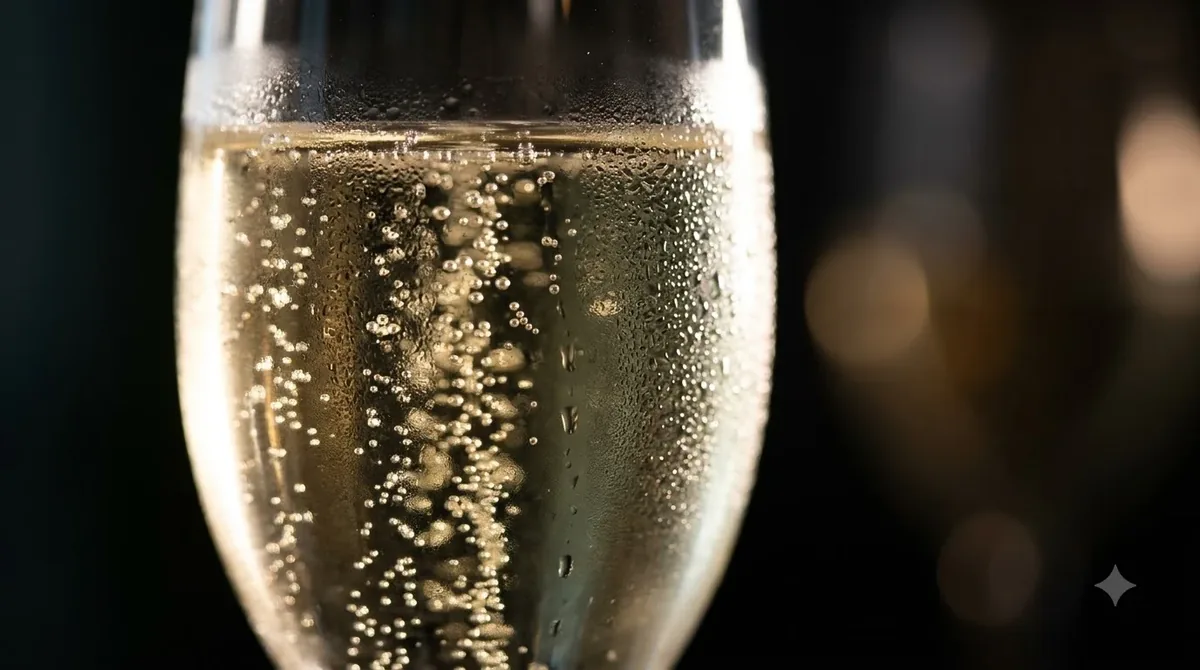
Carbonation changes how a sparkling wine feels and how quickly you drink it, but it does not add calories. The bubbles are carbon dioxide, which is not a source of energy. That point is worth remembering when a lighter-tasting sparkling wine seems low in calories simply because it is crisp. The calories come from the liquid.
The method of making the bubbles also matters for taste. Wikipedia describes three approaches. In the traditional method, the second fermentation happens in the bottle. In the Charmat method, it happens in pressurized tanks. Some cheaper wines have carbon dioxide injected directly. None of these methods changes the calorie logic, but they can change how dry or sweet the wine tastes.
Dry versus sweet sparkling wines
A dry sparkling wine such as Brut has less sugar, so its energy is mostly from alcohol. A sweet sparkling wine, such as a demi-sec or a doux, carries more sugar, and that sugar can make the calorie gap meaningful over several glasses. A sweet style can also tempt you to pour more, which adds up.
Sweet wines are not always the highest in alcohol. Some sweet sparkling styles, such as Moscato d’Asti, are lighter in alcohol, which partly offsets the sugar. Reading both figures on the label gives a clearer picture than either one alone.

Serving tips that do not change the wine
Serving temperature affects how sweet a sparkling wine tastes. A well-chilled Brut tastes crisp and dry, while a warmer glass can taste softer and sweeter. Chilling the bottle keeps the flavor clean, and it can help people choose a drier style they actually enjoy, rather than a sweeter one that seems easier.
Glassware is a small but real factor. A narrow flute holds a steady, measured pour and keeps the bubbles lively, while a wide coupe invites a larger serving. If you want to keep the portion predictable, a flute with a marked fill line is an easy way to see how much you are pouring.
Think about the whole table too. Sparkling wine is often served at the start of a meal, then followed by still wine or a cocktail. Each drink adds to the total, so it helps to decide the number of glasses before the evening begins rather than after the second toast.
Practical ways to keep the total in view
The simplest change is to choose a drier style. A Brut or Extra Brut keeps the sugar low without changing the celebratory feel. If you prefer a sweeter bottle, measure the pour rather than filling the glass, since the glass size decides more of the total than the wine does.
Spread the drinks across the evening and pair them with food. Eating slows the pace of drinking and keeps the portion steady. Sparkling wine also works well in a spritz-style drink with sparkling water, which dilutes the alcohol per serving while keeping the bubbles.
Check the producer’s technical sheet if a specific number matters. Many producers publish alcohol and sugar figures, and those are more reliable than general estimates for one bottle.
Frequently Asked Questions
Does sparkling wine have more calories than still wine?
Not necessarily. A dry sparkling wine can have a similar energy total to a still wine of the same alcohol level. Sweet sparkling styles carry more sugar, which raises the total.
Are the bubbles adding calories?
No. Carbon dioxide has no caloric value, so the calories come only from the alcohol and the residual sugar in the liquid.
Which sparkling wine has the fewest calories?
Usually a dry, lower-alcohol style with little sugar, such as a Brut Nature or Extra Brut. Check the label for both the sweetness category and the alcohol figure.
How do you estimate calories in a glass of sparkling wine?
Multiply the glass volume by the alcohol percentage to find the ethanol, then add the sugar from the sweetness category. Ethanol carries about 7 calories per gram and sugar about 4 calories per gram.
Sparkling wine can fit into a mindful routine when you know the sweetness style and the pour size. For comparison, see the guides on calories in dry red wine and calories in vermouth, and browse the wine by type section to compare styles side by side.
More in Wine Types & Grapes
 Zinfandel Sugar Content: Dry Red vs. White Zinfandel GramsUpdated Nov 21, 2026
 Best Zinfandel Substitute Options for Sipping and CookingUpdated Nov 21, 2026
 Zweigelt Food Pairing: Best Dishes, Cheeses, and Serving TipsUpdated Nov 21, 2026
 Zinfandel Tannins Explained: How Structure Shapes Every BottleUpdated Nov 21, 2026
 Zinfandel Sweetness Level: Dry Red vs. Sweet White Zin ExplainedUpdated Nov 21, 2026
 Xinomavro Food Pairing: Best Dishes, Styles, and Serving TipsUpdated Nov 21, 2026