

We may earn a commission when you buy through links on this page, at no extra cost to you. Learn more.
Chardonnay tasting notes usually describe green apple, lemon and pear in an unoaked wine, and peach, butter, vanilla and baking spice in an oaked one. The grape itself is fairly neutral, so the winemaker decides much of the final flavor through oak aging, malolactic fermentation and time on the lees. Learning the common notes helps you read a label and predict whether a bottle will taste crisp and mineral or rich and creamy.
Chardonnay is one of the most widely planted white grapes, and its style ranges from lean and minerally to full and buttery. That range can confuse people who expect every bottle to taste the same. This guide walks through the main tasting notes, explains where they come from, and shows how to use them when you choose a bottle, pour it and describe what is in the glass.
The Core Flavors of Chardonnay
Across most styles, Chardonnay shows a core of orchard fruit. Green apple, yellow apple and pear are the most typical notes in cooler and unoaked wines, while lemon and pineapple show up in warmer climates or riper bottles. These fruit flavors are the baseline that every other note sits on top of.
Wine Folly’s Chardonnay guide lists lemon, yellow apple, butter, vanilla and pineapple as common flavors, which covers most of what drinkers meet on store shelves. The same guide notes that bottle age can bring out hazelnut, toasted nuts, honey and mushroom notes, so an older Chardonnay can taste very different from a young one even when it came from the same vineyard.
Unoaked Chardonnay: Crisp and Mineral
Unoaked Chardonnay is fermented and aged in stainless steel or other neutral vessels, so the oak does not add flavor. The wine tastes fresh and direct, with green apple, pear and citrus. Many people also detect a chalky or stony minerality, which is why these wines are often compared with dry Sauvignon Blanc.
The style is lean and crisp, with high acidity and a light to medium body. Wine Folly describes the lean style, as seen in Chablis, as having a freshness similar to Sauvignon Blanc but with more body. If you like a clean, refreshing white for seafood, an unoaked bottle is usually the right choice, and it shows the grape’s natural fruit most clearly.
| Style | Main notes | Body and acidity | Common origin |
|---|---|---|---|
| Unoaked, lean | Green apple, pear, citrus, chalk | Light to medium, high acidity | Chablis, cool-climate regions |
| Oaked, Burgundian style | Peach, lemon, butter, vanilla, baking spice | Fuller, creamy, moderate acidity | Burgundy, Sonoma Coast, Napa Valley |
| Warm-climate, ripe | Pineapple, mango, stone fruit | Rich, softer acidity | Australia, parts of California |
| Aged bottle | Hazelnut, toasted nuts, honey, mushroom | Softer, more complex | Any region, after several years |
Oaked Chardonnay: Butter, Vanilla and Spice
Oak changes Chardonnay more than any other factor. When the wine is fermented or aged in barrels, it picks up vanilla, toast, baking spice and sometimes coconut or smoke, depending on the wood and the toast level. Malolactic fermentation, which turns sharp malic acid into softer lactic acid, adds the buttery character that many drinkers look for.
VinePair’s Chardonnay guide makes the same point: the buttery and oaky qualities often come from winemaking decisions rather than from the grape. Oaked styles tend to show peach, mango and lemon over a base of vanilla and butter, with a creamier texture. The Burgundian style is the classic example, and it is useful to know when a label says “barrel fermented” or “sur lie” because those phrases signal a richer wine.
Regional Differences in Chardonnay Notes
Where a Chardonnay is grown shapes its fruit as well as its oak. Cooler regions tend to produce wines with green apple, citrus and high acidity, while warmer sites produce riper fruit such as pineapple, mango and peach. Burgundy, the grape’s historic home, produces a range from fresh, fruit-forward young wines to fuller, more textured bottles.
Chablis in northern Burgundy is the best-known lean style, and it usually tastes flinty and crisp. Meursault and Puligny-Montrachet, also in Burgundy, are known for richer, more textured wines. In California, Sonoma Coast Chardonnay often shows bright acidity with citrus, while Napa Valley bottles can be fuller and more oak-driven. In Australia, Yarra Valley and Margaret River are well regarded for balanced wines. A lean white with bright fruit can be compared with albariño tasting notes to see how other white grapes express acidity and minerality. Those regional patterns are useful when you are comparing bottles, but many producers blend or change their style, so the label and the producer’s description are the best final guide.
How to Taste and Describe Chardonnay
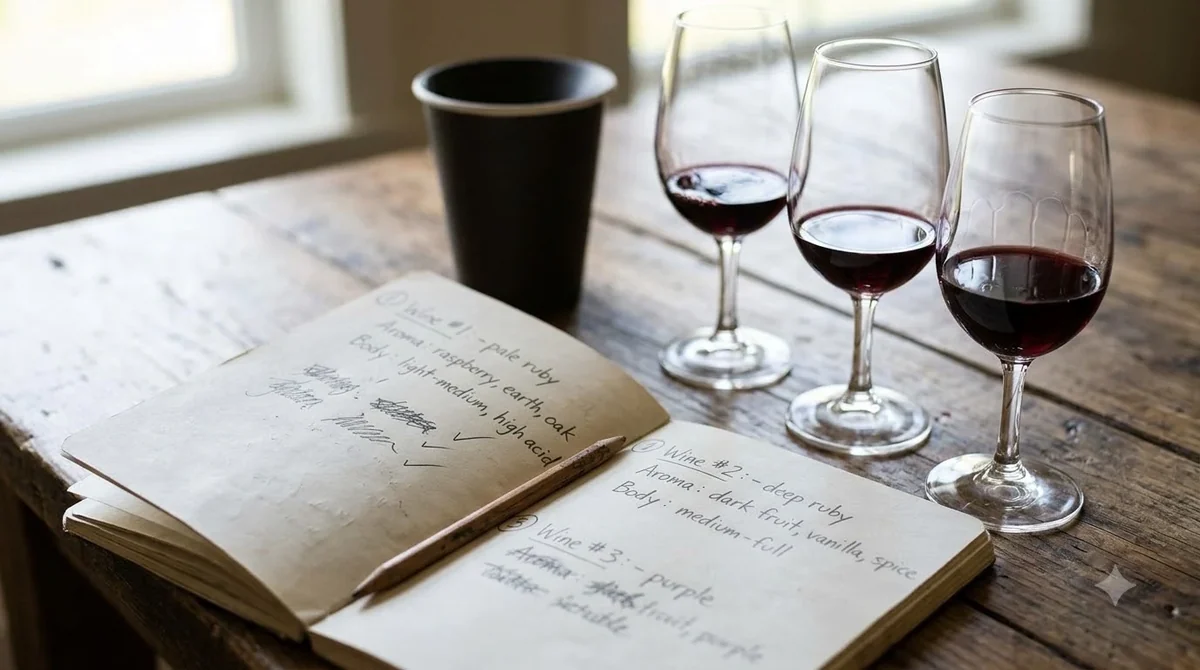
Start with appearance. A young Chardonnay is usually pale straw or light gold, and an older or heavily oaked bottle can look deeper gold. Swirl the glass, then smell it for fruit first, then oak. Next, taste the wine and notice its acidity, which is the sense of freshness on the sides of the tongue, and its body, which is how heavy it feels in the mouth.
Finally, look at the finish. A lean Chardonnay often finishes clean and tart, while an oaked one can leave a creamy, toasty impression that lasts longer. Describing a wine this way makes it easier to remember which bottles you like. Tasting a red alongside, such as with cabernet sauvignon tasting notes, can also sharpen your sense of how oak and tannin change a wine’s texture. You can record the fruit, the oak level and the acidity in a simple note, then compare it with the next bottle you try.
Serving Chardonnay to Bring Out the Notes
Temperature changes how Chardonnay tastes. Wine Folly gives 45 to 55°F as a general serving range for white wines of this style, with lean wines like Chablis near 45°F and oaked styles around 55°F. Serving too cold mutes the fruit and oak, while serving too warm can make an oaked wine feel heavy and flat.
Glassware matters as well. A standard white wine glass suits a lean, unoaked bottle, because it focuses the fruit and keeps the wine fresh. A wider bowl helps an oaked Chardonnay show its vanilla and spice. Most Chardonnays do not need decanting, though an older bottle can benefit from a short rest in the glass to open up.
Pairing Chardonnay With Food
Tasting notes also help with pairing. Lean, unoaked Chardonnay goes well with oysters, shellfish, sushi and sautéed white fish, because its acidity matches the freshness of the food. Oaked styles have more weight and suit roast chicken, crab cakes, lobster and pork tenderloin with apples.
Vegetarian dishes can also work. Corn, squash and mushrooms have the richness to match an oaked Chardonnay, while a crisp unoaked bottle pairs with salads and herb-based dishes. If you are unsure, match the wine’s body to the food’s richness and its acidity to the dish’s fat. That rule works for most Chardonnay styles.
Frequently Asked Questions
What do Chardonnay tasting notes usually include?
Most Chardonnay tasting notes include apple, pear or citrus for fruit, plus oak notes such as vanilla and butter if the wine was aged in barrels. Warmer regions add pineapple or mango, and older bottles can show honey and nuts.
Why does Chardonnay taste buttery?
Buttery flavor usually comes from malolactic fermentation, which converts sharp malic acid into softer lactic acid, and from oak aging. Both are winemaking decisions, so the same grape can taste very lean or very buttery depending on the producer.
What is the difference between oaked and unoaked Chardonnay?
Unoaked Chardonnay is crisp and fruit-driven, with green apple and citrus. Oaked Chardonnay is fuller and creamier, with vanilla, butter and spice. Oaked styles are often richer and pair better with heavier dishes.
Does Chardonnay get better with age?
Some do. Wine Folly notes that bottle age can bring out hazelnut, honey and toasted nut flavors, and that good bottles can be cellared for several years. Most everyday Chardonnay is best enjoyed fresh, so check the producer’s advice before storing a bottle.
Chardonnay offers a wide range of tasting notes, from crisp green apple to rich butter and vanilla. Start with an unoaked bottle if you want freshness, then try an oaked one to see how barrel aging changes the wine. For more on how other grapes taste, the wine by type section is a good next step.
More in Wine Types & Grapes
 Zinfandel Sugar Content: Dry Red vs. White Zinfandel GramsUpdated Nov 21, 2026
 Best Zinfandel Substitute Options for Sipping and CookingUpdated Nov 21, 2026
 Zweigelt Food Pairing: Best Dishes, Cheeses, and Serving TipsUpdated Nov 21, 2026
 Zinfandel Tannins Explained: How Structure Shapes Every BottleUpdated Nov 21, 2026
 Zinfandel Sweetness Level: Dry Red vs. Sweet White Zin ExplainedUpdated Nov 21, 2026
 Xinomavro Food Pairing: Best Dishes, Styles, and Serving TipsUpdated Nov 21, 2026