

We may earn a commission when you buy through links on this page, at no extra cost to you. Learn more.
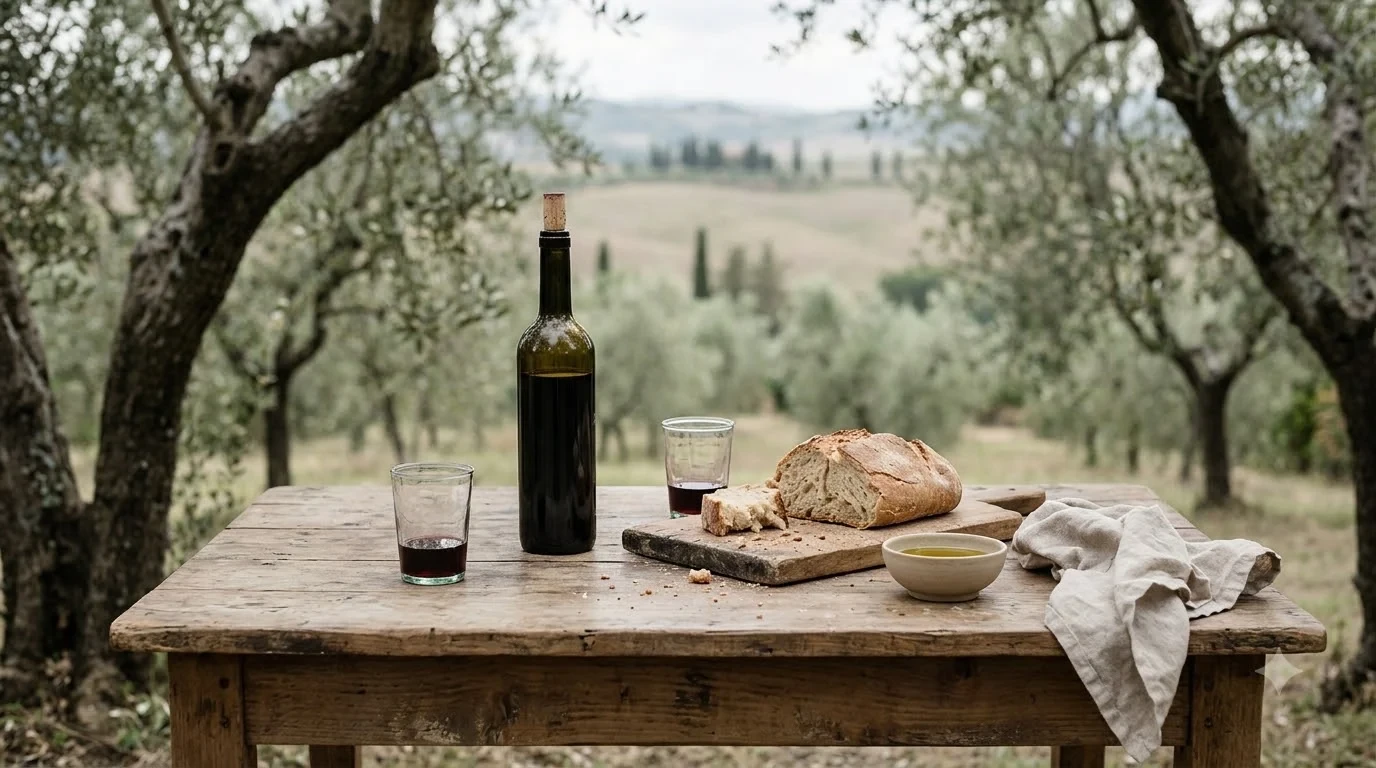
Sanford wine comes from Santa Barbara County, and the producer is associated with the Sta. Rita Hills, a cool-climate appellation known mainly for Chardonnay and Pinot Noir. The region’s ocean breezes and morning fog keep the grapes cooler than in the warmer Santa Ynez Valley, which tends to give the whites more freshness and the reds more lift. Serve the whites chilled and match them to the style on the label.
When people search for Sanford wine, they are often trying to work out what kind of bottle they are holding and whether it will suit their meal. The name points to a Santa Barbara County winery, and the wines are shaped by the place where the grapes grow. This guide explains the region behind the name, the white styles to expect, how to serve them, and what to pair with each one.
Where Sanford Wine Comes From
The Sta. Rita Hills is an American Viticultural Area in Santa Barbara County, within the Santa Ynez Valley landform. It was established in 2001 and runs as an east-west maritime corridor from a few miles east of Lompoc to a few miles west of Buellton Flats. According to the Sta. Rita Hills AVA entry on Wikipedia, elevations run from near sea level to a ridgeline about 1,800 feet high.
The climate is the key feature. Ocean breezes reach the valleys, and coastal fog settles into the hills overnight and in the early morning. That cooling effect is why the area is treated as cooler than the part of the Santa Ynez Valley east of U.S. Highway 101, which is better suited to warmer varieties such as Cabernet Sauvignon and Merlot. A wine from a cool site usually shows brighter acidity and a leaner frame than a wine from a hotter one.
The soils are mostly loams, sandy loams, silt loams, and clay loams, formed from dune sand, marine deposits, and river and terrace sediments. Compared with the eastern valley, the soils contain more sand and silt and less gravel. For a buyer, this means the wine’s character comes from the cool site as much as from the winemaker.
The White Styles to Expect
Chardonnay is the white variety most closely tied to this part of Santa Barbara County, and it is the main white you are likely to meet under a Sanford label. The style depends on how the wine is made. Wine Folly’s Chardonnay guide describes two broad approaches. An unoaked Chardonnay, in the style of Chablis, shows green apple, pear, and citrus, sometimes with a chalky or mineral note, and it has a lean, crisp palate with high acidity. An oaked Chardonnay, in the Burgundian style, shows peach, mango, and lemon, with butter, vanilla, and baking spice from oak and malolactic fermentation. The guide notes that the oaked version has a fuller body and creamier mouthfeel.
Because the Sta. Rita Hills keeps acidity high, even an oaked Chardonnay from the region tends to feel more balanced than a warm-climate version. That makes the wine useful at the table. The richer side gives weight for a roast or a cream sauce, and the fresher side keeps the palate clean with fish and seafood.
Pinot Noir is the other variety the region is best known for, and some producers in the appellation make both a white and a red. If you are choosing between colors, the white is the better pick for a light lunch or a dish with a lot of herbs, while the red suits a richer meal. A single winery can offer both, so read the label carefully before you buy.
| Style | Typical taste | Body | Good with |
|---|---|---|---|
| Unoaked Chardonnay (Chablis style) | Green apple, pear, citrus, mineral | Lean and crisp | Oysters, sushi, sautéed fish, vegetable risotto |
| Oaked Chardonnay (Burgundian style) | Peach, mango, lemon, butter, vanilla | Fuller, creamy | Crab cakes, pork tenderloin with apples, halibut |
| Sparkling Chardonnay | Citrus, green apple, toasty notes | Light, lively bubbles | Fried snacks, shellfish, celebrations |
How to Serve Sanford White Wine
Serving temperature changes the way a Chardonnay tastes, so match it to the style. Wine Folly gives about 45 degrees Fahrenheit (7 degrees Celsius) for a leaner style such as an unoaked Chablis-style wine, and about 55 degrees Fahrenheit (12 degrees Celsius) for an oaked Chardonnay. Sparkling Chardonnay should be colder, in the range of 38 to 45 degrees Fahrenheit (3 to 7 degrees Celsius).
Temperature also changes how the acidity feels. A wine served too cold can seem sharp and closed, while one that has warmed too far can taste heavy and flat. Aim for the middle of the range for the style, and adjust by a few degrees depending on the meal and the room temperature.
Chill the bottle in the refrigerator for a few hours before serving. Take an oaked white out about ten minutes before you pour, so the fruit and oak can open up in the glass. A standard white wine glass is a practical choice for both styles. Sparkling wine is better in a flute or a tulip-shaped glass, which keeps the bubbles lively for longer.
Food Pairing Ideas
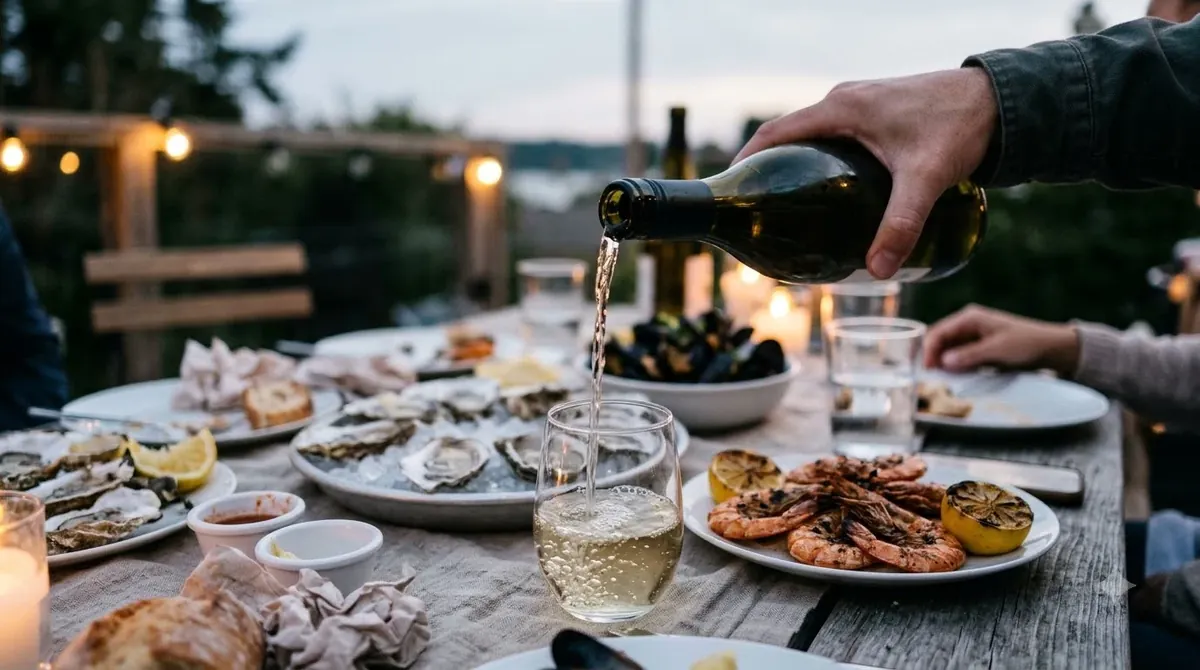
Lean, unoaked Chardonnay works well with delicate seafood. Wine Folly lists oysters, sushi, sautéed fish, pâté, chicken piccata, vegetable risotto, and moules frites as good matches for this style. Its acidity cuts through rich or fried food, and it keeps the palate fresh between bites.
Oaked Chardonnay suits richer dishes. The same guide suggests crab cakes, linguini with clams, halibut, and pork tenderloin with apples for this style. For vegetarian dinners, rich or starchy vegetables such as corn, squash, and pumpkin pair well with the fuller wine. Sparkling Chardonnay is a good match for fried snacks, and for shellfish when you want a lighter bottle than a still white.
How to Choose a Sanford White
Start with the style you want. If you like a crisp, clean white for seafood, look for a lean, unoaked Chardonnay. If you prefer a wine with more texture for roast chicken, pork, or cream sauce, choose an oaked version. For a celebration or a toast, sparkling Chardonnay is the easiest option.
Consider also the occasion. An unoaked Chardonnay is a practical choice for a seafood dinner or a summer lunch, since it stays fresh even when the bottle sits on the table for a while. An oaked version is better when the table is set for a longer, heavier meal, such as a holiday roast or a dinner with cream sauces and rich vegetables.
Next, read the back label for the appellation and the vintage. A bottle from the Sta. Rita Hills will show the cool-climate character described above, and the vintage will tell you how old the wine is. Most whites are best within a few years of release, though a good oaked Chardonnay can often age longer than a light, unoaked one. Store bottles on their side or upright in a cool, dark place until you are ready to chill and serve them.
Frequently Asked Questions
What is the Sta. Rita Hills known for?
The Sta. Rita Hills is a cool-climate American Viticultural Area in Santa Barbara County, best known for Chardonnay and Pinot Noir. Ocean breezes and coastal fog keep the vineyards cooler than the warmer Santa Ynez Valley to the east.
Is Sanford white wine oaked or unoaked?
Styles vary by release. Check the label or the producer’s tasting notes, since an unoaked Chablis-style wine and an oaked Burgundian-style Chardonnay taste very different from each other.
What temperature should I serve it at?
Serve a lean, unoaked Chardonnay at about 45 degrees Fahrenheit and an oaked version at about 55 degrees. Sparkling Chardonnay is best colder, at 38 to 45 degrees.
What food goes best with Sanford white wine?
Lean styles suit oysters, sushi, and sautéed fish. Oaked Chardonnay pairs with crab cakes, halibut, and pork with apples, while sparkling Chardonnay works with fried snacks and shellfish.
Because wineries update their releases each year, the most reliable source for current bottles is the label on the shelf or the producer’s own website. Use the region and the style as your guide, and the bottle in front of you will show the rest.
Sanford wine is easiest to understand once you know the cool Sta. Rita Hills climate behind it and the two main Chardonnay styles. For background on how producer ranges work, the wine brands guide is a useful next step, and if you want a white for a casual evening instead, the 19 Crimes white wine guide covers a different style.
More in Wine Brands
 Underwood Wine Price: Compare Bottles, Cans, and Pack SizesUpdated Nov 21, 2026
 Zenato Wine Price: Compare Styles and Choose the Right BottleUpdated Nov 21, 2026
 Zuccardi Wine Price: Compare Bottles and Find the Right RangeUpdated Nov 21, 2026
 Yellow Tail Moscato Review: Taste, Sweetness and Serving TipsUpdated Nov 21, 2026
 Wolf Blass Yellow Label Review: Choose Your Best StyleUpdated Nov 21, 2026
 Wolffer Estate Rose Review: Choose the Right Bottle for Your TableUpdated Nov 21, 2026