

We may earn a commission when you buy through links on this page, at no extra cost to you. Learn more.
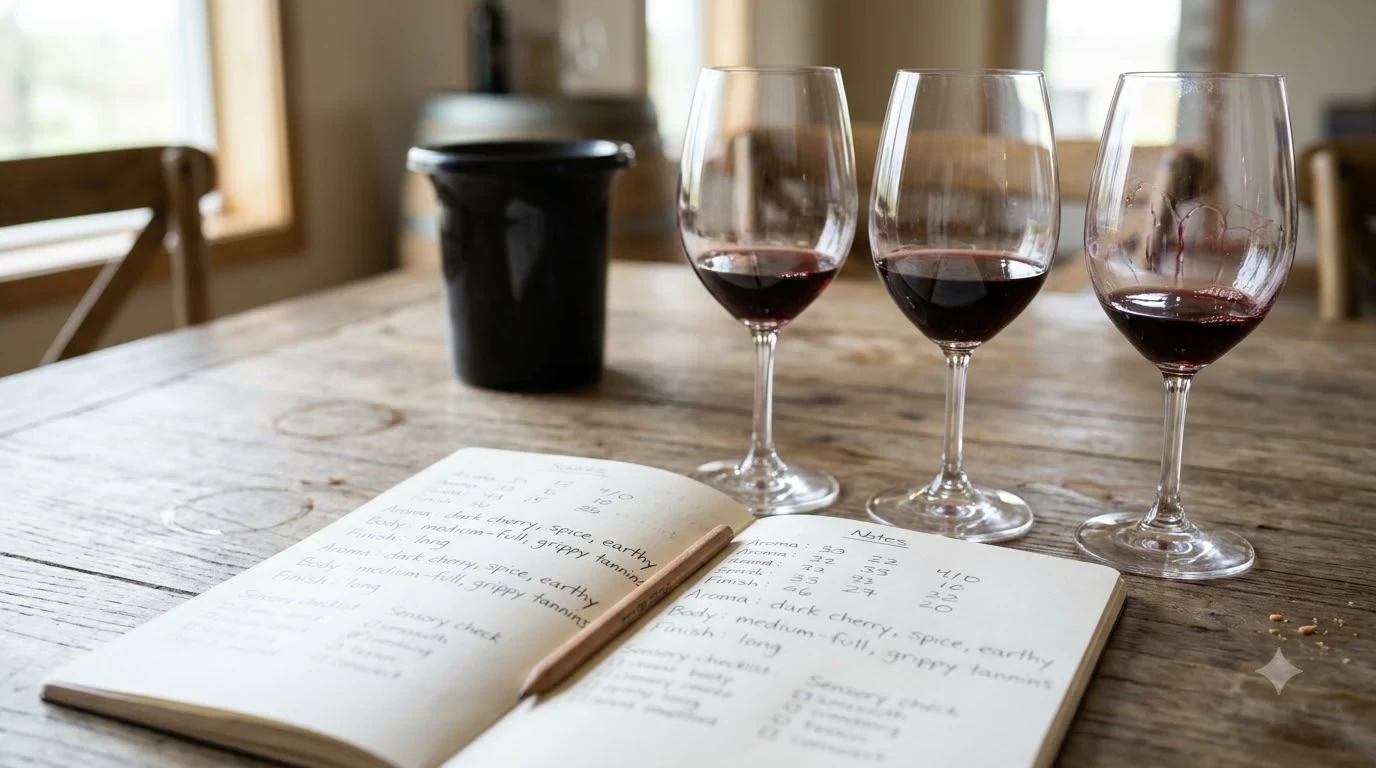
Merlot tasting notes usually center on black cherry, plum, and cocoa, with soft tannins, a medium-full body, and a smooth finish. The exact profile shifts with climate, oak, and age. Cooler regions tend to show fresh red plum and a herbal edge, while warmer sites give riper blackberry and higher alcohol.
Merlot is one of the most recognizable red grapes, and its tasting notes are easier to learn once you know which flavors come from the fruit, which come from the vineyard, and which come from the cellar. This guide explains the core profile, how climate and oak change the glass, and how to serve and pair Merlot. If you are comparing it with other reds, the guides on cabernet sauvignon tasting notes and malbec tasting notes offer useful contrasts.
The Core Merlot Flavor Profile
Merlot’s primary fruit flavors are cherry, plum, and chocolate, according to the Merlot grape profile on Wine Folly. Black cherries and blackberries appear often in tasting notes, and VinePair also lists cocoa and violets as typical secondary notes. These are the flavors most people mean when they call a Merlot ripe or soft.
The fruit is usually the first thing you notice on the nose. On the palate, it often feels round and fleshy rather than sharp. That roundness is one reason Merlot is often suggested to people who find some reds too tight or drying.
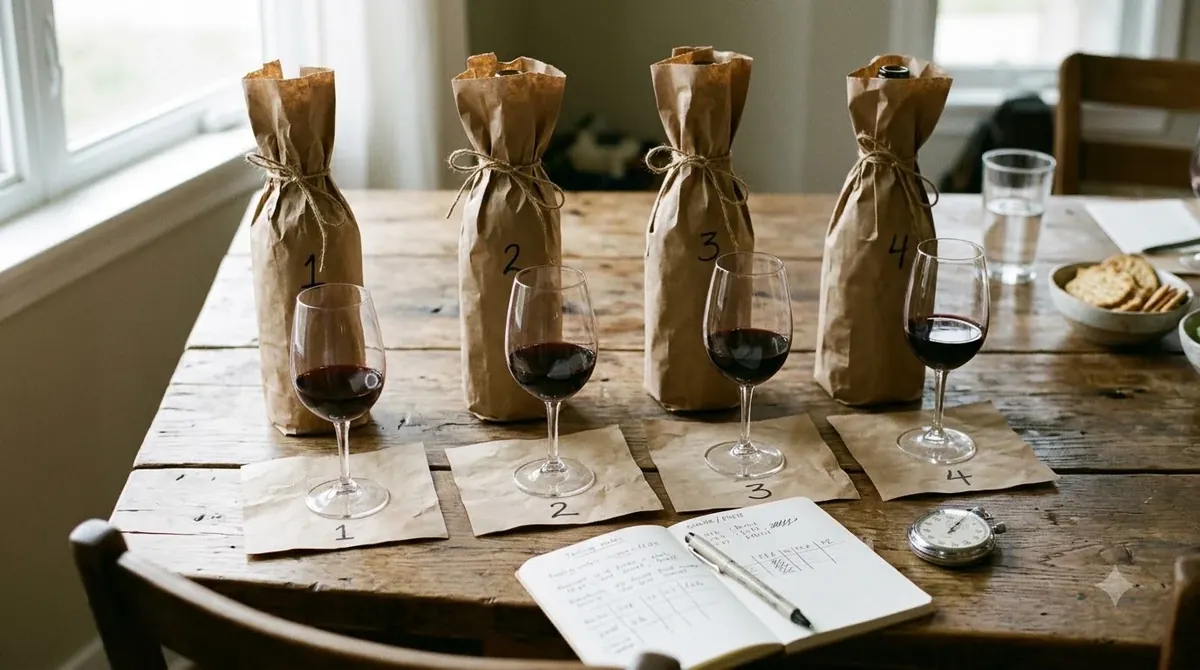
Tasting for fruit works best when you name what you smell before you taste. Try separating fresh fruit, such as cherry, from cooked or dried fruit, such as prune or fruitcake. The difference usually points to the climate where the grapes ripened.
How Climate Changes the Flavor
Where the grapes grow shapes the taste more than almost any other factor. Cooler-climate Merlot tends to show fresh red plum and cherry, along with herbal and peppery notes. Warmer sites produce riper fruit, with baked blackberry, fruitcake-like sweetness, and higher alcohol. VinePair describes warmer-climate examples as juicier and fruitier, and cooler ones as more herbaceous, with grippier tannins than Merlot usually shows, as its Merlot overview explains.
The same grape can therefore taste very different depending on the bottle. Merlot from Bordeaux’s Right Bank, where clay-rich soils suit the grape, often reads more restrained than a California bottle from a hot vintage. Wine Folly also notes an herbal edge in some Columbia Valley bottles from Washington State, which shows that cooler sites can still produce a distinctive style.
| Trait | Cooler-climate Merlot | Warmer-climate Merlot |
|---|---|---|
| Fruit | Fresh red plum and cherry | Baked blackberry, ripe plum |
| Savory notes | Herbal, bay leaf, pepper | Chocolate, sweet spice |
| Tannin | Firmer, more grip | Softer and rounder |
| Alcohol | Lower end of the range | Higher end of the range |
Oak, Age, and Secondary Flavors
Oak changes Merlot noticeably. Oak-aged bottles often show vanilla and spice, which can layer over the cherry and plum. The best Bordeaux examples may show smoke and clove, according to Wine Folly. Oak is a winemaking choice, so the same vineyard can produce a lighter, fruit-first style or a richer, toasty one.
Age adds a second layer. As a Merlot matures, earthy, meaty, and chocolate-like aromas can develop. Younger bottles tend to taste bright and fruity, while older bottles are often softer and more savory. Most everyday Merlot is made to drink young, so the fruit-forward style is the one most shoppers meet first.
When you taste an oaked bottle, check whether the vanilla sits on top of the fruit or blends into it. A well-integrated oak note feels like part of the wine. An oak note that stays separate from the fruit can make the finish seem dry and wood-driven.
Structure: Tannin, Acidity, and Body
Merlot’s structure is one of the easiest things to learn by feel. Wine Folly describes its body as medium-full, its tannins as medium-high, and its acidity as medium. Merlot is generally softer and less astringent than Cabernet Sauvignon, so it tends to feel smoother on the palate. VinePair notes that Merlot usually has lower acidity than Cabernet, although its overview places Merlot in the medium to medium-high range.
In practice, this means Merlot feels round and weighty with less drying grip. Its alcohol typically falls between 13.5 and 15 percent ABV, according to Wine Folly. The higher end usually comes from warmer regions, and it is one reason a warm-climate bottle can taste heavier even when the fruit looks similar on the label.
Tannin is the feeling of dryness along the gums and cheeks after a sip. Merlot’s tannins are usually soft enough that the sensation is gentle. If a bottle grips strongly, it is worth checking whether it is a young, cooler-climate wine or a bottle from a producer who favors firmer structure.
How to Serve Merlot to Bring Out Its Notes
Serving temperature changes how the fruit and alcohol show up. Wine Folly suggests serving Merlot at 60 to 68 degrees Fahrenheit, which is slightly below room temperature. In that range, the fruit feels brighter and the alcohol is less prominent.
Glassware matters too. A large bowl gives the wine room to open and lets the cocoa and herbal notes come forward. Decanting about 30 minutes before pouring can soften young bottles with firm tannins. Many everyday Merlots do not need decanting, but older or oak-heavy bottles often benefit from a short rest.
Tip: If a Merlot tastes warm and alcoholic, pour it a little cooler and give it a few minutes in the glass. The fruit usually settles into a cleaner shape.
Food Pairings for Merlot
Merlot’s soft tannins and medium-full fruit make it a flexible partner for many dishes. Roasted poultry, mushroom dishes, and tomato-based pasta are classic matches because they echo the wine’s savory side. The fruit also suits dishes with a little sweetness, such as glazed pork or barbecue sauces that are not too sharp.
Richer dishes work well too. Braised beef and herb-crusted lamb can stand up to a Merlot with more structure, while a lighter cooler-climate bottle is better with grilled vegetables or a simple cheese plate. Matching by weight is a useful rule: a fuller Merlot needs a fuller plate, and a lighter bottle is better with simpler food.
Merlot is also easy to enjoy without food. The soft tannins make it approachable on its own, which is why many people use it as an everyday red.
Frequently Asked Questions
Is Merlot a sweet wine?
Most Merlot is dry. Wine Folly lists Merlot as bone dry, so the ripe fruit flavors should not be confused with residual sugar. Some warm-climate bottles taste fruity and round, but the wine itself is usually not sweet.
What is the difference between Merlot and Cabernet Sauvignon?
Merlot is typically softer, with lower tannin and a rounder mouthfeel. Cabernet Sauvignon tends to be firmer and more structured. Both can show dark fruit, but Merlot usually feels smoother on the palate.
Should you decant Merlot?
Young bottles with firm tannins can benefit from about 30 minutes in a decanter. Many everyday Merlots are ready to pour without it, so a quick taste is the simplest guide.
What food goes best with Merlot?
Roasted poultry, mushroom dishes, and tomato-based pasta are strong starting points. Match the weight of the dish to the weight of the bottle, so a richer Merlot can handle braised meats.
Merlot tasting notes are easiest to learn by comparing a few bottles from different regions. Start with one cooler-climate example and one warmer bottle, then note how the fruit, oak, and tannin differ. For broader context on red grape families, the wine by type guide is a useful next step.
More in Wine Types & Grapes
 Zinfandel Sugar Content: Dry Red vs. White Zinfandel GramsUpdated Nov 21, 2026
 Best Zinfandel Substitute Options for Sipping and CookingUpdated Nov 21, 2026
 Zweigelt Food Pairing: Best Dishes, Cheeses, and Serving TipsUpdated Nov 21, 2026
 Zinfandel Tannins Explained: How Structure Shapes Every BottleUpdated Nov 21, 2026
 Zinfandel Sweetness Level: Dry Red vs. Sweet White Zin ExplainedUpdated Nov 21, 2026
 Xinomavro Food Pairing: Best Dishes, Styles, and Serving TipsUpdated Nov 21, 2026