

We may earn a commission when you buy through links on this page, at no extra cost to you. Learn more.
The best prosecco at Trader Joes is usually a Prosecco DOC bottle labeled Brut or Extra Dry, because those sweetness terms and the DOC rules tell you more about the wine than the shelf tag does. Selection changes by store and season, so the practical skill is reading the label and choosing the style you want when you find a bottle in stock.
This guide is for shoppers who want a dependable sparkling wine from a neighborhood store and need a simple way to judge the bottles they find. Prosecco is one of the most widely bought sparkling wines in the world, and its label carries useful information that many buyers skip. The Prosecco consortium website explains the DOC area, the grape, and the sparkling method that most bottles use.
What Prosecco Is and Where It Comes From
Prosecco is made mainly from the Glera grape, which Italy renamed from Prosecco in 2009 so that the name could be used as a place name rather than a grape. Since January 2010, Prosecco has been a geographical indication, which means the name refers to a defined area in northeastern Italy.
The Prosecco DOC covers a large area that includes parts of several provinces in the Veneto and Friuli regions. Two smaller DOCG zones, Conegliano Valdobbiadene and Asolo, sit inside that area. Wines labeled Superiore come only from those DOCG zones and are always spumante, so a Superiore bottle signals a more specific origin.
Read the Sweetness Terms on the Label
Sweetness is the easiest difference to miss on a shelf. Under the EU rules for sparkling wine, the sweetness terms are defined by the amount of residual sugar, which gives you a dependable way to predict how a bottle will taste before you open it.
| Label term | Residual sugar (grams per liter) | How it tastes |
|---|---|---|
| Brut | Up to 12 | Dry and crisp, with more lemon and green-apple character |
| Extra Dry | 12 to 17 | Lightly sweet, the most common style on shelves |
| Dry | 17 to 32 | Noticeably sweet, often paired with dessert |
Extra Dry has long been the dominant style, but Brut is gaining ground with buyers who want a drier glass. If you are unsure, choose Brut for a dry aperitif style and Extra Dry for a softer, fruit-forward glass with brunch or appetizers.
How the Bubbles Are Made
Most Prosecco uses the Charmat-Martinotti method, in which the second fermentation takes place in large sealed stainless steel tanks rather than in individual bottles. The minimum production time is 30 days, and higher-quality versions can take up to about nine months. That tank method keeps the fruit fresh and the bubbles lively, which suits an everyday sparkling wine.
The traditional method, known in Italy as Metodo Classico, is also permitted. Those bottles often show more toasty, yeasty notes, and they are less common in supermarket and warehouse-style stores.
Superiore and Other Label Words
Superiore is the label word that most often signals a more specific origin. Under the consortium’s rules, the wine must come from the Conegliano Valdobbiadene or Asolo DOCG zones, and it must be spumante. Those hills are steep and the vineyards are smaller, which is one reason the wines are often priced above the basic DOC bottles. Reading the full name on the label, not just the word Prosecco, is the quickest way to see whether a bottle comes from that zone.
Other words on the label describe the production or the year. A vintage date means the grapes came from one harvest year, while a plain label usually blends several years. Neither is better by default, but a dated bottle tells you more about the particular year’s character.
What to Look For at Trader Joe’s
Trader Joe’s stock changes from store to store, and a favorite bottle may not return once it sells out. A short checklist makes it easier to choose quickly when the bottle you wanted is gone.
Look at the whole sparkling section, not only the first few bottles. Because the selection is rotated, a Prosecco you did not expect may sit beside a familiar label, and the back label will show whether it matches the style you want.
- Confirm the label says Prosecco and check for the DOC or DOCG designation.
- Choose a sweetness term that matches the meal: Brut for dry, Extra Dry for softer fruit.
- Look for the word Superiore if you want a wine from the DOCG hills around Conegliano Valdobbiadene or Asolo.
- Check the bottle is sparkling, since still and lightly fizzy Prosecco-style wines are sold alongside the sparkling versions.
Serving and Pairing Prosecco
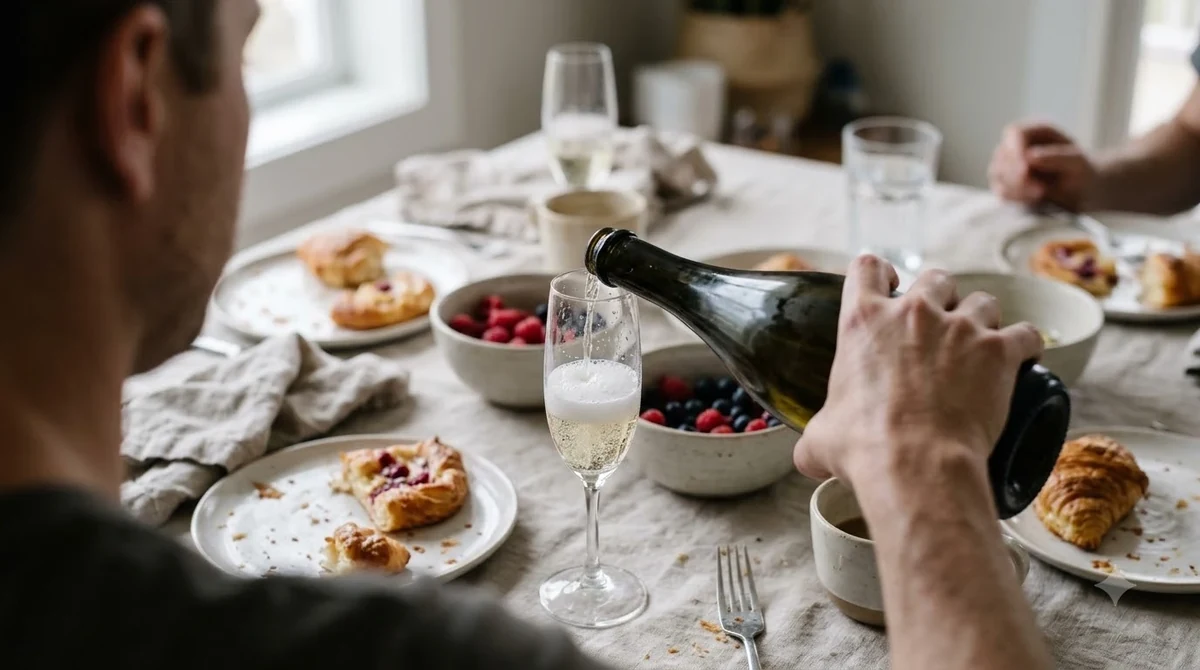
Serve Prosecco well chilled, ideally around 45 to 50 degrees Fahrenheit (about 7 to 10 Celsius), so the bubbles stay fine and the aromas stay bright. A bottle that is too warm tastes flat and sweet, and one that is too cold can taste sharp and muted.
Brut suits oysters, fried snacks, and salty cheeses, because the acidity cuts through rich food and cleans the palate between bites. Popcorn, sushi, and light seafood starters are also easy matches for a dry sparkling glass.
Extra Dry works with fruit tarts, spicy Asian dishes, and brunch plates that include sweet elements. The sweetness of the wine is a balance, not a flaw, when it sits with a dish that has heat or salt.
Common Mistakes When Buying Prosecco
Most buying mistakes come from assuming all sparkling wine tastes the same, and from treating a sparkling bottle as an occasion wine rather than an everyday glass. A bottle that suits brunch can also work well with a weeknight salad or a plate of grilled vegetables.
Prosecco is light and fruity, while Champagne is made by a different method and often tastes richer and more savory.
- Choosing by the shelf tag or the bottle design without reading the sweetness term.
- Serving the bottle at room temperature, which dulls the aroma.
- Keeping an opened bottle for days, since the bubbles fade quickly.
- Buying a Dry bottle expecting a crisp aperitif, when the wine will taste noticeably sweet.
Frequently Asked Questions
Is Prosecco the same as Champagne?
No. Prosecco is usually made from the Glera grape in northeastern Italy and gets its bubbles from tank fermentation. Champagne comes from France and is typically made by the traditional bottle method, which gives a richer, more toasty style.
What does Brut mean on a Prosecco label?
Brut means the wine is dry, with up to 12 grams of residual sugar per liter under EU sparkling wine rules. It tastes crisp and clean compared with Extra Dry or Dry.
Does Trader Joe’s always carry the same Prosecco?
No. Stock varies by store and season, so a bottle you liked may not be available on your next trip. Looking for the same DOC designation and sweetness term will help you find a comparable wine.
How long does an opened Prosecco last?
Keep an opened bottle cold and sealed, and drink it within a day or two. The bubbles fade faster than in a still wine, so finish the bottle soon after opening. A sparkling stopper can slow the loss of fizz for a day, though it will not keep the wine fresh for a week.
Once you know the sweetness terms and the DOC rules, the prosecco shelf becomes much easier to read, and each visit becomes a quick check of the same few label details. For more ideas, see the white wine at Trader Joe’s guide, or the pinot noir at Trader Joe’s guide for a red style. Enjoy responsibly.
More in Wine Buying Guides
 Riesling Gift: Choose a Bottle They’ll LoveUpdated Nov 21, 2026
 Sweet Red Wine Gift: Choose a Bottle They’ll LoveUpdated Nov 21, 2026
 Malbec Gift: How to Choose a Memorable Bottle for Any OccasionUpdated Nov 21, 2026
 Sherry Gift Ideas That Match Every Wine LoverUpdated Nov 21, 2026
 Moscato Gift: How to Choose a Sweet Wine They’ll LoveUpdated Nov 21, 2026
 Merlot Gift: How to Choose a Bottle They’ll AppreciateUpdated Nov 21, 2026