

We may earn a commission when you buy through links on this page, at no extra cost to you. Learn more.
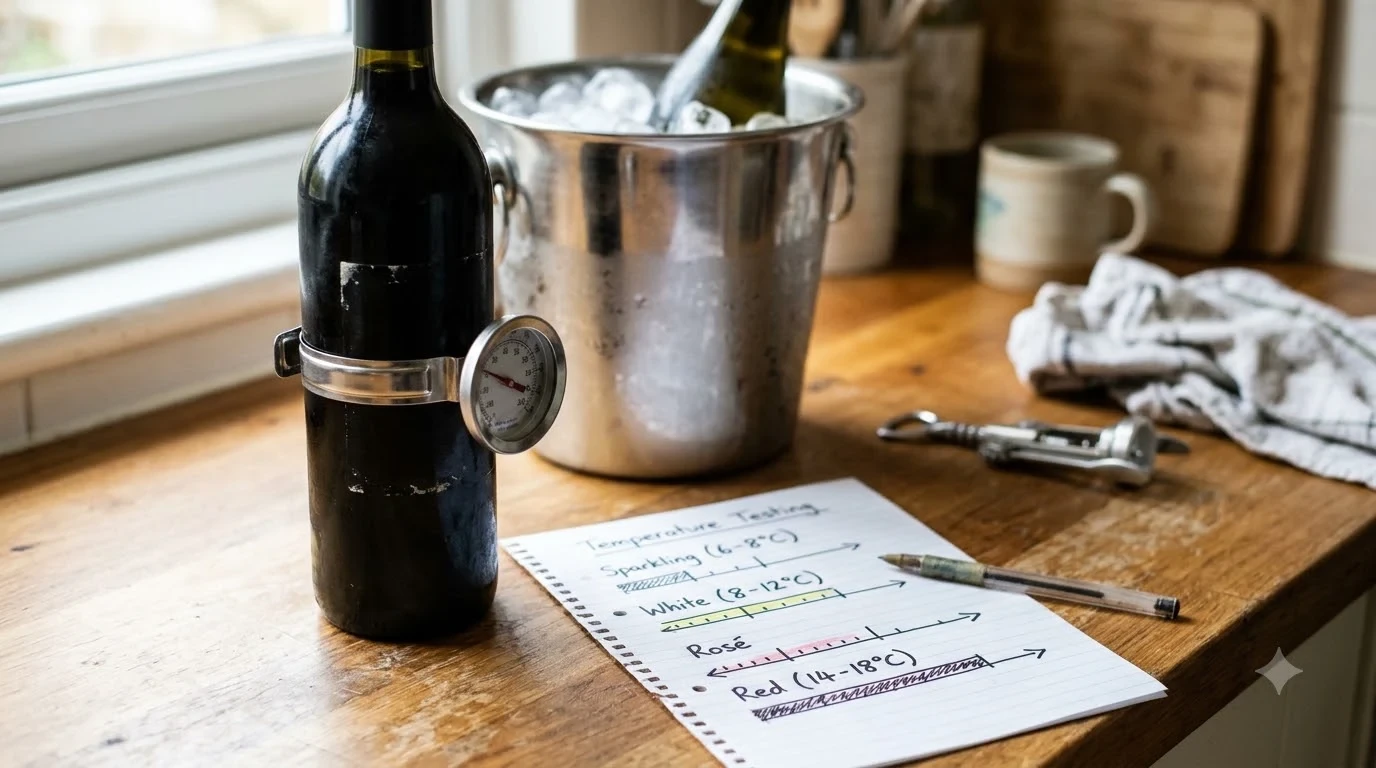
The best temperature for white wine is usually between 43 and 54 degrees Fahrenheit, with lighter and sweeter styles at the cold end and fuller oaked whites slightly warmer. Temperature changes how acidity, sweetness and aromas show up in the glass. A white served too cold can taste sharp and muted, while one served too warm can taste flat and heavy.
Many people chill white wine straight from the store and pour it right away, which is a fine habit for everyday bottles. Once you know how temperature shifts the taste, though, you can adjust the serving temperature to suit the style in front of you. This guide walks through the ranges by style and explains why they matter.
Quick Comparison
Serving ranges vary a little between tasting references, but they follow the same pattern: the lighter, sweeter and sparkling styles are served coldest, and the richer oaked styles are served a few degrees warmer. The table below uses the ranges given in Wikipedia’s entry on wine tasting, which lists both Celsius and Fahrenheit.
| White wine style | Example wines | Serving range (C) | Serving range (F) |
|---|---|---|---|
| Sweet dessert wines | Sauternes-style wines | 6 to 10 C | 43 to 50 F |
| Sparkling whites | Champagne and other sparkling wines | 6 to 10 C | 43 to 50 F |
| Aromatic, light-bodied | Riesling, Sauvignon blanc | 8 to 12 C | 46 to 54 F |
| Medium-bodied | Chablis, Semillon | 10 to 12 C | 50 to 54 F |
| Full-bodied and oaked | Oaked Chardonnay, Rhone whites | 12 to 16 C | 54 to 61 F |
Best Temperature for Light, Aromatic Whites
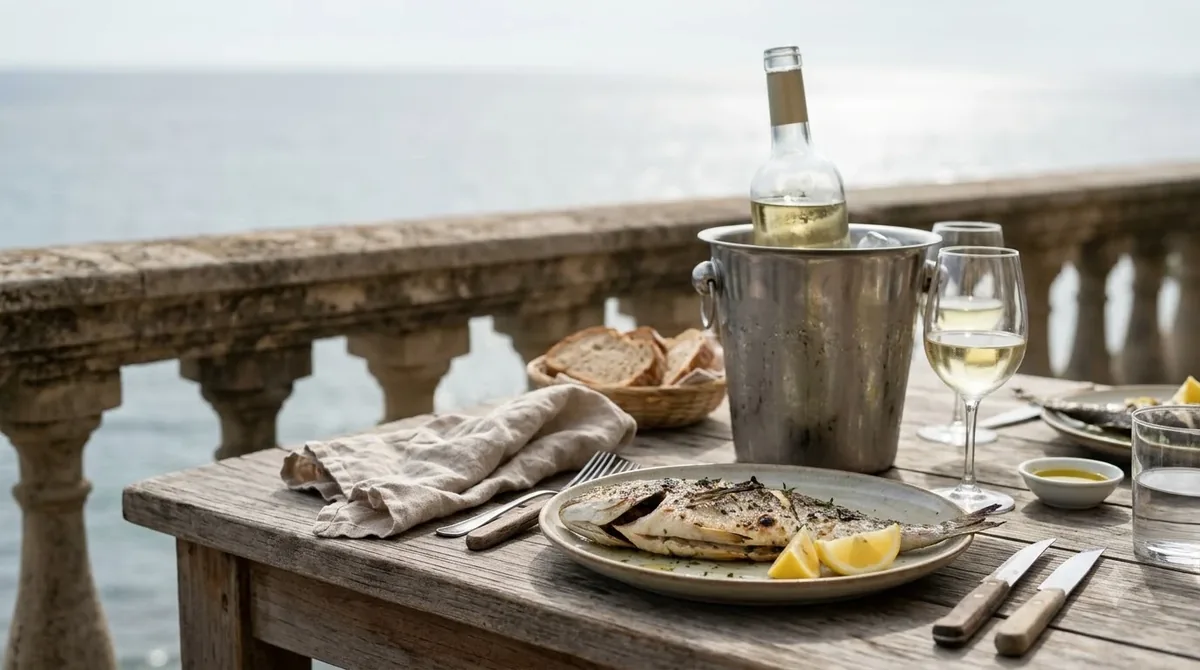
Light and aromatic whites such as Riesling and Sauvignon blanc taste best when they are cool but not icy. Their appeal comes from fresh acidity and perfume, and both qualities can fade when the wine is too cold. A range of about 46 to 54 degrees Fahrenheit keeps the fruit lively.
These wines are a good fit for salads, seafood and light appetizers. Pour a glass and give it a few minutes in the glass before tasting, since the aromas open as the wine warms slightly.
Best Temperature for Sparkling White Wine
Sparkling white wines, including Champagne, are served colder than most still whites. The reference range is about 43 to 50 degrees Fahrenheit. At this temperature the bubbles feel crisp, and the acidity stays bright rather than sharp.
Chill sparkling wine well before opening, and keep the bottle in an ice bucket if you are serving it over a longer evening. As it warms, the wine becomes softer and more rounded, which some people prefer for richer dishes.
Best Temperature for Sweet Dessert Wines
Sweet dessert whites are often served at the cold end of the range, around 43 to 50 degrees Fahrenheit. Cooler temperatures keep the sweetness from feeling heavy and help the wine’s acidity balance the sugar.
A small pour goes a long way with these wines. Serve them with fruit desserts, soft cheeses or on their own, and store leftover bottles in the refrigerator once opened.
Best Temperature for Full-Bodied Oaked Whites
Full-bodied whites, especially oaked Chardonnay and some Rhone-style blends, are served a few degrees warmer. The main reference gives about 54 to 61 degrees Fahrenheit for these wines, while the WSET recommendations cited on the same page give a slightly cooler 50 to 55 degrees Fahrenheit for medium and full-bodied oaked whites.
At this temperature the wine’s texture and oak character come through more clearly. Richer dishes, such as roast chicken with cream sauce or lobster, suit this style. If the wine feels flat or heavy, a short time in the refrigerator can help restore some freshness.
How to Chill and Serve White Wine at Home
A home refrigerator is usually colder than the serving ranges above, so it can push a white wine too far into the cold zone. For this reason, take a full-bodied white out of the refrigerator a little before you plan to pour it, and give lighter styles less time to warm.
A bucket of ice and water chills a bottle faster than the refrigerator alone, which is useful for sparkling wine or a last-minute guest arrival. Keep the process gentle, since a bottle that is too cold can mute its aromas.
Common Mistakes With White Wine Temperature
The most common mistake is putting every white wine in the refrigerator for the same length of time. Lighter styles reach a pleasant serving temperature sooner than full-bodied bottles, and a single rule for all whites can leave one of them too cold. Check the style first, then decide how long the bottle needs.
Another mistake is leaving white wine on the counter until it tastes flat. A glass in a warm room can drift upward in temperature quickly, and the fresh acidity fades as the wine warms. Keep the rest of the bottle chilled, and pour smaller amounts so the glass does not warm too much before the meal.
Some people also overchill their wine to hide a flaw. Very cold temperatures can soften the perception of a wine that is not in good shape, but they also mute the aromas of a good one. If a white tastes unpleasant only when very cold, let it warm a little and taste again before you decide.
How to Choose a Serving Temperature
Begin with the style on the label. Sweet, sparkling and light whites belong in the cooler part of the range. Oaked and full-bodied whites belong in the warmer part. When the style is unclear, aim for the middle of the range, around 46 to 50 degrees Fahrenheit, which works for many everyday bottles.
Then taste and adjust. If a white tastes harsh or sharp, let it warm for a few minutes. If it tastes dull or heavy, chill it briefly. Small changes in temperature can make a noticeable difference, so trust your palate over a fixed rule.
If you are planning a visit to a tasting room, many producers serve their whites at the temperature they recommend for that wine, so ask staff before you pour. For broader planning, the best Paso Robles wineries guide covers how to spread tastings across a day.
Frequently Asked Questions
What temperature should white wine be served at?
Most white wines are served between about 43 and 54 degrees Fahrenheit. Sparkling and sweet whites sit at the cold end of that range, while light aromatic whites sit in the middle and oaked whites are served slightly warmer.
Is it better to serve white wine too cold or too warm?
Too cold is the more common problem. Very cold wine can hide aromas and make acidity feel sharp. Serving within the recommended range usually gives the best balance of fruit and structure.
How long should white wine sit in the refrigerator?
The time needed depends on the bottle and the refrigerator, so check the temperature by touch rather than by the clock. For a quicker chill, an ice bucket works faster than the refrigerator. Move full-bodied whites out a little early so they do not get too cold.
Does temperature really change how white wine tastes?
Yes. Wikipedia’s entry on wine tasting notes that temperature can greatly affect how a wine tastes and smells. Cooler temperatures emphasize acidity and tannins and mute aromatics, while warmer temperatures reduce the prominence of acidity and bring out aroma.
Serving white wine at the right temperature is a simple habit that improves almost any bottle. Start with the style, use the ranges above as a guide, and adjust to taste. For the red side of the same question, the temperature for red wine guide covers the matching ranges, and the wine buying hub has more on choosing bottles. Drink responsibly.
More in Wine Buying Guides
 Riesling Gift: Choose a Bottle They’ll LoveUpdated Nov 21, 2026
 Sweet Red Wine Gift: Choose a Bottle They’ll LoveUpdated Nov 21, 2026
 Malbec Gift: How to Choose a Memorable Bottle for Any OccasionUpdated Nov 21, 2026
 Sherry Gift Ideas That Match Every Wine LoverUpdated Nov 21, 2026
 Moscato Gift: How to Choose a Sweet Wine They’ll LoveUpdated Nov 21, 2026
 Merlot Gift: How to Choose a Bottle They’ll AppreciateUpdated Nov 21, 2026